Month: August 2025

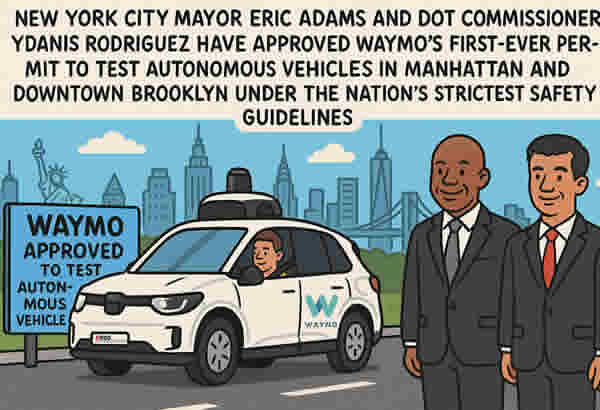
  • Mayor Adams Approves Waymo’s First Autonomous Vehicle Testing in NYC Under Strict Safety Rules

    Mayor Adams Approves Waymo’s First Autonomous Vehicle Testing in NYC Under Strict Safety Rules

    Summary: New York City Mayor Eric Adams and DOT Commissioner Ydanis Rodriguez have approved Waymo’s first-ever permit to test autonomous vehicles in Manhattan and Downtown Brooklyn under the nation’s strictest safety guidelines. The pilot requires a trained safety specialist behind the wheel at all times, with up to eight vehicles permitted until September 2025. The program emphasizes roadway safety, cybersecurity, and collaboration with city agencies, marking a milestone in bringing innovative transportation technology to NYC while prioritizing public safety.

    Mayor Adams, DOT Announce Approval of First Application to Test Autonomous Vehicles in New York City With Trained Safety Specialist Behind Steering Wheel

    What you should know

    • Waymo Permitted to Begin Testing Autonomous Vehicles in Manhattan and Downtown Brooklyn with Trained Specialist Behind Wheel at All Times Under Nation’s Strictest Safety Rules

     – New York City Mayor Eric Adams and New York City Department of Transportation (DOT) Commissioner Ydanis Rodriguez today announced that DOT has granted Waymo its first-ever permit to begin testing a limited number of autonomous vehicles (AV) in parts of Manhattan and Downtown Brooklyn under the nation’s strictest AV safety rules, including a requirement to have a trained AV-specialist behind the wheel at all times. Launched by the Adams administration last year, the city’s robust safety requirements have been established for responsible and safe AV testing in New York City. The rigorous permitting program ensures all approved applicants are ready to safely and proficiently test their technology in the country’s most dynamic and complex urban environment.

    “We’re a tech-friendly administration and we’re always looking for innovative ways to safely move our city forward,” said Mayor Adams. “New York City is proud to welcome Waymo to test this new technology in Manhattan and Brooklyn, as we know this testing is only the first step in moving our city further into the 21st century. As we continue to implement responsible innovation, we will always prioritize street safety.”

    “As autonomous vehicle technology expands across the country, DOT has put in place comprehensive safety guidelines to ensure safe, responsible testing on our city’s streets,” said DOT Commissioner Ydanis Rodriguez. “These requirements will help ensure that the development of this technology is focused, first and foremost, on the safety of everyone who shares our busy city streets.”

    “With over 10 million rides completed in five major U.S. cities and a strong safety record, we’re proud to be working with leaders to lay the groundwork to bring this life saving technology to New Yorkers one day, beginning with receiving the first-ever permit issued in the city to drive autonomously,” said Annabel Chang, head of U.S. state and local public policy, Waymo. “We believe it is essential for companies to collaborate directly with cities on the rollout of autonomous technology and are pleased to have reached this next step in New York City.”

    “Roadway safety for all New Yorkers is quite simply one of the most important issues today,” said Paige Carbone, regional executive director, MADD (Mothers Against Drunk Driving) New York. “Autonomous vehicles hold the exciting promise of preventing deaths and injuries caused by behavioral factors, including impaired driving, if deployed responsibly and safely and in collaboration with the right community and city stakeholders. We welcome this next step for New Yorkers as Waymo receives the first permit of its kind.”

    Assemblymember Brian Cunningham said, “As sponsor of legislation on autonomous vehicles at the state level, I’m encouraged to see New York City moving forward with testing that will show us how this technology can improve safety, reduce congestion, and expand mobility. This is the type of measured innovation that allows us to prepare for the future while making sure progress works for New Yorkers. The lessons learned here will help guide how we integrate autonomous technology statewide, which will help ensure it delivers real benefits in transportation, equity, and economic opportunity.”

    As part of their permit to operate within New York City, Waymo is required to coordinate closely with DOT through regular meetings and data reporting and Waymo must certify that they are adhering to the industry’s best practices related to cybersecurity. In addition to receiving DOT approval, Waymo has also obtained necessary permits from the New York state Department of Motor Vehicles. Waymo will be permitted to test up to eight autonomous vehicles in Manhattan and Downtown Brooklyn until late September 2025. After the pilot testing period, Waymo will have the opportunity to apply for an extension to their pilot testing period. Finally, DOT’s approval strictly relates to testing AV technology — the use of autonomous vehicles for for-hire service is currently prohibited by New York City Taxi and Limousine Commission (TLC) rules, and any company providing for-hire service must comply with TLC rules, including by obtaining a TLC license.

    Source: NYC.gov , Midtown Tribune news

    Midtown Tribune Independent USA news from New York

  • NYPD detective shot in Queens carjacking; Mayor Adams blasts repeat offender laws

    NYPD detective shot in Queens carjacking; Mayor Adams blasts repeat offender laws

    New York news  Mayor Adams Briefs Media With NYPD Commissioner Tisch and Visits Detective Shot in 109th Precinct

    Summary: A New York City detective was shot and wounded during a carjacking in Queens on Friday, in what police say was likely a friendly fire incident. Mayor Eric Adams criticized state laws that allow repeat offenders back on the streets, pointing out the suspect, 28-year-old Kevin Dubuisson, was arrested just a day earlier and released with a desk appearance ticket despite a long record of violent crimes. The 12-year NYPD veteran is expected to recover after surgery, while Dubuisson is in custody. Police unions and city officials are calling on Albany lawmakers to act quickly to close loopholes that they say endanger both officers and the public.

    Transcript: Mayor Adams Briefs Media With NYPD Commissioner Tisch and Visits Detective Shot in 109th Precinct

    Mayor Eric Adams: Today, we are reminded once more of the risk every man and woman that performs public safety in the city, specifically the members of the New York City Police Department, the faces they put on the uniform and that badge, especially with our current state laws that allow for a revolving door of criminal activity. And for dangerous people to be put back on our streets after they have committed crimes, and as recently as yesterday, and on parole, it just sends a terrible signal to our public and a terrible signal to the men and women who repeatedly attempt to apprehend and ensure our city is a safe place.

    Patrol officers from the 109th precinct responded to a carjacking of an Uber driver. While at the location, on-duty narcotics detectives from Queens South, who were headed back to their office after executing a search warrant, came across the incident and stopped to help the apprehension. During the apprehension, one detective from Queens South Narcotics was shot twice, wounded in the arm and the leg.

    At this time, it appears this was a friendly fire incident. [I’m] thankful these injuries are not life-threatening, and we expect him to make a full recovery. We just visited his mom and his wife, who is expecting a child at this time. And it was a relief to them that their loved one will be okay. And I wanna thank him for his bravery when I visited him. He’s now in surgery at his 12 years of service.

    Right now, one perpetrator is in custody and will face justice in the court of law. But I wanted to be clear, regardless of who shot our detective, there’s one person responsible for starting the chain of events that landed us in the hospital today. This is a man who should have been behind bars, not on our streets. He’s a 28-year-old recidivist with a lengthy rap sheet of robbery and assaulting officers who was on parole for a robbery that took place in March. And was literally arrested again and released yesterday with a desk appearance ticket.

    Before going out to attempt a carjacking in Queens, he walked out of one of our criminal justice locations. This is a definition, I believe, of insanity. Arresting the same people over and over again and expecting different results. NYPD is gathering more information about the crime, but it’s clear that this individual has no business walking free and endangering New Yorkers.

    From day one, this administration has been focused on driving down crime and have delivered results over and over again. But we need help from our lawmakers. We cannot allow repeated offenders to commit repeated violent acts in our city. We know the reality of what that means, and we know what it means to prepare our officers for this dangerous work.

    They’re training hard and taking risks. They run towards dangers while others run away. We call them New York Finest for a reason, and we saw that today. And we’re going to continue to support them as they do their job. I’m going to turn it over to the commissioner to give her full details of the events.

    Police Commissioner Jessica Tisch: Thank you, sir. The information that I am about to provide is preliminary and subject to change. At this point, here is what we know. Earlier this morning, as detectives assigned to Queen South Narcotics were returning to their command after performing a search warrant in the 113 precinct, they encountered officers from the 109 precinct along the side of the White Stone Expressway near 22nd Road engaging a suspect.

    That job began when an Uber driver in a black Toyota Highlander was parked just off the service road of the White Stone Expressway at approximately 8:52 AM. A male approaches the vehicle, announces a robbery, and displays what appears to be a firearm to the driver. The driver exits the vehicle and is assaulted by the perp. The driver calls 911 to report the carjacking a minute later at 8:53 AM. The perp attempts to drive away, but the victim still has the vehicle’s keys, forcing the perp to immediately return and collide with another car at the location.

    The perp then assaults the victim a second time in an effort to retrieve the keys, tackling the victim to the ground. Having retrieved the keys, the perp starts to slowly drive away and makes a right-hand turn onto 22nd Road. At this point, officers from the 109 are responding to the victim’s 911 call about the robbery in progress. They engage the car in an attempt to make an apprehension.

    Detectives assigned to Queen South Narcotics see the patrol officers attempting to make the apprehension and try to assist by blocking the car in. At 8:57 AM, officers discharge their firearms. The perp is not hit, but one of our officers assigned to Queen South Narcotics is struck one time in the right hand and one time in the left leg. He was removed here to Jamaica Hospital.

    This incident is recorded on [the] body-worn camera. Blessedly, as the mayor said, our officer is in stable condition and is both conscious and alert. I am pleased to report that I met with him and his family, and he is in good spirits. He is in surgery now. The perpetrator is uninjured and was taken into custody. At this time, this incident appears to be friendly fire as we did not recover a firearm from the perpetrator on scene.

    The perp in this incident is identified as 28-year-old Kevin Dubuisson. Mr. Dubuisson has a lengthy violent criminal history with ten career unsealed arrests, including multiple knife point robberies and multiple assaults on police officers. At just 28 years old, he is a four time convicted felon. Mr. Dubuisson is currently out on parole for robbery after being released from prison in March of this year. He was actually arrested just yesterday for theft of service in Manhattan and released with only a desk appearance ticket.

    Importantly, prior to the criminal justice reforms of 2020, an individual out on parole would not be eligible for a D.A.T. Mr. Dubuisson also has documented EDP history with the department. Prior to the incident with the Uber driver at approximately 8:40 AM this morning, Mr. Dubuisson attempted to steal a car from a mobile gas station on Parsons Boulevard and 20th Avenue, but was scared off by employees there. Then two minutes later, he attempts to carjack a female on Parsons Boulevard, just steps away from the gas station, but the victim’s husband runs outside and scares him off.

    It was then that he encountered the Uber driver on the service road along the Whitestone Expressway. This chain of events, which could have ended quite differently, began because a career criminal, a person who has terrorized victims for nearly a decade, was allowed to continue his violent spree. It is unconscionable that a violent predicate felon who pled guilty to two more robberies was out on the streets to commit his crimes today. That is criminal justice reform for you.

    I want to thank the entire staff of Jamaica Hospital. They are taking excellent care of our officer. This is just another reminder of the dangerous situations that our cops confront every single time they put that uniform on. We are praying for a speedy recovery and hope to see our officer home with his family soon. Thank you, and now I’m going to turn it over to Scott.

    Scott Munro, President, Detectives’ Endowment Association: Good morning. My name is Scott Munro, the Detective Endowment Association president. I have a message for Albany. Come off your vacation now, get up in Albany, and let’s start working to protect our police, our detectives that are out there working every day. In fact, this detective, thank God he’s okay today. He was out working protecting the people of the City of New York this morning executing a search warrant. And now he’s sitting upstairs in surgery.

    We need your help in Albany. It’s just not about retaining police officers. We want police officers to be safe. That’s what we hear. We want them to be safe. Just like the people of New York, we want to be safe. But we want our police officers safe. And it’s about time that the legislators– it’s about time Albany gets together, the assembly and the senate, with the governor, and start working on this.

    Get this fixed. It needs to be fixed right away. That should be your first thing on your agenda back in the next couple weeks. It actually should be started tomorrow, right now. Let’s get this done. I’d like to thank the hospital, everybody, the doctors, everybody that’s done a great job with our people here. We don’t want to plan funerals. That’s not what we’re here for. We’re here to protect the City of New York. Now we need your help, Albany. Thank you.

    Question: The firearm, was that a detail in the 911 call, the flash, the central firearm that wasn’t with the weapon?

    Chief Joseph Kenny, Chief of Detectives, New York City Police Department: Yeah, so the two different 911 calls that we looked at, the one female from the gas station, she describes what appeared to be a firearm, and the male, the Uber driver, describes that the male perpetrator was armed with a weapon.

    Mayor Adams: But he was never found with that gun?

    Chief Kenny: That’s correct.

    Question: Chief, is it yet clear if the officer who fired realized that the narcotics were at the door of that police, and can you describe the layout? Was this a ricochet or a vehicle that the officer was in, or was it a line of fire?

    Chief Kenny: Crime scene is going through that right now. We’ll get the trajectory of who fired what round. But what it appears is that there was a crossfire incident. The narcotics detectors were in the front of the perpetrator car. The 109 patrol was in the rear.

    Question: [Inuadible.]

    Chief Kenny: Right now it appears three officers from patrol fired.

    Question: Can you tell us anything about the officer you mentioned?… [inaudible].

    Chief Kenny: No, that’s it.

    Question: I have a question for the mayor and the commissioner. So regarding the release of the felon who was arrested yesterday, I mean, it’s all likely that even pre-report he would have been arraigned and released. But is there anything about his release in March that’s particularly troubling beyond the fact that he was—

    Police Commissioner Tisch: Yeah, this was a guy who was a violent predicate felon [who was] arrested two more times thereafter. He should not have been out on our streets this morning.

    August 22, 2025 Manhattan, New York

    Sources: NYC.gov , Big New York news BigNY.com
    Midtown Tribune News


    Midtown Tribune Independent USA news from New York

  • New York. Mayor Eric Adams Honors Haitian Community at Heritage Reception, Calls for Unity and Resilience (Video)

    New York. Mayor Eric Adams Honors Haitian Community at Heritage Reception, Calls for Unity and Resilience (Video)

    Summary: At a Haitian Heritage Reception on August 22, 2025, Mayor Eric Adams paid tribute to the Haitian community’s history, resilience, and contributions to New York City. He honored security officer Aland Paoli, who was killed while saving lives during a recent shooting, and urged continued action against gun violence. Adams praised Haiti’s legacy of freedom and resilience, highlighting its role in shaping global history and celebrating Haitian New Yorkers’ achievements in business, education, and public service—including NYC Budget Director Jacques Jiha. Stressing his commitment to immigrant support and equity, Adams said unity is key to overcoming challenges, declaring, “From Port-au-Prince to Brooklyn, we still rise.”

    Transcript: Mayor Adams Hosts Haitian Heritage Reception

    Mayor Eric Adams: Wow, look at this. Look at this crowd. You know, earlier this– a few weeks ago, I was working late and actually it was around six o’clock, we got the call that at 345 Park Avenue, there was a shooting. And in the shooting, when I responded, we learned that four New Yorkers were killed. Later that night, I walked through the building and looked at the tape. And [what] I saw, it was just so heart wrenching. And people talked about losing Officer Islam and other workers.

    But I want to talk about our Haitian brother, Aland. We call Aland. What that brother did was unbelievable. And how he tried to save the lives of the people that were in the building. He had that energy of Toussaint. He had that resiliency of this community. And as I watched the sick action of his assassin, and his desire to save the people who were there, it just tore me apart.

    And I just want to say as his wife is here, I’m gonna ask her to come on, Rachelle Paoli, if you will come on [stage]. And his beautiful children. I want us to just take a moment, a moment of silence of a life that is worth living because he gave his life to save the lives of others. More people would have been lost in that building if it wasn’t for the courageous actions of the security personnel and our first responding law enforcement.

    And when you see a family like this, this is why I am so committed to remove every illegal firearm off our street. And the 23,000 we have removed is just the start of what we need to do. So do something for me. Just raise your hand towards this stage to this family and say silently to yourselves, a word of prayer to lift them up, to give them the hope and the aspiration they need to forge ahead. And just a moment of silence. Thank you so much. Thank you for being here with us.

    And so to my Haitian people who are here, I remember going to Haiti a few years ago when I was borough president, you know, I like to believe that Brooklyn is the Port-au-Prince of America. And it was in the middle of a hurricane, and I watched how no matter what is thrown at you, you are so resilient. And America owes you a debt of gratitude because it was due to you whipping Napoleon’s butt that we were able to do the Louisiana Purchase.

    But not only that, I think that the councilwomen pointed it out. Because you beat Napoleon so bad, you’re still being held accountable for it. You know, people want to give the impression that this is all by accident. It’s not. Becoming the first Black republic, you pay a price. That’s like the price you pay when you become the second Black mayor.

    You know, you will rather live a lifetime in poverty than one day in slavery. And [with] your fighting spirit and fighting energy. And I remember just walking through Port-au-Prince and going up into the mountains and seeing folks just resilient and willing to fight and stand tall. And I remember as a child reading about Toussaint and how he inspired me. He was willing to fight for freedom. And people need to know that. That history has been lost in the conversation.

    Don’t be so Yankee-ized that you don’t realize how powerful you are as a country. And it’s significant. One of the highest levels of academic achievements. One of the highest levels in the medical profession. One of the highest levels in starting your own businesses. One of the highest levels of making sure of building institutions.

    You have a legacy that is so proud of and we allow people to beat us down so much that we don’t acknowledge how much we have accomplished. You have so much to be proud of. You grace us by being here on Gracie Mansion’s lawn right now. And so we have a lot to do and a lot to accomplish.

    And tonight we want to recognize your history, your culture, your contribution that our Haitian brothers and sisters have done from little Haiti and Brooklyn to proud homeowners in Queens. Every place you go, you bring about a level of prosperity and commitment and dedication. So I am proud to be the mayor of the second largest Haitian population in the country. And eventually we’re going to be the first because they’re going to leave Miami and come to New York.

    And let me tell you something. We have a $115 billion dollar budget. $115 billion dollars. The largest budget of any city. $115 billion dollars. And you know who controls it? Jacques [Jiha], a Haitian. I don’t spend a dime unless Jacques tells me it’s okay to spend it. And so we need to find our gems within not only city government but the city and that’s what this is all about. Lifting up how we manage crises.

    Look at what we manage under Jacques [Jiha]. We manage COVID under Jacques [Jiha]. We manage the migrants and asylum seekers under Jacques [Jiha]. We manage the sunsetting of COVID dollars that left gaping holes under Jacques [Jiha]. We lowered all income tax for low-income New Yorkers under Jacques [Jiha]. Free high-speed broadband under Jacques [Jiha].

    Breaking records of building housing in year one, two, and three more than anyone in the recorded history of the city of a mayor under Jacques [Jiha]. More jobs in New York City and the entire history under the city under Jacques [Jiha]. Jacques Jiha. Sorry, Jacques. I’m thinking of Maurice, my mentor. You know, he was another Haitian brother that was there for me.

    But Jacques handled his business in this city and he’s going to go down in history as one of the best budget directors the city has ever seen and he is Haitian. And so we’re doing more with our Haitian response initiative, a partnership between the Mayor’s Office of Immigrant Affairs and eight Haitian serving nonprofits and CUNY’s Brooklyn College Haitian Students Institute to give resources to provide information to Haitian New Yorkers in your language regardless of their immigration status.

    What we’ve done with free legal services, what we’ve done, we’re putting more money in legal services, what we’ve done and all of the issues of uplifting everyone who’s in the city. My obligation as the mayor is not to ask how you got here, but to make sure while you’re here you can provide for your family, provide for your children, receive police support if you need it and get medical attention when it’s required and I’m going to continue to do that.

    I didn’t start doing that when I was a mayor. I did it when I was back with 100 Blacks in Law Enforcement, state senator, borough president. I’m going to continue the legacy we started many years ago. And so we know these are uncertain and painful moments. We know that. We know what we’re going through right now and I hear all the time folks. I hear all the time people say these are the most difficult moments.

    I want to ask all of you something. When wasn’t it a difficult moment for Black folks? Can somebody tell me the year? Because it was a difficult moment for me when I grew up in South Jamaica, Queens, dyslexic, undiagnosed. It was a difficult moment for me when mommy was working three jobs. It was a difficult moment for me when my sister didn’t have her childhood because she had to raise the five of us.

    It was a difficult moment for me when we had to eat that hard [] cheese that came from welfare. It’s always been difficult folks, but you know what? We’ve always survived. Because if we are honest in what we say, God is still in charge. And that is what I believe and no matter what is thrown at me in this administration, we have been able to move this city forward and have been successful in the process.

    And in your flag states, unity creates strength. It is a measure that recalls your resiliency through struggles in the past and is a symbol for the future that together we are stronger. So from Port-au-Prince to Brooklyn through tragedy and triumph, we will continue to do as Maya Angelou stated. We will continue to rise. We still rise. Thank you so much.

    August 22, 2025

    Sources: NYC.gov , Midtown Tribune news

    Midtown Tribune Independent USA news from New York

  • New York. Mayor Adams Vows to Stay in Office, Pushes Back on Corruption Allegations

    New York. Mayor Adams Vows to Stay in Office, Pushes Back on Corruption Allegations

    Summary: New York City Mayor Eric Adams said Friday he won’t resign despite growing political pressure and corruption probes involving close associates. Speaking after a police-involved shooting, Adams dismissed rumors he might step down, saying he will “never quit on New York City.” He defended his record on crime, jobs, and housing while insisting his allies deserve due process. Critics say the scandals raise questions about his judgment, but Adams argued his administration is delivering results and promised to stay focused as the city heads into a heated election season.

    Mayor Adams Makes Announcement

    Mayor Eric Adams: There was a shooting involving members of the department when they attempted to apprehend an extremely dangerous and violent offender on parole, released yesterday for committing a crime, attempted several crimes this morning. And men like him, dangerous offenders like him, are on the streets of our city because of the action of the reform that Andrew signed into law.  

    And so when you were calling around to my staff saying, there’s the announcement today that Eric is stepping down, [] no. That cannot happen. I’m not going to leave this city to a beret-wearing, carnival display. I’m not going to leave it to a person who put dangerous laws on the books that hurt us from cannabis to bail reform to 15,000 nursing homes death.  

    I’m not going to leave this city to someone that wants legalized prostitution on our streets. I’m not going to leave this city to someone that does not understand what it is to run a city that went from being a rapper to an assemblyman and now wants to be the mayor of the most complex city. We’ve come too far to go backwards. That is not going to happen.  

    I’m never going to quit on the City of New York. We’ve worked too hard to get here, and to those thousands of men and women who serve this city every day, I want to tell them thank you. One of them is that officer who fought to take a dangerous person off the streets. So I wanted to address you because there’s been a lot of questions over the last few days after the indictment of two former employees of City Hall, one DCAS and one here at City Hall.  

    And one of them is Ingrid. Ingrid is like a sister to me. I love Ingrid. She’s worked with me for over forty years. I served as a police officer with her husband. I know her son, and I know her, and I know her heart. And she and her attorney will deal with the case that’s in front of her. My prayers are with Ingrid, and I wish her the best.  

    And throughout the number of years that I have known her, I found her to be a hardworking, dedicated member of city government for over 40 years. And with Jesse Hamilton, former state senator, former employee here, I wish him the best as well. I wish them to go through this process and allow their attorneys to do their role. And I am not going to interfere in any way with the process. Our communications with the district attorney’s office indicated that in no way am I involved in any of the reviews that they’re conducting in this manner.  

    And I’m going to continue to do the job that I’ve done for 8.5 million people. And to New Yorkers, I’m sorry. Instead of us talking about what we have done in this city, instead of us talking about how we brought down crime, brought back jobs, put money back in the pockets of working-class people, revitalized our economy, and made our city safer, we have to deal with conversations like this. But on the campaign trail, I’m going to continue to tell my story and allow you to make the right choices.  

    I’ve committed my life to this city. As a police officer, as a state senator, as a borough president, and now as your mayor. We have not always gotten it right, but we have never stopped being dedicated to the people of this city. And I’m going to continue to do that as long as you allow me to do so. I’m going to turn it over to the opening for a few questions. 

    Question: Hi Mayor Adams, I just wanted to ask you specifically, about the case and about what the city is potentially paying for. Well actually, this is a specific question. So Ingrid’s lawyer says she was only trying to help her constituents navigate the city’s onerous bureaucracy. But I wanted to get your take on that since some of those constituents also allegedly bribed her with free food and home repairs and $50,000 wired to her son.  

    And the second question is, these are people who are very close to you, Ingrid in particular. How can you let New Yorkers know that people who are so close to you, including even your son, have a movie funded by the Argentos who were arrested yesterday. How can you truly believe that you had no knowledge, no information or no understanding or no involvement at all in any of this? These are people who are so close to you that it even involves your son.  

    Mayor Adams: First of all, it didn’t involve my son. My son wrote, he had a job at Broadway– 

    Question: [Inaudible.] 

    Mayor Adams: Are you going to let me answer the question? My son was employed at Broadway Stages. And anything involving the case, you said you spoke to the attorney. Speak to the attorney. I’m not talking about their case. The attorney will handle that. 

    Question: Is the city paying for the legal fees of anyone who was arrested and indicted yesterday? 

    Mayor Adams: Speak to corporation counsel. Not of my knowledge. 

    Question: I actually have a couple of questions. One, I wanted to ask Randy Mastro. You’re a former federal prosecutor. You’ve prosecuted racketeering cases. You’ve prosecuted all kinds of things. What’s your take on this case? Do you think that this goes to the heart of corruption in city government? 

    First Deputy Mayor Randy Mastro: Thank you for asking. I’m not going to comment on the specifics of any case. But I’m not going to remain silent when ancient conduct of people who are no longer in government are being used to smear a government and a city hall and an administration producing every day for New Yorkers. I’ve stood by this mayor’s side for the past five months. We talk every day. We talk about how to resolve issues, how to address questions.  

    There’s not a single time when he’s given me a direction that wasn’t in the best interests of the city. And the people who work in this building, who are so dedicated, I cannot tell you how proud I am to be their colleague. They are doing the people’s work every day. And they’re doing it honestly. They’re doing it professionally. They’re doing it productively. That’s why crime is down to record lows. Jobs are up to record highs. Affordable housing being produced at unprecedented levels.  

    That’s why right across the street, [the] Department of Education and the chancellor [are] producing public school student test scores higher in math and reading in every grade, every category. That’s why quality of life is improving in our city. I’m not going to dwell on the past. I came here to help this mayor, this administration, [and] this city [to] focus on the present and the future. And the future is bright. I care about good government. I’ve been a federal prosecutor. I’ve done this job before.  

    And the work of this administration and the people in this administration, from the mayor on down, I could not be prouder of them. So I’m not going to sit silently by and accept a characterization of how these good public servants are serving this city, because we’re serving this city well and producing unprecedented results for New Yorkers. And I’m not going to let ancient history that will play out eventually in a courtroom one way or the other be the way the work of this administration is described, because we are doing great things for New Yorkers and we’re going to continue to do that every day. 

    Mayor Adams: Thank you. 

    Question: I have two questions. Number one, your opponents have obviously weighed in and they say it’s a city for sale. It’s Tammany Hall all over again. I wonder if you would respond to that. But also, if you could answer a question about the friendly fire situation with the police officers. Do you think that the police officers broke protocol in the way they handled the case? 

    Mayor Adams: It’s under investigation, and what we’re clear on, not one shot would have been fired if the perpetrator would have been behind bars where he should have been if we did not have these major changes in our laws. And when you respond to a call of service where the preliminary reports indicated that the person was armed with a weapon, those officers don’t know what they’re responding to.  

    And I thank God that they took this dangerous person off our streets. And the review will look at it. A shooting team will determine if there are any changes that should be done. But I thank God for those responding officers and how they responded. He was robbing an Uber driver who was just trying to do his job. And those officers didn’t run away. They ran towards the danger. 

    Question: And in terms of what your opponents have said, do you want to respond to that? 

    Mayor Adams: No, they’re in their political season. This is what happened in the political season. There are five people who are in the race. Three of them don’t have a record. One of them is running away from his record. I’m the only one that has a record. And when you have a record, people can pick it apart. And as the first deputy mayor stated, it’s a darn good record for this city.  

    Question: Your staff confirmed they put these down. I was just wondering, first, why? And then the second question is probably more pertinent and serious. What do you say to New Yorkers that see these recent allegations of corruption and bribery, look at the previous allegations and say this reflects poorly on your judgment, sir? 

    Mayor Adams: First, let me answer your first part about the whistle. Many of these women here are interviewing Andrew Cuomo, and they feel unsafe. They’re going to have a whistle to help them through it, okay? That’s one. Two, this is from previous investigations that is taking place. I said it then, and I’ll say it again. We’re going to deliver for this city as we have done and we will continue to do.  

    Question: When you were indicted, you suggested that this was politically motivated. Is there anything about these charges that you would like to also connect with that statement you made in the past? And the second question, you are running on the fact that you are tough on crime. So how do you reconcile that with these revelations when people hear about corruption, how [do] you react to allegations? 

    Mayor Adams: Let me answer both of them. First, the attorneys will determine what are their beliefs on these charges and how to respond. I’ve made it clear, when you’re dealing with cases, respect the attorney process. They all have attorneys. Communicate with the attorneys to get their thoughts. It is not up to me to decide what the thoughts are. I’ll speak with the attorneys.  

    Tough on crime? I’ve always been tough on crime. From my days as a police officer, state senator, borough president, and now the mayor. And the results of that toughness have proven successful. 23,000 illegal guns removed off our streets. Lowest numbers of shootings and homicides in the first six months of this year.  

    Our pursuit to do preventive measures with after-school programs for children, summer employment programs. We have been both proactive and reactive. And I’m always going to be tough on crime. And this is not an indicator of me not being tough on crime. 

    Question: Could you talk a little bit about your relationship with the Argentos? I know that they-  

    Mayor Adams: I’m sorry, who?  

    Question: The Argentos. You know, they’ve contributed to your campaigns over many years. You just said that your son Jordan worked for Broadway Stages. Could you elaborate a little bit? How did he get that job? Was that something that you helped him get through the Argentos? 

    Mayor Adams: I am very clear with my son. My son finds his way. I’m not going to raise a son that cannot find his way. My son has been working and has been finding jobs. He has been doing what he needs to do as he reaches his 30th birthday. He found his way. He went out. He interviewed from his degree in communication. And he found the job. And both Gina and her brother are wonderful people. They’re great New Yorkers. They contribute in the area of their community. They give back. They’re very dedicated to the people of this city.  

    And I’m not the first elected that they supported. They’ve supported many electeds that they felt understood how important it is to move the city in the right direction. And my heart goes out to both of them because they are, from my interactions with them, they are beautiful people. And they really care about the City of New York. And if you look at their volunteerisms, their contributions, what they’ve done with the 94 precinct in that area, they have continuously given back.  

    Question: There are those who look at this, your opponents in particular, and will say Eric Adams called the reporters here today to do damage control. Is that what this is, mayor? Is this damage control? 

    Mayor Adams: No. I want to move around the city, and I don’t want you following me around with the cameras in my faces and the phones in my faces, so I might as well get you all together and explain. And I owe New Yorkers an explanation of what we’re doing. So this is not damage control. It is about communicating with you so that I can do the business out there without you having to follow me around. You can speak to me right here.  

    Question: Mayor, the election is [getting] more complicated day by day. How do you see the future?  

    Mayor Adams: Well, first of all, if you would ask those who are regularly here, they would tell you a year ago, I said this is going to be the most interesting election in the history of the city. It turned out to be true. This is New York. New York is a complex place. New York is a place where any given day you can get a call. I got a call early this morning. I have an officer shot. We deal with hurricanes that hit our shores.  

    That’s why you have to be ready to do this job. In order to do this job as mayor, you can’t go from rapper to assemblyman and then mayor. It’s too complex. There’s too many layers. The first job, a real job, should not be leading the City of New York because you have to respond to these uncertainties. And I challenge all of you, go back. The first time I had to deal with the lawfare of the federal authorities, look at what we did after that. I never wore my personal crisis.  

    I delivered for the city. City of Yes. Universal after-school program. Paying off medical debt for New Yorkers. Removing the income tax for low-income New Yorkers. I never stopped. I’ve been able to deliver for the city no matter what came at me. And that’s what you need to do if you’re the mayor of the greatest city on the globe, New York. 

    Question: So, I understand you’re not going to comment on any of the specifics in the case or go over any of those things. But I think, you know, for your employees, the New Yorkers, what message does this send that you’re not condemning these actions? If true, of some of these things that happened, whether it’s your long-term friend Ingrid or anybody like that.  

    Because, you know, do you believe that it’s okay for somebody to cut through red tape and city government, as you’re saying, just to help people out? But then simultaneously, what– benefiting themselves? What message does that send New Yorkers? And then, is there anything you’d like to address with Winnie Greco this week? You know, whatever that situation is at this point, saying that she accidentally gave a bag full of cash to Katie Honan or she meant it as a gift. Did you want to comment on that at all? 

    Mayor Adams: Okay. First of all, the message that I’m sending. The message I’m sending is something called due process. Something we all believe in. What makes our country different than other places. And what makes us great. And so, if you condemn someone without their due process [it’s a] slap in the face of what our constitution stands for. Let the due process play out. And you can communicate with their attorneys if you have some questions. 

    Question: I’m not looking for you to say, Ingrid did this and she should be convicted. I’m just saying, like, to the people that are still working under you. Everybody that Randy Mastro just praised. They’re doing great work here. You know, if any of these allegations, not just Ingrid, not just Jesse, all these allegations, any of these are true. Would you want to condemn that, to say that you are looking to root out corruption in your administration. 

    Mayor Adams: First of all, you’re being hypothetical and I’m not going to do that with someone’s life. And we have very, very strict guidelines on rooting out and not allowing corruption to be in our administration. And we have [a] Conflict of Interest Board that tells us what we can do and what we can’t do. Do people make mistakes in those Conflict of Interest Board rulings? Yes. Fines are given out all the time often when people make a mistake in what they do. That is why we have a Conflict of Interest Board. We do training. We do all the things that we’re supposed to do. And we’re going to continue to do that. 

    Question: Would you like to say anything on Winnie Greco?  

    Mayor Adams: I’m sorry?  

    Question: Would you like to say anything? 

    Mayor Adams: I have no idea of the communication between Winnie and the reporter involved. I don’t know what conversation they had. We don’t give money to reporters. I don’t know anything about what took place there. We condemned that type of action. If it was done for the wrong reason, I have no idea. And she’s no longer able to volunteer on the campaign because that’s an action–  that is the perception of it, we don’t agree with and I don’t tolerate it. 

    [Crosstalk.]  

    Hold on. Don’t stop. Don’t start yelling. Don’t start doing that. All that yelling and screaming because then I am going to bounce. We’re going to take a few more questions, but I got a city to run. Okay? Go ahead.  

    Question: I’m wondering, do you agree with Ingrid’s lawyer’s characterization of the charges? He said this was politically motivated lawfare.  

    Mayor Adams: I just answered that. Her lawyer represents her. I don’t represent her in this case. Speak with her lawyer and her lawyer will give you his input. I don’t represent her in this case.  

    Question: Do you make of the timing? Obviously it’s coming– as you’re seeking re-election, and you had to deal with legal challenges in the past. Do you make anything of that timing?  

    Mayor Adams: Well, you know, I wake up every day and I deal with the plate that’s in front of me. I don’t say woe is me. I say why not me? I have to succeed no matter what because I’m fighting for New Yorkers. My mother didn’t wake up and say life is tough. She woke up and she delivered for our family and that’s what I’m going to do. So the timing or non-timing doesn’t matter. I got to communicate with voters and voters are going to make the decision what direction we want to go in.  

    Question: Mayor, you said you were very close to Ingrid, [inaudible]… close to Jesse Hamilton as well. So I’m wondering, were you aware of any allegations or corruption while they were working for your administration? Did anyone raise concerns to you on [inaudible]… favors being given.  

    And then secondly, the second question is, both of them were very close to you, winning records also very close to you. So I’m just wondering, how do you explain to people in New York the fact that these are, you know, people that you are close to, that you trust, and that they are now facing these sort of criminal charges? You say that doesn’t reflect on you, but I’m wondering how you explain that to New Yorkers who might think that your closeness to these individuals somehow reflects on you and your judgment. 

    Mayor Adams: Well, first of all, yes, you’re right. She is close to me and I love her like a sister. And she’s in my prayers and her attorney will handle her case.  

    Question: Were you aware of any allegations of corruption?  

    Mayor Adams: There were no complaints on her work ethics. In fact, to the contrary, people knew that she knew how to make sure that the people in the city got the services they needed. And she did that in the senate office, in the borough president office, and here as well.  

    Question: Mayor, I wanted to ask you, are you disappointed at all in Ingrid, Jesse Hamilton, or Winnie Greco’s actions? And I also wanted to ask you, why should New Yorkers trust you, because this is another case, more indictments, to make sure that this isn’t going to continue to happen at least in your first term and possibly in your second term? 

    Mayor Adams: Well, I think New Yorkers should trust me on how I deliver for the city. I mean, you’ve covered me for some time. You know that we brought down crime. You know that we’ve helped foster care children. You know that we improved grade scores in our schools. You know we build more housing in individual years than any other mayors. You know we took 23,000 guns off the streets. You know what we’re doing for foster care children, for NYCHA residents.  

    You know what I do. They would trust me if you write about the good things I do. They would trust me. I am fighting for New Yorkers every day, and I get up to do that. And there’s going to be distractions. And New Yorkers, there are things I would have loved to have done differently, but I’m going to live life in my rearview mirror. I learn from those bumps in the road and become a better, not only mayor every day, but a better human every day.  

    Question: Any disappointment in Ingrid, Jesse Hamilton, or Winnie Greco’s actions? 

    Mayor Adams: Due process. Due process. 

    Question: You know, just now you said there were things that you wish you could have done differently [inaudible]… is there anything certainly you could’ve done differently?  

    Mayor Adams: No.  

    Question: So what could you do differently then?  

    Mayor Adams: There’s a lot of things I could do differently in life. I think all of us, everyone that’s sitting here, could look at something they wish they would have done differently. I wish I would have spent more time with my son when he was growing up, instead of being the advocate for everything that I was doing.  

    There’s a lot of reflection I have on my life, what I could have done differently. And anyone who doesn’t reflect on their life and states that I wish I could have done differently, then shame on you. That means you stayed home every day in the bed. I got up every day and delivered for this city. In every role that I had, I delivered for the people of this city. I’m going to continue to do that.  

    Question: I have a question again about the [inaudible]. You know, the indictment says that the bribery led to the redesign of McGuinness to get a change. I was wondering, with all these allegations coming out, are you going to go back to McGuinness, the director of DOT, to go back to the original plan or make any changes in response? 

    Mayor Adams: No. McGuinness, it was a win to sit down and come to a resolution that both sides could agree on. And there will be continuous modifications of our streets. That’s part of what we do. We keep modifying to get it 100 percent right. And from my understanding, there were a lot of conversations. There were people on both sides of the issue. And you have to come to a middle. This is New York. In New York, you know, every one person that wants something, there’s another person that wants something differently.

    August 22, 2025 Manhattan, New York

    Sources: NYC.gov , Big New York news BigNY.com
    Midtown Tribune News

    Midtown Tribune Independent USA news from New York
  • White House. America by Design

    White House. America by Design

    On August 21, 2025, President Donald J. Trump signed an executive order launching “America by Design,” a national initiative to modernize and improve the usability of federal digital and physical services. The order establishes the National Design Studio within the White House and introduces a Chief Design Officer to lead efforts in recruiting top creative talent, standardizing government design, and enhancing user experiences. Agencies are directed to prioritize updates to high-impact websites and services by July 4, 2026, ensuring compliance with modern digital standards while reducing costs from outdated systems. The initiative underscores the administration’s policy to deliver government services that are not only efficient but also visually engaging and accessible for all Americans.

    IMPROVING OUR NATION
    THROUGH BETTER DESIGN

    By the authority vested in me as President by the Constitution and the laws of the United States of America, it is hereby ordered:

    Section 1.  Purpose and Policy.  America has long led the world in innovation, technological advancement, and design.  But with a sprawling ecosystem of digital services offered to Americans, the Government has lagged behind in usability and aesthetics.  There is a high financial cost to maintaining legacy systems, to say nothing of the cost in time lost by the American public trying to navigate them.  It is time to fill the digital potholes across our Nation.

    With this order, I am announcing “America by Design,” a national initiative to improve experiences for Americans, starting by breathing new life into the design of sites where people interface with their Government.  It is time to update the Government’s design language to be both usable and beautiful.  This effort will be facilitated by a new National Design Studio and by a new Chief Design Officer.  The Chief Design Officer will help recruit top creative talent, coordinate with executive departments and agencies (agencies), and devise innovative solutions.

    It is the policy of my Administration to deliver digital and physical experiences that are both beautiful and efficient, improving the quality of life for our Nation.  Towards that end, the National Design Studio will advise agencies on how to reduce duplicative design costs, use standardized design to enhance the public’s trust in high-impact service providers, and dramatically improve the quality of experiences offered to the American public.

    Sec. 2.  Establishing America by Design and the National Design Studio.  (a)  There is established a national initiative, America by Design, to improve comprehensively the visual presentation and usability of Federal services provided to the public in both digital and physical spaces, creating first-class online and offline experiences for Americans.

    (b)  To help facilitate the America by Design initiative, there is established within the White House Office of the Executive Office of the President the National Design Studio (NDS) and, within the NDS, a new position entitled the Chief Design Officer.  The NDS shall be led by an Administrator, who shall report to the Office of the White House Chief of Staff.  There is further established within the NDS, in accordance with section 3161 of title 5, United States Code, a temporary organization headed by the NDS Administrator and dedicated to helping advance the America by Design initiative.  The temporary organization shall terminate 3 years from the date of this order, but that termination shall not be interpreted to imply the termination, attenuation, or amendment of any other authority or provision of this order.

    Sec. 3.  Implementing America by Design.  (a)  Heads of agencies shall consult with the Chief Design Officer to implement the America by Design initiative at their respective agencies and shall produce initial results by July 4, 2026. 

    (i)    Heads of agencies shall prioritize improving websites and physical sites that have a major impact on Americans’ everyday lives. 

    (ii)   The Administrator of General Services shall consult with the Chief Design Officer to update the United States Web Design System consistent with the policies set forth in this order.

    (iii)  Heads of agencies shall consult with the Chief Design Officer to ensure Government-wide compliance with the 21st Century Integrated Digital Experience Act, Public Law 115-336.

    (b)  The Chief Design Officer shall consult with thought leaders and research and design firms on how best to implement the America by Design initiative.  In order to employ the most talented designers of our generation to serve their country, the Chief Design Officer shall help recruit designers and other experts from the private sector as well as other sources of expertise.  Heads of agencies shall use all relevant hiring authorities to facilitate this effort, including title IV of the Intergovernmental Personnel Act of 1970, Public Law 91-648, 5 U.S.C. 3371 et seq.

    (c)  The Chief Design Officer shall consult with the Director of the Office of Management and Budget, as appropriate, in carrying out his or her obligations under this order.

    Sec. 4.  General Provisions.  (a)  Nothing in this order shall be construed to impair or otherwise affect:

    (i)   the authority granted by law to an executive department or agency, or the head thereof; or

    (ii)  the functions of the Director of the Office of Management and Budget relating to budgetary, administrative, or legislative proposals.

    (b)  This order shall be implemented consistent with applicable law and subject to the availability of appropriations.

    (c)  This order is not intended to, and does not, create any right or benefit, substantive or procedural, enforceable at law or in equity by any party against the United States, its departments, agencies, or entities, its officers, employees, or agents, or any other person.

                                 DONALD J. TRUMP

    THE WHITE HOUSE,

        August 21, 2025.

    Executive Orders Presidential Actions

    Sources: White House , Midtown Tribune

    #DonaldTrumpNews #USANewsToday #FunUSAWhiteHouse #WhiteHousePictures

    Midtown Tribune Independent USA news from New York
  • Americans Nationwide to Save Thousands in Taxes Under President Trump’s One Big Beautiful Bill

    Americans Nationwide to Save Thousands in Taxes Under President Trump’s One Big Beautiful Bill

    One-Paragraph Summary:
    President Trump’s One Big Beautiful Bill Act is delivering sweeping tax relief across the country, with the average American taxpayer set to save $3,752 in 2026, according to the nonpartisan Tax Foundation. From Alaska’s $3,485 average savings to Nevada’s $4,220, Florida’s $5,000, and Miami-Dade County’s $5,872, families in every state will feel the impact through lower taxes and higher take-home pay. The bill makes the 2017 tax cuts permanent while introducing new breaks, including deductions for tips and overtime income, tax relief for seniors, expanded child-care credits, and enhanced small business incentives. In Ohio alone, savings are projected to protect 232,000 jobs and boost wages by as much as $6,100, while Michigan and North Carolina families will save an average of over $3,000 each. With provisions like permanent Opportunity Zones, manufacturing support, and business-friendly deductions, the bill is being hailed as the most significant federal tax reform in decades — fueling job creation, simplifying the tax code, and putting more money in the pockets of working Americans.

    Across the Country, Americans Will Pay Less in Taxes Thanks to President Trump’s Big Beautiful Bill

    Americans across the country will feel the benefits of President Trump’s One Big Beautiful Bill this tax season, with the average taxpayer saving more and paying less.

    Here’s what outlets across the country are saying:

    Must Read Alaska (Homer, AK): Alaska Taxpayers to Save an Average of $3,485 Under New Federal Tax Law

    “Alaska taxpayers will see significant relief under the One Big Beautiful Bill Act, with average savings of $3,485 thanks in part to the Alaska delegation’s support for working-family tax cuts, according to a new analysis from the Tax Foundation.”

    Reno Gazette-Journal (Reno, NV): Nevada Ranks in Top States for Tax Cuts from Trump’s Big Budget Bill

    “Nevadans will see among the biggest tax reductions of any state because of changes in this year’s federal budget package. The average tax cut for each Nevada resident who files a return in 2026 will be $4,220 — with Washoe County filers seeing a $6,313 drop. That’s according to the nonpartisan, nonprofit Tax Foundation, a national think tank that advocates for lower taxes and limited government.”

    The Tennessean (Nashville, TN): How Much Can Middle Tennessee Taxpayers Expect to Save Under Trump’s Tax Cuts? These Counties Will Save the Most.

    “Middle Tennessee residents are among the Tennesseans set to experience the most financial relief by tax cuts introduced under President Donald Trump’s ‘Big Beautiful Bill.’

    Signed into law on July 4, the legislation marks the most significant overhaul of federal tax policy since the 2017 Tax Cuts and Jobs Act, which lowered average tax burdens across income levels and temporarily streamlined the filing process through structural reforms, according to an analysis by the Tax Foundation. The new bill not only makes the 2017 tax cuts permanent but also introduces additional breaks, including deductions on tips and overtime pay, tax relief for seniors and an expanded child-care tax credit.”

    WKMG-TV (Orlando, FL): Tax Cuts are Coming to Florida Next Year. Here’s How Much to Expect

    “With the One Big Beautiful Bill Act (OBBBA) being signed into law last month, Florida is slated to see plenty of individual and business tax cuts. That’s according to The Tax Foundation, which put together a study this month detailing what Florida residents can expect during the upcoming 2026 tax season.

    The study predicts that the OBBBA will bring down federal taxes on average for individual taxpayers in every state, largely thanks to features like new deductions for tipped/overtime income, as well as an expanded child tax credit and standard deduction.”

    Axios Phoenix (Phoenix, AZ): Arizonans Will See Tax Cuts From “Big, Beautiful Bill”

    “Arizonans’ average tax cut will be $3,521 in 2026, a bit under the national average of $3,752, per an analysis from the Tax Foundation, a nonpartisan research group that mostly supports lower taxes. But if you’re in Maricopa County, the average tax savings will be $4,049, the biggest cuts of any county in the state.”

    Spectrum News 1 (Toledo, OH): Ohio Lawmakers Seek to Frame Big Beautiful Bill During Congress’ August Recess

    “The average Ohio taxpayer will save $3,175 in 2026 because of tax cuts in the so-called One Big, Beautiful Bill Congress passed in July, according to an analysis by the nonpartisan Tax Foundation… The analysis is based on the tax rate that would have taken effect if the 2017 tax cuts expired at the end of this year, so the average Ohio filer will see $1,036 in savings on their 2026 taxes compared to 2025.”

    Axios Richmond (Richmond, VA): Richmonders to get $3.5K Tax Cut in 2026

    “The average Richmonder will see a federal tax cut of nearly $3,500 in 2026 thanks to the ’big, beautiful bill,’ per an analysis from the Tax Foundation, a nonpartisan research group that mostly supports lower taxes.,, The spending bill Congress passed last month made President Trump’s first term tax cuts permanent — and added on a bunch more. The new tax breaks include deductions for tips and overtime income, a cut for seniors and an expanded child-care credit.”

    The Ohio Press Network (OH): Ohio Officials Discuss OBBBA Tax Cuts, Benefits at White House Event

    “Nationwide, the act makes permanent the 2017 TCJA provisions, preventing tax hikes for 62% of filers in 2026 according to a Tax Foundation analysis. It also introduces new deductions for tipped and overtime income, expands the child tax credit, and enhances the standard deduction.

    In the Buckeye State, the Council of Economic Advisors (CEA) projects OBBBA will significantly boost Ohio’s economy, raising wages by $3,400 to $6,100 over the next four years and increasing take-home pay for a typical family with two children by $7,000 to $9,800, according to CEA analysis.

    CEA predicts OBBBA will protect 232,000 Ohio jobs with 5% of the workforce benefiting from no taxes on tips, 2.1 million seniors gaining from no taxes on Social Security, and 24% of employees (plus 65% in eligible occupations) advantaged by no taxes on overtime. The bill supports manufacturing (14% of Ohio’s employment) and extends the 199A deduction for 141,000 small businesses statewide. Enhanced Opportunity Zones, now permanent, have already created 43,000 jobs and 13,000 housing units in Ohio’s 320 zones.”

    Axios Miami (Miami, FL): Miami-Dade, Broward Residents See $5K Tax Cut in 2026

    In Miami-Dade, the average tax break is expected to be $5,872 next year. In Broward County, it’s $4,441. In Florida, the average tax cut will be about $5,000, per the Tax Foundation analysis. Collier County residents will see some of the largest average tax cuts in the state ($14,315).”

    Axios Des Moines (Des Moines, IA): Iowa Taxpayers Expected to See Average of $3,000 in Savings

    Iowa’s average cuts in 2026 range from $2,311 in Appanoose County to $4,330 in Dallas County. Iowa’s all-Republican congressional delegation supported the bill. Sen. Chuck Grassleycalled it a ‘resounding victory,’ outlining a dozen ways he believes it benefits Iowans. Sen. Joni Ernstsaid it will keep more money in people’s pockets.”

    Axios Kansas City (Kansas City, KS/MO): How the “Big, Beautiful Bill” Affects Your 2026 Taxes

    “On the Kansas side,Johnson County filers are projected to receive an average cut of $5,344 in 2026. Wyandotte County filers are estimated to get an average cut $2,115. In Missouri, Platte County leads with an estimated average cut of $4,104. Cass County is projected at $3,240, Clay County at $3,138 and Jackson County at $3,039.”

    The Greenville News (Greenville, SC): Chamber of Commerce Lobbyist Touts One Big Beautiful Bill as “game-changer” for Businesses

    “The law makes the 20 percent qualified business income deduction permanent – ‘a game-changer for businesses,’ Jackson said. She also pointed to the 100 percent deduction for research and experimental expenses. Jackson was pleased that businesses will receive an expanded employer-provided childcare tax credit because ‘we know that childcare is one of the biggest hurdles to getting people into the workforce and keeping people in the workforce.’”

    The Dallas Express (Dallas, TX): Tax Foundation: Trump’s ‘One Big Beautiful Bill’ Cuts Taxes, Creates Jobs

    “American taxpayers will receive an average tax cut of $3,752 under President Donald Trump’s One Big Beautiful Bill, according to a new analysis released Friday by the nonpartisan Tax Foundation. The organization also projects that the legislation will create nearly one million new jobs nationwide. The sweeping tax overhaul represents the centerpiece of Trump’s economic agenda. White House officials tout it as historic relief for middle-class families.”

    The Columbus Dispatch (Columbus, OH): The Buckeye State has Reason to Thank Donald Trump. He Just Gave Workers a Raise

    “Among the many commonsense and overdue measures to jumpstart the U.S. economy, President Donald Trump’s Big Beautiful Bill specifically targets middle-class blue-collar and service-sector workers for relief from high taxes, so that every American — and especially those here in the Buckeye State — can benefit from a growing economy.

    The bill’s provision on cutting taxes on overtime, up to $12,500 a year, means more money in the pockets of our hardest-working Ohioans. Overtime taxes are essentially a tax on production, since labor is such a big cost in making things right here at home.”

    The Midwesterner (Michigan): Tax Foundation Study Shows Avg $3,151 Tax Cut for Michiganders After One Big Beautiful Bill

    “The Tax Foundation’s report estimates that, in 2026, the average Michigan taxpayer would see a $3,151 tax cut. Every county would benefit, with some seeing larger reductions than others: Ingham County residents would save $2,657 on average, Kalamazoo County $3,276, Grand Traverse County $3,855, Genesee County $2,430, Macomb County $2,693, Oakland County $5,006, and Saginaw County $2,462.

    The ‘One Big Beautiful Bill’ is a comprehensive federal tax reform package passed by Trump’s administration. It includes cuts to individual and corporate tax rates, expands child tax credits, and reduces certain deductions. Supporters say it is designed to simplify the tax code, stimulate economic growth, and put more money in the pockets of middle-class families.”

    The Mountaineer (Waynesville, NC): Report: Average Tax Cut Coming is $3,264

    “More than $3,200 in tax cut savings is projected on average for North Carolinians, a report from The Tax Foundation says. Long range, more than 26,000 jobs are forecast to be added in the state as well, says the international nonprofit research organization publishing studies on American tax policies. The report was done in response to the July 4 signing of House Resolution 1, known also as the One Big Beautiful Bill Act.”

    Axios Atlanta (Atlanta, GA): Fulton County Residents to get $5,666 Tax Cuts in 2026

    “At $5,666, Fulton residents will see the second-highest average tax cut next year in Georgia, per the Tax Foundation. Residents of Cherokee, Cobb, DeKalb, Fayette and Forsyth counties will see at least $3,500.”

    The White House

    August 21, 2025

    Sources: White House , Midtown Tribune News

    Midtown Tribune Independent USA news from New York
  • President Trump Delivers Safer Streets in D.C. and Sparks Investment Boom with One Big Beautiful Bill

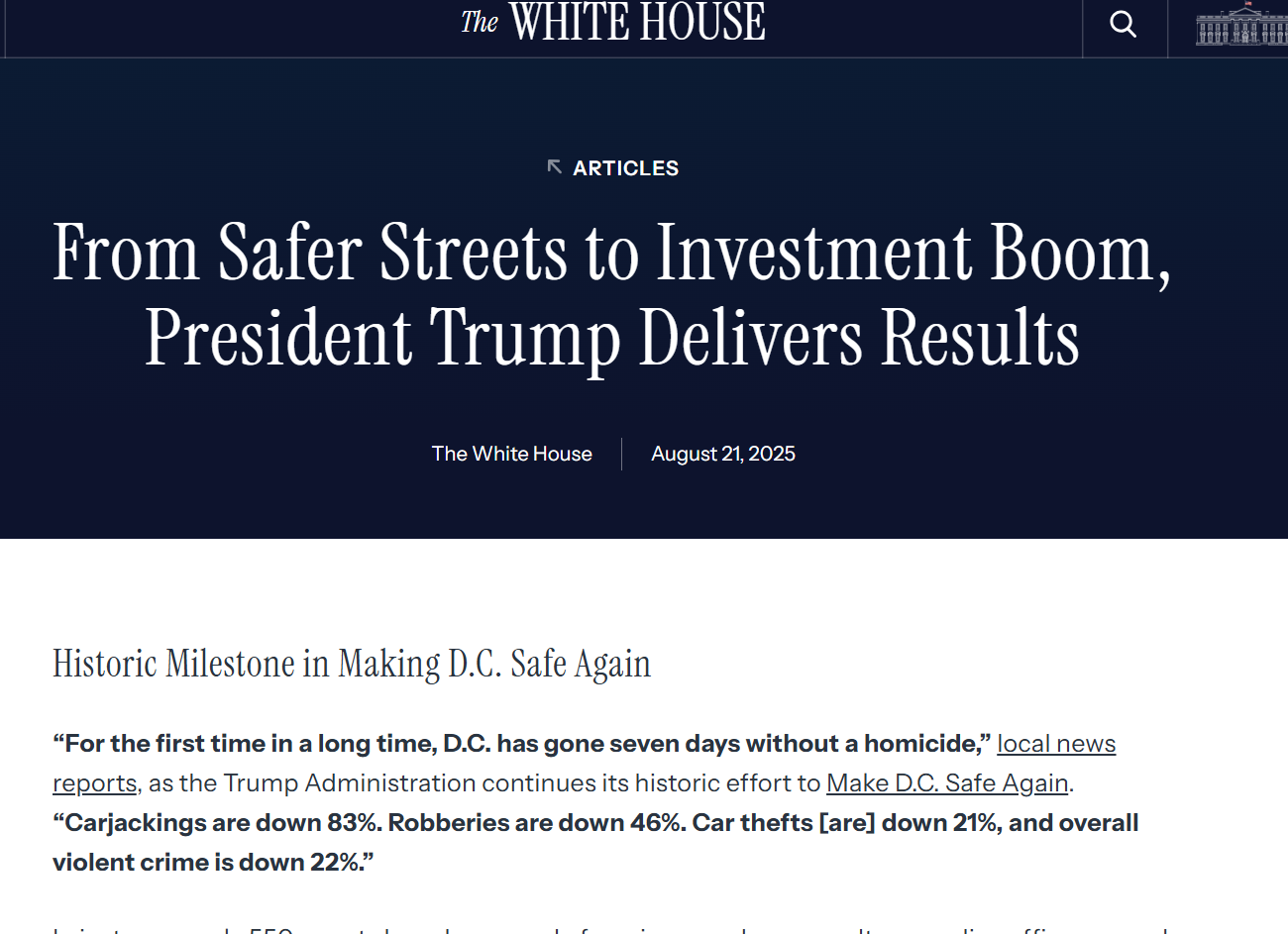
    President Trump Delivers Safer Streets in D.C. and Sparks Investment Boom with One Big Beautiful Bill


    President Trump’s policies are showing measurable results both in public safety and economic growth, as Washington, D.C. experiences its first week without a homicide in years and violent crime drops by 22%, with carjackings down 83%, robberies down 46%, and car thefts down 21%. In just seven days, law enforcement made 550 arrests for serious offenses ranging from armed robbery to child abuse, while also removing dangerous illegal immigrants, including MS-13 gang members, from the streets. The administration is also tackling urban blight by clearing homeless encampments and cleaning graffiti. On the economic front, Trump’s landmark One Big Beautiful Bill Act is driving a manufacturing resurgence, with Johnson & Johnson announcing a new $2 billion facility in North Carolina as part of its $55 billion U.S. investment commitment, credited to the administration’s push to restore American industrial and pharmaceutical strength.

    From Safer Streets to Investment Boom, President Trump Delivers Results

    Historic Milestone in Making D.C. Safe Again

    “For the first time in a long time, D.C. has gone seven days without a homicide,” local news reports, as the Trump Administration continues its historic effort to Make D.C. Safe Again“Carjackings are down 83%. Robberies are down 46%. Car thefts [are] down 21%, and overall violent crime is down 22%.”

    In just one week, 550 arrests have been made for crimes such as assault on a police officer, armed robbery, assault with a deadly weapon, involuntary manslaughter, child abuse, driving under the influence, and more. Authorities have also removed dozens of criminal illegal immigrants from the streets, including one MS-13 gang member and another charged with sex crimes against a child.

    Meanwhile, dozens of homeless encampments have been cleared and graffiti is being cleaned up as the Trump Administration works to restore glory and prestige to our nation’s capital.

    One Big Beautiful Bill Driving Investment

    As President Donald J. Trump continues his pursuit of American manufacturing dominance and restoring America’s pharmaceutical supply chain, Johnson & Johnson announced a new $2 billion investment to build a manufacturing facility in North Carolina — adding to their $55 billion commitment earlier this year.

    Joaquin Duato, the company’s chairman and CEO, credited President Trump’s landmark One Big Beautiful Bill for the continued investment: “With the recent signing of the One Big Beautiful Bill Act, we continue to expand our investment in the U.S. to lead the next era of healthcare innovation.”

    The White House

    August 21, 2025

    Sources: White House , Midtown Tribune News

    Midtown Tribune Independent USA news from New York
  • President Trump Criticizes Smithsonian’s Woke Exhibits and Progressive Agenda

    President Trump Criticizes Smithsonian’s Woke Exhibits and Progressive Agenda

    President Trump has taken aim at the Smithsonian Institution, highlighting a series of exhibits and programs that critics say push an extreme progressive agenda under the guise of cultural education. Museums including the National Museum of African American History and Culture, the American History Museum, the National Portrait Gallery, and the National Museum of the American Latino have featured content portraying America’s founding as rooted in racism and colonization, celebrating illegal border crossings, and reframing historic events such as the Texas Revolution and Mexican-American War through an anti-American lens. Displays include LGBTQ+ identity showcases, activist-driven narratives on immigration, exhibits that reinterpret the Pilgrims and Benjamin Franklin primarily through slavery, and even artwork proposing a transgender Statue of Liberty. Trump argues that such programming, filled with activist voices and radical reinterpretations of U.S. history, disrespects American heritage and misrepresents the nation’s founding principles.

    President Trump Is Right About the Smithsonian

    • The National Museum of African American History and Culture debuted a series to educate people on “a society that privileges white people and whiteness” — defining so-called “white dominant culture“ as “ways white people and their traditions, attitudes, and ways of life have been normalized over time” and portraying “the nuclear family,” “work ethic,” and “intellect” as white qualities rooted in racism.
    • As part of its campaign to stop being “wealthy, pale, and male,” the National Portrait Gallery featured a choreographed “modern dance performance“ detailing the “ramifications“ of the southern border wall and commissioned an entire series to examine “American portraiture and institutional history… through the lens of historical exclusion.”
    • The American History Museum prominently displays the “Intersex-Inclusive Progress Pride flag” at its entrance, which was also flown alongside the American flag at multiple Smithsonian campuses.
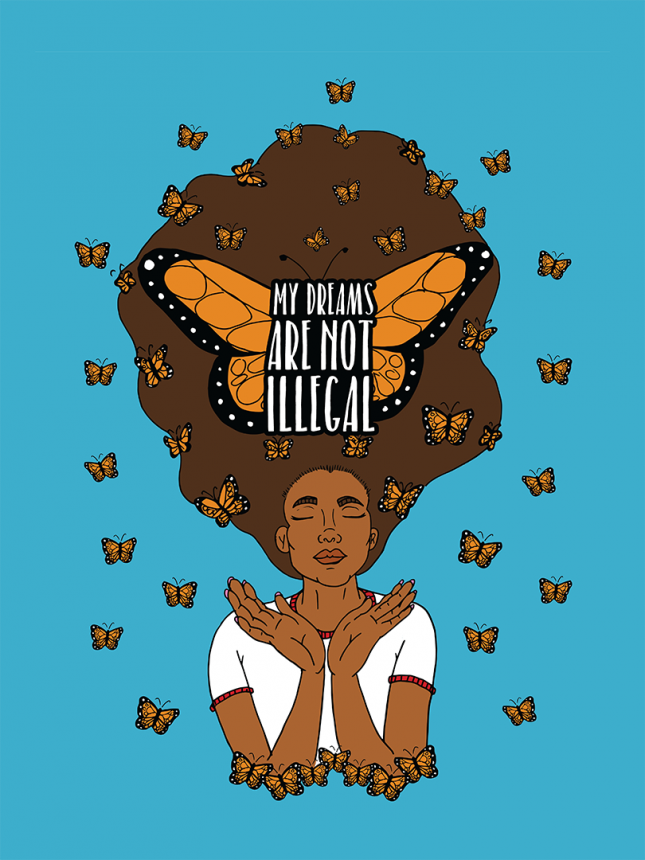
    • The National Portrait Gallery features art commemorating the act of illegally crossing the “inclusive and exclusionary” southern border — even making it a finalist for one of its awards.
    • The National Museum of African Art displayed an exhibit on “works of speculative fiction that bring to life an immersive, feminist and sacred aquatopia inspired by the legend of Drexciya,” an “underwater kingdom populated by the children of pregnant women who had been thrown overboard or jumped into the ocean during the Middle Passage.”
    • The American History Museum’s “LGBTQ+ History” exhibit seeks to “understand evolving and overlapping identities such as lesbian, gay, bi-sexual, transgender, queer, transsexual, transvestite, mahu, homosexual, fluid, invert, urning, third sex, two sex, gender-bender, sapphist, hijra, friend of Dorothy, drag queen/king, and many other experiences,” and includes articles on “LGBTQ+ inclusion and skateboarding“ and “the rise of drag ball culture in the 1920s.”
    • The National Museum of the American Latino features programming highlighting “animated Latinos and Latinas with disabilities” — with content from “a disabled, plus-sized actress” and an “ambulatory wheelchair user” who “educates on their identity being Latinx, LGBTQ+, and disabled.”
    • The National Museum of the American Latino characterizes the Texas Revolution as a “massive defense of slavery waged by ‘white Anglo Saxon’ settlers against anti-slavery Mexicans fighting for freedom, not a Texan war of independence from Mexico,” and frames the Mexican-American War as “the North American invasion” that was “unprovoked and motivated by pro-slavery politicians.”
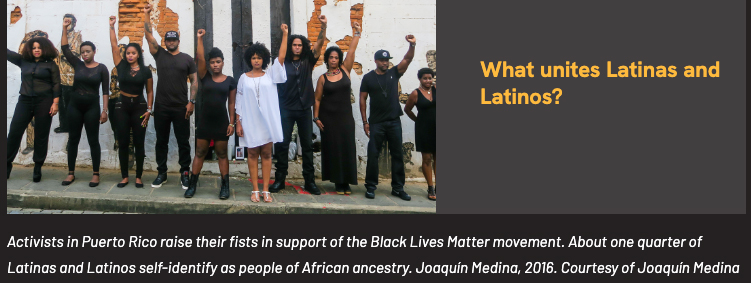
    • According to the National Museum of the American Latino, “what unites Latinas and Latinos“ is “the Black Lives Matter movement.”
    • The American History Museum’s exhibit marking the 50th anniversary of Title IX includes biological men competing in women’s sports and argues in favor of “transgender” athletes competing in sports against the opposite biological sex.
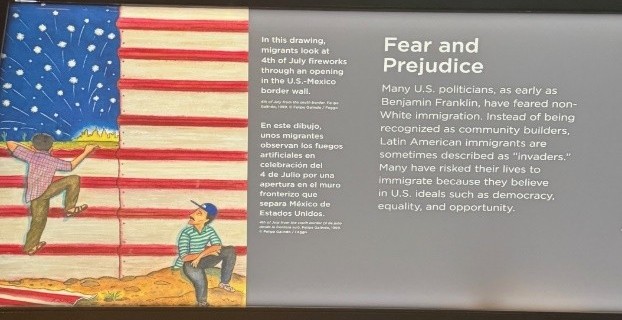
    • A exhibit at the American History Museum depicts migrants watching Independence Day fireworks “through an opening in the U.S.-Mexico border wall” and says America’s founders “feared non-White immigration.”
    • The American History Museum features a display that refers to the founding of America as “a profound unsettling of the continent.”
    • The American History Museum’s “American Democracy” exhibit claims voter integrity measures are “attempts to minimize the political power” of “new and diverse groups of Americans,” while its section on “demonstrations” includes only leftist causes.
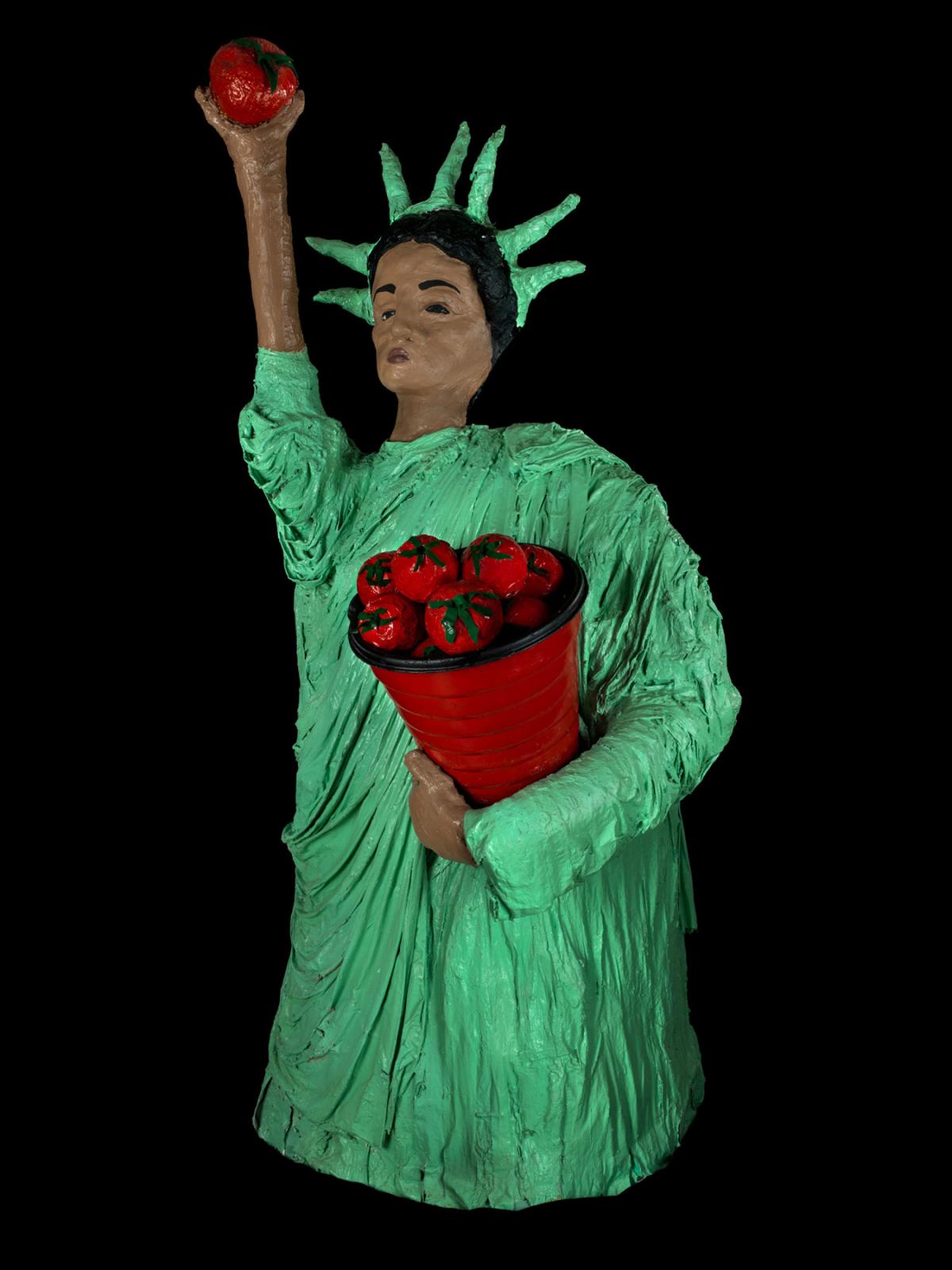
    • An American History Museum exhibit features a depiction of the Statue of Liberty “holding a tomato in her right hand instead of a torch, and a basket of tomatoes in her left hand instead of a tablet.”
    • The National Museum of the American Latino features an anti-American exhibit that defines Latino history as centuries of victimhood and exploitation, suggests the U.S. is stolen land, and characterizes U.S. history as rooted in “colonization.”
      • The exhibit features writing from illegal immigrants “fighting to belong.”
      • The exhibit displays a quote from Claudia de la Cruz, the socialist nominee for president and a director an anti-American hate group, as well as another quote that reads, “We didn’t cross the border; the border crossed us.”
      • The exhibit remains prominently featured on its website alongside a quote from the Communist Party USA’s Angela Davis, who was once among the FBI’s Top 10 Most Wanted Fugitives.
    • The National Museum of the American Latino describes the post-Mexican-American War California describes a “Californio” family losing their land to American “squatters.”
    • The Museum of American Art uses American sculpture “to invite dialogue and reflection on notions of power and identity.”
    • The American History Museum’s “Upending 1620” exhibit claims Pilgrims are a “myth,” instead framing them as colonizers.
    • The American History Museum’s exhibit about Benjamin Franklin focuses almost solely on slavery, directing visitors to learn more about his “electrical experiments and the enslaved people of his household,” noting his “scientific accomplishments were enabled by the social and economic system he worked within.”
    • The National Portrait Gallery was set to feature a “painting depicting a transgender Statue of Liberty” before the artist withdrew it.
    • The former interim director of the future Smithsonian American Women’s History Museum declared the museum will be “inclusive” of biological men posing as women.

    The White House

    August 21, 2025

    All illustration from White House Website

    Sources: White House , Midtown Tribune

    Midtown Tribune Independent USA news from New York

  • White House. U.S. and EU Announce Framework Agreement on Reciprocal, Fair, and Balanced Trade

    White House. U.S. and EU Announce Framework Agreement on Reciprocal, Fair, and Balanced Trade

    The United States and the European Union have unveiled a landmark Framework Agreement on Reciprocal, Fair, and Balanced Trade, designed to strengthen one of the world’s largest economic relationships and address longstanding trade imbalances. Under the deal, the EU will eliminate tariffs on U.S. industrial goods and expand market access for American agricultural and seafood products, while the U.S. will adjust tariffs on European goods, including cars, aircraft parts, pharmaceuticals, and semiconductors. The agreement also prioritizes cooperation on energy security, with the EU planning $750 billion in U.S. energy purchases and $40 billion in AI chip imports, alongside expanded European investments of $600 billion in U.S. industries. Key commitments cover defense procurement, mutual recognition of standards, technology and cybersecurity cooperation, agricultural trade, digital trade protections, labor rights, and supply chain resilience. Positioned as a first step, the Framework Agreement sets the stage for broader transatlantic economic cooperation and long-term industrial revitalization.

    Joint Statement on a United States-European Union Framework on an Agreement on Reciprocal, Fair, and Balanced Trade

    The United States and the European Union are pleased to announce that they have agreed on a Framework on an Agreement on Reciprocal, Fair, and Balanced Trade (“Framework Agreement”). This Framework Agreement represents a concrete demonstration of our commitment to fair, balanced, and mutually beneficial trade and investment.  This Framework Agreement will put our trade and investment relationship – one of the largest in the world – on a solid footing and will reinvigorate our economies’ reindustrialization. It reflects acknowledgement by the European Union of the concerns of the United States and our joint determination to resolve our trade imbalances and unleash the full potential of our combined economic power. The United States and the European Union intend this Framework Agreement to be a first step in a process that can be further expanded over time to cover additional areas and continue to improve market access and increase their trade and investment relationship.

    The key terms include: 

    1.​ The European Union intends to eliminate tariffs on all U.S. industrial goods and to provide preferential market access for a wide range of U.S. seafood and agricultural goods, including tree nuts, dairy products, fresh and processed fruits and vegetables, processed foods, planting seeds, soybean oil, and pork and bison meat. The European Union will immediately take the necessary steps to extend the Joint Statement of the United States and the European Union on a Tariff Agreement announced on August 21, 2020, with respect to lobster (that expired 31 July 2025), coupled with an expanded product scope to include processed lobster.

    2.​ The United States commits to apply the higher of either the U.S. Most Favored Nation (MFN) tariff rate or a tariff rate of 15 percent, comprised of the MFN tariff and a reciprocal tariff, on originating goods of the European Union. Additionally, effective as of 1 September 2025, the United States commits to apply only the MFN tariff to the following products of the European Union: unavailable natural resources (including cork), all aircraft and aircraft parts, generic pharmaceuticals and their ingredients and chemical precursors. The United States and the European Union agree to consider other sectors and products that are important for their economies and value chains for inclusion in the list of products for which only the MFN tariffs would apply.

    3. ​The United States intends to promptly ensure that the tariff rate, comprised of the MFN tariff and the tariff imposed pursuant to Section 232 of the Trade Expansion Act of 1962, applied to originating goods of the European Union subject to Section 232 actions on pharmaceuticals, semiconductors, and lumber does not exceed 15 percent. When the European Union formally introduces the necessary legislative proposal to enact the tariff reductions set forth in Section 1 of this Framework Agreement, the United States will reduce tariffs on automobiles and automobile parts originating from the European Union subject to Section 232 tariffs as follows: No Section 232 automobile or automobile parts tariffs will apply to covered European Union goods with an MFN tariff of 15 percent or higher; and for covered goods with an MFN rate lower than 15 percent, a combined rate of 15 percent, comprised of the MFN tariff and Section 232 automobile tariffs, will be applied. These tariff reductions are expected to be effective from the first day of the same month in which the European Union’s legislative proposal is introduced. The United States expects the European Union’s legislative proposals will be consistent with this Framework Agreement and enacted by the necessary legislatures. All modifications to U.S. Section 232 tariffs will be executed in a manner that reinforces and is consistent with U.S. national security interests. With respect to steel, aluminum, and their derivative products, the European Union and the United States intend to consider the possibility to cooperate on ring-fencing their respective domestic markets from overcapacity, while ensuring secure supply chains between each other, including through tariff-rate quota solutions.

    4. ​The United States and the European Union will negotiate rules of origin that ensure that the benefits of the Agreement on Reciprocal Trade accrue predominately to the United States and the European Union.

    5. ​The United States and the European Union commit to cooperate on ensuring secure, reliable, and diversified energy supplies, including by addressing non-tariff barriers that might restrict bilateral energy trade.  As part of this effort, the European Union intends to procure U.S. liquified natural gas, oil, and nuclear energy products with an expected offtake valued at $750 billion through 2028. In addition, the European Union intends to purchase at least $40 billion worth of U.S. AI chips for its computing centers. The European Union further plans to work with the United States to adopt and maintain technology security requirements in line with those of the United States. in a concerted effort to avoid technology leakage to destinations of concern. The United States will endeavor to facilitate such exports once such requirements are in place.

    6. ​The United States and the European Union share one of the world’s largest economic relationships, supported by mutual investment stocks exceeding $5 trillion, and intend to promote and facilitate mutual investments on both sides of the Atlantic. In this context, European companies are expected to invest an additional $600 billion across strategic sectors in the United States through 2028. This investment reflects the European Union’s strong commitment to the transatlantic partnership and its recognition of the United States as the most secure and innovative destination for foreign investment.

    7. ​The European Union plans to substantially increase procurement of military and defense equipment from the United States, with the support and facilitation of the U.S. government.  This commitment reflects a shared strategic priority to deepen transatlantic defense industrial cooperation, strengthen NATO interoperability, and ensure that European allies are equipped with the most advanced and reliable defense technologies available.

    8. ​The United States and the European Union commit to work together to reduce or eliminate non-tariff barriers. With respect to automobiles, the United States and the European Union intend to accept and provide mutual recognition to each other’s standards. Cooperation on standards plays a crucial role in enhancing the transatlantic marketplace. The European Union and United States commit to enhance opportunities for technical cooperation between EU- and U.S.-domiciled standards development organizations with the objective of identifying and developing standards for the transatlantic marketplace in key sectors of mutual interest.  The United States and the European Union commit to facilitate conformity assessments to cover additional industrial sectors.

    9. ​Recognizing the importance of continued engagement to resolve longstanding concerns, the European Union and the United States commit to work together to address non-tariff barriers affecting trade in food and agricultural products, including streamlining requirements for sanitary certificates for pork and dairy products.

    10. ​Recognizing that production of the relevant commodities within the territory of the United States poses negligible risk to global deforestation, the European Union commits to work to address the concerns of U.S. producers and exporters regarding the EU Deforestation Regulation, with a view to avoiding undue impact on U.S.-EU trade.

    11. ​Taking note of the U.S. concerns related to treatment of U.S. small and medium-sized businesses under the Carbon Border Adjustment Mechanism (CBAM), the European Commission, in addition to the recently agreed increase of the de minimis exception, commits to work to provide additional flexibilities in the CBAM implementation.

    12. ​The European Union commits to undertake efforts to ensure that the Corporate Sustainability Due Diligence Directive (CSDDD) and the Corporate Sustainability Reporting Directive (CSRD) do not pose undue restrictions on transatlantic trade.  In the context of CSDDD, this includes undertaking efforts to reduce administrative burden on businesses, including small- and medium-sized enterprises, and to propose changes to the requirement for a harmonized civil liability regime for due diligence failures and to climate-transition-related obligations.  The European Union commits to work to address U.S. concerns regarding the imposition of CSDDD requirements on companies of non-EU countries with relevant high-quality regulations.

    13. ​The European Union reaffirms that U.S. conformity assessment bodies can be designated as Notified Bodies in accordance with the Sectoral Annex for Telecommunications Equipment to the Agreement on Mutual Recognition Between the European Community and the United States (1998) to carry out the tasks in relation to all essential requirements, including cybersecurity, in the Radio Equipment Directive 2014/53/EU.  In addition, the United States and the European Union will commit to negotiate a mutual recognition agreement on cybersecurity.

    14.​ The European Union and the United States commit to strengthen cooperation and action related to the imposition of export restrictions on critical mineral and other similar resources by third countries.

    15. ​The United States and the European Union commit to discuss high-standard commitments related to intellectual property rights protection and enforcement.

    16. ​The European Union and the United States commit to work together to ensure strong protection of internationally recognized labor rights, including with regard to the elimination of forced labor in supply chains.

    17.​ The United States and the European Union commit to address unjustified digital trade barriers. In that respect, The European Union confirms that it will not adopt or maintain network usage fees. The United States and the European Union will not impose customs duties on electronic transmissions. The United States and the European Union intend to continue to support the multilateral moratorium on customs duties on electronic transmissions at the World Trade Organization and seek the adoption of a permanent multilateral commitment.

    18.​ The European Union intends to consult with the United States and U.S. traders on digitalization of trade procedures and implementation of the legislation currently proposed on EU Customs Reform.

    19. ​The United States and the European Union agree to strengthen economic security alignment to enhance supply chain resilience and innovation by taking complementary actions to address non-market policies of third parties as well as cooperating on inbound and outbound investment reviews and export controls, as well as duty evasion. This includes addressing non-market practices, unfair competition, and lack of reciprocity in public procurement with respect to third countries. The United States and the European Union will cooperate on further implementation measures. ​

    The United States and the European Union, in line with their relevant internal procedures, will promptly document the Agreement on Reciprocal, Fair, and Balanced Trade to implement this Framework Agreement.

    The White House

    August 21, 2025

    Sources: White House , Midtown Tribune

    Midtown Tribune Independent USA news from New York
  • Hochul Unveils $52.6M Broadband Boost to Connect Thousands of New Yorkers

    Hochul Unveils $52.6M Broadband Boost to Connect Thousands of New Yorkers

    Summary: Gov. Kathy Hochul announced $52.6 million in new broadband funding to expand internet access for more than 24,000 households, businesses, and community sites across 28 New York counties. The plan will add 234 miles of fiber and 46 wireless hubs, with a major focus on affordable housing and underserved rural areas. Backed by federal and state dollars, the initiative is part of more than $308 million already invested to connect 142,500 homes statewide, helping families, students, and small businesses get reliable, low-cost internet they need for school, work, healthcare, and everyday life.

    Governor Hochul Announces $52.6 Million in Broadband Infrastructure Awards

    ConnectALL Awards Will Build 234 Miles of Fiber and 46 Wireless Hubs To Serve More Than 24,000 Households with Affordable Broadband in 28 Counties Across the State

    In Total, These Programs Have Awarded More Than $308 Million to Connect More Than 142,500 Households, Including 32,117 Affordable Homes with Reliable, Accessible and Affordable Internet

    Governor Kathy Hochul today announced 15 broadband infrastructure awards through the Municipal Infrastructure Program (MIP), Affordable Housing Connectivity Program (AHCP), and Deployment Program County Partnerships totaling $52.6 million. These awards will directly connect 6,900 locations across the state, including 24,000 total households, businesses, and anchor institutions, with 19,000 of those being affordable housing units, and build 234 miles of new fiber infrastructure and 46 new wireless hubs.

    “New York State is leading the nation in closing the digital divide once and for all,” Governor Hochul said. “Today’s $52 million in awards represents our commitment to connecting communities that need it most. In today’s economy, broadband isn’t a luxury, it’s a necessity for education, healthcare, economic opportunity, and full participation in modern life.”

    Empire State Development President, CEO and Commissioner Hope Knight said, “Expanding broadband access strengthens New York’s economy and improves quality of life. These awards will help to connect more than 24,000 households — including affordable housing residents — with high-speed service. By giving small businesses the tools to grow, students and workers the ability to succeed, and families access to critical services, we are building stronger, more connected communities across the state.”

    Senator Charles Schumer said, “Access to high-speed internet is not a luxury, but a necessity, a utility as vital as electricity for everyday life. Today, New York State takes a leap towards closing the digital divide. I’m proud to deliver millions in federal funding to help expand broadband infrastructure to boost affordable, high-quality internet access for over 24,000 homes and businesses across NY. This will help communities in 28 counties in every corner of NY from Buffalo and Albany to rural parts of the Finger Lakes and Southern Tier. It will help families stay connected to education, to healthcare, economic opportunity, and each other. When I led the American Rescue Plan and Bipartisan Infrastructure & Jobs Law to passage, I made sure there was funding for long term investments like this that would create good paying jobs helping build the 21st century infrastructure needed to make high-speed internet reach every corner of the state. I’m grateful for Governor Hochul’s work putting these federal dollars to work to ensure all New Yorkers get the equitable access to the internet that they deserve.”

    Senator Kirsten Gillibrand said, “Affordable and high-speed internet should be accessible to all New Yorkers, regardless of background. Investing in broadband infrastructure is critical for children to receive high-quality education, seniors to access telehealth services, and workers to engage in the digital economy. I am proud that this nearly $53 million investment will help connect communities across our state, and I will continue fighting for more funding that closes the digital divide once and for all.”

    Representative Jerrold Nadler said, “Access to reliable, high-speed internet is essential for every New Yorker, no matter their zip code or income. I welcome Governor Hochul’s announcement of over one million dollars to help close the digital divide so all Manhattan families can stay connected to each other and the world. As I did with the American Rescue Plan, I will always fight to make sure New Yorkers get the reliable, high-speed internet they need to succeed.”

    Representative Paul Tonko said, “Over the past several years, I’ve been proud to lead the charge in Congress to expand broadband here in New York and nationwide. That’s because internet access is not a luxury — it’s a necessity for families, businesses, and communities here in our Capital Region and across our state. These investments will help ensure that New Yorkers of all income levels can stay better connected to their jobs, their schools, and their loved ones, while strengthening the very fabric of our communities. I’m thrilled to join Governor Hochul in celebrating this important step forward in our efforts to bring critical infrastructure improvements to the families who need them most.”

    Representative Grace Meng said, “Broadband isn’t a luxury, it’s a necessity for New Yorkers of all ages. In Congress I have fought to expand broadband access in Queens and make at-home internet access more affordable for all families. This $52 million investment builds on the progress we’ve made to ensure that all New Yorkers are online, regardless of whether they live in a metropolitan or rural community across the state.”

    Representative Joseph Morelle said, “Affordable, reliable internet isn’t a luxury anymore—it’s how families connect to jobs, schools, and each other. This $4 million in funding for our community will transform the lives of thousands of families, giving them the resources and support they need to thrive. I’m grateful to Governor Hochul for leading New York State on our mission to close the digital divide once and for all.”

    Representative Tim Kennedy said, “Investing in broadband infrastructure is one of the most meaningful ways we can strengthen our communities and expand opportunities for working families across Western New York and New York State. This investment will improve access and connectivity for our region’s schools, first responders, small businesses, and households that have been left behind for far too long. By investing in broadband, New York is working to ensure that every student can learn, every patient can access telehealth, and every family can fully participate in today’s economy.”

    Representative John W. Mannion said, “Investing in broadband infrastructure is crucial for our rural communities and delivers government that prioritizes the people. The $2.7 million for the Greater Syracuse area will connect houses and communities across my district, and the nearly $10 million in Madison County will build hundreds of miles of fiber to connect thousands of homes and businesses, providing vital resources to rural communities and farmers. I’ll continue advocating for connectivity and broadband for Central New York and the Mohawk Valley to connect constituents and their businesses. I thank Governor Hochul for her commitment and leadership delivering results across New York State.”

    The $52.6 million in awards will support long-term economic development across 28 counties and the internet service will improve affordability so all residents can participate in the digital economy. The broadband internet service in some cases will be as low as $10 per month and in all cases will include high-speed options below the regional average prices.

    These projects build on a foundation of prior investment by ConnectALL, which has previously awarded more than $13 million in AHCP grants connecting more than 12,000 affordable housing units, and $242.5 million in MIP grants bringing high-speed internet to an additional 105,000 households across the state. Funded by the US Department of Treasury, these initiatives reflect a targeted state and federal partnership that aims to accelerate progress toward universal connectivity and ensure that all New Yorkers have access to reliable, affordable internet.

    Assemblymember Steve Otis said, “New York State has led the nation in developing innovative programs to provide broadband access in neglected rural, suburban, and urban areas. This announcement is especially exciting with the focus on providing access to affordable and public housing complexes that are the types of facilities often left out of high-speed broadband access many take for granted. Special recognition for this important work goes to Governor Kathy Hochul, ESD President and Commissioner Hope Knight, and ConnectALL Chair Josh Breitbart for their leadership in making sure underserved New Yorkers gain access. As Chair of the Assembly Science and Technology Committee, I know that both houses of the Legislature have been partners in this work.”

    Municipal Infrastructure Program Awards

    The Municipal Infrastructure Program builds critical broadband infrastructure through public-private partnerships, focusing on expanding access in underserved rural areas.

    • Southern Tier Network MIP Expansion (Southern Tier) – $1,363,264: STN will extend its existing middle mile network by building a high-capacity, open-access fiber line connecting to the Phase 1 network in Newark Valley, improving service reliability and supporting ISPs delivering affordable broadband to rural and underserved areas.
    • Madison County (Central New York) – $9,928,784: Madison County will partner with Empire Access to build 120 miles of fiber connecting more than 2,600 homes, businesses, and community anchor institutions. By leveraging existing USDA ReConnect contracts with 20% designated as open-access fiber for other providers, the County will extend service to rural and agricultural communities with limited high-speed service options.
    • Wyoming County (Finger Lakes) – $15,682,943: Wyoming County and Community Broadband Networks will partner on two projects; the first will construct a 36-mile fiber optic backbone connecting approximately 100 locations supporting Fiber-to-the-Home service, with capacity to support further last-mile expansions from multiple internet service providers; the second will deploy 20 fixed wireless Points of Presence reaching more than 1,900 locations. POPs will be installed on utility poles, custom masts, and municipal assets like water towers to deliver broad public benefit.
    • ErieNet Local Development Corporation (Western New York) – $5,088,381: Erie County will utilize funds to extend their open-access middle-mile network 42 miles to serve 82 additional community anchor institutions providing essential life and safety protection in Erie County, including police, fire, emergency management services and community centers owned by the municipalities of City of Buffalo, City of Lackawanna, and Erie County Public Safety.

    Affordable Housing Connectivity Program Awards

    The Affordable Housing Connectivity Program provides high-speed internet access to affordable and public housing properties, ensuring digital equity for low-income residents. Awards have been announced to two grantees: Flume Internet and Community Broadband Networks, across the following regions:

    • Greater Rochester (Monroe, Livingston, Ontario, Orleans, Wayne, Yates Counties) – $4,063,313: Community Broadband Networks will deploy hybrid fiber-fixed wireless networks to affordable and public housing properties in Greater Rochester, offering service at $10/month and Gigabit service at $30/month for 10+ years.
    • Greater Albany (Albany, Rensselaer, Saratoga, Schenectady, Schoharie Counties) – $3,364,105: Community Broadband Networks will deploy hybrid fiber-fixed wireless networks to affordable and public housing properties in Greater Albany, offering service at $10/month and Gigabit service at $30/month for 10+ years.
    • Brooklyn (Kings County) – $2,979,787: Flume Internet will deploy hybrid fiber-fixed wireless networks to affordable and public housing properties in Brooklyn, offering service at $10/month and Gigabit service at $30/month for 10+ years.
    • Greater Buffalo (Erie, Niagara Counties) – $2,849,775: Community Broadband Networks will deploy hybrid fiber-fixed wireless networks to affordable and public housing properties in Greater Buffalo, offering service at $10/month and Gigabit service at $30/month for 10+ years.
    • Greater Syracuse (Onondaga, Oswego, Madison Counties) – $2,748,215: Community Broadband Networks will deploy hybrid fiber-fixed wireless networks to affordable and public housing properties in Greater Syracuse, offering service at $10/month and Gigabit service at $30/month for 10+ years.
    • Manhattan (New York County) – $1,299,485: Flume Internet will deploy hybrid fiber-fixed wireless networks to affordable and public housing properties in Manhattan, offering service at $10/month and Gigabit service at $30/month for 10+ years.
    • Greater Ithaca (Tompkins County) – $1,012,456: Community Broadband Networks will deploy hybrid fiber-fixed wireless networks to affordable and public housing properties in Greater Ithaca, offering service at $10/month and Gigabit service at $30/month for 10+ years.
    • Lower Hudson (Westchester, Rockland Counties) – $929,662: Community Broadband Networks will deploy hybrid fiber-fixed wireless networks to affordable and public housing properties in Westchester and Rockland Counties, offering service at $10/month and Gigabit service at $30/month for 10+ years.
    • City of Geneva (Ontario County) – $203,663: Community Broadband Networks will deploy hybrid fiber-fixed wireless networks to affordable and public housing properties in Geneva, offering service at $10/month and Gigabit service at $30/month for 10+ years.

    County Partnership Infrastructure Awards

    The County Partnership Infrastructure Awards support local broadband deployment through strategic partnerships with counties and private providers.

    • Albany County (Capital District) – $1,022,608: Albany County is partnering with Archtop Fiber and State Telephone to deliver reliable, high-speed internet to more than 100 locations in the county.

    Expanding New York’s Digital Infrastructure

    Governor Hochul has made expanding broadband access a cornerstone of her administration’s efforts to create a more equitable New York. Through the ConnectALL initiative, New York State is investing more than $1 billion to transform the state’s digital infrastructure, enhance competition among providers, and ensure that every New Yorker has access to reliable, affordable high-speed internet. To date, ConnectALL has overseen the successful launch and implementation of several programs to advance broadband access, including:

    • The Municipal Infrastructure Program has awarded more than $242 million to support construction of open access municipal broadband networks across the state. The program, primarily funded by the U.S. Department of the Treasury under the American Rescue Plan’s Capital Projects fund, facilitates a variety of models of municipal broadband and public-private partnerships to provide New Yorkers with affordable, high-quality service options. The Beta ConnectALL Projects Dashboard provides details on projects funded by the Municipal Infrastructure Program.
    • The Digital Equity Program will invest $50 million to implement the New York State Digital Equity Plan to close the digital divide. The Plan outlines New York’s statewide strategy to increase its capacity to improve digital literacy and digital job readiness skills, facilitate access to affordable internet and devices, enhance digital privacy and safety, and make government services more accessible through the internet.
    • The Affordable Housing Connectivity Program will bring new broadband infrastructure to homes in affordable and public housing leveraging a $100 million federal investment from the U.S. Treasury Department’s Capital Projects Fund. The Beta ConnectALL Projects Dashboard provides details on projects funded by the Affordable Housing Connectivity Program.
    • The ConnectALL Deployment Program will provide funding for internet service providers to reach unserved and underserved locations, drawing on an allocation of $644.6 million in federal funding as described in the ConnectALL Broadband Deployment Initial Proposal. The Requests for Applications for the Deployment Program ended in July, and ConnectALL is currently reviewing applications for inclusion in its Final Proposal for these funds.
    • The Connectivity Innovation Program advances innovation and new broadband solutions, business models, and technologies in order to increase private sector investment and entrepreneurship; drive equity and innovation in the broadband marketplace; and reinforce a thriving research, development, and manufacturing ecosystem to support connectivity innovation in New York. ConnectALL is reviewing applications to the Connectivity Innovation – Mobile Service RFA, which closed in June 2025.
    • The Excelsior Broadband Network is a new statewide public broadband network. The first component of this project will be a new fiber line running the full length of the New York Thruway which will connect public broadband assets across the state and improve access to consistent high-speed internet and reliable cell phone service for communities across the state.
    • The Mobile Service Connectivity initiative will work with local stakeholders, state agencies, and industry to develop regional plans to expand cellular coverage across the state. The program will identify top opportunities to expand coverage and provide funding to deploy innovative, scalable solutions that can address gaps in wireless cellular coverage.

    August 21, 2025

    Albany, NY

    Sources: Governor.ny.gov , Big New York News BigNY.com
    Midtown Tribune news

    Midtown Tribune Independent USA news from New York