
Day: December 16, 2025
-
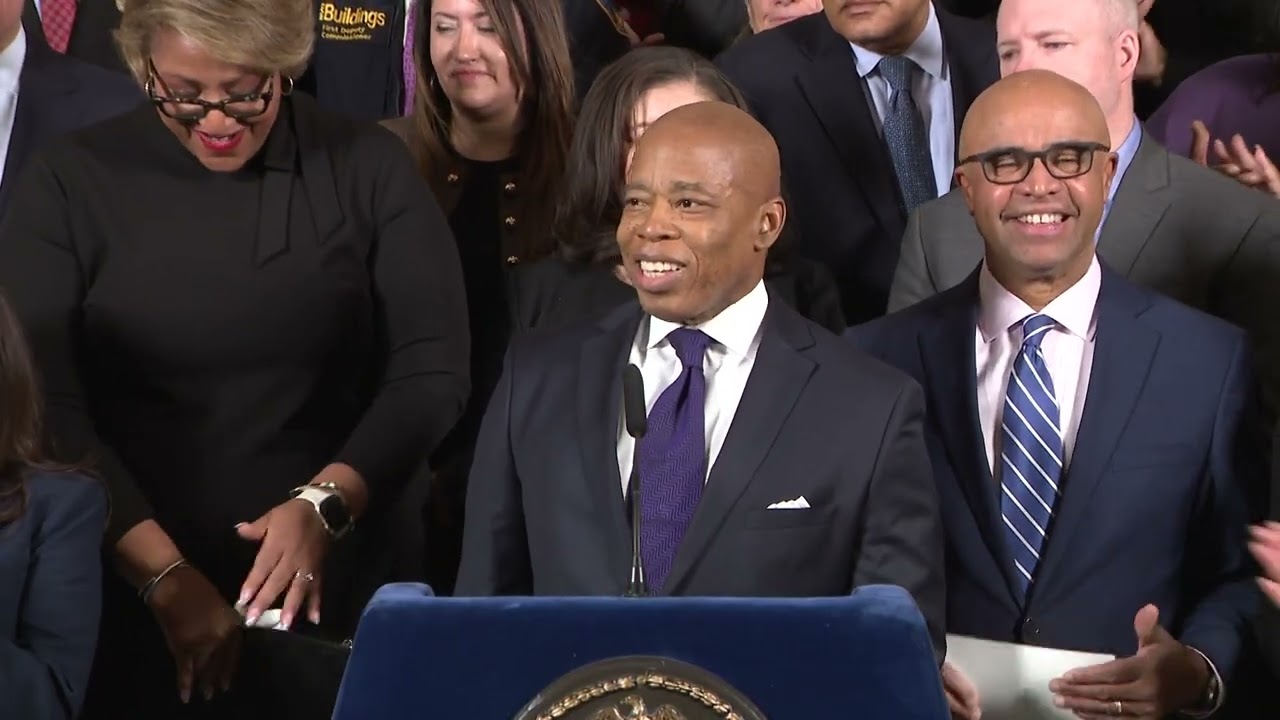
Mayor Adams Delivers End of Term Update on Initiatives Created to Support Working Class New Yorkers (Video)
Mayor Eric Adams Time Capsule Ceremony: “Working-Class Mayor,” 4-Year Record, and a City Built on “Yes”
The video opens with a spoken-word/rap-style introduction framing Eric Adams as a “working-class New Yorker” who overcame dyslexia, rejection, and arrest to become elected.
The core message is personal resilience turned into public mission: stay focused, avoid distractions, and keep grinding—because investing in education prevents cycles of incarceration and harm.The speech then runs through a highlight reel of claimed administration results over the last four years: putting $30 billion back into New Yorkers’ pockets, reaching record highs in jobs and small businesses, reducing unemployment (including in Black and Brown communities), eliminating city income taxes for some working-class families, wiping out medical debt for low-income residents, expanding Pre-K/3K and after-school access, moving more people from homelessness into permanent housing, and improving public safety by removing illegal guns, reducing shootings, lowering transit crime, and cracking down on illegal scooters/ghost cars and illegal cannabis shops. It also emphasizes major housing initiatives, especially “City of Yes,” with large-scale rezonings and long-term housing creation/preservation targets.
The second half centers on a City Hall “time capsule” event where senior officials place symbolic objects into the capsule to represent policy priorities—operations, public safety technology (including drones), migrant/asylum response, affordability, health and human services, and communications. Adams closes by arguing that the record should be judged in totality, that “the numbers don’t lie,” and that the administration leaves a stronger foundation for the next chapter of New York City.
Sources: NYC.gov official video , Midtown Tribune News
-
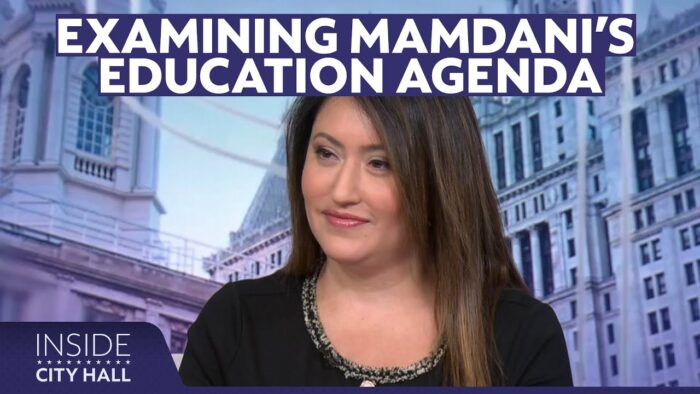
Schools Chancellor Melissa Aviles-Ramos talks future of NYC public schools | Inside City Hall
NY1 Interview: Schools Chancellor Melissa Avilés-Ramos on Staying Under Mayor-Elect Mamdani, Universal Child Care, and Closing NYC’s “Opportunity Gap”
In this NY1 segment, the host frames the looming transition at City Hall: Mayor-elect Alex Zoron Mamdani is expected to announce early appointments while also weighing whether to retain senior officials from the Adams administration. The focus then turns to NYC Schools Chancellor Melissa Avilés-Ramos, who signals she wants to remain in the role and says she has already met with the mayor-elect for what she describes as a wide-ranging conversation on education priorities.
Avilés-Ramos highlights a mix of safety, academic performance, and student support initiatives. She points to efforts aimed at boosting math and reading proficiency and emphasizes an initiative launched earlier in the year—“Every Child and Family is Known”—designed to better support students in temporary housing by strengthening connections to families and city resources. On universal child care, she draws a clear line between “daycare” and early childhood education and argues that community-based providers and caregivers should be supported and treated as educators who help prepare children for academic success from the earliest years.
On outcomes, she reframes the traditional “achievement gap” discussion as an “opportunity gap,” arguing that improved resources and consistent instructional supports drive score gains—citing noted growth among Black and Latino students even as proficiency rates remain under 50%. She credits standardized curriculum work under “NYC Reads” and “NYC Solves,” including a K-5 push to concentrate schools into one of three curricula to enable targeted, job-embedded coaching. The conversation also touches on compliance with the state class-size law, a proposal for paid apprenticeship-style pathways for new teachers, the impact of federal immigration enforcement on students and families (including “Project Open Arms”), and the rollout of cell-phone restrictions with flexible, school-by-school approaches. Avilés-Ramos closes by underscoring that she is “first and foremost a parent” in the system and wants to be an advocate for families.