
Month: December 2025

  • Governor Kathy Hochul Touts New York Classroom Cell Phone Ban, Youth Mental Health and NY Affordability on Fox 5’s “Good Day New York”

    Governor Kathy Hochul Touts New York Classroom Cell Phone Ban, Youth Mental Health and NY Affordability on Fox 5’s “Good Day New York”


    In an appearance on Fox 5’s “Good Day New York,” Governor Kathy Hochul highlighted early successes from New York’s statewide classroom cell phone ban, saying students are more engaged, talking to each other at lunch, and “being kids again” instead of fixating on screens. She framed the policy as a key step in addressing a youth mental health crisis driven by constant online bullying, toxic content, and addictive social media algorithms, noting New York’s efforts to restrict unsolicited harmful content to minors and warning parents about AI chatbots that mimic human relationships. Hochul also discussed her partnership with Mayor-elect Zohran Mamdani on housing affordability and child care, reiterated her opposition to raising personal income taxes while leaving other revenue options on the table, and strongly criticized federal threats to SNAP funding on privacy and moral grounds. Additionally, she defended investments in the MTA, including congestion pricing and safety measures that she says have boosted ridership and reduced traffic, and closed by sharing personal holiday traditions with her family.

    Rush Transcript: Governor Hochul is a Guest on Fox 5’s ‘Good Day New York’

    Governor Hochul: “We’re the largest state in America that went literally bell-to-bell… I have kids talking to each other during lunch now and making eye contact and playing games, they’re bringing board games to recess. I think this is fabulous. And so we’re letting kids be kids again.”

    Hochul: “With the cell phone ban, our kids are going to emerge as more well-adjusted, happier, more functioning adults when they go into the workplace because they’ll be used to working in collaborative settings instead of just staring at their phone all day.”

    Earlier today, Governor Kathy Hochul was a guest on FOX 5’s “Good Day New York.”

    AUDIO: The Governor’s remarks are available in audio form here.

    A rush transcript of the Governor’s remarks is available below:

    Curt Menefee, FOX 5: Well, New York’s statewide cell phone ban in classrooms is already showing positive results and making a big impact for students and teachers.

    Rosanna Scotto, FOX 5: There’s new data and it reveals 83 percent of schools that implemented the smartphone restrictions reported a better classroom environment as well as better student engagement.

    Joining us now with more on this and protecting students in this digital age is New York State Governor Kathy Hochul. Nice to have you back on Good Day.

    Governor Hochul: Thank you.

    Curt Menefee, FOX 5: Thank you for coming in.

    Rosanna Scotto, FOX 5: So what have you found out about the cell phone ban?

    Governor Hochul: Well, the results are what I expected, but I had to persuade the rest of the state. I have been traveling around for almost two years, gathering teenagers and having forums with parents and understanding that our kids are really in the throes of a mental health crisis.

    And you ask, why is this happening now? We know teenage years are always tough. We lived through that. But it really is the presence of a cell phone that all day long in school is taking you to a dark place. Or you’re being mocked or bullied by other kids. Or the girls are meeting in the restroom and they’re excluding you and you’re stressed out about that. Or they’re making plans for a party on a Friday. These are all the stories I heard. And I said, you know what? We have to do something.

    And I talked to school boards and superintendents and teachers, no one wanted to take it on because of the fear of the backlash from parents or students, and “we just want to teach, we don’t want to get in the middle of this.”

    And I said, “You know what? I’m a mom. I’m used to getting blamed for everything, blame me. I will take this on behalf of the kids of this state.”

    And I am so delighted about the cooperation we’ve had. We did a lot of training with our school districts, talked to teachers, talked to students. So literally, starting in September, this was a whole new game in classrooms.

    Rosanna Scotto, FOX 5: Yeah, we’re hearing, “My kids are actually talking to one another.” But also, Governor, you know about the studies, the studies with these kids with cell phones, they’re finding if they have them before they’re 12 years old, they’re depressed, they’re overweight, there’s so many things. Do you have more plans with the cell phone ban? What are you going to do next?

    Governor Hochul: Well, the ban was dramatic. We’re the largest state in America that went literally bell-to-bell. Some say you can use it during recess or during lunch. That defeats the purpose because I have kids talking to each other during lunch now and making eye contact and playing games, they’re bringing board games to recess. I think this is fabulous. And so we’re letting kids be kids again. So don’t underestimate the power of this. I think every state should do this, absolutely. But we’re also looking at the addictive algorithms that they’re being bombarded with from social media companies, and we’re the first state in the nation last year to ban this, to say that unless the parent’s consent, you cannot be sending all this unsolicited information to your kids.

    For example, a student looks up, “suicide.” They’re having dark thoughts. They want to look for a place that maybe gives them some advice. It’ll tell you how to commit suicide instead of giving you the relief you’re looking for, the support you’re looking for. So we have to protect our kids, number one job, and I’m committed to this all the way through. We’re going to have some new ideas in my State of the State, even those AI companions where kids think they’re dating somebody and getting emotionally involved with an AI [chatbot] —

    Curt Menefee, FOX 5: But they think they’re talking to a human because they’re kids.

    Governor Hochul: They think they’re talking to a human. And so, moms and dads, we’ve got to be aware of what’s going on. These threats were not there when we were growing up. So I’m going to continue educating, but also passing laws to protect.

    But with the cell phone ban, our kids are going to emerge as more well-adjusted, happier, more functioning adults when they go into the workplace because they’ll be used to working in collaborative settings instead of just staring at their phone all day. And I encourage parents, at the end of the day, to find other activities for their kids and do not be on your own cell phone during dinner because your kids are watching everything you do.

    Curt Menefee, FOX 5: Lots has been accomplished. Lots more still to be done, as you just said. This is the first chance we’ve had to talk to you since the election here of Zohran Mamdani. He’s the Mayor-elect right now. I know you congratulated him right after he won the election. Have you been in constant communication with him? Regular communication with him? You’ve talked to him, what do you talk about?

    Governor Hochul: Fairly regular. We’re talking about how we can work together to make New York City more affordable. This is what the majority of voters want to have happen when they put their faith in him.

    It is my job as Governor to make sure that whomever the Mayor is, they’re successful. I work closely with Eric Adams. I worked with Bill de Blasio during the time we overlapped. And I’m committed to making sure that we focus on the issues like building more housing to reduce the cost of rent. That we focus on child care — I already started universal child care in the State of New York. We’re on the path to get there. But what people need to realize is that you can’t just declare there’s universal child care. You have to have enough facilities. You have to have enough teachers and caregivers. And so we’ve worked on this over the last couple years to really position ourselves to take more steps together, and I know that’s a priority of the Mayoral-elect, and we can work on that together. So our conversation has been very positive just about the future of New York and what we’re going to do together.

    Curt Menefee, FOX 5: You endorsed him. You congratulated him. You talk about talking with him constantly. But you have some political differences, you’ve been public about that. He has talked about free buses, which you’re against. Universal child care, you explained a little bit right there. Do you discuss all of that before he takes office? Or is this something that he’s not going to get day one, but you will work with him down the road?

    Governor Hochul: No, of course. We’ve already had meetings. Our staffs are in constant communication because I want him to hit the ground running. But also, he understands this is a four-year term he has. There will be a rollout of some ideas, you have to build support for others. But also, just the everyday running of city government requires a lot of support from the state. We fund a lot of programs. He’ll be coming to Albany like all the Mayors do, asking for financial support and making sure that we continue investing in the subway system and safety there.

    And we’re seeing dramatic changes in the investments that I have made in supporting police overtime, so there’s more police officers visible, hundreds of millions of dollars to make sure that every train has a camera on it. And right now, we have had the safest few months in a row in recorded history on our subways. We want to keep that going. So I talked to him about public safety as well, keeping those investments, keeping rebuilding the police force and supporting our police officers because they’re out there protecting us every day.

    So I think there’s a lot of common ground, but where there’s differences, I have no trouble talking about them. We’ve had those conversations. Or the timing of some of the ideas, what we can actually afford now. And remember this, we’re taking a lot of financial hits from Washington, programs that had been funded by the federal government, they’re now putting on the backs of the states. So we have to step back and assess — okay, wait a minute. This is the federal government’s responsibility. This is why we pay federal taxes for programs like health care, support for hospitals, nutrition programs, but to the extent that they stop doing this, we have to have those conversations in our next Budget about what we’re going to do. So it’s a very fluid situation, but it’s very positive. I think people should know that. It’s a very positive conversation about what’s good for New York.

    Rosanna Scotto, FOX 5: Can we talk about taxes? Because obviously, New Yorkers are talking about that. I know at one point you said, “No new taxes,” but then I felt like there was room for taxes. Are we talking about taxes, personal or business in New York? I know next year’s also an election year for you.

    Governor Hochul: That’s independent, because I’ve focused on reducing taxes since I’ve been Governor. We expedited a middle class tax cut my first year in office. Then we instituted our own tax cut last year, the largest middle class tax rate cut in 70 years.

    Rosanna Scotto, FOX 5: But will we have new taxes?

    Governor Hochul: Well, I’m not raising income taxes because I believe that we want to make sure that New York is more affordable for everybody and I want people who are successful to keep creating the jobs and investing here. But we have to look at other revenue sources to fund — again, we’re dealing with a lot of hits from Washington.

    Rosanna Scotto, FOX 5: So would you raise business taxes then? Because Mr. Mamdani keeps saying New York doesn’t pay as much in business taxes as Jersey does, and that’s not true. Businesses pay a payroll tax. There’s plenty. You tax everything.

    Governor Hochul: We have other taxes as well. So I would just say this, the Budget process is unfolding. We’ll be working with the Legislators over the next couple months and we’ll find out how we can take off a bite of what we need to do — like what is doable in this upcoming year, in the following year.

    Rosanna Scotto, FOX 5: Would you veto a tax increase?

    Governor Hochul: I’m not raising income taxes.

    Rosanna Scotto, FOX 5: Personal. What about business?

    Governor Hochul: Anything else has to go into our Budget process. So we are not there yet. We don’t know what our needs are. I have to see. I have to look at the revenues coming in. We’re even going to look at how well we’re doing with the end-of-year stock market bonuses, the bonuses, we get tax revenues from those. So I don’t have a clear view of what the resources are coming in, the revenues, and manage that against the Trump cuts versus what our needs are. All will be told in due time, but we’re really focused on just delivering for New Yorkers the programs and the services they come to expect.

    Curt Menefee, FOX 5: You talked about cuts from Washington. Just yesterday, the Secretary of Agriculture said that they’re debating withholding some funds that would allow Democrat-run states to fund the SNAP program. You’ve obviously been against that. But what they’re saying in Washington is, we just want the roles of people that are on public assistance, you’ve been resistant about that. Several states have, by the way, more than 20. Why not just say, okay, here are the names of the recipients.

    Governor Hochul: Let me tell you what’s going on here. We actually went to court about this because people sign up for a particular program, not to have their name in a — think about it. Do you really want every bit of information about you in other parts of the government monitoring you and tracking what you do?

    This is a privacy issue as well. Even if you’re on SNAP and getting nutrition benefits, like 42 million Americans do. Does that mean that your privacy should be invaded now or that you should be giving out this information unrelated to this program? So we went to court. A judge in October said, Governors of these states, you are correct. You do not have to turn over this information, and they cannot withhold that money. Now to have a secretary in the Trump Administration basically saying, “We’re going to ignore a court order,” that is problematic. That is problematic. And that’s what we’re dealing with right now.

    Curt Menefee, FOX 5: What are your concerns other than just privacy?

    Governor Hochul: Privacy is a big one. Privacy is a big one. Now we are working on the fraud issues. It’s something we monitor at the state level. We don’t want anyone to abuse programs, but basically to end a program for everybody in the expectation you might find a few who are abusing it — don’t you care about everybody else who’s hungry?

    The Mayor-elect, Mamdani, told me that on Veteran’s Day he was sitting down with some veterans who had had a hard life. One of them said when the SNAP benefits stopped, he went to his refrigerator and it was empty. And that is a heartbreaking story to know that those who wear a uniform to keep us safe at night to defend our country and our values can’t count on a program to feed them. So that is just cruelty. They need to stop trying to find ways to hurt Americans, make them go hungry, and work with us. We’ll work with you to fight fraud, of course, we do that already. But I think there’s just this base feeling that these are programs that no one needs and we should eliminate them to save money. And what do they do with that money? That helps fund tax breaks for millionaires and billionaires, and that’s exactly what’s going on.

    Rosanna Scotto, FOX 5: Can we talk about the MTA? They’re close to balancing the budget. But it does seem like it’s a big abyss with the MTA and they’re depending on the casino licenses. They’re going to make, what, a billion and a half from the just upfront casino licenses? Is that going to be enough for the MTA?

    Governor Hochul: We have found sustainable sources of revenues for the MTA.

    Rosanna Scotto, FOX 5: So does that mean they’re not going to raise fares anymore?

    Governor Hochul: I think that — very incremental. You see some other states, they keep it very low and all of a sudden it goes up dollars, if it goes up a dime or nickel here and there, that is what happens in the normal course of business to cover escalating costs. Look at the tariffs for having to pay extra for everything. Even supplies that we used to manufacture our train cars from Canada. Like we’re spending more because of the Trump tariffs on something like that. So we have to make adjustments for that. But I don’t want to see any increases that people are going to think are significant at all. It’s just incremental.

    So we have the MTA on a path to sustainability. It was going off the cliff when I first became Governor. Nobody was making the proper investment. I stepped in and said, “I will support at the state level. You have to find savings.” I put that on the MTA, “You have to find savings or I’m not going to keep funding this.” And we did.

    And also congestion pricing. I know your favorite topic, is another —

    Rosanna Scotto, FOX 5: Governor, I’ve come to think that, okay, maybe it’s okay. We’re funding the MTA. It hasn’t really helped with congestion, but —

    Governor Hochul: No, it has. No, traffic, there’s 20 million fewer cars that went into that zone since last January.

    Rosanna Scotto, FOX 5: Go in there now.

    Governor Hochul: And that’s down. It would’ve been worse. It’s down 10 percent, right?

    Curt Menefee, FOX 5: Doesn’t get rid of all traffic. It just reduces traffic —

    Governor Hochul: And ridership on the subways and the buses is up 11 percent. So you’re getting what we’re looking for, that adjustment in behavior plus the revenue.

    Curt Menefee, FOX 5: We can talk to you forever. Your staff told us you have a hard time out here.

    Rosanna Scotto, FOX 5: I know, but wait, can we just so you have, go find out what the Governor’s going to do for the holidays?

    Governor Hochul: Yes. Yes. My house is being decorated right now. My sister who’s very good at this. She brought up some of her decorations. We’re decorating. I’ll be having grandchildren over, a little three-year-old and a four-month-old. And so I’ll be out shopping for some real pretty dresses for them and playing.

    Rosanna Scotto, FOX 5: Is there a traditional meal in the Hochul house?

    Governor Hochul: Usually it has some beef tenderloin and I’m all about pies. I’ve still been eating leftover pumpkin pie for days. I can’t — I inhale pumpkin pies.

    Rosanna Scotto, FOX 5: That could be a problem.

    Governor Hochul: I’ll make sure I have fresh pies for that. But it’s great to see the fa

    Sources: NY.gov , Midtown Tribune news
    Big New York news BigNY.com

    Midtown Tribune Independent USA news from New York

  • Mayor Eric Adams Urges Americans to Stand Together Against Antisemitism at 2025 Mayors Summit

    Mayor Eric Adams Urges Americans to Stand Together Against Antisemitism at 2025 Mayors Summit

    At CAM’s 2025 North American Mayors Summit Against Antisemitism, Mayor Eric Adams gave a powerful speech asking people to stop “outrunning the lion” of hate and instead work together to remove it from our communities. He said that while many groups face hate and injustice, this moment is focused on fighting antisemitism, especially in New York City where Jews are a small part of the population but suffer more than half of all hate crimes. Adams urged everyone—teachers, faith leaders, and community organizations—to “play their position” by pushing back against antisemitism, misinformation, and the radicalization of young people. He announced an executive order against BDS and confirmed that New York City will keep investing pension funds in Israeli companies. Adams also reminded people of the long history of Jewish support for Black civil rights and called on Jewish communities to stand proudly and openly as Jews. He ended by saying he is willing to “leave everything on the ice” in the fight against hate and asked everyone to “lace up their skates” and join him.

    New York Adams forum against antisemitism 2025

    Transcript: Mayor Adams Delivers Remarks at CAM’s 2025 North American Mayors Summit Against Antisemitism Closing Gala Dinner

    Mayor Eric Adams: Thank you so much, mayor. Throughout this afternoon, you shared something that resonated with me, and I’m hoping people didn’t miss it. A good friend of mine, Rabbi Potasnik, told me a joke about two lions. Two hunters in a jungle, hunting for big game, they came up against a lion. One hunter looked at the other and said, “Let’s run, let’s get out of here.” The other hunter replied, “What’s wrong with you, we can’t outrun a lion.” The hunter replied, “I don’t have to outrun the lion, I have to outrun you.” 

    And when Rabbi Potasnik told me the story, I laughed, and he had this look on his face. He said, “That’s the problem. We’re trying to outrun each other.” Yes, the lion of foreclosure took your home, but I have my home, I outran that lion. The lion of crime may have taken your child, but I outran that lion. The lion of poverty, the lion of domestic violence, the lion of hatred. As long as I outrun that lion, I’m alright. 

    But what the hunter did not understand is, that if you don’t take the lion out of the jungle after he devours one hunter, he’s going to devour you. You were so right. The goal is not to outrun each other. The goal is to remove the lion of hatred from our community. That’s the goal. 

    If you go back to what Lyndon B. Johnson did in 1964 when he signed the Civil Rights Act, there were Jewish brothers and sisters that didn’t say, “Well, that had nothing to do with me.” When you look in 2013 and the Black Lives Matter movement took place after we saw the devastation, murder of a young man in Florida, and people used to say to Black folks who said Black lives matter, they said, well, all lives matter. Well, right now we’re not talking about all lives, we’re talking about Black lives. 

    And so, when we come to a conference and talk about combating antisemitism, don’t start telling me about other issues. Right now, we’re talking about antisemitism. And talking about a specific incident during a time does not dismiss the other incidents. Yes, we know we have other issues, but right now the focus is on antisemitism. That’s what it’s on. 

    And we can engage in other conversations. I’m going to continue to lift up my Asian brothers and sisters that are dealing with Asian violence. I’m going to continue to lift up the overproliferation of abuse in young African American males and the incarceration of them. I’m going to continue to lift up what’s happening with men and women of the LGBTQ+ community. We’re going to continue to do that. 

    But right now we’re in this stadium talking about antisemitism. And we need to be focused on what is happening, particularly in New York City, where you have a numerical minority of the community from the Jewish community and over 50 percent of the victims are Jewish people of hate crimes. That’s a real issue. And what we must focus on is to be laser focused on that. Because when we marry talking about this issue and bridging it with the other issues that we’re facing, we will raise the standard of who we are as human beings. 

    But how do we do it? That’s why I grabbed the football. This is a team sport, folks. If I’m the quarterback, you should not be the running back standing behind the center. Get your ass out of the way. Each player, play your position. We all got to play our positions. 

    If you are a teacher, you need to be in our public school system pushing back on the radicalization of our young people who not only hate Israel, they hate America because they were taught to hate America. That’s what we saw on the Columbia campus when the protests took place. We saw flyers that said hatred for Israel and hatred for America. Now, I don’t know who’s in this room, but I think you are Americans, right? 

    So, my educators must play their role. My faith-based leaders, play your position. You’re not the mayor. Be the rabbi, be the preacher, be the monk, be a Sikh leader. Play your position. And to my organizations, play your positions. Play your roles. And stand outside your comfort zones. Because if all we do all the time is speak to the same people, the choir heard the song, folks. It’s time to sing to those who are singing off-key so they can learn the lyrics and chorus of ending hate in our city and in our country. 

    And then let’s be honest with ourselves. Folks have been hating Jews for a long time. Our Jewish brothers and sisters have been fleeing and running from the days of Moses to when Columbus left Spain and Jews had to get out because of the edict, to being in Rome and watching the Jewish quarter. You can go over and over and over again to see how Jewish people have fled and ran from particular places. 

    And I’m saying to my Jewish brothers and sisters, your legacy in this generation is to say we run no more. We stand and fight. We don’t live in fear hoping that it goes away. We don’t allow certain groups to take to the streets and determine that you should be eradicated. And you’re sitting back contemplating what block you take off your yarmulke or what morning you remove your star of David. If you want to win this fight, then you need to stand up, stand firm, and say, “I am Jewish and there’s not a darn thing you can do about it.” 

    And you need to be strong in your faith and your belief. And people should see it in your presence and in your posture and in your stance. And that’s what we must do as a team. And then you need to lift up those who stand with you and let them know you support them. Because many of these mayors in this room will lose their races because they’re standing tall with you and not with the numerical loud minority that have hijacked the narrative. 

    They will be targeted, they will be focused, and they will go after them one at a time. That’s the hate that has swept our entire country and globe. You are being targeted. And we have to be as intelligent and as focused, as strategic as possible. That’s why we put the IHRA definition in place in New York City. 

    That’s why I am signing an executive order today to deal with BDS so we can stop the madness that we should not invest in Israel. That is why we’re going to sign an executive order stating that our pension funds will invest in Israeli companies because we’re getting a high return on our investment because they’re doing the right thing. 

    But Israel and Jews must tell their story. When I talk about ending antisemitism, you know what I talk about to that young African American man that’s in Brownsville? I tell him about the device that was discovered in Israel that helped his mother deal with a medical condition that she’s facing. 

    When I talk about ending hatred, you go look at who has the highest number of Nobel Peace Prize winners. Go look at the technology that’s coming out of Israel today because of the partnership that we have with New York City and Israel that is saving the lives of people from communities across the globe. 

    So, when you eradicate Israel and when you put them on an island and don’t allow their companies to go to trade shows and don’t allow their companies to participate in innovation, it is impacting us directly because it impacts us every day and the health and welfare of our communities. That’s what we have to do today. Don’t just talk about stopping antisemitism because it stops attacks on Jewish people. Stop antisemitism because we are all connected together and we’re all involved in this together. 

    I was sitting in a restaurant, as I conclude. It must have been October 10th. I’m sitting down at the table having a meal and a young African American woman walked in with a Howard University shirt on. She looked at me and said, “You’re one of those Zionist lovers. We know what you’re about. I just came from the march. We know what you are about.” 

    And while she’s saying that, I’m on my phone. I’m Googling Howard University. And I handed her my phone. And she looked at the founder of Howard University, Julius Rosenwald. And I told her, “Read on.” And she read on and she looked at the fact that almost 40 percent of the children in the Deep South were educated in schools that he opened, a Jewish philanthropist. 

    When segregation was the norm in the Deep South, he was opening schools so Black and Brown children could go to school and become teachers and educators to go into the Black and Brown communities and deal with segregation. And I said, “Read on.” And she saw how he was one of the original co-founders of the NAACP. 

    And I said, let’s go talk about the two Jewish young men who were down in Mississippi and lost their lives. But let’s not stop there. Let’s talk about when young white students went to the Deep South, 51 percent of them were Jewish, putting their lives on the line. And so yes, call me a Zionist. But what you can’t call me is mis-educated. And if you are going to denounce what gave birth to the college that you’re in right now, then they’re not educating you. 

    So, the next time you go in the street to celebrate October 7th, buy a plane ticket and go see what happened there. The next time you believe that you should eradicate from the river to the sea, first know where on the map you’re talking about. The next time you want to align yourself with groups who are proliferating hatred and talking about genocide, go look at what’s happening in Sudan and the thousands of lives that are being lost. 

    Lift up your educational understanding so you can properly fight a fight on the right side of the issue. That’s where we are missing this. They have indoctrinated and radicalized our children in the social media generation that is taking them down the road of devastation, of not knowing who their allies and brothers and sisters have historically been. 

    And you’re right, mayor. You are our cousins. You marched with us for Dr. King. You committed and volunteered your lives throughout the generations to stand side by side. But now your story can no longer be a tree that falls in a forest where no one hears a sound. It’s time for you to tell your story. Because if you don’t tell your story, people will distort your story. 

    So, I’m going to play my position. I may not be the best at it, but I’m going to do everything possible. We had a hockey player called Wayne Gretzky. They called him the ‘Great One.’ I loved his story. Wayne lost his first Stanley Cup. That’s a championship for hockey players. And he went into his locker room and all his teammates were pointing the finger at each other. “Who missed the puck? Who didn’t do their job?” 

    And then Wayne, being the gentleman that he is, walked down the hall to the opposing team’s locker room. It was quiet. He thought they went home. He peeked his head inside. They were laid out on the benches, bloody and bruised. They left everything they had on the ice. He knew then, that’s how you win. 

    And I don’t know what’s going to happen in the future. But I’m going to fight hate. And I’m going to be battered, I’m going to be bruised. I’m going to leave everything I have on the ice. And all I’m asking all of you, lace up your skates and get on this ice with me. And let’s win. 

    December 3, 2025 Manhattan, New York

    Sources: NYC.gov , Big New York news BigNY.com
    Midtown Tribune News

    Midtown Tribune Independent USA news from New York

  • White Home. Trump Ends Biden CAFE and EV Rules, Promises Cheaper Gas Cars and More U.S. Auto Jobs

    White Home. Trump Ends Biden CAFE and EV Rules, Promises Cheaper Gas Cars and More U.S. Auto Jobs

    President Trump, speaking at the White House on December 3, 2025, announced the termination of President Biden’s fuel economy (CAFE) standards and related electric vehicle mandates. He argued these rules were “burdensome” and “ridiculously expensive,” blaming them for driving up car prices by more than 25% and forcing automakers into costly technologies and carbon credit trading. Trump said his new rules will cancel EPA tailpipe emissions standards, revoke California’s stricter waiver, and restore automakers’ ability to build more gasoline-powered vehicles alongside hybrids and EVs, with the administration estimating at least $1,000 in savings per new vehicle for consumers.

    Transportation Secretary Shan Duffy and leaders from Ford, Stellantis, and General Motors backed the policy shift during the event, saying it aligns regulations with actual consumer demand and will support more investment and production in the U.S. They highlighted multibillion-dollar commitments to expand American plants, create thousands of jobs, and build a wider range of affordable vehicles, including very small, fuel-efficient cars that Trump said he has now authorized for U.S. production. Several lawmakers and auto dealers also praised the repeal, emphasizing consumer choice, lower prices, and the ability of small businesses to benefit from tax provisions such as full expensing and interest deductibility on vehicle loans.

    Beyond auto policy, Trump used the announcement to promote his broader economic agenda and address other issues raised by reporters. He credited tariffs with driving trillions of dollars in investment, claimed sharp increases in U.S. auto production, and said inflation and gasoline prices are now falling. In a wide-ranging Q&A, he commented on Ukraine peace efforts, drug interdiction at sea, Venezuela, investigations by Special Counsel Jack Smith, and immigration, including strongly critical remarks about Somali immigrants and Minnesota politics. He framed the rollback of CAFE and EV rules as part of a larger “affordability” and “jobs” push that he says distinguishes his administration from Biden’s policies.

    Sources : WH.gov , Midtiwn Tribune news

    Midtown Tribune Independent USA news from New York

  • Why Gen Z Is Renting Everything From Clothes to Strollers Instead of Owning (Video)

    Why Gen Z Is Renting Everything From Clothes to Strollers Instead of Owning (Video)

    Gen Z is driving a major shift away from traditional ownership and toward a rental-first lifestyle, according to a Fox Business discussion on the growing “rental boom.” Young consumers are now renting everything from clothes and kids’ strollers to glassware, treating access as more important than possession. What older generations might see as a financial red flag, many Gen Zers now see as a smart, flexible way to live—one that allows them to enjoy variety and convenience without long-term commitment or big upfront costs.

    USA news Z Rental Boom

    The panel highlighted that this rental trend has both lifestyle and environmental benefits. Renting fashion and children’s toys, for example, keeps items in circulation longer and reduces waste compared to fast fashion that ends up in landfills after just a few wears. At the same time, there’s still tension between the pride and responsibility that comes with owning assets and the ease of simply renting what you need, when you need it. The guests cautioned against calling things like clothes or shoes “assets,” noting that most people don’t recoup much value when they try to resell them.

    Technology is the backbone of this new rental economy. Subscription platforms and apps now make it easy to rent clothes, accessories, and even household items on demand, in much the same way services like Uber and Airbnb reshaped transportation and travel. Companies such as Nuuly, FashionPass, and rental programs by major brands leverage cloud-based technology to manage inventory, logistics, and customer preferences at scale. The result is a fast-growing business model where Gen Z can constantly refresh their lifestyle—wardrobes, baby gear, and more—without needing to own it all.

    Sources: Midtown Tribune news , Video Fox Business

    Midtown Tribune Independent USA news from New York

  • Governor Hochul Launches Second $50 Million County Infrastructure Grant to Support Housing and Local Growth in New York

    Governor Hochul Launches Second $50 Million County Infrastructure Grant to Support Housing and Local Growth in New York

    Governor Kathy Hochul has opened a second round of the County Infrastructure Grant Program, adding another $50 million to help New York counties upgrade local infrastructure and support more housing, tourism, and community projects. Counties can apply now through April 1, 2026, with grants of up to $1 million for projects that create at least 10 new homes and up to $500,000 for smaller or non-housing projects. The program, run by Empire State Development, builds on a first round that funded 49 projects and more than 2,750 new homes, giving local governments the resources they need to fix aging systems, attract new residents and visitors, and create stronger, more vibrant neighborhoods across the state.

    Governor Hochul Announces Additional $50 Million for Second Round of County Infrastructure Grant Program

    Applications Now Open for County-Led Infrastructure Projects that Encourage Housing Growth, Placemaking and Tourism . Applications Due April 1, 2026

    Governor Kathy Hochul today announced a second round of the County Infrastructure Grant Program, which will provide an additional $50 million to support small- and medium-sized county-led infrastructure projects. Modern infrastructure is fundamental to New York State’s economic vitality. By supporting small- and medium-scale projects, the state can maintain its competitiveness, generate additional economic growth and continue to advance Governor Kathy Hochul’s bold housing agenda. Applications will be accepted now through April 1, 2026. Empire State Development (ESD) requires submitting a Letter of Intent (LOI) prior to filing a final application. Links to the LOI and application are available here.

    “Coming from local government, I know firsthand how funding for local infrastructure projects can change a community — uplifting residents and providing those communities with a sense of purpose,” Governor Hochul said. “When counties are offered assistance to build more infrastructure, it gives these communities the opportunity to attract more visitors and spur housing development for generations to come.”

    Empire State Development President, CEO & Commissioner Hope Knight said, “Growing the state’s housing stock is not just a priority; it is a structural pillar of Governor Hochul’s administration and the essential catalyst for robust, sustainable economic growth. With another round of the County Infrastructure Grant Program, we are making a targeted investment that will provide critical housing stability for New Yorkers. This simultaneous effort will enhance the sense of place and vitality across our communities, creating the groundwork necessary to cultivate new jobs, attract new residents, and welcome visitors.”

    New York State Housing and Community Renewal Commissioner RuthAnne Visnauskas said, “With this second round of funding, Governor Hochul is building on the millions already invested to strengthen local infrastructure and unlock more than 2,700 housing opportunities across New York. The additional $50 million will pave the way for more homes, ensuring that counties have the tools they need to grow sustainably. By investing in the foundations of our communities, we are not only expanding the supply of housing, but also fueling economic vitality, supporting tourism, and creating vibrant neighborhoods where families can thrive. We are proud to continue partnering with counties throughout New York to turn these investments into lasting results.”

    New York State Association of Counties President Phil Church said, “This innovative grant program provides vital resources that empower counties to strengthen local communities — addressing critical housing needs while upgrading aging water and wastewater systems. The New York State Association of Counties applauds Governor Kathy Hochul, the State Legislature, and Empire State Development President & CEO Hope Knight for their leadership and continued investment in county infrastructure. These partnerships between state and local governments are essential to building vibrant, resilient communities across every region of New York. With this second round of funding totaling $100 M, counties have new opportunities to deliver projects that improve quality of life and lay the foundation for sustainable growth statewide.”

    State Senator Sean M. Ryan said, “Strong communities are built on reliable, modern infrastructure, and counties across New York have no shortage of worthy projects that just need the resources to move forward. This program gives local governments the support they need to upgrade aging systems, attract new housing, and lay the groundwork for long-term economic growth. I’m grateful to Governor Hochul and Empire State Development for continuing to invest in the growth of our communities.”

    Assemblymember Al Stirpe said, “One of the biggest obstacles to economic development in New York State is housing — and a substantial amount of it for New Yorkers to live and work where they want to. The second round of the County Infrastructure Grant Program takes the housing crisis head-on, building on the success of its initial round to encourage additional housing, placemaking, and tourism in virtually every corner of the state. Small-scale infrastructure projects lacking the capital to get off the ground will get the chance to lift off and go from idea to implementation. This is an exciting opportunity to continue modernizing our neighborhoods and maintaining New York’s economic competitiveness, benefitting both residents and tourists alike.”

    An informational webinar will be held on Thursday, December 18 at 11:30 a.m. More information will be posted on the County Infrastructure Grant Program website.

    The County Infrastructure Grant Program was established to assist counties in developing infrastructure to better meet the needs of New Yorkers. The original $50 million program was included in the State’s FY 2025 Enacted Budget, with an additional $50 million included in the FY 2026 Enacted Budget. Grants of up to $1 million are awarded to priority projects that propose the creation of 10 or more housing units. Projects fewer than 10 housing units, or no housing creation, can receive up to $500,000. Projects are identified by the county and must support economic development, contribute to placemaking or encourage tourism. In July 2025, Governor Hochul announced that more than $37 million was awarded to 49 projects, supporting the construction of over 2,750 new homes, through the first round of the program.

    More information on the program, including how to apply, is on the Empire State Development website. Applications will be accepted on an ongoing basis through the Consolidated Funding Application portal.

    About Empire State Development

    December 2, 2025

    Albany, NY

    Sources: NY.gov , Big New York news BigNY.com
    Midtown Tribune news

    Midtown Tribune Independent USA news from New York

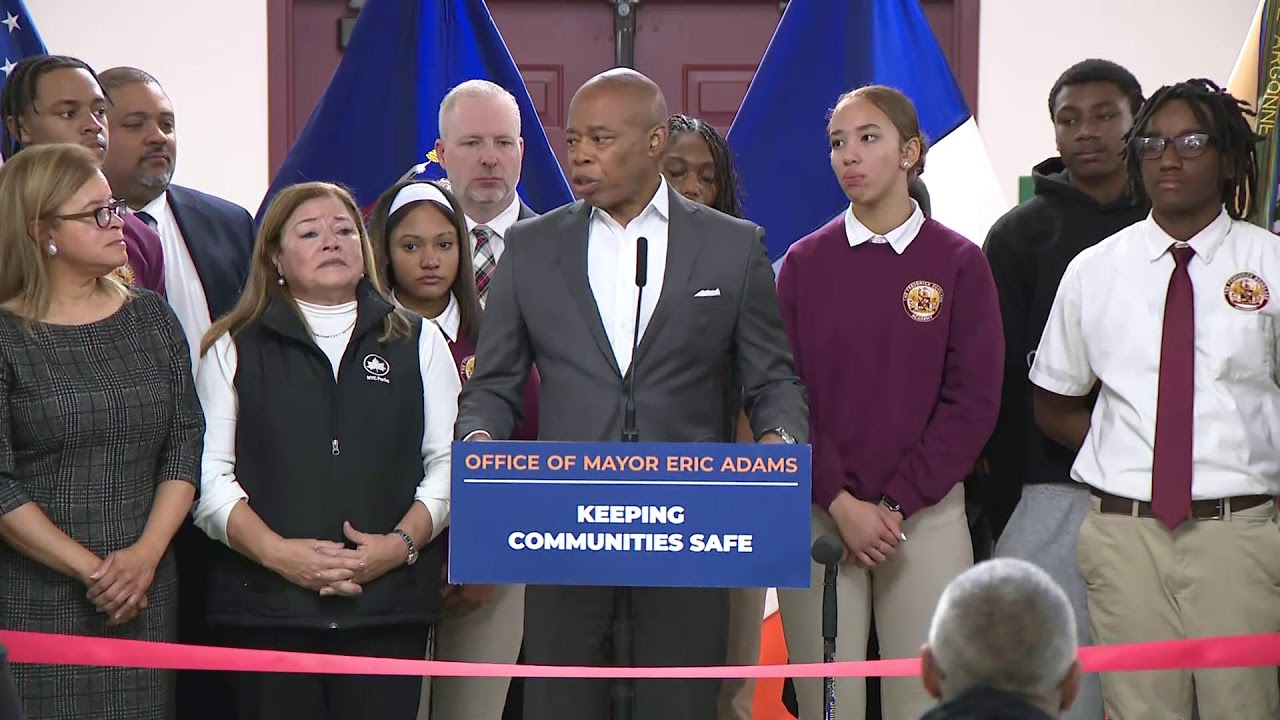
  • Mayor Adams, CC Sabathia Unveil $11 Million “Harlem Field of Dreams” Public-Private Investment at Charles Young Playground (Video)

    Mayor Adams, CC Sabathia Unveil $11 Million “Harlem Field of Dreams” Public-Private Investment at Charles Young Playground (Video)

    New York City Mayor Eric Adams and New York Yankees All-Star CC Sabathia have opened the $11 million “Harlem Field of Dreams,” a 150,000-square-foot multi-sport synthetic turf complex at Brigadier General Charles Young Playground in Harlem, representing a high-impact public-private investment in urban infrastructure and youth development. Funded through approximately $7.5 million in law enforcement asset forfeiture dollars, complemented by contributions from the PitCCh In Foundation, Major League Baseball and the MLBPA Youth Development Fund, the NFL Foundation Grassroots Program, the Cal Ripken Sr. Foundation, the Manhattan Borough President, and the New York City Council, the project advances the Adams administration’s strategic priorities around public safety, community engagement, and equitable access to quality recreational assets. The upgraded facility, coupled with free “Saturday Night Lights” youth programming, is designed to reduce crime risk factors, strengthen community–law enforcement relationships, and enhance long-term social and economic outcomes for Harlem residents, while honoring the legacy of Brigadier General Charles Young and the historic “Harlem Hellfighters” regiment.

    Mayor Adams, Yankees All-Star CC Sabathia Open $11 Million “Harlem Field of Dreams” Renovated Athletic Field at Historic Harlem Brigadier General Charles Young Playground

    https://youtube.com/watch?v=47GNAorHcSA%3Ffeature%3Doembed

    – New York City Mayor Eric Adams was today joined by New York City Department of Parks and Recreation (NYC Parks) Commissioner Iris Rodriguez-Rosa, New York Yankees All-Star CC Sabathia, and members of the Harlem community to celebrate the $9 million transformation of a dilapidated dirt field at Brigadier General Charles Young Playground in Harlem into a state-of-the-art 150,000 square foot multi-sport synthetic turf field, also known as the “Harlem Field of Dreams.” The plan for the now completed project was first announced in Mayor Adams’ 2025 State of the City address earlier this year.

    This revitalization project is a key component of a collaborative policing strategy led by the Adams administration, city agencies, and local community-based organizations aimed at transforming the relationship between communities and law enforcement. It builds on the administration’s upstream approach to public safety in New York City, which invests in free programming to keep young people safe and engaged when not in school. By focusing on youth development and violence prevention initiatives, the Adams administration continues to invest in a safer and more connected future for everyone — already contributing to a significant reduction in major crimes across the five boroughs, especially in shootings and homicides.

    “If you build it, they will come, and today, we are announcing the completion of the ‘Harlem Field of Dreams’ as we make children’s dreams come true,” said Mayor Adams. “This $11 million project not only fulfills another one of our State of the City commitments by transforming a once-dilapidated field into a vibrant and enriching space where more than 800 young people can play baseball, football, soccer, and lacrosse, but also upholds our promise to making the smart, upstream investments that prevent crime in the first place. Today, we are giving hundreds of families both a safe place to send their children and an outside space for them to grow in as we continue to make New York City the best place to raise a family.”

    “Today, we are proud to officially open the newly renovated athletic field at Brigadier General Charles Young Playground. The ‘Harlem Field of Dreams’ is now a reality — a space where Harlem’s young people and families can come together, play, and thrive,” said NYC Parks Commissioner Rodriguez-Rosa. “With a new synthetic turf field that supports multiple sports and expanded community programming, we are not only providing state-of-the-art facilities, but also creating lasting opportunities for health, connection, and growth. By honoring the legacy of Brigadier General Charles Young, this field will continue to inspire future generations for years to come.”

    “Giving back has always been at the heart of everything I do,” said CC Sabathia, founder, PitCCh In Foundation. Through the PitCCh In Foundation, we’re proud to support spaces that empower young people to dream, grow, and thrive. This field represents opportunity, resilience, and community—values that shaped me growing up and continue to inspire me today. New York has become my second home, and I’m honored to help build brighter futures right here.”   

    The newly renovated athletic field at Brigadier General Charles Young Playground now accommodates five sports — baseball, softball, soccer, football, and lacrosse. The upgrades to the park include improved drainage and water detention, a new synthetic turf surface, drinking fountains, fencing, backstops, benches, dugouts, and a sports mister.

    The $11 million project was funded through approximately $7.5 million in law enforcement asset forfeiture funds from the New York /New Jersey High Intensity Drug Trafficking Area program, in partnership with the New York City Police Department and the New York City Police Foundation, along with contributions from former New York Yankees pitcher CC Sabathia’s PitCCh In FoundationMajor League Baseball and the Major League Baseball Players’ Association Youth Development Fund, the NFL Foundation Grassroots Program , the Cal Ripken Sr. Foundation, the Manhattan Borough President’s Office, and the New York City Council.

    The renovation builds on earlier improvements made by the Adams administration in 2023, including new asphalt and fencing for the main basketball court, repairs and new coatings for three basketball courts, and the conversion of one court into a soccer pitch. The field house bathrooms are also set to be upgraded with $2.5 million in funding provided by the Mayor’s Office, the City Council, and the Manhattan Borough President’s Office.

    In addition to the capital improvements, free youth sports programming will be offered on the new field through the New York City Department of Youth and Community Development’s Saturday Night Lights program. This initiative gives young people safe spaces to play, while building trust between law enforcement and communities — helping youth develop skills and relationships that will support their future success.

    The project reflects the Adams administration’s holistic approach to public safety, which begins with investing in programs and opportunities that keep young people safe and engaged. Last year, Mayor Adams announced the city’s first indoor baseball center in Washington Heights to provide year-round training, launched a new Saturday Night Lights website to better connect families with free sports programming, and pledged $163 million over five years to expand some of the city’s most successful youth programs in his State of the City address earlier this year. Mayor Adams also committed to opening more schoolyards in underserved neighborhoods for after-school, weekend, and summer use — ensuring that thousands more New Yorkers are within a 10-minute walk of safe, supportive spaces to play.

    About Brigadier General Charles Young:

    General Charles Young was born into slavery on a Kentucky plantation in 1864. A year later, his family escaped and settled in the abolitionist town of Ripley, Ohio. Young went on to become the third Black graduate of the United States Military Academy at West Point and served over 30 years in the U.S. Army. His career included historic appointments as the first Black national park superintendent, the first Black military attaché, and the first African American to reach the rank of colonel, making him the highest-ranking Black officer in the Army until his death in 1922.

    In 1917, the U.S. Department of War forcibly “medically retired” Young, halting his promotion to general in response to resistance from white officers. To demonstrate his fitness for duty, the 53-year-old Young undertook a 497-mile horseback ride from his home in Ohio to Washington, D.C., though his appeal was unsuccessful. In 2022 — 100 years after his death — Charles Young was posthumously promoted to Brigadier General by the U.S. Department of Justice, recognizing his exemplary service and contributions to breaking racial barriers.

    The Brigadier General Charles Young Playground in Nort Central Harlem is located just north of the 369th Regiment Armory, home to the “Harlem Hellfighters,” an African American regiment that saw more combat than any other unit during World War I and was one of the most decorated in the Army. The playground and landmarked armory together celebrate African American military heritage.

    “Local Initiative Support Corporation’s partnership with the NFL Foundation and the New York Jets is devoted to increasing the quality, safety and accessibility of fields and play spaces. The Brigadier General Charles Young Park is essential to the health and sustainability of youth and families in the Harlem community,” said Beverly Smith, vice president, sports and youth development, Local Initiative Support Corporation. “For more than 25 years, our partnership with the NFL Foundation has resulted in over 450 new and improved recreation facilities across the country that are serving generations of neighborhood youth and communities.”

    “Brigadier General Charles Young Field holds extra significance as it is the 125th Youth Development Park opened by the Cal Ripken, Sr. Foundation across the country,” said Cal Ripken, Jr., vice chairman, Cal Ripken Sr. Foundation. “I cannot believe how much of an impact the foundation named for our father has made. This is only accomplished through relationships with other organizations that share a passion for helping kids. Thank you to the Manhattan District Attorney’s Office, the New York City Department of Parks and Recreation, and the Parks Capital team for making sure that this field was not only built but will continue to be a resource for New Yorkers in the years ahead.”

     “When we invest in our young people, we invest in a safer future for all New Yorkers,” said Manhattan District Attorney Alvin Bragg. “I am proud to celebrate the culmination of this years-long effort to make Brigadier General Charles Young Field a place where young New Yorkers can play sports, make friends, and be mentored by caring adults in a safe and beautiful space. My office was proud to contribute to this renovation and to work alongside the many public servants and Harlem leaders that made today a reality.” 

    December 2, 2025 Manhattan, New York

    Sources: NYC.gov , Big New York news BigNY.com
    Midtown Tribune news

    Midtown Tribune Independent USA news from New York

  • Donald Trump and Venezuela: ‘Pinpoint Attacks’ on Drug Boats and Possible Ground Strikes

    Donald Trump and Venezuela: ‘Pinpoint Attacks’ on Drug Boats and Possible Ground Strikes

    In this segment, President Trump reaffirms his support for U.S. strikes on alleged drug trafficking boats and pointedly leaves the door open for potential land operations in Venezuela. He highlights that, in his view, more than 90% of narcotics arriving by sea have been stopped and frames the maritime campaign as a series of “pinpoint attacks” that are “saving hundreds of thousands of lives.” The messaging clearly positions these actions as part of a broader strategy to increase pressure on Nicolás Maduro’s regime and to treat the narcotics flow as a direct national security threat.

    The report then focuses on the controversy surrounding a two-strike incident on a suspected drug vessel in September. Defense Secretary Pete Hegseth states he watched only the first strike live before leaving the room, after which operational control rested with Admiral Frank Bradley. According to U.S. officials cited by Fox News, Bradley authorized the second strike to fully sink the vessel, arguing it could have posed a threat to other ships or allowed survivors to call for armed backup. Hegseth references the “fog of war,” noting that fire, explosions, and smoke made it impossible to clearly see survivors in real time.

    Finally, the piece highlights the growing political and legal scrutiny in Washington. Both Democrats and some Republicans are questioning whether the second strike could qualify as a war crime under international law and U.S. rules of engagement. Lawmakers on the House and Senate Armed Services Committees are expected to press Admiral Bradley for detailed explanations in upcoming briefings. As a result, the Venezuela pressure campaign and anti-drug operations in the Caribbean are becoming not only a foreign and security policy issue, but also a test case for how far U.S. military force can be used in counter-narcotics missions without crossing legal and ethical red lines.

    Midtown Tribune Independent USA news from New York

  • Reuters NEXT New York: Global Leaders Converge to Debate the World’s Most Urgent Questions

    Reuters NEXT New York: Global Leaders Converge to Debate the World’s Most Urgent Questions

    Reuters NEXT New York 2025

    New York, December 3–4, 2025 – As the world struggles to navigate geopolitical fracture, AI upheaval, and a fragile economy, Reuters NEXT returns to New York this week, assembling a heavyweight roster of policymakers, CEOs and creators to ask a simple but urgent question: what kind of future are we building?

    Over two days in the global financial hub, more than 700 leaders from business, government and civil society will take the stage across multiple tracks, tackling themes that range from war and peace to streaming wars, central bank policy to luxury retail.


    A summit of power brokers

    This year’s speaker lineup underlines the ambition of the summit. According to Reuters, confirmed speakers include:

    • António Guterres, Secretary-General of the United Nations
    • Christian Klein, CEO of SAP
    • Naomi Gleit, Head of Product, Meta
    • Jimmy Wales, Founder of Wikipedia
    • Sarah Jessica Parker, executive producer and entrepreneur
    • Shari Redstone, Chair of Sipur Studios
    • Aidan Gomez, Co-Founder & CEO of AI firm Cohere
    • Stéphane de La Faverie, President & CEO, The Estée Lauder Companies
    • Pearlena Igbokwe, Chairman, Television Studios & Peacock Scripted, NBCUniversal
    • Ilario Corna, CIO & CTO, International Olympic Committee
    • Joanne Crevoiserat, CEO of Tapestry
    • Rick Wurster, CEO of Charles Schwab
    • Senior leaders from Google, Cisco, Moderna and others

    They are joined by central bank governors, including representatives from Libya and Syria, underscoring how monetary policy and financial stability have become central to discussions about global risk and rebuilding trust in institutions. Reuters Agency

    Reuters Editor-in-Chief Alessandra Galloni will lead interviews and discussions, supported by a team of senior journalists, as they press speakers on the decisions they are making now—and the consequences those choices will have for 2026 and beyond.


    Six themes, one turbulent world

    The official agenda is built around six core themes that reflect the fault lines of 2025:

    1. Geopolitics – Panels will explore an era of “growing geopolitical fragmentation,” as alliances are tested by regional conflicts, resource competition and shifting power centers.
    2. Economy & Markets – With investors nervously eyeing the outlook for 2026, speakers from banks, asset managers and major corporates will debate interest-rate paths, capital flows and the resilience of the global financial system.
    3. Banking & Finance – From regulatory scrutiny to fintech disruption, executives will drill into how financial institutions can stay profitable while financing the energy transition and safeguarding against systemic shocks.
    4. AI & Technology – Having moved from “AI experimentation to accountability,” the program delves into governance, transparency and the real business impact of generative AI, with leaders from Cohere, Google, Cisco and others.
    5. Climate & Sustainability – With pressure mounting after a year of record temperatures, CEOs and policymakers will look at how to fund decarbonization, reform supply chains and meet mounting disclosure demands.
    6. Business Leadership – Sessions will focus on leadership in an “increasingly contested information ecosystem,” where trust, internal communications and public credibility can make or break an organization.

    Beyond the headlines: AI, energy and attention

    What sets Reuters NEXT apart from many other executive gatherings is its framing as a live journalism experience. Interviews are run with the same rigor as a newsroom grilling: short on platitudes, long on specifics.

    Some of the most closely watched conversations are expected to orbit three clusters of issues:

    • AI disruption and accountability
      • Tech leaders will be asked how they intend to govern powerful AI models, reduce bias, and protect jobs—while still chasing growth.
      • Policy-makers and regulators in attendance are expected to push for clearer guardrails and more transparency on training data, safety testing and risk management.
    • Financing the energy transition
      • With trillions of dollars in investment needed, financial institutions and corporates will debate which models actually work, from green bonds to blended finance.
      • Executives in energy, heavy industry and consumer goods will be pressed on supply-chain emissions, reporting standards and how they balance shareholder pressure with long-term climate commitments.
    • The battle for attention – from streaming to social
      • Media, entertainment and tech executives—including leaders from NBCUniversal, Meta and the IOC—will explore how audiences are fragmenting across platforms and what that means for business models built on advertising and subscriptions.

    Why New York, why now

    New York—still one of the world’s dominant hubs for finance, media and diplomacy—offers a symbolic backdrop. The city has been at the center of debates on inequality, climate resilience, and the future of work, making it a fitting stage for conversations about reshaping global systems.

    The 2025 edition arrives at a moment when:

    • Markets are trying to price in a new interest-rate regime and adjust to slower, more uneven growth.
    • Governments are wrestling with how to regulate fast-moving technologies without stifling innovation.
    • Public trust in institutions—from banks to newsrooms to international bodies—remains fragile.

    In a statement ahead of the summit, Galloni framed the objective as cutting through the noise: Reuters NEXT is meant to “go beyond the headlines” and give decision-makers the “clarity, connections and action plans” they need to navigate the next few years.


    What to watch for

    While the full speaker page is hosted on the Reuters Events site and may feature additional names and sessions that aren’t publicly detailed elsewhere, a few flashpoints are already emerging from the published lineup and themes:

    • How blunt will leaders be? Will CEOs and policymakers speak candidly about geopolitical risks, or stick to carefully scripted talking points?
    • Concrete AI commitments. Will any firms announce new principles, partnerships or oversight mechanisms for AI deployment?
    • Climate credibility. Expect close attention to what companies say about measurable progress toward net-zero goals rather than generic pledges.
    • Media and misinformation. With Wikipedia’s Jimmy Wales, major broadcasters and platform leaders in the mix, discussions on information integrity and audience trust could become some of the most lively sessions.

    A forum under pressure to deliver

    Expectations for high-level summits like Reuters NEXT are rising. Critics often accuse elite gatherings of generating lofty rhetoric but little follow-through. Organizers, for their part, are positioning the New York summit as a working forum—where deals are sketched out in side rooms, cross-sector coalitions emerge, and some of the world’s most powerful decision-makers are forced to defend their strategies in public.

    Whether the 2025 edition ultimately shapes policy, markets or boardroom agendas will only become clear in the months ahead. For now, the arrival of this year’s speakers in New York signals at least one thing: amid uncertainty and upheaval, the conversation about “what comes next” is very much underway.

    Sources: Midtown Tribune , Reuters Agency+1

    Midtown Tribune Independent USA news from New York

  • Ukraine Aid in November 2025: What Congress Funded and What Trump Could (Not) Do

    Ukraine Aid in November 2025: What Congress Funded and What Trump Could (Not) Do

    1. Who actually “allocates” money for Ukraine?

    Congress

    Under U.S. law, only Congress can appropriate federal money – set the legal dollar amounts and what they can be used for. This flows from the Appropriations Clause (“No Money shall be drawn from the Treasury, but in Consequence of Appropriations made by Law…”) and is implemented through appropriations acts.

    Congressional Research Service (CRS) – the nonpartisan research arm of Congress – notes that Congress has passed five emergency supplemental funding measures for Ukraine since 2022, plus regular annual appropriations that also contain Ukraine-related money. Congress.gov+1

    A CRS brief on “U.S. Direct Financial Support for Ukraine” (IF12305, hosted on Congress.gov) lists those five Ukraine supplemental laws and states that as of January 2025 Congress had appropriated nearly $174.2 billion in Ukraine-related supplemental funding for FY2022–FY2024. Congress.gov

    The official UkraineOversight.gov “Funding” page (run by the Special Inspector General for Operation Atlantic Resolve) summarizes the same story in even plainer language:

    “Congress appropriated $174.2 billion through the five Ukraine supplemental appropriation acts enacted FY 2022 through FY 2024…” Ukraine Oversight

    So in law:

    • Congress writes and passes the bills that set the amounts and purposes (appropriations).
    • These include both the five Ukraine emergency supplementals and relevant pieces of annual spending bills.

    The President / Administration (now Trump)

    Once Congress has made money legally available, the executive branch controls how it’s used within those legal limits.

    CRS’s long report “Supplemental Funding for Ukraine” (R47275) walks through how Ukraine laws expanded the President’s authority to transfer or “draw down” defense articles and to reprogram some funds, but always within caps and conditions set by statute. Congress.gov

    The UkraineOversight.gov glossary (built from DoD’s Financial Management Regulation) explains the key concepts: Ukraine Oversight

    • Appropriation – Congress’s law that authorizes agencies to incur obligations and make payments for specified purposes.
    • Apportionment – how the Office of Management and Budget (in the Executive Office of the President) parcels out that appropriated money over time or categories.
    • Reprogramming / transfers – limited authority to shift money within or between accounts, as allowed by law.

    Putting that together, Trump (or any President) can:

    • Propose budgets and supplemental Ukraine requests (or choose not to request more).
    • Sign or veto what Congress passes.
    • Control implementation of already-appropriated funds:
      • which weapons go in which Presidential Drawdown Authority (PDA) package,
      • how quickly funds are obligated and disbursed,
      • and some reprogramming within the rules Congress set in the Ukraine supplementals and other appropriations. Congress.gov+1

    He cannot, on his own, create new Ukraine money that Congress hasn’t appropriated.

    Political reality right now (no non-gov sources)

    On top of the legal rules, there’s the politics:

    • A significant share of Members in the current Congress are openly skeptical about further, large Ukraine packages, often citing corruption and oversight concerns.
    • If Trump demanded a big new Ukraine supplemental that leadership and the base didn’t want, he would risk burning political capital with his own majority.

    Legally, he can ask; practically, he’s constrained by what Congress is willing to vote for.


    2. What did Congress budget for Ukraine in November 2025?

    Short answer using only U.S. government sources:

    • In November 2025, Congress passed H.R. 5371, the Continuing Appropriations, Agriculture, Legislative Branch, Military Construction and Veterans Affairs, and Extensions Act, 2026.
    • It is a continuing resolution (CR) that:
      • Ends the October–November 2025 government shutdown, and
      • Extends FY2026 “continuing appropriations” for most federal agencies through January 30, 2026, generally at FY2025 levels. Congress.gov
    • The official House Appropriations Committee press release describes this as a “clean funding extension” that extends funding “until January 30” and notes the shutdown “lasted 43 days.” House Appropriations GOP

    What exactly does H.R. 5371 do?

    The Congress.gov CRS summary (for H.R. 5371, now Public Law 119-37) states: Congress.gov

    “This bill ends the government shutdown by providing FY2026 continuing appropriations for most federal agencies through January 30, 2026…”

    and

    “The CR funds most programs and activities at the FY2025 levels with several exceptions…”

    Key implications:

    • It is not a Ukraine-specific law.
    • It continues existing accounts (including those that can be used for Ukraine) at about FY2025 levels for a short period.
    • It does not create a new, headline Ukraine supplemental title the way the five earlier Ukraine emergency laws did.

    From the House Appropriations Committee’s official November 12, 2025 press release, we see the same points in political language:

    • Shutdown “lasted 43 days”.
    • The CR is a “clean and straightforward short-term CR … [that] simply extends funding until January 30.” House Appropriations GOP

    Nothing in that official material indicates a brand-new, separate Ukraine aid package passed in November 2025.

    So, if someone says, “In November 2025 Trump budgeted $X more for Ukraine,” the government’s own documents show:

    November 2025 = general stopgap for the whole government, not a separate Ukraine supplemental.


    3. What Ukraine money was already on the books by then?

    By the time you reach November 2025, Ukraine funding mostly comes from:

    a) The five Ukraine supplemental laws (2022–2024)

    CRS’s IF12305 “U.S. Direct Financial Support for Ukraine” (on Congress.gov) lists the five emergency supplemental measures specifically responding to Russia’s invasion of Ukraine: Congress.gov

    1. Ukraine Supplemental Appropriations Act, 2022 – P.L. 117-103, Div. N
    2. Additional Ukraine Supplemental Appropriations Act, 2022 – P.L. 117-128
    3. Ukraine Supplemental Appropriations Act, 2023 – P.L. 117-180, Div. B
    4. Additional Ukraine Supplemental Appropriations Act, 2023 – P.L. 117-328, Div. M
    5. Ukraine Security Supplemental Appropriations Act, 2024 (USSAA) – P.L. 118-50, Div. B

    CRS then states:

    “As of January 2025, Congress has appropriated a total of nearly $174.2 billion from FY2022 through FY2024 in supplemental appropriations in response to Russia’s war against Ukraine.” Congress.gov

    The official UkraineOversight.gov Funding page uses essentially the same number and breaks it out: Ukraine Oversight

    • $174.2 billion from the five Ukraine supplementals (FY2022–FY2024),
    • plus $22.3 billion from annual agency appropriations,
    • plus $1.1 billion from other supplemental acts,

    for a total of about $187 billion in appropriations related to Operation Atlantic Resolve and the Ukraine response.

    That’s all money that Congress has already appropriated before the November 2025 CR.

    b) Ongoing defense and security authorities

    CRS’s R47275 “Supplemental Funding for Ukraine” details how these laws: Congress.gov

    • Raised the cap on Presidential Drawdown Authority for defense articles,
    • Created and funded the Ukraine Security Assistance Initiative (USAI),
    • Expanded and adjusted transfer and reprogramming authorities for Ukraine-related support.

    Later, the FY2026 National Defense Authorization Act (NDAA), in the Senate Armed Services Committee executive summary, notes that it extends USAI through 2028 and increases its authorized funding to $500 million (authorization, not appropriation, but still part of the Ukraine toolkit available once Congress supplies appropriations). Armed Services Committee

    Again, that’s not a November-2025 thing; it’s part of the broader FY2026 defense legislation.


    4. So how do you answer “Trump just allocated $X for Ukraine in November 2025”?

    Using only U.S. government documents, you can say:

    1. Congress, not Trump, legally allocates the money.
      • Congress has enacted five Ukraine supplemental appropriation acts plus related annual appropriations, totaling about $174.2 billion in Ukraine supplementals and $187 billion overall for the Ukraine response by early 2025. Congress.gov+1
    2. In November 2025, Congress did not pass a new, standalone Ukraine aid law.
      • It passed H.R. 5371 (P.L. 119-37), a continuing resolution that:
        • Ended the 43-day shutdown and
        • Extended most funding at FY2025 levels through January 30, 2026. Congress.gov+1
      • Nothing in the official CRS summary or House Appropriations release suggests a separate, new Ukraine-only tranche in November 2025.
    3. Trump’s actual role is:
      • He signs or vetoes what Congress sends him (H.R. 5371 became law on Nov. 12, 2025). Congress.gov
      • He chooses whether to request more Ukraine money in future supplementals. Congress.gov
      • Through OMB apportionment and statutory authorities (drawdown, reprogramming, etc.), his administration controls the pace and form in which already-appropriated Ukraine funds are used. Congress.gov+1

    Sources: Midtown Tribune news ,

    Midtown Tribune Independent USA news from New York