Category: New York State Governor News

  • Governor Hochul Highlights Her Car Insurance Affordability Proposal (Video)

    Governor Hochul Highlights Her Car Insurance Affordability Proposal (Video)

    In this video, Governor Hochul discusses her proposals to reduce vehicle insurance rates and combat fraudulent claims in New York State (5:54). She highlights that New Yorkers pay some of the highest insurance rates in the nation, attributing this to rampant fraud and excessive litigation costs (6:44).

    Key points of her proposal include:

    • Reforming tort laws (9:23) to prevent individuals who cause accidents (especially those driving under the influence, without a license, or committing felonies) from receiving large emotional distress or pain and suffering payouts from victims’ premiums.
    • Establishing a cross-agency task force (10:28) and reimagining the Motor Vehicle Theft and Insurance Fraud Board to crack down on scammers.
    • Strengthening penalties (10:52) for those who break the law.

    She cites Florida as an example where similar reforms led to a significant drop in insurance rates (9:32). Matt Unger, co-owner of Tax Auto Body and Service, supports the Governor’s initiative, explaining how fraud manifests in repair shops and impacts honest customers through higher premiums and longer claim times (13:29).

    Governor Hochul: “You can have a situation where someone causes the accident intentionally and gets a huge personal injury payout. So we’re putting the brakes on that fraud. Enough is enough here in the State of New York… I don’t want to have a system anymore that rewards dangerous behavior. So if you’re driving drunk, driving without a license or committing a felony at the time of the crash or cause the accident, you should not get a payday. I’m not sure who can argue with that. We’ll start by reforming our tort laws to protect people who play by the rules and insulate the personal injury system from abuse.”

    Hochul: “We’re going to continue in the State of New York to find ways to reduce your cost of living. And if one of those drivers of high costs is your insurance rates, we’re going to peel back and find the causes. We’ve identified them and now we’re doing something about it in this session of the Legislature.”

    Earlier today, Governor Kathy Hochul highlighted her proposals to bring down costs of vehicle insurance rates and tackle fraudulent claims across New York State. The Governor is taking common—sense steps to battle fraud, limit damages paid out to bad actors and ensure that consumers, not insurance companies, are prioritized. These proposals build on Governor Hochul’s ongoing efforts to make the state more affordable and put money back into the pockets of hardworking New Yorkers.

    A rush transcript of the Governor’s remarks is available below:

    Good morning, everyone. I don’t know if any of you have been here before, but this is a second generation car repair, known as TACS. Matt Ungererand his brothers, and Matt is the oldest. What’s your name again? Kevin is the second oldest, and then Ryan is the baby. So, a family business. We had a great conversation about what they’re seeing as they see hundreds of vehicles come through this repair shop, you know, since 1979 and why car insurance rates seem to be just going higher and higher and higher.

    And so I’ve talked a lot about affordability. This is my, you know, one of my top priorities: public safety and affordability. And I’m proud that last year we found ways to put money back in people’s pockets, upwards of $5,000. But now we’re trying to say, “What else is disturbing you? What is that bill at the end of the month or quarterly that is just driving you crazy because you don’t know why it’s going up?” So, I want to put a spotlight on this issue once again and acknowledge that some accidents really are just that – they’re accidents. But others are a result of a system that’s just riddled with bad actors and fraud and excessive greed that rewards criminals in illegal behavior. And that’s one of the reasons why New Yorkers pay some of the highest insurance rates in the entire nation, averaging $4,000 a year, which is a whopping $1,500 a year higher than the national average.

    So, this doesn’t exist just because every New Yorker did something wrong, but because as I said, the rampant fraud, the runaway litigation costs that are also jacking up prices. You can have emotional distress payouts to the drivers who actually caused the accident in the first place. It doesn’t make any sense. And here’s how it happens: you have these uninsured drivers, scofflaw motorists, even drunk drivers. They’re all distorting the risk pool. So you have these owners of a business, three brothers, who have never filed claims. You know why? Because they fixed their own vehicles. And yet their premiums are going up higher and higher and higher. So you’ve got to just ask why. What’s going on here?

    So, someone could be driving drunk without a license, cause an accident, and recover for emotional distress. Or a reckless driver who hits another car will sue for pain and suffering. And a driver who causes an accident can be entitled to—not just modest payouts—but literally millions and millions of dollars from the premiums of regular policy owners, which means all of you. So a drunk driver hits you while you’re crossing the street, turns around and sues you for emotional distress, or the person who rear ends you and is found 80 percent at fault, is then suing you for emotional distress.

    Also, this is frightening because there’s been an increase in this, the number of criminals who are now staging accidents. You know, you’ll hear about this, how this is happening with more frequency. The purpose is to defraud drivers through our no-fault laws and collect outsized payments. And again, who do these costs get passed down to? All the motorists in New York.

    So you can have a situation where someone causes the accident intentionally and gets a huge personal injury payout. So we’re putting the brakes on that fraud. Enough is enough here in the State of New York. Obviously this is taking on a big fight. It’s been a problem for a while. It’s getting worse, but nobody else is willing to stand up and say, “Why is this happening and how can we do something about it?”

    So I don’t want to have a system anymore that rewards dangerous behavior. So if you’re driving drunk, driving without a license or committing a felony at the time of the crash or cause the accident, you should not get a payday. I’m not sure who can argue with that. We’ll start by reforming our tort laws to protect people who play by the rules and insulate the personal injury system from abuse.

    Now, another state, Florida—and I have to admit this, I don’t usually follow the lead of Florida—but this is one area where they took a serious look at what was driving up their high insurance rates. They instituted very similar changes to these and over a one or two year period, the insurance rates literally plummeted. In some cases by 20 percent, and they gave a rebate back to the policy holders.

    So I want to be very clear, if someone is involved in an accident, they’re still entitled to fair compensation for damages. That’s just how we’ll continue this. But what they’re not entitled to is millions and millions of dollars of additional compensation from suing the victims of an accident they caused. That’s the scope of the approach we’re taking here. Other states already have these in place, so it’s not new, it’s not earth shaking, and so should New York. We’ll also have a cross agency task force and reimagine the existing motor vehicle theft and insurance fraud board so our State Police and the Department of Financial Services continue to crack down on swindlers and scammers. I want to make it easier to prosecute those who are involved in stage accidents. Again, that number, if you look statistically across the nation, we’re becoming one of the highest. Also strengthen the penalties for those who break the law.

    So let me wrap up by saying this: It’s really simple, everybody. We’re going to continue in the State of New York to find ways to reduce your cost of living. And if one of those drivers of high costs is your insurance rates, we’re going to peel back and find the causes. We’ve identified them and now we’re doing something about it in this session of the Legislature. So, I hope you all join me in that effort.

    And I want to thank our friends here from TACS and hear from them directly, not just what it’s like to be three brothers running a business—they all get along really well, I already asked this question—but to find out what they’re seeing firsthand as they work in a very well-known, popular, reputable repair shop here as well.

    So, Matt, take it away.

    Sources: Governor.ny.gov , Midtown Tribune news

    Midtown Tribune Independent USA news from New York

  • Hochul Unveils MTA’s Record $15.8B Transit Buildout in 2025—$5B From Congestion Pricing, New Trains, Signals, and Major Expansions

    Hochul Unveils MTA’s Record $15.8B Transit Buildout in 2025—$5B From Congestion Pricing, New Trains, Signals, and Major Expansions

    Katy Hochul New York state-news-01-29-2026

    Governor Kathy Hochul says the MTA hit an all-time record with $15.8 billion in capital commitments in 2025, the biggest single-year infrastructure investment in agency history—powered in part by over $5 billion tied to congestion pricing revenues—to push forward new subway and rail cars, modern signals, ADA accessibility, buses, and major expansion projects across the system. Highlights include Second Avenue Subway Phase 2 tunneling moving ahead on time and on budget, a key Interborough Express contract that shifts the Brooklyn–Queens line from planning to active development, and signal modernization on the Fulton & Liberty A/C lines using a new delivery model that’s 33% cheaper per mile than past upgrades. The MTA also points to measurable “delivery” wins—projects coming in below estimates, 41 elevator replacements, new accessible stations, and megaproject progress like the Park Avenue Viaduct replacement finished 21 months early and $93M under budget—framing the message as: congestion pricing money is being reinvested directly into a faster, more reliable, more accessible transit network for millions of riders.

    Governor Hochul Announces MTA Sets Record With $15.8 Billion in Capital Commitments in 2025

    Governor Kathy Hochul today announced that the Metropolitan Transportation Authority (MTA) made a record $15.8 billion in capital commitments in 2025, marking the largest single-year investment in transit infrastructure in the agency’s history. The commitments advance critical accessibility upgrades, state-of-good-repair work, and major megaprojects across the system, including more than $5 billion made possible through Congestion Relief funding. Projects advanced also included the first round of investments made possible by the MTA’s historic 2025-2029 Capital Plan, which was fully funded by Governor Hochul and the state legislature in the FY26 Enacted State Budget.

    “New York is investing in transit like never before, with record levels of investment being made to upgrade our existing system and to bring better transit to more communities,” Governor Hochul said. “The historic year for capital investments at the MTA — including $5 billion in projects made possible by congestion pricing — will improve the commutes of millions of New Yorkers and will ensure that this lifeblood of the entire region is able to deliver for riders for years to come.”

    MTA Chair and CEO Janno Lieber said, “This record year of commitments cements C&D’s status as a top-tier infrastructure developer. New Yorkers want to know where congestion relief revenues are going — the answer is right back into the transit system with new train cars, modern signals and more ADA elevators. Thank you, Governor Hochul!”

    This historic year for capital awards includes investments across the transit system to improve reliability and accessibility, along with targeted investments in system expansion.

    • Signal improvements: $2 billion
    • Rolling Stock: $6.6 billion
    • Expansion: $2.7 billion
    • Accessibility: $500 million
    • Bus upgrades: $500 million
    • State-Of-Good-Repair & other program support: $3.4 billion

    The MTA also awarded a significant $166 million contract for engineering and design of the Interborough Express last August, which advanced the project from planning to active phase. The MTA’s 2025-2029 Capital Plan includes $2.75 billion for this transformative transit expansion project between Brooklyn and Queens.

    Thanks to funding from congestion pricing, major projects are advancing, including:

    • Second Avenue Subway Phase 2 Contract 2 for tunneling. This major expansion is advancing on time and on budget.
    • Signal Modernization on the Fulton & Liberty AC lines in Brooklyn and Queens. Thanks to a new delivery approach, this project is 33 percent cheaper on a per-mile basis than prior signal modernization projects.
    • Accessibility upgrades at 7 stations, including the Bryant Park Complex on the BDFM7 trains. These accessibility projects came in 6 percent below engineering estimates.

    In addition, 2025 saw progress on the MTA’s new 2025-2029 Capital Plan. This includes new contracts for over 300 new train cars on the Long Island Rail Road and the exercise of an option to purchase 270 additional electric buses for the NYC Transit bus fleet.

    The record-breaking year surpasses the previous mark set in 2022, when $11.4 billion in contracts were awarded.

    MTA Construction & Development President Jamie Torres-Springer said, “This year’s record-setting numbers are the latest proof that the new MTA is delivering the capital program better, faster, and cheaper. From state of good repair and accessibility upgrades to signal modernization and major expansion projects, we are advancing projects all across the region that will improve the lives of New Yorkers for a generation.”

    In addition to the record-setting commitments, the MTA completed $6.7 billion in projects in 2025, trailing only 2023’s $7.1 billion as the strongest year for capital project completions.

    Customers saw major benefits throughout the system in 2025, with 41 elevator replacements and 10 new accessible stations across the subways and railroads. That record setting number of replacements saw the average project duration drop by more than 2 months.

    Other major projects completed included circulation improvements at Grand Central as part of the 42 St Connection program, which saved $46.5M, the opening of New York City’s new Rail Car Acceptance Facility in Brooklyn, and the rehabilitation of the lower level main span deck of the Verazzano-Narrows Bridge. In addition, the MTA awarded a contract to Kawasaki last fall to construct 378 new R268 subway cars, which will ultimately replace nearly 50 year-old cars and improve reliability and performance.

    Megaprojects also made major advances. The first phase of the full replacement of the Park Avenue Viaduct — the elevated steel structure that carries four Metro-North Railroad tracks and serves all Metro-North trains traveling into and out of Grand Central Terminal — saw bridge replacement completed 21 months ahead of schedule and $93 million under budget. Further south, additional savings were achieved during the rebuilding of the Grand Central Train Shed that holds up Park Avenue and the surrounding skyscrapers above Metro-North tracks near Grand Central, which came in $20 million under budget in its first phase and has secured $75 million in private funding for the second phase.

    January 28, 2026

    Albany, NY

    Sources: NY.gov , Midtown Tribune news

    Midtown Tribune Independent USA news from New York

  • NYC Gets Its First “Self-Driving” Materials Lab: Radical AI Brings 100 Experiments a Day to Brooklyn Navy Yard

    NYC Gets Its First “Self-Driving” Materials Lab: Radical AI Brings 100 Experiments a Day to Brooklyn Navy Yard

    first-fully autonomous New York nerws Hochul

    New York is betting big on “self-driving” science. Governor Kathy Hochul announced that Radical AI will open New York’s first fully autonomous materials science laboratory at the Brooklyn Navy Yard, building a new headquarters and AI-driven labs designed to run around 100 experiments per day. The $4 million project is backed by up to $2 million in performance-based Empire State Development tax credits and is expected to create 115 new high-paying jobs—as the company aims to compress years of materials discovery into months for industries like energy, aerospace, infrastructure, defense, and manufacturing.

    J

    Governor Hochul Celebrates Radical AI Establishing New York’s First Fully Autonomous Materials Science Labs at the Brooklyn Navy Yard

    Materials Science R&D Company Will Renovate New Headquarters and Build Advanced AI-Driven Labs

    Project Will Create 115 New High-Paying Jobs and Catalyze New York City’s Growing Deep-Tech and Artificial Intelligence Sector

    Supported by up to $2 Million in Performance-Based ESD Excelsior Jobs Program Tax Credits

    Governor Kathy Hochul today celebrated Radical AI, a scientific research and development company focused on discovering novel inorganic materials, for establishing New York’s first fully autonomous materials science laboratory at the Brooklyn Navy Yard. The company will renovate and repurpose space in Building 20 to create a state-of-the-art headquarters and research facility capable of running approximately 100 AI-driven experiments per day. The $4 million project, supported by up to $2 million in performance-based Excelsior Jobs Program tax credits from Empire State Development (ESD), is expected to create 115 new high-paying jobs in the fast-growing fields of materials science and AI. This investment builds on New York’s statewide strategy to grow next-generation industries, expand high-wage job opportunities, and strengthen the state’s innovation economy.

    “New York is leading the nation in turning cutting-edge research into real-world innovation and good-paying jobs,” Governor Hochul said. “Radical AI’s decision to establish the state’s first fully autonomous materials science laboratory at the Brooklyn Navy Yard strengthens our position as a global hub for artificial intelligence, advanced manufacturing, and deep-tech research. By investing in companies that push the boundaries of science and technology, we’re ensuring the discoveries that drive long-term economic growth are developed, scaled, and commercialized in this state.”

    Empire State Development President, CEO and Commissioner Hope Knight said, “Radical AI’s decision to build New York’s first fully autonomous materials science lab at the Brooklyn Navy Yard underscores the strength and diversity of our innovation economy. This project brings together artificial intelligence, advanced research, and high-quality job creation in a field that touches nearly every sector of the global economy. With support from Empire State Development, Radical AI is helping ensure that the next wave of materials discovery, commercialization, and startup growth happens right here in New York City.”

    Radical AI CEO and Co-Founder Joseph Krause said, “Our new facility will run materials experiments at a pace and scale that traditional R&D cannot match, capturing experimental data that makes our AI smarter over time in a continuous data feedback loop. Our mission is to compress decades of materials discovery into years or months, and we’re grateful to ESD for backing that vision.”

    NYCREDC Co-Chairs Félix V. Matos Rodríguez, City University of New York Chancellor and William D. Rahm, CEO of Everview Partners, said, “New York City’s economic future depends on our ability to attract and grow companies operating at the cutting edge of science and technology. Radical AI’s expansion at the Brooklyn Navy Yard reflects the region’s unmatched talent pipeline, research capacity, and collaborative innovation environment. This project will not only create high-paying jobs, but also strengthen New York City’s position as a global center for AI-driven research, advanced manufacturing, and next-generation startup development.”

    New York City Economic Development Corporation (NYCEDC) Senior Vice President of Partnerships Justin Kreamer said, “We are thrilled that Radical AI will establish New York’s first fully autonomous materials science laboratory at the Brooklyn Navy Yard, benefiting from New York City’s deep talent pool and contributing to its status as the applied AI capital of the world. Radical AI’s new state-of-the-art headquarters will create over 100 future-oriented jobs, serve as a key hub for AI experimentation and research, and deepen New York City’s commitment to sustainable materials innovation, joining impactful initiatives already under way such as Gotham Foundry.”

    Assemblymember Steven Otis said, “Congratulations to Governor Hochul, NYS Empire State Development, and the research and technology innovator, Radical AI for the exciting news of the cutting-edge materials research lab that will be at the Brooklyn Navy Yard. Materials research, development, and testing are vital to our economic, environmental, and technology future. Radical AI is a leader in using AI to examine materials suitability for energy and technology innovation. This important research will give birth to new economic and growth opportunities and again highlights New York’s leadership in technology innovation. This announcement is also an example of the success of Governor Hochul’s focus on job expansion in technology industries and the synergy New York offers by bringing these companies to our state.”

    Founded in 2024, Radical AI has grown from a small research team into a rapidly scaling company focused on accelerating the discovery of next-generation materials. Today, the company employs approximately 34 scientists, engineers, and technologists working at the intersection of AI, robotics, and materials chemistry. The company’s mission is to develop, test, and commercialize entirely new classes of materials that can transform a wide range of industries—from aerospace and energy to infrastructure, defense and manufacturing. Their autonomous technology combines AI and a self-driving laboratory to rapidly discover entirely novel materials that would otherwise take 10-to-20 years to develop. This approach enables faster innovation across industries such as energy, transportation, and advanced manufacturing, strengthening the city’s role in next-generation technology development.

    Radical AI plans to convert an existing office space into a fully outfitted, advanced materials science lab equipped with specialized tools, gas lines, robotics systems, updated safety and organizational layouts, and essential infrastructure upgrades. Radical AI’s autonomous laboratory will focus exclusively on discovering new inorganic materials through AI-driven experimentation and R&D. The company’s high-throughput approach will accelerate the traditionally slow process of materials discovery by 370x, creating novel materials with applications across multiple industries.

    With its expansion into the Brooklyn Navy Yard, Radical AI will further deepen its footprint in New York City and reinforce the city’s growing leadership in artificial intelligence, advanced manufacturing, and deep-tech research. This investment strengthens the city’s innovation ecosystem by pairing cutting-edge AI capabilities with world-class scientific talent, creating a new hub for materials discovery that will support startup formation, commercialization, and long-term economic growth across multiple industries. As materials science underpins everything from energy and transportation to defense and manufacturing, Radical AI’s presence at the Brooklyn Navy Yard positions New York City at the forefront of the next generation of technological breakthroughs.

    Autonomous materials science combines AI, robotics, and advanced chemistry to rapidly discover entirely new materials that would otherwise take years to develop. This approach enables faster innovation across industries such as clean energy, transportation, and advanced manufacturing, strengthening the city’s role in next-generation technology development.

    About Empire State Development
    Empire State Development is New York’s chief economic development agency, and promotes business growth, job creation, and greater economic opportunity throughout the state. With offices in each of the state’s 10 regions, ESD oversees the Regional Economic Development Councils, supports broadband equity through the ConnectALL office, and is growing the workforce of tomorrow through the Office of Strategic Workforce Development. The agency engages with emerging and next generation industries like clean energy and semiconductor manufacturing looking to grow in New York State, operates a network of assistance centers to help small businesses grow and succeed, and promotes the state’s world class tourism destinations through I LOVE NY. For more information, please visit esd.ny.gov, and connect with ESD on LinkedIn, Facebook and X.

    About Radical AI
    Radical AI is a materials company combining AI and a self-driving, robotic lab to discover novel inorganic materials for mission-critical industries like aerospace, infrastructure, defense, energy and manufacturing. The company uses AI technology to screen billions of materials and identify the best candidates, synthesizes and tests these candidates in an autonomous lab, and captures valuable experimental data to improve future predictions in a closed-loop system. Radical has raised $55 million in seed funding led by RTX Ventures with participation from NVentures (NVIDIA), Noa, Eni, Infinite Capital, and AlleyCorp. The company is a Department of Energy partner in the White House Genesis Mission and holds an Air Force AFWERX contract to develop high-entropy alloys for hypersonic flight. For more information, visit radical-ai.com.

    anuary 27, 2026

    Albany, NY

    Sources: Governor.NY.gov

    Midtown Tribune Independent USA news from New York

  • New York Boosts Hospital Cybersecurity and Telehealth With $300M State Investment, Hochul Says

    New York Boosts Hospital Cybersecurity and Telehealth With $300M State Investment, Hochul Says

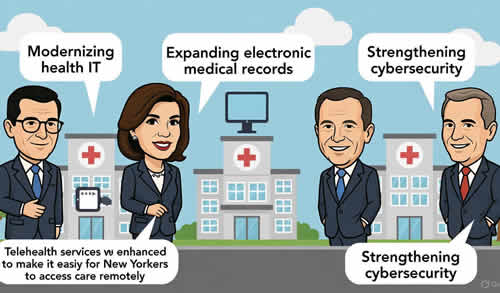
    New York State is putting more than $300 million into hospital upgrades aimed at making care safer and more connected, Governor Kathy Hochul announced. The funding will support 22 projects statewide to improve health information technology, expand electronic medical records, strengthen cybersecurity to protect patient data, and grow telehealth services. State officials say the goal is to help hospitals—especially financially strained providers—modernize critical systems, reduce cyber risk, and make it easier for New Yorkers to access care remotely. The awards are part of New York’s broader push to improve hospital infrastructure and resilience across the state.

    Governor Hochul Announces More Than $300 Million to Advance Health Information Technology and Cybersecurity in Hospitals Across New York State

    Governor Kathy Hochul today announced more than $300 million in new state funding to support health care transformation projects across New York. The awards, made through the Statewide Health Care Facility Transformation Program IV and V, will support 22 projects aimed at improving health information technology by expanding patient electronic medical records, strengthening cybersecurity and patient information security, and expanding telehealth services.

    “By modernizing our hospitals’ IT infrastructure and protecting patients’ information, we’re strengthening the foundation of health care in New York State,” Governor Hochul said. “These investments will help ensure that hospitals have the tools they need to safeguard patient data, expand telehealth services and deliver a healthier future for all New Yorkers.”

    New York State Department of Health Commissioner Dr. James McDonald said, “With these investments, we are focused on developing safe, reliable and connected patient-centered care. By expanding data capabilities and improving cybersecurity defenses, we’re enhancing clinical decision making across the state’s health care network.”

    This funding prioritizes projects that:

    • Support financially distressed providers;
    • Modernize critical health information technology infrastructure;
    • Strengthen cybersecurity and patient information security; and
    • Expand telehealth services.

    Awardees include hospitals in every region of the State.

    full list of awardees, project descriptions, and award amounts is available here. Funds are administered by the New York State Department of Health and the Dormitory Authority of the State of New York (DASNY).

    This investment builds on Governor Hochul’s continued efforts to strengthen New York’s health care delivery system. The Statewide Health Care Facility Transformation Program has awarded more than $1.75 billion to providers working to improve access, equity, and quality of care across New York. These awards are part of a broader, long-term commitment that has directed more than $4.7 billion in health care capital funding statewide since 2016.

    Under Governor Hochul’s leadership, New York State enacted nation-leading cybersecurity regulations for hospitals, establishing a robust blueprint to protect critical systems and enhance the resilience of the state’s health care network against cyber threats.

    Recently, the State made additional funding awards for 55 projects under Statewide IV, and additional projects under the Safety Net Transformation Program

    December 12, 2025

    Albany, NY

    Sources: NY.gov , Big New York news BigNY.com
    Midtown Tribune News

    Midtown Tribune Independent USA news from New York

  • New York Subway Ridership Hits Post-Pandemic Record as OMNY Tap-and-Ride Nears MetroCard Sunset

    New York Subway Ridership Hits Post-Pandemic Record as OMNY Tap-and-Ride Nears MetroCard Sunset

    NEW YORK News Hochul Subway news NYC

    New York’s subway system logged fresh post-pandemic ridership highs, carrying 4.61 million riders on Dec. 3 and 4.63 million on Dec. 4, surpassing an October record and coming in roughly 6% above year-earlier levels, Gov. Kathy Hochul said. November on-time performance reached 84.4%, the strongest for that month since the pandemic, extending a run of improved reliability tied to service increases, new equipment and upgraded signals. At the same time, the Metropolitan Transportation Authority is accelerating the shift to its OMNY tap-and-ride payment system, with 94% of subway and bus trips now paid contactlessly and MetroCard sales scheduled to end Dec. 31, 2025, ahead of full phaseout in 2026. The MTA, which has rolled out OMNY card giveaways, 2,700 retail locations and 980 station vending machines, projects at least $20 million in annual savings from retiring MetroCard and moving to a single, fully contactless fare system.

    Governor Hochul Announces Record Subway Ridership of 4.6 Million Riders and Best November for Subway Performance

    Governor Kathy Hochul today announced that the New York City Subway surpassed 4.6 million riders, setting a post-pandemic ridership record, while also achieving an on-time performance record for November of 84.4 percent — the best November since the pandemic. On Wednesday, December 3, 4.61 million customers rode the subway, and on Thursday, December 4, 4.63 million customers rode the subway. Both days eclipsed the previous record set on October 29, 2025 of 4.6 million subway customers and were up 6 percent from the same dates in 2024. These milestones come as 94 percent of subway and bus trips are now paid with the MTA’s new contactless tap and ride system.

    “The subway is the lifeblood of New York City, and thanks to our investments in safety and reliability, ridership continues to come roaring back,” Governor Hochul said. “We know our work is far from finished, and that’s why we’re investing in new subway cars, upgraded signals and tools like cameras and law enforcement to keep riders safe. The subway is already the best way to get around, and thanks to these investments, we are making it better than ever.”

    The November OTP record extends the trend of historically strong subway performance in 2025. Subway on-time performance reached 85 percent in September — the best September in modern history — maintaining August’s 85.1 percent, which was the best August in a decade, and building on May’s record-setting 85.2 percent, the highest non-pandemic OTP on record. These gains coincide with service increases on the A and L lines, reducing wait times for more than 100,000 weekday riders. Beginning Monday, December 8, rush hour service will also increase on the M line.

    MTA Chair and CEO Janno Lieber said, “No secret: transit is the best way to get around New York. When our subways are safe, frequent and reliable, people will use them more and more. That’s what’s happened and the records are going to keep coming.”

    NYC Transit President Demetrius Crichlow said, “Hitting 4.6 million subway riders as we achieve another on-time performance milestone shows once again that when you deliver safe and reliable service riders will take it. We’re determined to carry this momentum into 2026, as we continue to tout all the opportunities available to riders to seamlessly switch to tap and ride.”

    MTA Chief Customer Officer Shanifah Rieara said, “New Yorkers have embraced tap and ride and we’re proud to see that as more and more people return to the city, they are choosing mass transit. As the end of MetroCard sales nears, we are focusing on reaching the remaining 6 percent to make the switch and unlock the benefits and convenience of tap and ride technology.”

    In an effort to facilitate the transition to Tap and Ride, the MTA recently launched an OMNY Card Giveaway on November 18, where the first 400 customers at every Customer Service Center could transfer their MetroCard balance to fee-waived OMNY cards. These fee-waived OMNY cards are currently available at the following nine Customer Service Centers while supplies last:

    • 125 St 4 5 6
    • 161 St-Yankee Stadium B D 4
    • 168 St-Broadway A C 1
    • E. 177 St-Parkchester 6
    • Fordham Rd B D
    • Myrtle Av J M Z
    • St. George, Staten Island Railway (SIR)
    • Stillwell Av-Coney Island D F N Q
    • Sutphin Blvd F

    By the end of the year, fourteen new Customer Service Centers will open at locations across the Bronx, Brooklyn, Manhattan, and Queens. The first 400 customers to visit those new Customer Service Centers and transfer their MetroCard balances to OMNY will also be able to receive the promotional fee-waived OMNY cards.

    As announced in March, the last day to purchase or reload a MetroCard will be December 31, 2025, with the acceptance of MetroCards ending in mid-2026. While the Tap and Ride payment system doesn’t require an OMNY card and allows riders to pay fares directly with digital wallets and contactless bank cards, customers will find it twice as easy to purchase or reload an OMNY card with a robust OMNY retail network currently at 2,700 locations — more than double the MetroCard partnering locations.

    The MTA has also installed 980 OMNY card vending machines across all 472 subway stations. And, most recently, shared a list of 102 opportunities for members of the public who live in bus-reliant areas to transfer MetroCard balances to the OMNY cards for those who opt to use the physical card.

    By eliminating the sale of MetroCard and fully transitioning to one fare collection method, the MTA expects to save at least $20 million annually in costs related to MetroCard production and distribution; vending machine repairs; and cash collection and handling. Moving to a contactless payment also unlocks potential for new customer-friendly promotions and fare discounts.

    December 5, 2025

    Albany, NY

    Sources: NY.gov , Big New York news BigNY.com
    Midtown Tribune news

    Midtown Tribune Independent USA news from New York

  • Governor Hochul Advances 19 New Historic Site Nominations, Unlocking Investment and Tax Credit Opportunities Across New York State

    Governor Hochul Advances 19 New Historic Site Nominations, Unlocking Investment and Tax Credit Opportunities Across New York State

    NEW YORK News Gov Hochul list sites

    Governor Kathy Hochul announced 19 new nominations to the State and National Registers of Historic Places, positioning communities across New York to leverage powerful economic development tools, including state and federal historic rehabilitation tax credits and preservation grants. Spanning urban public housing, energy-efficient commercial design in Buffalo, industrial complexes, rural mill neighborhoods, and architecturally significant churches and residences, these designations help drive private investment, support adaptive reuse, and catalyze community revitalization. New York already leads the nation in the use of historic tax credits, with $7.17 billion in rehabilitation costs between 2018 and 2024 and more than $16.4 billion in project expenditures since 2009, generating over 91,000 jobs and $1.79 billion in tax revenue. The newly nominated sites further align historic preservation with economic growth, offering property owners and municipalities expanded access to incentives that strengthen local economies while safeguarding long-term cultural and real estate value.

    Governor Hochul Announces 19 Nominations for State and National Registers of Historic Place

    Governor Kathy Hochul… announced recommendations by the New York State Board for Historic Preservation to add 19 properties and districts to the State and National Registers of Historic Places. The nominations include an office building with a pioneering design in energy efficiency in Buffalo, an Arts and Crafts church on Staten Island, a new historic district in Essex County, and the Cortland home of a leader in New York’s Women’s Club Movement.

    “The history of the people of New York is imprinted in the architecture and places around us,” Governor Hochul said. “These nominations to the State and National Registers show our commitment to preserving New York’s rich and diverse story and making it accessible for future generations. By recognizing these landmarks and the people behind them, we are strengthening our communities, boosting local pride and ensuring that history remains a living part of New York’s future.”

    The nominations were reviewed on December 3, 2025, at a meeting of the New York State Board for Historic Preservation.

    New York State Office of Parks, Recreation and Historic Preservation Acting Commissioner Kathy Moser said, “Identifying and nominating historic resources for the State and National Registers is a key step in preserving our shared past. As stewards for New York’s history, we recognize the positive impact listings in the registers have on communities throughout the state. From recording local history before it is lost to unlocking access to grants and incentive programs, the State and National Register programs create opportunities to inspire pride of place, encourage investment, and catalyze collaborations.”

    State and National Register listings can assist owners in revitalizing properties, making them eligible for various public preservation programs and services, such as matching state grants and federal and state historic rehabilitation tax credits.

    New York State Office of Parks, Recreation and Historic Preservation Deputy Commissioner for Historic Preservation Daniel Mackay said, “The Division for Historic Preservation works to ensure that the State and National Registers of Historic Places continue to grow and reflect New York’s remarkable history. With this goal, we are expanding our understanding of our past and providing access to incentive programs that can help preserve and revitalize our historic assets for the future. By connecting property owners with resources, historic preservation becomes a shared, statewide effort. We’re proud to be part of this impactful work.”

    New York State continues to lead the nation in the use of historic tax credits, with $7.17 billion in total rehabilitation costs from 2018-2024. Since 2009, the historic tax credit program has stimulated over $16.4 billion in project expenditures in New York State, creating significant investment and new jobs. According to a report, between 2019-2023, the credits in New York State generated 91,386 jobs and over $1.79 billion in local, state and federal taxes. 

    The State and National Registers are the official lists of buildings, structures, districts, landscapes, objects and sites significant in the history, architecture, archaeology and culture of New York State and the nation. There are more than 128,000 historic properties throughout the state listed in the National Register of Historic Places, either individually or as components of historic districts. Property owners, municipalities and organizations from communities throughout the state sponsored the nominations. 

    Once recommendations are approved by the Commissioner, who serves as the State Historic Preservation Officer, the properties are listed in the New York State Register of Historic Places and then nominated to the National Register of Historic Places, where they are reviewed by the National Park Service and, once approved, entered in the National Register. More information, with photos of the nominations, is available on the Office of Parks, Recreation and Historic Preservation website. 

    Capital Region

    Dr. Jay McDonald Towers, Albany County – Constructed in 1972, this ten-story senior housing tower is the City of Cohoes’ first example of senior apartments. The building is located in the central business district, anchoring the north end of Remsen Street as a mid-rise, red brick building with an exposed concrete structural system. The design embodies a restrained modern aesthetic with an emphasis on form, materials, and structure. Inside, the apartments follow standard recommendations for senior housing, featuring bathtubs with grab bars, non-skid floors, and wider door openings. The McDonald Towers are associated with the Cohoes Housing Authority’s Model Cities Program, authorized by the Demonstration Cities and Metropolitan Development Act of 1966. In addition to funding new, improved housing, the Model Cities program also endeavored to provide additional community services, such as job training, code enforcement, and improved public education. In 1970, Housing and Urban Development (HUD) approved a $13 million Model Cities grant to Cohoes, and McDonald Towers was among the most significant of the projects proposed.

    Roulier Heights Historic District, Albany County – This small complex of ten apartment buildings and one community center in the City of Cohoes was the Cohoes Housing Authority’s first completed project. Built in 1961, the complex was designed around an elliptical drive just west of Cohoes’s central business district. The rows line both sides of the street, face each other, and there are paved paths in front of and behind the buildings. Each apartment block comprises a row of six to ten two-story townhouses, with individual entrances, interior wood floors, and dedicated storage space. Established in 1952 with support from state legislation and federal funding, the Cohoes Housing Authority was formed to respond to post-World War II housing shortage pressures in the city, which was felt even more severely with the significant downsizing of Cohoes’ nation-leading textile manufacturing mills which also happened after the war.

    Central New York

    Benton-Sherwood House, Cortland County – The house at 79 Central Avenue in Cortland is significant for its association with Jeannette Benton Sherwood (1863-1938) and the Women’s Club Movement of the early twentieth century. A key organizer of women’s clubs in Cortland County and later a leader in statewide roles with the New York State Federation of Women’s Clubs, Sherwood hosted numerous meetings at her childhood home, which she occupied from 1899-1921. Sherwood’s father, lumberman and one-time village president Henry F. Benton, built the substantial brick Second Empire style house in 1874. The largest and most elaborate of its type in Cortland, the house features a French-inspired mansard roof, a central tower that contains both the front entrance and spiraling cantilevered stair, as well as fine doors, moldings, and parquet floors. Many architectural details may have been manufactured at Benton’s nearby planing mill. The house’s parlor was a popular meeting space for groups connected with Sherwood; it served as the location of the founding meeting of the Tioughnioga Chapter of the Daughters of the American Revolution in 1900. In addition to her women’s clubs activities, Sherwood was also chair of the Cortland Fresh Air committee, chair of the statewide Victory War Fund during the First World War, participated in the Women’s Suffrage Movement, served as the founder and first president of the Cortland County Historical Society, and served on the board of the New York Historical Association.

    Lustron House Westchester Deluxe Model 02, Onondaga County  Located in the city of Syracuse, the house showcases important developments in post-World War II prefabricated houses. It is an excellent example of the Lustron Corporation’s Westchester two-bedroom “Model 02” and includes “deluxe” features such as a pass-through cabinet dividing the kitchen and dining area, a living room bay window, and a built-in vanity in the master bedroom. The Lustron Corporation, located in Columbus Ohio, used an assembly line to produce all-steel building components that could be shipped in pieces across the country and assembled on-site. The technology was an advanced prefab solution to the severe housing shortages in the post-war era.

    Mohawk Valley

    West Winfield Historic District, Herkimer County – Located in the Town of Winfield, the historic district consists of 315 resources at the intersection of the historic Great Western Turnpike (State Route 20) and County Route 51. The district embodies a community that developed because of these transportation routes and the local mills along the North Winfield Creek and the East Branch of the Unadilla River. The built environment in West Winfield represents its development from ca. 1790 through 1970. Architectural styles convey popular trends from the 1800s to the mid-1900s.

    New York City

    Bay View Houses, Kings County  Bay View Houses is a large public housing complex for middle-income tenants in the Canarsie neighborhood of Brooklyn. It was built in 1955-56 under New York City Housing Authority’s City IV program, the last phase of city-funded public housing before legislation such as the Mitchell-Lama law of 1955 shifted the responsibility for building middle-income housing onto private developers and away from city government. It reflects ideas about public housing, methods of financing, siting, and design at a time when the nation as a whole was grappling with the proper role of government and private capital in developing affordable housing, especially for middle-income residents.

    Northwest Bronx Scatter Site Housing, Bronx County (Three Nominations: Bailey Ave-West 193rd St Houses; East 180th St-Monterey Ave Houses; Fort Independence St-Heath Ave Houses) – These three public housing developments in the Bronx, all completed in the early 1970s, are the bricks-and-mortar embodiment of the long, often messy, and ultimately imperfect work of implementing the Civil Rights Act of 1964. They were built under New York City Housing Authority’s (NYCHA) scatter site program, a federally mandated attempt to enforce Title VI of the Civil Rights Act. That law prohibited discrimination based on race, color, or national origin in any federally funded program, including public housing. The federal government’s solution was to require local housing authorities to disperse (or scatter) a portion of new housing developments throughout the city, particularly in middle-class neighborhoods on the periphery, away from areas of racial concentration. New York City’s scatter site program launched in early 1966 during the first months of Mayor John Lindsay’s administration, with NYCHA completing its first scatter site developments in the early 1970s. In developing the scatter site housing program, federal and local housing officials implicitly acknowledged that decades of earlier policies had actively contributed to racial discrimination and residential segregation. Reactions to New York’s scatter site program revealed deep divisions among city residents, as well as persistent prejudice and racism. The first of NYCHA’s proposed scatter site developments met with significant resistance in many of the neighborhoods for which they were proposed, including those in the Northwest Bronx.

    Richard Mott House, Queens County – The Richard Mott House is locally significant as a rare, unique, and intact example of Shingle-style architecture in the Bayswater neighborhood of Far Rockaway. Richard Mott, a hotel owner and member of a well-established Far Rockaway family, refashioned a barn or outbuilding into a two-story beachside cottage in 1909 to use as his art studio. After his retirement in 1915, he lived full-time in the house until his death in 1925. With the demolition or alteration of many other Shingle homes in the neighborhood, the Richard Mott House stands as a remnant of a style which was common among coastal vacation towns such as Far Rockaway in the late 1800s and early 1900s. Moreover, the house is significant as an idiosyncratic, vernacular labor of Richard Mott. Mott was a hobbyist landscape artist and builder who customized the house as his personal refuge, studio, and gallery of his work and tastes. The house is replete with Mott’s own murals of Far Rockaway’s scenic marine landscapes, built-in wood furniture, custom wood molding, and stained-glass windows.

    Unitarian Universalist Church of Staten Island, Richmond County – The Unitarian Universalist Church of Staten Island (UUCSI) is locally significant as an example of the application of Arts and Crafts principles to a suburban church complex. Designed by Brooklyn-based architect, Quaker, and social reformer Frank Haviland Quinby, UUCSI’s buildings incorporate Tudor Revival, Queen Anne, and Shingle style references in an eclectic mix. Quinby’s choice of Arts and Crafts principles is notable because of their alignment with Unitarian faith’s social and political aims, placing UUCSI’s campus in a tradition of late-1800s Unitarian “Church Home” buildings emphasizing warmth, functionality, natural materials, and modest, residential scales.

    North Country

    Au Sable Forks Historic District, Essex County – Au Sable Forks Historic District is in the far northern reaches of Essex County and is uniquely positioned on a peninsula where the western and eastern branches of the Saranac River meet. The region’s abundant lumber, waterways, and proximity to iron deposits made it an ideal location for logging and iron ore processing in the 1800s, and it later became a hub for the pulp industry. The J.&J. Rogers Company was the primary driver of industrialization, with Au Sable Forks as their headquarters. The district, which is roughly bound by the branches of the river, essentially developed as a company town for the Rogers Company and remained as such until the early 1970s. The town is notable as one of the few intact company towns in this part of the Adirondacks. Additionally, Au Sable Forks suffered a tragic fire in 1925 that wiped out its entire commercial corridor. The resulting architecture in the wake of the fire was entirely fireproof and provides a good representative example of a Main Street almost entirely composed of 1920s and early 1930s commercial architecture. There are 80 resources within the district, including two properties that are already individually-listed on the National Register: the Graves Mansion and the Tahawus Masonic Lodge.

    Hamlet of Schuyler Falls Historic District, Clinton County – The proposed district is located at the intersection of NY Route 22B (Pleasant Street) and Felton Road in the Hamlet of Schuyler Falls and comprises twenty-two resources. After the Turner Grist Mill was established on the Salmon River in 1827, the area developed as a largely residential neighborhood for mill owners, managers, and working-class employees. The extant grist mill and remaining homes express the ways in which residents created a tight-knit rural community that was collectively focused on both industry and agriculture throughout the 1800s. Buildings range from the 1820s to approximately 1900 and include a variety of architectural styles.

    Western New York

    Buffalo Envelope Company Building, Buffalo, Erie County – The Buffalo Envelope Company Building, at the corner of Michigan Avenue and Seneca Street, derives its significance from industrial history for its association with envelope manufacturing and sales between 1909 and 1959. The Buffalo Envelope Company, founded at another location in 1888, moved into the six-story portion of this building (built for speculative purchases in 1899) in 1899. Multiple additions to the building were built during the twentieth century until it occupied an entire city block, attesting to the growth and success of the industry. A spiraling chute is still intact in the tall portion of the building, showing how envelope production started at the top and then step by step the envelopes worked their way down through the building as part of the assembly process. Buffalo Envelope Company was bought by Ohio-based Champion International in 1959, and they in turn sold the building in 1989, when it ceased to be used as a production facility.

    Burton H. Hurd House, Erie County – The Burton H. Hurd House in Elmira is locally significant as an early-1900s suburban residence with Colonial Revival style features. The house was built for Burton H. Hurd, a descendent of one of Elma’s earliest families and a regionally prominent business figure in Buffalo’s lumber industry. In 1912, he commissioned architects Harris & Merritt to design a secondary residence for use in the summer months. As a member of a wealthy and prominent family, Hurd desired a space to entertain guests and demonstrate his social status while also allowing servants to discretely perform domestic labor. The emphasis on separation of utilitarian space is evident in Harris & Merritt’s plan, with all such areas housed in the north wing, offsetting the facade’s design. The separation of service space is further emphasized by features such as the small first floor pantry that connects to the kitchen and dining room, and a set of stairs that provides direct access to the maids’ room, kitchen, and laundry room in the basement. These design choices allowed staff to remain virtually hidden while serving the family or guests. Essential elements, including the front and rear porches, balustrades, and windows have all remained largely intact to the building’s original design. While some alterations have occurred, the primary spaces retain the majority of their materials, finishes, and configuration, reflecting their contemporary use and patterns of living.

    Center and Pearl Streets Historic District, Chautauqua County – The Center and Pearl Streets Historic District is part of the former village of Forestville in the town of Hanover. Situated between Forestville’s commercial Main Street and the railroad depot, the district encompasses an area that evolved from a collection of mills and houses in forested land in the early 1800s, into a vibrant tree-lined streetscape that was the home to some of the community’s most prosperous families. The district grew in the sparsely developed land between the town center and rail depot following the arrival of the New York & Erie Railroad in 1851. The Center and Pearl Streets Historic District preserves a rare residential enclave that experienced continued changes and expansion over the course of a century as passenger and freight use of the railroad gave way to automobiles and trucks. The residents of the historic district directly contributed to and benefitted from access to railroad, ranging from railroad employees, local business owners, farmers, and locally significant professional lawyers, all who settled along for convenient access to both a major regional transportation route and the nearby town business district. This broad pattern of development was unique to Forestville, providing a rich study in the development of an isolated rural agricultural community into one connected to the larger world through the railroad.

    Norstar Building, Erie County – Downtown Buffalo’s Norstar Building, conceived by Mark Mendell of Cannon Design and constructed in 1981-1982, is architecturally significant for its pioneering design in the realm of energy efficiency. In the wake of the energy crisis of the late 1970s and early 1980s, the office building’s design utilizes multiple elements that enabled cost-saving systems, including its dramatically angled site orientation that incorporates passive solar design and wind screening, an emphasis on natural lighting using light shelves and a skylit atrium, and roof-mounted phase change solar collectors for heat transfer. Many of these elements were the first of their kind in downtown Buffalo and represent their first appearance together to provide an innovative approach to energy efficiency. Despite being less than fifty years of age, the building has exceptional significance as an early experiment in what is now recognized as sustainable design.

    The Saint Mary of the Angels Complex, Cattaraugus County – Nestled on a small hill rising from the Allegany river in a shady residential neighborhood in the City of Olean, the Saint Mary of the Angels Complex encompasses five buildings: the Roman Catholic Basilica of St. Mary of the Angels, the former Saint Mary’s convent, former rectory and carriage house, and the parish life center/former Saint Mary’s Academy. Built in 1915, the basilica of Saint Mary of the Angels is a magnificent twin-spired three-story Gothic Revival stone church, renowned not just for its exterior beauty but also the magnificent Munich-style windows and interior art. The former Academy building and convent, built together in 1924, are themselves stately red brick Tudor-style buildings with limestone trim, and the former rectory and carriage house form a well-preserved example of a Victorian residence. The Saint Mary of the Angels complex has long been a significant part of the spiritual and educational fabric of the Olean community and the basilica – one of only 93 so designated in the United States – is widely regarded as an architectural and artistic gem.

    Smith-Henry Building, Erie County – Originally built in 1855 as a two-story single-family residence with a rear extension for hatmaker Samuel Smith, the Smith-Henry Building in Buffalo is an exemplary example of early 1900s adaptive reuse that demonstrates the impact of commercial real estate development on 1800s domestic architecture in an evolving urban setting. In 1914 the brick building was altered and enlarged by lawyer and real estate developer John J. Henry to accommodate two ground-floor storefronts and several apartment units upstairs. Henry’s unorthodox alteration of the building involved enveloping the front of the house with a new three-story portion that expanded the building’s potential to meet the changing rental needs of the neighborhood. The result is a building that contains both mid-1800s details in what otherwise appears as a 1910s two-part commercial block.

    December 4, 2025

    Albany, NY

    Sources: NY.gov , Big New York news BigNY.com
    Midtown Tribune news

    Midtown Tribune Independent USA news from New York

  • Governor Kathy Hochul Touts New York Classroom Cell Phone Ban, Youth Mental Health and NY Affordability on Fox 5’s “Good Day New York”

    Governor Kathy Hochul Touts New York Classroom Cell Phone Ban, Youth Mental Health and NY Affordability on Fox 5’s “Good Day New York”


    In an appearance on Fox 5’s “Good Day New York,” Governor Kathy Hochul highlighted early successes from New York’s statewide classroom cell phone ban, saying students are more engaged, talking to each other at lunch, and “being kids again” instead of fixating on screens. She framed the policy as a key step in addressing a youth mental health crisis driven by constant online bullying, toxic content, and addictive social media algorithms, noting New York’s efforts to restrict unsolicited harmful content to minors and warning parents about AI chatbots that mimic human relationships. Hochul also discussed her partnership with Mayor-elect Zohran Mamdani on housing affordability and child care, reiterated her opposition to raising personal income taxes while leaving other revenue options on the table, and strongly criticized federal threats to SNAP funding on privacy and moral grounds. Additionally, she defended investments in the MTA, including congestion pricing and safety measures that she says have boosted ridership and reduced traffic, and closed by sharing personal holiday traditions with her family.

    Rush Transcript: Governor Hochul is a Guest on Fox 5’s ‘Good Day New York’

    Governor Hochul: “We’re the largest state in America that went literally bell-to-bell… I have kids talking to each other during lunch now and making eye contact and playing games, they’re bringing board games to recess. I think this is fabulous. And so we’re letting kids be kids again.”

    Hochul: “With the cell phone ban, our kids are going to emerge as more well-adjusted, happier, more functioning adults when they go into the workplace because they’ll be used to working in collaborative settings instead of just staring at their phone all day.”

    Earlier today, Governor Kathy Hochul was a guest on FOX 5’s “Good Day New York.”

    AUDIO: The Governor’s remarks are available in audio form here.

    A rush transcript of the Governor’s remarks is available below:

    Curt Menefee, FOX 5: Well, New York’s statewide cell phone ban in classrooms is already showing positive results and making a big impact for students and teachers.

    Rosanna Scotto, FOX 5: There’s new data and it reveals 83 percent of schools that implemented the smartphone restrictions reported a better classroom environment as well as better student engagement.

    Joining us now with more on this and protecting students in this digital age is New York State Governor Kathy Hochul. Nice to have you back on Good Day.

    Governor Hochul: Thank you.

    Curt Menefee, FOX 5: Thank you for coming in.

    Rosanna Scotto, FOX 5: So what have you found out about the cell phone ban?

    Governor Hochul: Well, the results are what I expected, but I had to persuade the rest of the state. I have been traveling around for almost two years, gathering teenagers and having forums with parents and understanding that our kids are really in the throes of a mental health crisis.

    And you ask, why is this happening now? We know teenage years are always tough. We lived through that. But it really is the presence of a cell phone that all day long in school is taking you to a dark place. Or you’re being mocked or bullied by other kids. Or the girls are meeting in the restroom and they’re excluding you and you’re stressed out about that. Or they’re making plans for a party on a Friday. These are all the stories I heard. And I said, you know what? We have to do something.

    And I talked to school boards and superintendents and teachers, no one wanted to take it on because of the fear of the backlash from parents or students, and “we just want to teach, we don’t want to get in the middle of this.”

    And I said, “You know what? I’m a mom. I’m used to getting blamed for everything, blame me. I will take this on behalf of the kids of this state.”

    And I am so delighted about the cooperation we’ve had. We did a lot of training with our school districts, talked to teachers, talked to students. So literally, starting in September, this was a whole new game in classrooms.

    Rosanna Scotto, FOX 5: Yeah, we’re hearing, “My kids are actually talking to one another.” But also, Governor, you know about the studies, the studies with these kids with cell phones, they’re finding if they have them before they’re 12 years old, they’re depressed, they’re overweight, there’s so many things. Do you have more plans with the cell phone ban? What are you going to do next?

    Governor Hochul: Well, the ban was dramatic. We’re the largest state in America that went literally bell-to-bell. Some say you can use it during recess or during lunch. That defeats the purpose because I have kids talking to each other during lunch now and making eye contact and playing games, they’re bringing board games to recess. I think this is fabulous. And so we’re letting kids be kids again. So don’t underestimate the power of this. I think every state should do this, absolutely. But we’re also looking at the addictive algorithms that they’re being bombarded with from social media companies, and we’re the first state in the nation last year to ban this, to say that unless the parent’s consent, you cannot be sending all this unsolicited information to your kids.

    For example, a student looks up, “suicide.” They’re having dark thoughts. They want to look for a place that maybe gives them some advice. It’ll tell you how to commit suicide instead of giving you the relief you’re looking for, the support you’re looking for. So we have to protect our kids, number one job, and I’m committed to this all the way through. We’re going to have some new ideas in my State of the State, even those AI companions where kids think they’re dating somebody and getting emotionally involved with an AI [chatbot] —

    Curt Menefee, FOX 5: But they think they’re talking to a human because they’re kids.

    Governor Hochul: They think they’re talking to a human. And so, moms and dads, we’ve got to be aware of what’s going on. These threats were not there when we were growing up. So I’m going to continue educating, but also passing laws to protect.

    But with the cell phone ban, our kids are going to emerge as more well-adjusted, happier, more functioning adults when they go into the workplace because they’ll be used to working in collaborative settings instead of just staring at their phone all day. And I encourage parents, at the end of the day, to find other activities for their kids and do not be on your own cell phone during dinner because your kids are watching everything you do.

    Curt Menefee, FOX 5: Lots has been accomplished. Lots more still to be done, as you just said. This is the first chance we’ve had to talk to you since the election here of Zohran Mamdani. He’s the Mayor-elect right now. I know you congratulated him right after he won the election. Have you been in constant communication with him? Regular communication with him? You’ve talked to him, what do you talk about?

    Governor Hochul: Fairly regular. We’re talking about how we can work together to make New York City more affordable. This is what the majority of voters want to have happen when they put their faith in him.

    It is my job as Governor to make sure that whomever the Mayor is, they’re successful. I work closely with Eric Adams. I worked with Bill de Blasio during the time we overlapped. And I’m committed to making sure that we focus on the issues like building more housing to reduce the cost of rent. That we focus on child care — I already started universal child care in the State of New York. We’re on the path to get there. But what people need to realize is that you can’t just declare there’s universal child care. You have to have enough facilities. You have to have enough teachers and caregivers. And so we’ve worked on this over the last couple years to really position ourselves to take more steps together, and I know that’s a priority of the Mayoral-elect, and we can work on that together. So our conversation has been very positive just about the future of New York and what we’re going to do together.

    Curt Menefee, FOX 5: You endorsed him. You congratulated him. You talk about talking with him constantly. But you have some political differences, you’ve been public about that. He has talked about free buses, which you’re against. Universal child care, you explained a little bit right there. Do you discuss all of that before he takes office? Or is this something that he’s not going to get day one, but you will work with him down the road?

    Governor Hochul: No, of course. We’ve already had meetings. Our staffs are in constant communication because I want him to hit the ground running. But also, he understands this is a four-year term he has. There will be a rollout of some ideas, you have to build support for others. But also, just the everyday running of city government requires a lot of support from the state. We fund a lot of programs. He’ll be coming to Albany like all the Mayors do, asking for financial support and making sure that we continue investing in the subway system and safety there.

    And we’re seeing dramatic changes in the investments that I have made in supporting police overtime, so there’s more police officers visible, hundreds of millions of dollars to make sure that every train has a camera on it. And right now, we have had the safest few months in a row in recorded history on our subways. We want to keep that going. So I talked to him about public safety as well, keeping those investments, keeping rebuilding the police force and supporting our police officers because they’re out there protecting us every day.

    So I think there’s a lot of common ground, but where there’s differences, I have no trouble talking about them. We’ve had those conversations. Or the timing of some of the ideas, what we can actually afford now. And remember this, we’re taking a lot of financial hits from Washington, programs that had been funded by the federal government, they’re now putting on the backs of the states. So we have to step back and assess — okay, wait a minute. This is the federal government’s responsibility. This is why we pay federal taxes for programs like health care, support for hospitals, nutrition programs, but to the extent that they stop doing this, we have to have those conversations in our next Budget about what we’re going to do. So it’s a very fluid situation, but it’s very positive. I think people should know that. It’s a very positive conversation about what’s good for New York.

    Rosanna Scotto, FOX 5: Can we talk about taxes? Because obviously, New Yorkers are talking about that. I know at one point you said, “No new taxes,” but then I felt like there was room for taxes. Are we talking about taxes, personal or business in New York? I know next year’s also an election year for you.

    Governor Hochul: That’s independent, because I’ve focused on reducing taxes since I’ve been Governor. We expedited a middle class tax cut my first year in office. Then we instituted our own tax cut last year, the largest middle class tax rate cut in 70 years.

    Rosanna Scotto, FOX 5: But will we have new taxes?

    Governor Hochul: Well, I’m not raising income taxes because I believe that we want to make sure that New York is more affordable for everybody and I want people who are successful to keep creating the jobs and investing here. But we have to look at other revenue sources to fund — again, we’re dealing with a lot of hits from Washington.

    Rosanna Scotto, FOX 5: So would you raise business taxes then? Because Mr. Mamdani keeps saying New York doesn’t pay as much in business taxes as Jersey does, and that’s not true. Businesses pay a payroll tax. There’s plenty. You tax everything.

    Governor Hochul: We have other taxes as well. So I would just say this, the Budget process is unfolding. We’ll be working with the Legislators over the next couple months and we’ll find out how we can take off a bite of what we need to do — like what is doable in this upcoming year, in the following year.

    Rosanna Scotto, FOX 5: Would you veto a tax increase?

    Governor Hochul: I’m not raising income taxes.

    Rosanna Scotto, FOX 5: Personal. What about business?

    Governor Hochul: Anything else has to go into our Budget process. So we are not there yet. We don’t know what our needs are. I have to see. I have to look at the revenues coming in. We’re even going to look at how well we’re doing with the end-of-year stock market bonuses, the bonuses, we get tax revenues from those. So I don’t have a clear view of what the resources are coming in, the revenues, and manage that against the Trump cuts versus what our needs are. All will be told in due time, but we’re really focused on just delivering for New Yorkers the programs and the services they come to expect.

    Curt Menefee, FOX 5: You talked about cuts from Washington. Just yesterday, the Secretary of Agriculture said that they’re debating withholding some funds that would allow Democrat-run states to fund the SNAP program. You’ve obviously been against that. But what they’re saying in Washington is, we just want the roles of people that are on public assistance, you’ve been resistant about that. Several states have, by the way, more than 20. Why not just say, okay, here are the names of the recipients.

    Governor Hochul: Let me tell you what’s going on here. We actually went to court about this because people sign up for a particular program, not to have their name in a — think about it. Do you really want every bit of information about you in other parts of the government monitoring you and tracking what you do?

    This is a privacy issue as well. Even if you’re on SNAP and getting nutrition benefits, like 42 million Americans do. Does that mean that your privacy should be invaded now or that you should be giving out this information unrelated to this program? So we went to court. A judge in October said, Governors of these states, you are correct. You do not have to turn over this information, and they cannot withhold that money. Now to have a secretary in the Trump Administration basically saying, “We’re going to ignore a court order,” that is problematic. That is problematic. And that’s what we’re dealing with right now.

    Curt Menefee, FOX 5: What are your concerns other than just privacy?

    Governor Hochul: Privacy is a big one. Privacy is a big one. Now we are working on the fraud issues. It’s something we monitor at the state level. We don’t want anyone to abuse programs, but basically to end a program for everybody in the expectation you might find a few who are abusing it — don’t you care about everybody else who’s hungry?

    The Mayor-elect, Mamdani, told me that on Veteran’s Day he was sitting down with some veterans who had had a hard life. One of them said when the SNAP benefits stopped, he went to his refrigerator and it was empty. And that is a heartbreaking story to know that those who wear a uniform to keep us safe at night to defend our country and our values can’t count on a program to feed them. So that is just cruelty. They need to stop trying to find ways to hurt Americans, make them go hungry, and work with us. We’ll work with you to fight fraud, of course, we do that already. But I think there’s just this base feeling that these are programs that no one needs and we should eliminate them to save money. And what do they do with that money? That helps fund tax breaks for millionaires and billionaires, and that’s exactly what’s going on.

    Rosanna Scotto, FOX 5: Can we talk about the MTA? They’re close to balancing the budget. But it does seem like it’s a big abyss with the MTA and they’re depending on the casino licenses. They’re going to make, what, a billion and a half from the just upfront casino licenses? Is that going to be enough for the MTA?

    Governor Hochul: We have found sustainable sources of revenues for the MTA.

    Rosanna Scotto, FOX 5: So does that mean they’re not going to raise fares anymore?

    Governor Hochul: I think that — very incremental. You see some other states, they keep it very low and all of a sudden it goes up dollars, if it goes up a dime or nickel here and there, that is what happens in the normal course of business to cover escalating costs. Look at the tariffs for having to pay extra for everything. Even supplies that we used to manufacture our train cars from Canada. Like we’re spending more because of the Trump tariffs on something like that. So we have to make adjustments for that. But I don’t want to see any increases that people are going to think are significant at all. It’s just incremental.

    So we have the MTA on a path to sustainability. It was going off the cliff when I first became Governor. Nobody was making the proper investment. I stepped in and said, “I will support at the state level. You have to find savings.” I put that on the MTA, “You have to find savings or I’m not going to keep funding this.” And we did.

    And also congestion pricing. I know your favorite topic, is another —

    Rosanna Scotto, FOX 5: Governor, I’ve come to think that, okay, maybe it’s okay. We’re funding the MTA. It hasn’t really helped with congestion, but —

    Governor Hochul: No, it has. No, traffic, there’s 20 million fewer cars that went into that zone since last January.

    Rosanna Scotto, FOX 5: Go in there now.

    Governor Hochul: And that’s down. It would’ve been worse. It’s down 10 percent, right?

    Curt Menefee, FOX 5: Doesn’t get rid of all traffic. It just reduces traffic —

    Governor Hochul: And ridership on the subways and the buses is up 11 percent. So you’re getting what we’re looking for, that adjustment in behavior plus the revenue.

    Curt Menefee, FOX 5: We can talk to you forever. Your staff told us you have a hard time out here.

    Rosanna Scotto, FOX 5: I know, but wait, can we just so you have, go find out what the Governor’s going to do for the holidays?

    Governor Hochul: Yes. Yes. My house is being decorated right now. My sister who’s very good at this. She brought up some of her decorations. We’re decorating. I’ll be having grandchildren over, a little three-year-old and a four-month-old. And so I’ll be out shopping for some real pretty dresses for them and playing.

    Rosanna Scotto, FOX 5: Is there a traditional meal in the Hochul house?

    Governor Hochul: Usually it has some beef tenderloin and I’m all about pies. I’ve still been eating leftover pumpkin pie for days. I can’t — I inhale pumpkin pies.

    Rosanna Scotto, FOX 5: That could be a problem.

    Governor Hochul: I’ll make sure I have fresh pies for that. But it’s great to see the fa

    Sources: NY.gov , Midtown Tribune news
    Big New York news BigNY.com

    Midtown Tribune Independent USA news from New York

  • Governor Hochul Launches Second $50 Million County Infrastructure Grant to Support Housing and Local Growth in New York

    Governor Hochul Launches Second $50 Million County Infrastructure Grant to Support Housing and Local Growth in New York

    Governor Kathy Hochul has opened a second round of the County Infrastructure Grant Program, adding another $50 million to help New York counties upgrade local infrastructure and support more housing, tourism, and community projects. Counties can apply now through April 1, 2026, with grants of up to $1 million for projects that create at least 10 new homes and up to $500,000 for smaller or non-housing projects. The program, run by Empire State Development, builds on a first round that funded 49 projects and more than 2,750 new homes, giving local governments the resources they need to fix aging systems, attract new residents and visitors, and create stronger, more vibrant neighborhoods across the state.

    Governor Hochul Announces Additional $50 Million for Second Round of County Infrastructure Grant Program

    Applications Now Open for County-Led Infrastructure Projects that Encourage Housing Growth, Placemaking and Tourism . Applications Due April 1, 2026

    Governor Kathy Hochul today announced a second round of the County Infrastructure Grant Program, which will provide an additional $50 million to support small- and medium-sized county-led infrastructure projects. Modern infrastructure is fundamental to New York State’s economic vitality. By supporting small- and medium-scale projects, the state can maintain its competitiveness, generate additional economic growth and continue to advance Governor Kathy Hochul’s bold housing agenda. Applications will be accepted now through April 1, 2026. Empire State Development (ESD) requires submitting a Letter of Intent (LOI) prior to filing a final application. Links to the LOI and application are available here.

    “Coming from local government, I know firsthand how funding for local infrastructure projects can change a community — uplifting residents and providing those communities with a sense of purpose,” Governor Hochul said. “When counties are offered assistance to build more infrastructure, it gives these communities the opportunity to attract more visitors and spur housing development for generations to come.”

    Empire State Development President, CEO & Commissioner Hope Knight said, “Growing the state’s housing stock is not just a priority; it is a structural pillar of Governor Hochul’s administration and the essential catalyst for robust, sustainable economic growth. With another round of the County Infrastructure Grant Program, we are making a targeted investment that will provide critical housing stability for New Yorkers. This simultaneous effort will enhance the sense of place and vitality across our communities, creating the groundwork necessary to cultivate new jobs, attract new residents, and welcome visitors.”

    New York State Housing and Community Renewal Commissioner RuthAnne Visnauskas said, “With this second round of funding, Governor Hochul is building on the millions already invested to strengthen local infrastructure and unlock more than 2,700 housing opportunities across New York. The additional $50 million will pave the way for more homes, ensuring that counties have the tools they need to grow sustainably. By investing in the foundations of our communities, we are not only expanding the supply of housing, but also fueling economic vitality, supporting tourism, and creating vibrant neighborhoods where families can thrive. We are proud to continue partnering with counties throughout New York to turn these investments into lasting results.”

    New York State Association of Counties President Phil Church said, “This innovative grant program provides vital resources that empower counties to strengthen local communities — addressing critical housing needs while upgrading aging water and wastewater systems. The New York State Association of Counties applauds Governor Kathy Hochul, the State Legislature, and Empire State Development President & CEO Hope Knight for their leadership and continued investment in county infrastructure. These partnerships between state and local governments are essential to building vibrant, resilient communities across every region of New York. With this second round of funding totaling $100 M, counties have new opportunities to deliver projects that improve quality of life and lay the foundation for sustainable growth statewide.”

    State Senator Sean M. Ryan said, “Strong communities are built on reliable, modern infrastructure, and counties across New York have no shortage of worthy projects that just need the resources to move forward. This program gives local governments the support they need to upgrade aging systems, attract new housing, and lay the groundwork for long-term economic growth. I’m grateful to Governor Hochul and Empire State Development for continuing to invest in the growth of our communities.”

    Assemblymember Al Stirpe said, “One of the biggest obstacles to economic development in New York State is housing — and a substantial amount of it for New Yorkers to live and work where they want to. The second round of the County Infrastructure Grant Program takes the housing crisis head-on, building on the success of its initial round to encourage additional housing, placemaking, and tourism in virtually every corner of the state. Small-scale infrastructure projects lacking the capital to get off the ground will get the chance to lift off and go from idea to implementation. This is an exciting opportunity to continue modernizing our neighborhoods and maintaining New York’s economic competitiveness, benefitting both residents and tourists alike.”

    An informational webinar will be held on Thursday, December 18 at 11:30 a.m. More information will be posted on the County Infrastructure Grant Program website.

    The County Infrastructure Grant Program was established to assist counties in developing infrastructure to better meet the needs of New Yorkers. The original $50 million program was included in the State’s FY 2025 Enacted Budget, with an additional $50 million included in the FY 2026 Enacted Budget. Grants of up to $1 million are awarded to priority projects that propose the creation of 10 or more housing units. Projects fewer than 10 housing units, or no housing creation, can receive up to $500,000. Projects are identified by the county and must support economic development, contribute to placemaking or encourage tourism. In July 2025, Governor Hochul announced that more than $37 million was awarded to 49 projects, supporting the construction of over 2,750 new homes, through the first round of the program.

    More information on the program, including how to apply, is on the Empire State Development website. Applications will be accepted on an ongoing basis through the Consolidated Funding Application portal.

    About Empire State Development

    December 2, 2025

    Albany, NY

    Sources: NY.gov , Big New York news BigNY.com
    Midtown Tribune news

    Midtown Tribune Independent USA news from New York

  • Hochul Warns New Yorkers on Thanksgiving Travel as Lake Effect Snow Bears Down on State

    Hochul Warns New Yorkers on Thanksgiving Travel as Lake Effect Snow Bears Down on State

    New York Gov. Kathy Hochul urged residents to brace for hazardous Thanksgiving travel as a potent lake effect snow band and strong winds move into Western and Central New York and the North Country, with some areas forecast to see up to two feet of accumulation. The state has deployed additional plow operators, trucks, and emergency personnel, while transportation and utility agencies are preparing for round-the-clock operations to keep highways open and power service stable during the holiday rush. Officials are advising motorists to leave extra time, avoid driving during periods of intense snowfall, and stay well behind snowplows, which will be operating at reduced speeds to keep roads treated. The state is also activating Code Blue protections as temperatures drop, directing local social services agencies to ensure shelters are accessible for people experiencing homelessness. Residents are being urged to follow cold-weather safety guidance, including precautions against frostbite, hypothermia, and carbon monoxide poisoning, and to sign up for real-time weather and emergency alerts by texting their county or borough name to 333111.

    Governor Hochul Reminds New Yorkers to Travel Safely Ahead of Thanksgiving Lake Effect Snow

    Governor Hochul Deploys Additional Resources in Anticipation of First Significant Lake Effect Event of the Season Set to Impact Parts of Western New York, Central New York and the North Country Today Through Saturday

    Thanksgiving Holiday is Busiest Travel Time of the Year; Leave Extra Time for Travel and Avoid Travel During Periods of Intense Snow

    New Yorkers Can Sign Up for Weather and Emergency Alerts by Texting 333111

    Governor Kathy Hochul today reminded New Yorkers to travel safely ahead of a lake effect snow system set to impact areas across the state during the Thanksgiving holiday. Areas across Western New York south of Buffalo could see between 12 and 18 inches of total snow, while Syracuse has the potential for eight to 12 inches and parts of Central New York north of Syracuse could see between one and two feet. A wind advisory also is in effect for portions of Western New York, Central New York, the Finger Lakes and the North Country. Travel around the Thanksgiving holiday is the busiest of the year, and snow paired with high winds increases the risk of blowing and drifting snow. Those traveling for the holiday should leave themselves extra time to reach their destinations and avoid traveling during intense periods of snow. Snowfall is expected to begin tonight and hit peak rates Thursday into Friday.

    “Thanksgiving is the busiest travel time of the year, and as we manage a lake effect snow system moving into our state, we’re taking proactive measures to keep roads clear and New Yorkers safe,” Governor Hochul said. “I’ve directed state agencies to do whatever they can to ensure families can travel safely during the coming days, and I encourage New Yorkers to take the necessary precautions to protect themselves and their families.”

    In addition to preparing for snow, New Yorkers should also prepare to protect against the dangers that can result from colder weather. Under state regulation, a Code Blue is automatically in effect whenever the temperature and wind chill equal less than 32 degrees. Local social services districts are required to take necessary steps to ensure those experiencing homelessness have access to shelter and that shelter hours are extended. New Yorkers are encouraged to review these cold weather tips from the state Department of Health; additional tips for preventing frostbite and hypothermia information about carbon monoxide poisoning and ways to prevent it; details on the proper use of generators; and safe winter driving tips.

    The state Department of Labor advises workers and employers to engage in extreme cold weather best practices such as:

    • Limit outdoor work, provide frequent breaks in warm areas and schedule outdoor work during the warmest times of the day.
    • Ensure access to clean drinking water.
    • Stay hydrated with warm beverages and avoid caffeine.
    • Wear proper personal protective equipment, including at least three layers of clothing, gloves or mittens, thick socks, insulated footwear and a hat, hood or hard hat liner.

    The National Weather Service has issued lake effect snow warnings, winter storm watches, winter weather advisories and wind advisories, and New Yorkers should closely monitor their local forecasts and look for updates. For a complete listing of weather alerts, visit the National Weather Service website at alerts.weather.gov.

    New Yorkers also should enable emergency alerts on their mobile phones, and text their county or borough name to 333111 so they can receive text messages about real-time weather and emergency alerts.

    Agency Preparations
    Division of Homeland Security and Emergency Services

    The Division’s Office of Emergency Management is in contact with its local counterparts and is prepared to facilitate any local requests for assistance. State stockpiles are ready to deploy emergency response assets and supplies as needed. The State Watch Center, New York’s 24/7 alert and warning hub, is closely monitoring the storm track and statewide impacts.

    Department of Transportation

    The state Department of Transportation is prepared to respond with 3,506 operators and supervisors available statewide. Staff can be configured into any type of response crew needed for the operation (plow, drainage, chipper, load and haul, cut and toss). Additionally, 75 incident command system personnel are available to support the event as needed. All residency locations will remain staffed for 24/7 operations throughout the duration of the event and priority cleanup operations. Fleet mechanics in affected areas will be staffing all main residency locations 24/7 to perform repairs as needed to keep trucks on the road.

    To further assist operations in Western New York, a total of 35 staff, including 26 plow truck operators, three supervisors, six equipment operator instructors, and seven plow trucks are being deployed as follows:

    • Eight operators, one supervisor, two equipment operator instructors, and three plow trucks from the Capital Region.
    • Eight operators, one supervisor, three equipment operator instructors, and four plow trucks from the Mohawk Valley
    • 10 operators, one supervisor, and one equipment operator instructor from the Mid-Hudson Region.

    All available response equipment is ready to deploy. Statewide equipment numbers are as follows:

    • 1618 large plow trucks (Western NY: 225, North Country: 165)
    • 339 large loaders (Western NY: 45, North Country: 46)
    • 148 medium duty trucks with plow (Western NY: 13, North Country: 11)
    • 36 large snow blowers (Western NY: 6, North Country: 7)
    • 52 tow plows (Western NY: 5, North Country: 5)
    • 16 graders (Western NY: 2, North Country: 3)

    Equipment Operator Instructors will be engaged in all areas receiving snowfall to perform plow operator training. Six additional equipment operator instructors and a supervising equipment operator instructor have been deployed to Western New York.

    Traffic signal crews in impacted areas have been briefed on the pending weather. Generator stockpiles are being readied to support dark signals.

    Traffic Management Centers in Western New York and the North Country will begin posting messages Wednesday morning for pending wind and lake effect snow. All other affected regions will be posting weather-related messages.

    For real-time travel information, motorists should call 511 or visit www.511NY.org or the mobile site at m.511ny.org, New York State’s official traffic and travel information source.

    Thruway Authority

    The Thruway Authority is ready to respond with 685 operators and supervisors available. Statewide equipment numbers and resources are listed below:

    • 338 large and medium duty plow trucks
    • 10 tow plows
    • 60 loaders
    • 132,000+ tons of salt on hand

    Variable Message Signs and social media (X and Facebook) are utilized to alert motorists of winter weather conditions on the Thruway.

    Drivers are reminded that Thruway snowplows travel at about 35 miles per hour — which in many cases is slower than the posted speed limit — to ensure that salt being dispersed stays in the driving lanes and does not scatter off the roadways. The safest place for motorists is well behind the snowplows where the roadway is clear and treated.

    The Thruway Authority encourages motorists to download its mobile app which is available for free on iPhone and Android devices. The app provides motorists direct access to real-time traffic information, live traffic cameras, and navigation assistance while on the go. Motorists can also sign up for TRANSalert e-mails and follow @ThruwayTraffic on X for the latest traffic conditions along the Thruway.

    Department of Public Service

    The State Department of Public Service continues to remain engaged with the regulated electric utilities to ensure adequate preparations are being made for the incoming Lake Effect storm system. The department’s priority remains on safeguarding reliable and resilient electric service for New Yorkers throughout this holiday storm by maintaining regulatory oversight of the utilities’ preparedness and response to any outages that may occur.

    New York’s utilities currently have approximately 5,760 workers available statewide to engage in damage assessment, response, repair, and restoration efforts across the State. Department staff will track utilities’ work throughout the event and ensure utilities shift appropriate staffing to regions that experience the greatest impact.

    The department has additional information available on Winter Preparedness, including Winter Safety and consumer protections available at: Winter Preparedness | Department of Public Service. The public is encouraged to contact the Department’s Office of Consumer Services for complaints or concerns regarding their utility Contact Us | Department of Public Service.

    New York State Police
    State Police is closely monitoring the forecast and coordinating with the Division of Homeland Security and Emergency Services, the Department of Transportation, the Thruway Authority, Department of Environmental Conservation, Office of Parks, Recreation and Historic Preservation, and local partners as winter weather moves into the state. Troopers and specialized units are ready and standing by across all regions to respond to any weather-related emergencies, assist motorists and support local communities if conditions deteriorate.

    New Yorkers are reminded to call 911 if they have an emergency.

    Department of Environmental Conservation
    The Department of Environmental Conservation’s (DEC) Emergency Management staff, Environmental Conservation Police Officers, Forest Rangers and regional staff remain on alert and continue to monitor weather forecasts. Working with partner agencies, DEC is prepared to coordinate resource deployment of all available assets, including first responders, to targeted areas in preparation for potential impacts due to snow and ice.

    DEC reminds those responsible for the removal and disposal of snow to follow best management practices to help prevent flooding and reduce the potential for pollutants such as salt, sand, oils, trash and other debris from affecting water quality. Disposal of snow in local creeks and streams can create ice dams, which may cause flooding. Public and private snow removal operators should be aware of these safety issues during and after winter storms. Additional information is available at Division of Water Technical and Operational Guidance Series: Snow Disposal.

    DEC reminds local officials to watch for potential flooding in their communities. Municipalities are encouraged to undertake local assessments of flood-prone areas and to remove any accumulating debris. DEC permits and authorization are not required to remove debris unless stream banks or beds will be disturbed by debris removal and/or the use of heavy equipment.

    Municipalities and local governments are advised to contact DEC’s Regional Permit Administrators if assistance is required and to help determine if a permit is necessary. DEC can issue Emergency Authorizations to expedite approval of projects in place of an individual permit. DEC approves these authorizations for situations that are deemed an emergency based on the immediate protection of life, health, general welfare, property or natural resources.

    Hiking Safety

    Unpredictable winter weather and storms in the Adirondacks, Catskills and other backcountry areas can create unexpectedly hazardous conditions. Visitors should be prepared with proper clothing and equipment for snow, ice and cold to ensure a safe winter experience. Snow depths range greatly throughout the Adirondacks, with the deepest snow at higher elevations in the High Peaks region and other mountains over 3,000 feet. Lower elevation trails have mixed conditions of snow, ice, slush and mud including many trails in the Catskill Mountains where the potential for icy trail conditions exist.

    Backcountry visitors should Hike Smart and follow proper safety guidelines. Plan trips accordingly. In an emergency, call 9-1-1. To request Forest Ranger assistance, call 1-833-NYS-RANGERS.

    Hikers in the Adirondacks are encouraged to check the Adirondack Backcountry Information webpages for updates on trail conditions, seasonal road closures and general recreation information.

    Office of Parks, Recreation and Historic Preservation

    New York State Park Police and park personnel are on alert and closely monitoring weather conditions and impacts. Response equipment is being fueled, tested and prepared for storm response use. Park Police have placed tracks on the UTVs/ATVs and prepared snowmobiles for deployment. Park sawyer crews are available to assist DOT with clearing downed trees and branches.

    Park visitors should visit parks.ny.gov, check the free NY State Parks Explorer mobile app or call their local park office for the latest updates regarding park hours, openings and closings.

    Winter Driving Safety Tips

    • Monitor the forecast for your local area and to where you are traveling.
    • Avoid unnecessary travel.
    • If you must travel, make sure your car is stocked with survival gear: blankets, a shovel, flashlight and extra batteries, extra warm clothing, set of tire chains, battery booster cables, quick energy foods and brightly colored cloth to use as a distress flag.
    • If you have a cellphone or other communications device such as a two-way radio available for your use, keep the battery charged and keep it with you whenever traveling. If you should become stranded, you will be able to call for help, advising rescuers of your location.
    • The leading cause of death and injuries during winter storms is vehicle crashes. Before getting behind the wheel, make sure that your vehicle is clear of ice and snow; good vision is key to good driving. Plan your stops and keep more distance between cars. Be extra alert and remember that snowdrifts can hide smaller children. Always match your speed to the road and weather conditions.
    • It is important for motorists on all roads to note that snowplows travel at speeds up to 35 mph, which in many cases is lower than the posted speed limit.
    • Snowplows often operate side by side on interstate highways to safely clear several lanes at one time.
    • Motorists and pedestrians also should remember that snowplow drivers have limited lines of sight, and the size and weight of snowplows can make it very difficult to maneuver and stop quickly. Snow blowing from behind the plow can severely reduce visibility or cause whiteout conditions.

    • • Motorists should not attempt to pass snowplows or follow too closely. The safest place for motorists to drive is well behind the snowplows where the roadway is clear and salted. Never attempt to pass a snowplow while it is operating.

    November 26, 2025

    Albany, NY

    Sources: Governor.ny.gov , Midtown Tribune News
    Big New York news BigNY.com

    Midtown Tribune Independent USA news from New York

  • New York State Launches $300 Million POWER UP Program to Prepare Industrial Sites for High-Growth Manufacturers

    New York State Launches $300 Million POWER UP Program to Prepare Industrial Sites for High-Growth Manufacturers


    New York Gov. Kathy Hochul unveiled a $300 million initiative, known as the Promote Opportunity with Electric Readiness for Underdeveloped Properties, or POWER UP, aimed at equipping industrial sites with the electrical and transmission infrastructure needed to lure advanced manufacturers, including semiconductor, agribusiness and clean-technology firms. First outlined in the governor’s 2025 State of the State and backed by $100 million in initial funding in the FY26 budget, the program marks a shift toward proactively developing “power-ready” and “shovel-ready” sites to speed project timelines and support reshoring of manufacturing. Empire State Development, working with the Department of Public Service, will steer grants to large, well-positioned sites of at least 40 contiguous developable acres that show strong engineering preparation and utility engagement. Industrial development agencies, municipalities, local development corporations and utilities can now submit Letters of Intent to apply, with a webinar for potential applicants scheduled for Wednesday, December 10.

    Governor Hochul Announces Launch of $300 Million ‘POWER UP’ Program to Create Power-Ready and Shovel-Ready Industrial Sites

    NY news Hochull 2025 Power UP

    Program Will Position New York To Attract High-Growth Industries by Proactively Extending the Power and Utilities Required by Next-Generation Businesses. First Introduced in 2025 State of the State and Funded in FY26 Enacted Budget. POWER UP Now Accepting Initial Applications; Webinar for Potential Applicants Scheduled for Wednesday, December 10

    Governor Kathy Hochul today announced the launch of New York’s new Promote Opportunity with Electric Readiness for Underdeveloped Properties (POWER UP) program. POWER UP will offer grants for electrical and transmission infrastructure at industrial sites for key sectors like semiconductors, agribusiness and cleantech. Through the program, New York will establish an inventory of turn-key industrial sites, further securing the State’s leadership role in reshoring manufacturing. The $300 million initiative was first introduced in Governor Hochul’s 2025 State of the State and was included in the FY26 Enacted Budget with an initial $100 million in grant funding, and represents a fundamental shift in the State’s approach to site-readiness by proactively preparing sites for the energy demands of next-generation manufacturers.

    “Bringing advanced manufacturing businesses that will create good-paying jobs in New York State has been a pillar of my administration, and that requires a proactive strategy that adapts to meet the needs of modern employers,” Governor Hochul said. “As businesses grow and technologies evolve, more power capacity is needed, and POWER UP will help ensure that our sites are shovel-ready and power-ready. We’re investing in our infrastructure today to build New York’s economy of tomorrow.”

    POWER UP will build upon the continued success of FAST NY, which awards grants to municipalities in New York to prepare industrial sites. Since its inception, FAST NY has awarded more than $283 million to 34 sites throughout Upstate New York. POWER UP will focus on developing electrical infrastructure at key industrial sites, helping to build a suite of locations that can support advanced manufacturers looking to move to New York. The program will take years off site development timelines and allow the State to offer industrial sites that are both power-ready and shovel-ready. With this inventory of industrial sites, New York State will continue to bring back manufacturing and build on its momentum of creating new good-paying jobs and fostering economic growth.

    Empire State Development will administer POWER UP in consultation with the Department of Public Service. ESD will work to ensure that the fund assists sites strongly positioned to host advanced manufacturing, and DPS will provide expertise in utility capital planning and identify opportunities for project sites that bundle clean energy resources.

    Empire State Development President, CEO and Commissioner Hope Knight said, “As New York works to attract high-growth industries and advanced manufacturers to the state, our strategic investments are creating shovel-ready sites. The POWER UP program will complement those efforts by awarding grants to prepare sites for the increased power needs of these businesses. Under Governor Hochul’s leadership, New York continues to build for the future, and POWER UP will further advance the state’s efforts to attract these dynamic industries and generate new economic growth.”

    New York State Public Service Commission Chair Rory M. Christian said, “With utility affordability a major focus for the Commission, Governor Hochul’s innovative POWER UP program will accelerate large capital investments in energy infrastructure that are needed for new business customers without burdening utility ratepayers. We are proud to partner with ESD to make the Governor’s vision a reality.”

    Starting today, applicants can submit a Letter of Intent to Apply — the first step in the program’s application process. A webinar for potential applicants will be held on Wednesday, December 10 at 10:00 a.m., and the program’s Consolidated Funding Application will open immediately following. Eligible applicants include industrial development agencies, local development corporations, municipalities, municipally designated economic development organizations and utilities. Applicants must have ownership or control of the site, or provide written consent from the ownership entity. Sites must be at least 40 contiguous developable acres and demonstrate a high-level of readiness with respect to preliminary engineering, feasibility studies and engagement with electric utility providers. More information, including program guidelines and webinar registration, is available online here.

    November 26, 2025 Albany, NY


    Sources: Governor.ny.gov , Midtown Tribune News
    Big New York news BigNY.com

    Midtown Tribune Independent USA news from New York