Month: November 2025

  • NYC’s COPA Bill Explained: How a ‘First Right to Buy’ Could Reshape the Housing Market

    NYC’s COPA Bill Explained: How a ‘First Right to Buy’ Could Reshape the Housing Market

    New York City news City Council pushing NYC into ‘Communist dystopia’ with affordable-housing bill dictating property sales

    New York City is debating a housing bill that sounds technical but could seriously change how multifamily buildings are bought and sold.

    It’s called the Community Opportunity to Purchase Act, or COPA, and it’s City Council bill Intro 902. New York City Council+1

    Supporters say it’s a crucial tool to save affordable housing. Critics say it’s a slow-motion takeover of the housing market by City Hall and politically connected nonprofits. Let’s walk through what the bill actually does, how it would work in practice, and what we can realistically expect if it passes.


    1. What COPA Would Do in One Sentence

    COPA would give qualified nonprofits and community land trusts the first chance to buy most multifamily buildings (3+ units) when an owner decides to sell, plus extra time to match any private buyer’s offer — with fines up to $30,000 if owners don’t follow the rules. New York City Council+1

    That’s it in plain English. The entire fight is really about who gets first shot at buying a building, and how much red tape comes with that.


    2. How the COPA Process Would Work, Step by Step

    Here’s the basic workflow, based on the bill text on the Council’s Legistar site and summary pages. New York City Council+2Intro NYC+2

    1. Owner decides to sell a building with 3 or more apartments.
      This can be a small walk-up, a mid-size rental, or a larger property — as long as it has at least three residential units (with some technical exceptions).
    2. Mandatory notice to the city and nonprofits.
      Before accepting offers, the owner must send a “notice of sale” to:
      • the Department of Housing Preservation and Development (HPD), and
      • a city-maintained list of “qualified entities” (nonprofits, community land trusts, etc.).
    3. Nonprofits get the “first opportunity to purchase.”
      • They have 60 days to say they’re interested.
      • Then up to 120 days to submit an offer.
      • During this window, the owner is not allowed to accept other offers. New York City Council
    4. If a private buyer appears, nonprofits can still match.
      Suppose a private investor makes a “bona fide” offer later in the process. The owner has to notify HPD and the nonprofits again. Under COPA, the nonprofits get another window (up to 120 days) to come in and match the same price and terms. New York City Council+1
    5. Penalties for skipping the process.
      If an owner just tries to sell quietly and ignore COPA, the city can seek:
      • civil penalties up to $30,000, and
      • a court order to unwind or block the sale. New York Post+1

    So in practice, COPA doesn’t let nonprofits buy buildings at a discount — they still have to pay market prices — but it reorders the line so they get:

    • first look,
    • first offer,
    • and a last-minute right to match.

    3. Where the Idea Comes From: D.C. and San Francisco

    Supporters are very open about the fact COPA is modeled on similar laws elsewhere:

    • Washington, D.C. – TOPA (Tenant Opportunity to Purchase Act)
      TOPA gives tenants (or developers they partner with) the chance to buy their building or assign that right when the landlord sells. Studies funded by D.C. and advocacy groups estimate over 16,000 affordable units were preserved or created between 2006 and 2020 under TOPA. Housing Alliance of Pennsylvania+1
    • San Francisco – COPA
      Since 2019, San Francisco has given nonprofits a first right of offer and first refusal to buy most multifamily buildings (3+ units). The goal is to prevent displacement and keep buildings permanently affordable. City and County of San Francisco+2SFMOHCD+2

    New York’s bill is explicitly pitched as doing the same thing: letting mission-driven nonprofits buy at-risk buildings before “speculators swoop in.” City & State New York+1


    4. Who’s Pushing COPA, and What They Say It Will Do

    The main political sponsor is Council Member Sandy Nurse, who introduced Intro 902 in May 2024. New York City Council+1

    Key advocacy groups backing COPA include New Economy Project, the NYC Community Land Initiative, and a broader “Community Land Act” coalition:

    • They argue that as soon as buildings go on the market, private equity funds and large investors often outbid everyone else, then:
    • COPA, in their view, would:
      • “level the playing field” so nonprofits can compete for buildings;
      • help preserve existing affordable units rather than just building new ones;
      • create more tenant- and community-controlled housing via land trusts and co-ops. New Economy NYC+2New Economy NYC+2

    By November 2025, New Economy Project said COPA had reached supermajority support in the Council, enough to potentially override a mayoral veto if everyone stayed on board. New Economy NYC


    5. Why Critics Are Alarmed

    Opposition is coming from small landlord groups, real-estate trade associations, and several law firms that advise owners and lenders. Their concerns fall into a few buckets.

    a) Time and uncertainty

    Legal memos from firms like Belkin Burden Goldman and Holland & Knight highlight how COPA could stretch a normal sale into a 6–12-month saga of notices, waiting periods, and possible nonprofit match offers. Belkin · Burden · Goldman, LLP+1

    Their arguments:

    • Financing windows can close. Lenders don’t like deals that might sit for half a year without clarity.
    • 1031 exchanges become risky. Owners relying on time-sensitive tax-deferred exchanges may not be able to meet federal deadlines if they’re stuck waiting out COPA timelines. Holland & Knight
    • Buyers may just give up on NYC. If investors fear their offer will be used as free price discovery for nonprofits that can later match it, they may look to other markets.

    b) Impact on values and tax revenue

    Some analyses warn that if buildings are harder to sell, their market value will fall — not necessarily because nonprofits pay less, but because:

    Holland & Knight, for example, argues Intro 902 could “dramatically decrease sales of multifamily buildings” and reduce the billions NYC collects in property and mortgage recording taxes, with little evidence it will create new units. Holland & Knight

    c) Tilt toward politically connected nonprofits

    Critics also point out that COPA doesn’t give tenants themselves the first right — it gives it to “qualified entities” certified by the city, mostly nonprofits and land trusts. New York City Council+1

    That raises questions:

    • Who gets on the list and who doesn’t?
    • Will the organizations with better political connections see more deals?
    • Do these entities have the capacity and funding to close purchases at scale, or will many buildings just sit in limbo?

    The New York Post, in a highly charged editorial, goes much further — calling COPA a step toward “communist dystopia” and “Stalinesque” control over private sales. New York Post+1

    That’s clearly rhetorical overkill, but it reflects a real anxiety in parts of the landlord and business community: that City Hall is inserting itself directly into who gets to buy what, and when.


    6. What We Can Learn from D.C. and San Francisco

    The honest answer is that both sides can point to evidence.

    Evidence that these laws do preserve housing

    • In Washington, D.C., research funded by the city and summarized by PolicyLink and others estimates that 16,000+ affordable units were created or preserved through TOPA between 2006 and 2020, plus thousands more units where tenants used TOPA negotiations to secure repairs and affordability guarantees even if they didn’t buy. PolicyLink+2LISC+2
    • In San Francisco, COPA has helped nonprofits acquire and preserve hundreds of units since 2019, using a similar first-right-of-offer structure for 3+ unit buildings. Shelterforce+2Housing Alliance of Pennsylvania+2

    So, if your only question is “Can these laws preserve some buildings as permanently affordable?” the answer is yes — they can.

    Evidence that these laws create friction and backlash

    At the same time:

    • D.C. is now scaling back TOPA rights for small properties (2–4 units), after years of complaints from small landlords that the process was too complicated and open to abuse. The Washington Post+2The Washington Post+2
    • Legal and industry commentary in both cities is full of examples where deals fell apart, financing was delayed, or owners avoided selling because they didn’t want to navigate the process. K&L Gates+2Hanson Bridgett LLP+2

    So, the track record suggests something like this:

    These laws do help preserve some affordable housing stock —
    but they also slow and complicate transactions, and over time, politicians feel pressure to tweak or partially roll them back.

    NYC is essentially jumping into a policy experiment that has already shown both benefits and costs elsewhere.


    7. Likely Real-World Effects in New York

    Putting it all together, what’s most likely to happen if COPA passes in roughly its current form?

    1. More power for City Hall–approved nonprofits.
      They will get a pipeline of potential acquisitions, often with public subsidy behind them. That’s by design.
    2. Slower, more complex deals for multifamily buildings.
      Sellers and buyers will need lawyers who understand COPA, and timelines will stretch. Some deals that would have happened simply won’t.
    3. Upward pressure on prices for “clean” assets, and discounting on COPA-constrained assets.
      • Buildings not covered by COPA (or where obligations are waived) could become more attractive, bidding prices up.
      • Buildings squarely under COPA may trade at a discount to compensate for extra risk and time — or not trade at all.
    4. Uneven impact by size and sophistication of owner.
      • Large institutional players may treat COPA as just another compliance cost.
      • Small landlords and families who own one or two buildings are the most likely to feel overwhelmed or pushed out.
    5. Real, but limited, gains in nonprofit-owned affordable housing.
      If D.C. and San Francisco are any guide, COPA will help nonprofits save some buildings — but not remotely enough to “solve” the housing crisis on its own. Shelterforce+2PolicyLink+2

    8. The Bottom Line

    COPA is not literally a ban on private property, and it doesn’t let nonprofits seize buildings at cut-rate prices. It’s a procedural power shift:

    • away from fast, bilateral deals between owner and buyer,
    • toward a system where city-approved nonprofits get the first and last word on many sales.

    Whether you see that as necessary protection in an overheated market or a dangerous politicization of transactions depends on your starting values:

    • Do you think the housing crisis is mainly a failure of markets, or a failure of public policy and supply?
    • Do you trust nonprofits, backed by City Hall, to manage a growing chunk of the housing stock better than private owners?
    • And how much extra bureaucracy are you willing to tolerate in exchange for preserving some buildings as permanently affordable?

    What’s clear from the evidence is that COPA-type laws are not cost-free. They can preserve units and empower community buyers — but they also bring delay, compliance costs, and the risk that only those nonprofits and intermediaries with the best political connections will really benefit.

    New York City is now deciding if that trade-off is worth it.
    Midtown Tribune Independent USA news from New York

  • New Petition Targets Mario Cuomo Bridge: How New York Tried a Third-World–Style Personality Cult on the Hudson

    New Petition Targets Mario Cuomo Bridge: How New York Tried a Third-World–Style Personality Cult on the Hudson

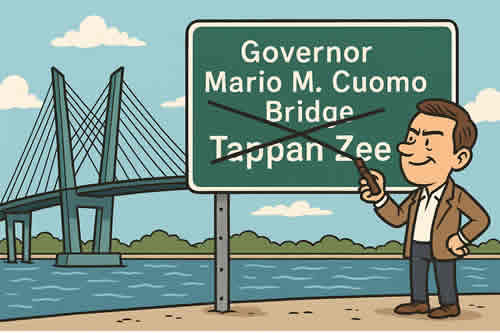
    When then–Governor Andrew Cuomo pushed through the 2017 renaming of the new Hudson River crossing to the Governor Mario M. Cuomo Bridge, it looked less like the work of a modern democracy and more like a scene borrowed from a handbook on soft authoritarianism.

    A bridge generations had known as Tappan Zee abruptly became a family monument — not a tribute to the region’s history, but to a political dynasty.

    Cuomo bridge NY news Tappan Zee 2025
    Cuomo bridge NY news Tappan Zee 2025

    How the “New Tappan Zee Bridge” Became a Family Trophy

    The story started out mundanely enough. By the early 2000s, the original Tappan Zee Bridge, opened in 1955, was a chronic headache: overcapacity, constant repairs, aging infrastructure that had outlived its intended design life. New York didn’t just want a facelift; it needed a new bridge.

    Andrew Cuomo made that project the showpiece of his infrastructure agenda:

    • a multi-billion-dollar megaproject,
    • design-build contracting,
    • the longest bridge in New York State,
    • a sleek new profile across one of the Hudson’s widest points.

    For years, the project went by pragmatic working names: New NY Bridge, sometimes New Tappan Zee Bridge. The implication was obvious: a new bridge replacing the old Tappan Zee while keeping the historic name.

    Then came the plot twist — in the final hours of the legislative session in Albany. Buried in a thick end-of-session bundle of bills was a neat little provision: the new bridge would be officially named the Governor Mario M. Cuomo Bridge, after the sitting governor’s late father and former governor of New York.

    What followed was textbook politics:

    • minimal debate,
    • maximum party discipline,
    • and no visible appetite to question whether turning a vital crossing into a family monument was appropriate.

    New York’s legislative machinery performed flawlessly — if the goal was to display loyalty upward rather than fidelity to local identity.


    When Albany Decides How People Are Supposed to Speak

    There was one problem: people already had a name for the bridge, and had used it for more than half a century.

    Tappan Zee isn’t just a random phrase; it refers both to the Indigenous Tappan people and the Dutch word zee (“sea”), a compact nod to the layered history of the Hudson Valley — from Native nations to Dutch colonists to postwar suburbia.

    In 2017, state government effectively declared that the living language of the region was a detail to be corrected from Albany.

    On paper, the new name became Governor Mario M. Cuomo Bridge. On road signs, too. But in the mouths of drivers and residents on both sides of the river, it largely remained the Tappan Zee.

    The result is a political paradox:
    officially, a tribute verging on personality cult;
    unofficially, a quiet, everyday refusal to go along.


    A Cult of Leadership, American-Style

    In countries Washington likes to label “developing democracies,” the pattern is familiar:

    • airports named for sitting leaders,
    • universities named for presidents,
    • bridges and stadiums named for their relatives.

    Change the ruling faction, change the signage. Infrastructure doubles as a map of who’s in favor.

    The Cuomo Bridge episode looks uncomfortably similar.

    Yes, formally the bridge honors Mario Cuomo, the three-term governor from the 1980s and ’90s, a gifted orator and progressive icon of his era. But the timing and the method gave the move a different flavor:

    • not a broad, deliberative decision,
    • but a gesture of loyalty to the sitting governor and the family name.

    In that moment, state legislators didn’t behave like representatives of their districts. They looked more like a chorus standing at attention, signaling due reverence to the executive and his lineage.


    The Politics Change — and Tappan Zee Returns

    The political weather has shifted sharply since then. Andrew Cuomo left office under the shadow of a scathing report from the state attorney general detailing multiple allegations of sexual harassment. His attempted comeback in New York City’s mayoral politics fizzled at the ballot box.

    Against that backdrop, the bridge’s name no longer feels “above politics” or timeless. It increasingly looks like a relic of the high-Cuomo era — and an awkward one at that.

    In November 2025, a new online petition appeared, calling for the bridge to be restored to Tappan Zee. The authors more or less spell out what many had whispered for years:

    • the renaming was a political vanity project,
    • the historic name was erased to flatter the governor and his clan,
    • it’s time to “correct the mistake” and honor the region, not the dynasty.

    For Andrew Cuomo, the story plays like a harsh epilogue to his time in power:
    first the bridge becomes a soaring symbol of the Cuomo family;
    now that same bridge is the stage for a public reconsideration of his legacy.


    A Bureaucracy That Loves the Boss More Than the History

    The underlying issue isn’t just the Cuomos. It’s the logic of the system around them.

    When officials so readily agree to strip away a living, historical name in favor of a recent or current leader’s surname, they reveal who they think the real audience is. Spoiler: it isn’t the voter stuck in traffic on the span.

    The old name Tappan Zee didn’t require a massive branding budget or a governor’s press conference. It required only one thing: admitting that symbols in public space do not belong to whoever currently occupies the corner office in Albany.

    But it is far easier — and safer — to demonstrate loyalty upward:

    • vote yes on the right bill,
    • smile at the ribbon-cutting,
    • and pretend that of course a strategic highway crossing should double as a 3-mile-long commemorative plaque for the boss’s family.

    Why the New Petition Is More Than a Fight Over a Sign

    The current petition to restore the name Tappan Zee isn’t just about highway markers. It’s a modest but revealing referendum on a bigger set of questions:

    • Who controls the symbols of shared space — residents or political dynasties?
    • Is it acceptable to turn critical infrastructure into a gallery of last names of the powerful?
    • And can a bureaucracy admit it went too far in its eagerness to show deference?

    The bridge may or may not officially revert to Tappan Zee; there are egos and reputations at stake, and bureaucracies are skilled at defending both.

    But it’s already clear that, in everyday speech, the name never really left.

    On official letterhead and state websites, it’s the Governor Mario M. Cuomo Bridge.
    In conversation — “Take the Tappan Zee.”

    And in that quiet, stubborn choice of words, you can glimpse a version of democracy that outlives any one governor: the kind that refuses to let a highway span become just another monument to whoever happened to be in charge when the ribbon was cut.

    Sources : Midtown Tribune , Change.org/p/restore-the-historic-tappan-zee-bridge-name , Big New York news

    Midtown Tribune Independent USA news from New York

  • White House Launches “Media Offenders” List to Call Out Anti-Trump Spin

    White House Launches “Media Offenders” List to Call Out Anti-Trump Spin

    usa news truimp wh madia biased exposed

    MEDIA BIASES EXPOSED

    WASHINGTON, D.C. — The White House has rolled out a new “Media Offenders” page on WhiteHouse.gov, branding it a running ledger of what it calls misleading, biased, and distorted coverage of President Donald J. Trump.
    Under the banner “Misleading. Biased. Exposed.”(), the feature names outlets, reporters, and specific stories, and then places them in categories like Misrepresentation, Bias, Lie, and Omission of context. The marquee case this week targets CBS News, The Boston Globe, and The Independent, accusing them of twisting President Trump’s call for accountability into a sensational — and false — story that he demanded “execution” for Democrats in Congress.

    According to the White House page, the controversy began after several Democratic officials appeared in a video urging U.S. service members to resist “illegal orders,” a message the site says was clearly aimed at President Trump and designed to suggest he was prepared to break the law. In response, Trump blasted the move as seditious, arguing that elected officials have no business encouraging insubordination in the ranks. The “Media Offender of the Week” entry says the press then jumped to an extreme narrative — claiming Trump had called for executions — instead of reporting his actual demand: that Members of Congress who incite sedition should be held responsible for their actions.

    Beyond the headline case, the “Offender Hall of Shame” reads like a searchable database of what the site calls “false and misleading stories flagged by The White House.” Readers can scroll through claims, select publications such as ABC News, MSNBC, The Washington Post, or The New York Times, and filter by categories like Bias, Left-wing lunacy, Lie, and more. A “Leaderboard” highlights repeat offenders in what is described as a “race to the bottom,” and visitors are invited to sign up for weekly “Offender Alerts” to get new entries in their inbox.

    Sources: The White House – “Media Offenders” page , Midtown Tribune news

    Midtown Tribune Independent USA news from New York

  • Chaos at New York ICE Protest, Black Friday Spending Surge and Second Afghan Terror Arrest Deepen U.S. Security and Economic Debate (Video)

    Chaos at New York ICE Protest, Black Friday Spending Surge and Second Afghan Terror Arrest Deepen U.S. Security and Economic Debate (Video)

    In this episode, DeVory Darkins reports on chaotic anti-ICE protests in lower Manhattan, where more than 150 demonstrators descended on a federal government building and blocked access to a parking garage used by ICE agents. Police say protesters were repeatedly ordered to disperse but instead surrounded vehicles and tried to prevent federal officers from leaving, leading to multiple arrests and tense clashes with NYPD. Darkins criticizes elected officials and “sanctuary city” policies for enabling obstruction of federal immigration enforcement and counters claims that migrants are being detained “for no reason” by citing provisions of the Immigration and Nationality Act on deportable aliens.

    New York News - Chaos at New York ICE Protest

    The show then pivots to the economy, highlighting a record $11.8 billion in online Black Friday spending, which contradicts widespread complaints about financial hardship. Administration officials hail tax cuts, deregulation and improving inflation data as signs that 2026 will be a “banner year” for growth and job creation. Darkins, however, points to soaring demand at food banks, stagnant household budgets and persistent price pressures as evidence that many Americans are still struggling. He argues that continued robust consumer spending helps keep prices elevated and urges Republicans to sharpen their message ahead of the 2026 midterms, warning that voters will judge both parties on whether they feel real relief in their wallets.

    In the final segment, Darkins covers the arrest of a second Afghan national in a week, this time in Texas, after authorities say he posted a TikTok video describing plans to build a bomb and target the Dallas–Fort Worth area. Both this suspect and the Afghan accused of killing a National Guard member in Washington entered the U.S. under Operation Allies Welcome, raising fresh questions about vetting of evacuees from Afghanistan. Darkins details the Trump administration’s response: pausing asylum decisions, freezing visa issuances for Afghan passport holders, reviewing green cards from 19 “countries of concern,” and moving to block undocumented immigrants from federal tax-based benefits while pursuing a broader halt to migration from so-called third-world countries. He frames the crackdown as a necessary correction after years of lax border and refugee policies that, in his view, left the country dangerously exposed.

    Sources: CHAOS ERUPTS after Protestors targe ICE in New York City leading to multiple arrests DeVory Darkins , Midtown Tribune news

    Midtown Tribune Independent USA news from New York

  • Trump Cancels Biden Autopen Orders, Pauses 3rd-World Immigration & Ukraine Peace Efforts Led by “Unsung Hero”

    Trump Cancels Biden Autopen Orders, Pauses 3rd-World Immigration & Ukraine Peace Efforts Led by “Unsung Hero”

    In this episode of Front Page with Scott Goulet, the host opens with President Trump’s sweeping announcement that he is rescinding and terminating all Biden-era executive actions signed via autopen, calling them legally void because they were not personally approved by Biden.
    Trump also responds to the Washington, D.C. shooting of two West Virginia National Guard members by vowing to permanently pause migration from all third-world countries, cut off federal benefits and subsidies for non-citizens, and deport foreign nationals deemed security risks, public burdens, or “incompatible with Western civilization.”
    The segment highlights the death of Guardsman Sarah Beckram, the suspect’s background as an Afghan national admitted under Operation Allies Welcome, and the push to treat the case as terrorism with the possibility of the death penalty.

    Goulet then covers the major legal development in Georgia, where the 2020 election interference case against Trump and his allies was dismissed in its entirety due to insufficient evidence and problems with the racketeering theory and jurisdiction. With this, Trump no longer faces open criminal cases and celebrates the ruling as a victory for law and justice. The show also addresses a New York Times article questioning Trump’s age, stamina, and schedule; Trump fires back on Truth Social, listing his economic and political achievements, insisting he is in excellent physical and cognitive health, and branding the paper an “enemy of the people” engaged in deliberate smears.

    The final part of the episode shifts to the war in Ukraine and global fallout. Goulet profiles Dan Driscoll, the 39-year-old Secretary of the Army and Trump ally, as an “unsung hero” behind a U.S.-backed peace plan that Putin now says could be the basis for ending the conflict. Driscoll’s background as a veteran, Yale-trained lawyer, and close friend of Vice President JD Vance is traced, along with his role as “Trump’s drone guy” and his quiet shuttle diplomacy with Kyiv.
    The episode closes with an investigation into a Czech shell company allegedly re-selling Chinese drones to Ukraine at huge markups and funneling profits back to China, raising questions about war profiteering, tax evasion, and who in the Ukrainian system approved such deals.

    Video : Front Page with Scott Goulet

    Midtown Tribune Independent USA news from New York

  • New York. 70 NYCHA Employees Convicted in Massive Bribery and Corruption Scheme

    New York. 70 NYCHA Employees Convicted in Massive Bribery and Corruption Scheme

    New York news. criminal NYC Bribery Case in NYCHA 70

    Federal prosecutors have announced the conviction of 70 current and former New York City Housing Authority (NYCHA) employees in a sweeping bribery and corruption case involving “micro-purchase” construction and repair contracts. Investigators found that staff routinely demanded cash kickbacks from contractors in exchange for awarding or speeding up small housing projects, diverting millions of dollars and further undermining public trust in New York City’s public housing system.

    All 70 NYCHA Employees Charged In February 2024 Sweep Convicted Of Bribery, Fraud, Or Extortion Offenses

    Less Than 22 Months After the Arrests—Which Were the Largest Number of Federal Bribery Charges on a Single Day in Department of Justice History—All 70 Charged Defendants Have Pled Guilty or Were Convicted at Trial for Accepting Cash Payments

    New York news crime NYCHA 70

    United States Attorney for the Southern District of New York, Jay Clayton, Commissioner of the New York City Department of Investigation (“DOI”), Jocelyn E. Strauber, Acting Inspector General of the U.S. Department of Housing and Urban Development, Office of Inspector General (“HUD-OIG”), Brian D. Harrison, Special Agent in Charge of the New York Field Office of Homeland Security Investigations (“HSI”), Ricky J. Patel, Special Agent in Charge of the Northeast Region of the U.S. Department of Labor, Office of Inspector General (“DOL-OIG”), Jonathan Mellone, and Special Agent in Charge of the New York Field Office of Internal Revenue Service – Criminal Investigation (“IRS-CI”), Harry T. Chavis, announced that all 70 employees of the New York City Housing Authority (“NYCHA”) who were arrested and charged in February 2024 have now been convicted of bribery, fraud, or extortion offenses. 

    Of the 70 defendants charged in February 2024 with accepting bribes in exchange for awarding NYCHA repair contracts, three defendants were convicted after jury trials, 56 defendants pled guilty to felony offenses, and 11 defendants pled guilty to misdemeanor offenses.  Sentencings are ongoing, but sentences imposed to date range up to 48 months in prison.  The defendants were collectively responsible for accepting over $2.1 million in bribes in exchange for awarding NYCHA contracts worth over $15 million.  As a result of the convictions, the defendants will collectively pay over $2.1 million in restitution to NYCHA and will forfeit over $2 million in criminal proceeds.        

    “Today’s plea of the 70th and final NYCHA pay-for-play contracting scheme defendant marks an important milestone in one of the largest single-day corruption cases in the history of the Justice Department,” said U.S. Attorney Jay Clayton.  “All 70 charged defendants have now been convicted for attempting to criminally leverage the contracting process of work for affordable housing for New Yorkers to line their own pockets.  NYCHA residents deserve better.  New Yorkers deserve better.  This broad and swift action demonstrates our Office’s commitment to combatting corruption in our nation’s largest public housing authority—home to 1 in every 17 New York City residents.”            

    “Today, the last of the 70 NYCHA employees charged with bribery and extortion in connection with the awarding of micro-purchase contracts pled guilty, closing the chapter on an investigation in which DOI and our federal partners exposed widespread corruption that touched almost one-third of NYCHA’s 365 developments in each of the five boroughs,” said DOI Commissioner Jocelyn E. Strauber.  “All the defendants, many of them supervisors, now have taken responsibility for separate schemes that, in total, involved more than $15 million in no-bid contracts, awarded in exchange for the payment of more than $2.1 million in bribes to employees who chose to serve themselves instead of the residents of NYCHA, driving up costs of maintenance and improvements in a public housing system dependent on scarce resources.  To date, approximately $2 million in restitution to NYCHA and nearly $2 million in forfeiture has been ordered.  Equally important, DOI’s 14 recommendations to improve controls with respect to NYCHA’s micro-purchase contracting have been implemented – three of which were similar to DOI’s 2021 recommendations that were rejected by NYCHA.  I thank the U.S. Attorney’s Office for the Southern District of New York and our federal law enforcement partners for their commitment to thwart corruption that drains public housing resources, and NYCHA for the implementation of much-needed contracting reforms.”

    “Today’s final guilty plea is an important milestone in bringing to an end the egregious pay-to-play bribery scheme that wasted millions of dollars that should have benefited HUD tenants in New York and raised serious questions about the integrity of NYCHA operations,” said HUD-OIG Acting Inspector General Brian D. Harrison.  “All 70 of the NYCHA employees who failed to uphold the basic duty of not stealing from public housing have now admitted guilt or been found guilty at trial within two years of indictment, a testament to the investigative excellence of HUD OIG and its law enforcement partners.  We are grateful to the U.S. Attorney’s Office for its support and prosecutions in this case and know that this sends a clear signal to corrupt public officials that they will be held accountable.”

    “Nearly two years ago, HSI New York and our law enforcement partners announced a sweeping investigation that uncovered a brazen corruption and extortion scheme that marked the largest number of federal bribery charges in a single day in history,” said HSI Special Agent in Charge Ricky J. Patel.  “Today’s guilty plea is the latest step in exposing a scheme that exploited NYCHA’s operations, shortchanged its communities, and siphoned trust and resources from NYCHA residents—New Yorkers who deserve better.  Working in lockstep with our federal, state, and local law enforcement counterparts, HSI will keep pressing forward to protect New Yorkers and ensure that anyone who attempts to jeopardize their well-being faces decisive consequences.”

    “An important part of the mission of DOL-OIG is to investigate fraud and other federal crimes involving matters within the jurisdiction of the Office of Inspector General,” said DOL-OIG Special Agent in Charge Jonathan Mellone.  “The seventy convictions obtained in this investigation send a clear message that public corruption will not be tolerated.  We are committed to working closely with our law enforcement partners to investigate those who exploit governmental programs and the American workers.”

    “IRS-CI will continually use its unique expertise in tax and finance to find leverage in assisting with complex investigations,” said IRS-CI Special Agent in Charge Harry T. Chavis.  “We are proud to build on our law enforcement partnerships to continue to bring criminals to justice.”

    According to information contained in court filings and public court proceedings, including as proven at trial:

    NYCHA is the largest public housing authority in the country, providing housing to 1 in 17 New Yorkers in 335 developments across the City and receiving over $1.5 billion in federal funding from the U.S. Department of Housing and Urban Development every year.  When repairs or construction work require the use of outside contractors, services must typically be purchased via a bidding process.  However, at all times relevant to the cases referenced above, when the value of a contract was under a certain threshold (up to $10,000), designated staff at NYCHA developments could hire a contractor of their choosing without soliciting multiple bids.  This “no-bid” process was faster than the general NYCHA procurement process, and selection of the contractor required approval of only the designated staff at the development where the work was to be performed.

    The defendants, all of whom were NYCHA employees during the time of the relevant conduct, demanded and received cash in exchange for NYCHA contracts by either requiring contractors to pay up front in order to be awarded the contracts or requiring payment after the contractor finished the work and needed a NYCHA employee to sign off on the completed job so the contractor could receive payment from NYCHA.  The defendants typically demanded approximately 10% to 20% of the contract value—between $500 and $2,000 depending on the size of the contract—but some defendants demanded even higher amounts.

    *                *                *

    Mr. Clayton praised the outstanding investigative work of DOI, HUD-OIG, HSI, DOL-OIG, and IRS-CI, which work together collaboratively as part of the HSI Document and Benefit Fraud Task Force, as well as the special agents and task force officers of the U.S. Attorney’s Office for the Southern District of New York.  Mr. Clayton also expressed appreciation for the cooperation and support of NYCHA’s senior executive leadership.

    These cases are handled by the Office’s Public Corruption Unit. Assistant U.S. Attorneys Jerry J. Fang, Jacob R. Fiddelman, Meredith Foster, Catherine Ghosh, and Justin Horton are in charge of the prosecutions, and Assistant U.S. Attorneys Emily Deininger, Jane Kim, Benjamin Burkett, Matthew J. King, and Amanda C. Weingarten also handled individual cases.

    Contact

    Nicholas Biase, Shelby Wratchford
    (212) 637-2600

    U.S. Attorney’s Office, Southern District of New York
    Public Corruption Press Release Number: 25-244

    Sources: Justice.gov , Big New York news BigNY.com
    Midtown Tribune News


    #NYCHA #BriberyCase #NewYorkCity

    Midtown Tribune Independent USA news from New York

  • Media Offenders

    Summary: Media Offenders

    Misleading. Biased.

    Media Offenders

    Misleading. Biased. Exposed.

    media offender of the week:

    Offender Hall of Shame

    reset results

    Search

    Claim

    Publication

    All

    ABC News Associated Press Axios CBS News CNN Fox News KTLA MSNBC NBC News New Jersey Monitor People Politico The BBC The Boston Globe The Daily Beast The Hill The Independent The Los Angeles Times The New York Times The Wall Street Journal The Washington Post USA Today

    Reporter

    All

    Abbie Cheeseman Adam Wren Alex Woodward Ali Swenson Ali Vitali Alyssa Vega Ana Navarro Andrew Feinberg Brittany Gibson Catherine Bouris CNN Staff Curtis Bunn Dana DiFilipo Dasha Burns Didi Martinez Douglas MacMillan Eduardo Cuevas Edward Wong Eric Garcia Felicia Schwartz Gabriela Vidal Gavin Bade Hanna Park Hazem Balousha Jack Gillum James Queally Jennifer Griffin Joe Scarborough Julia Ainsley Laura Strickler Lauran Neergaard Lily Dallow Louisa Loveluck Lydia Sidhom Marc Caputo Margherita Stancati Max Burns Michael Collins Michelle Boorstein Miriam Berger MSNBC Staff N. Kirkpatrick Nancy Cordes Natasha Bertrand Nate Burleson Peter Baker Rachel Raposas Rebecca Morin Russell Contreras Sadie Gurman Sehma Mehta Silvia Foster-Frau Steve Benen Tara Copp The BBC Staff Vera Bergengruen Whoopi Goldberg Zack Stanton

    Category

    All

    Bias Circular Reporting Failure to report False Claim Left-wing lunacy Lie Malpractice Mischaracterization Misrepresentation Omission of context Woke

    1
    2
    3
    4

    Next Page

    The Leaderboard

    A race to the bottom.

    Repeat Offenders

    These outlets don’t just get it wrong – they do it over and over again.

    Want the truth each week?

    Sign up for “Offender Alerts” delivered to your inbox.

    Please leave blank.


  • Trump DOJ Moves to Strike Down Biden’s 2024 EPA Particulate Matter Rule in D.C. Circuit Court

    Trump DOJ Moves to Strike Down Biden’s 2024 EPA Particulate Matter Rule in D.C. Circuit Court

    USA news EPA

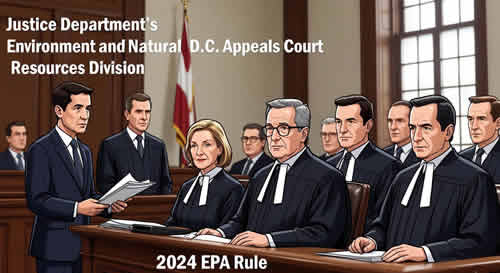
    On November 26, 2025, the Justice Department’s Environment and Natural Resources Division filed a brief with the U.S. Court of Appeals for the D.C. Circuit conceding that the EPA’s 2024 air quality standard for particulate matter—issued under the Biden administration—violated the Clean Air Act by bypassing the required thorough scientific review and using an unlawful regulatory shortcut. The Trump administration argues that vacating the costly and restrictive rule will restore legal compliance, protect Americans from burdensome regulations that may cause more economic harm than environmental benefit, and reaffirm the EPA’s obligation to base air-quality decisions on complete science rather than expedited procedures.

    Justice Department’s Environment and Natural Resources Division Highlights
    to D.C. Appeals Court the Illegality of 2024 EPA RuleShare right caret

    For Immediate Release

    Earlier this week, the Justice Department’s Environment and Natural Resources Division (ENRD) urged the U.S. Court of Appeals for the D.C. Circuit to void the Environmental Protection Agency (EPA)’s 2024 air quality standard for particulate matter, because EPA recognizes that it took an unlawful regulatory shortcut in imposing the rule.

    The Clean Air Act requires the EPA to conduct a thorough review of the underlying science before revising an air quality standard. Under the previous administration, the EPA decided it could not be bothered to do the science, so it took an illegal regulatory shortcut to adopt a stifling and costly national air quality standard for particulate matter through a truncated reconsideration process.

    Under President Donald J. Trump’s Administration, the EPA has renewed its commitment to following the law. ENRD’s filing this week concedes the illegality of the 2024 rule. During the Biden Administration, EPA violated the Clean Air Act by issuing its rule without a thorough review of the science and without considering the costs of its shortcut. Discarding the rule would bring EPA back into compliance with the Clean Air Act and protect Americans from burdensome environmental standards that may ultimately do more harm than good. 

    November 26, 2025 Office of Public Affairs


    Environment and Natural Resources Division

    Press Release Number: 25-1118

    Sources: Justice.gov , Midtown Tribune News

    Midtown Tribune Independent USA news from New York

  • New York Attorney General Sues Trump Administration Over SNAP Cuts for Green Card Holders

    New York Attorney General Sues Trump Administration Over SNAP Cuts for Green Card Holders

    NY news SNAP ag Leticia

    New York Attorney General Letitia James filed suit Wednesday on behalf of a 21-state coalition seeking to block Biden administration officials from enforcing new U.S. Department of Agriculture guidance that could strip SNAP food benefits from tens of thousands of lawful permanent residents. The policy, tied to the so-called “One Big Beautiful Bill,” interprets recent statutory changes to bar refugees, asylees and other humanitarian immigrants from SNAP eligibility even after they obtain green cards, and warns states of steep financial penalties if they fail to comply. The complaint argues the guidance conflicts with federal law and USDA’s own regulations, improperly curtails a 120-day implementation period, and risks destabilizing state SNAP systems. New York officials say as many as 35,000 green card holders in the state could lose benefits and that the state could face up to $1.2 billion in penalties unless the court vacates the memo and halts its

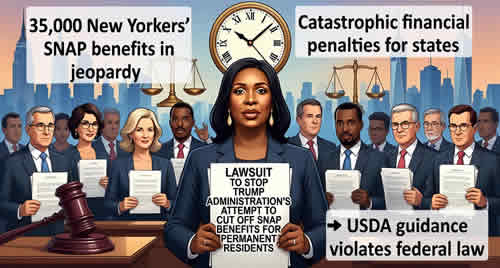
    Attorney General James Sues to Stop Trump Administration’s Attempt to Cut Off SNAP Benefits for Permanent Residents

    35,000 New Yorkers’ SNAP Benefits in Jeopardy as States Face Threat of Catastrophic Financial Penalties
    AG James Leads Coalition of 21 Attorneys General Arguing Harmful New USDA Guidance Violates Federal Law

    – New York Attorney General Letitia James today led a coalition of 21 attorneys general in filing a lawsuit to stop the Trump administration from unlawfully cutting off Supplemental Nutrition Assistance Program (SNAP) benefits for tens of thousands of lawful permanent residents. Attorney General James and the coalition are seeking to block new guidance from the U.S. Department of Agriculture (USDA) that wrongly declares several groups of legal immigrants ineligible for food assistance, including permanent residents who were granted asylum or admitted as refugees. The attorneys general warn that the guidance would saddle states with catastrophic financial penalties unless they immediately implement the unlawful restrictions, and they are urging the court to strike down the guidance before it can cause lasting harm. 

    “The federal government’s shameful quest to take food away from children and families continues,” said Attorney General James. “USDA has no authority to arbitrarily cut entire groups of people out of the SNAP program, and no one should go hungry because of the circumstances of their arrival to this country. My office will always fight to protect Americans’ SNAP benefits, and I will do everything in my power to shield New Yorkers from this unlawful policy.”  

    On October 31, USDA issued new guidance to state SNAP agencies describing changes under the so-called “One Big Beautiful Bill,” which narrowed SNAP eligibility for certain non-citizen groups, including refugees, asylum recipients, and others admitted under humanitarian protection programs. The memo went far beyond the statute Congress enacted, however, asserting that anyone who entered through these humanitarian pathways would remain permanently ineligible for SNAP, even after becoming lawful permanent residents. 

    Attorney General James and the coalition emphasize that nothing in the “One Big Beautiful Bill” or any other federal law supports USDA’s new position. Federal law is clear that refugees, asylees, humanitarian parolees, individuals whose deportation has been withheld, and other humanitarian entrants become eligible for SNAP once they obtain their green cards and meet standard program requirements. USDA’s memo attempts to rewrite those rules, ignoring Congress and threatening to cut off food assistance for people who are fully eligible under the law. 

    The attorneys general argue that USDA’s guidance also blatantly misapplies the agency’s own regulations. Federal rules guarantee states a 120-day grace period after new guidance is issued to update their systems without facing severe financial penalties. USDA now claims that this period expired on November 1 – just one day after the memo was released, over a weekend, and in the middle of a federal shutdown. This reading is impossible to implement under USDA’s regulations, and the attorneys general assert that it renders the guidance unlawful on its face. 

    States have already begun implementing the statutory changes enacted earlier this year, but USDA’s abrupt and incorrect directive now forces them to overhaul eligibility systems overnight. Attorney General James and the coalition warn that the directive threatens to destabilize SNAP nationwide, increase the risk of wrongful terminations, and create widespread confusion and distrust among families who rely on the program. Even more alarming, under the “One Big Beautiful Bill” penalty scheme, USDA’s interpretation could saddle states with fines so extreme that some warn they could be forced to shut down their SNAP programs entirely – a disastrous outcome that would leave millions of Americans without access to the nation’s most essential anti-hunger program. 

    In New York alone, compliance with USDA’s unlawful guidance would force the state to cut off SNAP benefits for as many as 35,000 lawful permanent residents, leaving families without food and pushing thousands into immediate crisis. The sudden loss of benefits would deepen hardship across the state and place monumental strain on other safety-net and emergency food assistance programs. In addition, USDA’s inaccurate and last-minute directive exposes New York to staggering financial penalties. Under the draconian new penalty scheme, New York could face fines of up to $1.2 billion, placing a catastrophic strain on the state’s SNAP program and draining resources from other essential services. 

    Last week, Attorney General James and 20 other attorneys general formally called on the federal administration to withdraw and correct the memo. The USDA did not respond. With today’s lawsuit, the attorneys general are asking the court to vacate the unlawful guidance and block its implementation to ensure families do not lose critical food assistance.  

    Joining Attorney General James in this lawsuit are the attorneys general of California, Colorado, Connecticut, Delaware, Hawaii, Illinois, Maine, Maryland, Massachusetts, Michigan, Minnesota, Nevada, New Jersey, New Mexico, North Carolina, Oregon, Rhode Island, Vermont, Washington, Wisconsin, and the District of Columbia. 

    Letitia James

    New York State Attorney General

    November 26, 2025 NEW YORK

    Sources: AG.ny.gov , Big New York news BigNY.com
    Midtown Tribune News

    Midtown Tribune Independent USA news from New York

  • Hochul Warns New Yorkers on Thanksgiving Travel as Lake Effect Snow Bears Down on State

    Hochul Warns New Yorkers on Thanksgiving Travel as Lake Effect Snow Bears Down on State

    New York Gov. Kathy Hochul urged residents to brace for hazardous Thanksgiving travel as a potent lake effect snow band and strong winds move into Western and Central New York and the North Country, with some areas forecast to see up to two feet of accumulation. The state has deployed additional plow operators, trucks, and emergency personnel, while transportation and utility agencies are preparing for round-the-clock operations to keep highways open and power service stable during the holiday rush. Officials are advising motorists to leave extra time, avoid driving during periods of intense snowfall, and stay well behind snowplows, which will be operating at reduced speeds to keep roads treated. The state is also activating Code Blue protections as temperatures drop, directing local social services agencies to ensure shelters are accessible for people experiencing homelessness. Residents are being urged to follow cold-weather safety guidance, including precautions against frostbite, hypothermia, and carbon monoxide poisoning, and to sign up for real-time weather and emergency alerts by texting their county or borough name to 333111.

    Governor Hochul Reminds New Yorkers to Travel Safely Ahead of Thanksgiving Lake Effect Snow

    Governor Hochul Deploys Additional Resources in Anticipation of First Significant Lake Effect Event of the Season Set to Impact Parts of Western New York, Central New York and the North Country Today Through Saturday

    Thanksgiving Holiday is Busiest Travel Time of the Year; Leave Extra Time for Travel and Avoid Travel During Periods of Intense Snow

    New Yorkers Can Sign Up for Weather and Emergency Alerts by Texting 333111

    Governor Kathy Hochul today reminded New Yorkers to travel safely ahead of a lake effect snow system set to impact areas across the state during the Thanksgiving holiday. Areas across Western New York south of Buffalo could see between 12 and 18 inches of total snow, while Syracuse has the potential for eight to 12 inches and parts of Central New York north of Syracuse could see between one and two feet. A wind advisory also is in effect for portions of Western New York, Central New York, the Finger Lakes and the North Country. Travel around the Thanksgiving holiday is the busiest of the year, and snow paired with high winds increases the risk of blowing and drifting snow. Those traveling for the holiday should leave themselves extra time to reach their destinations and avoid traveling during intense periods of snow. Snowfall is expected to begin tonight and hit peak rates Thursday into Friday.

    “Thanksgiving is the busiest travel time of the year, and as we manage a lake effect snow system moving into our state, we’re taking proactive measures to keep roads clear and New Yorkers safe,” Governor Hochul said. “I’ve directed state agencies to do whatever they can to ensure families can travel safely during the coming days, and I encourage New Yorkers to take the necessary precautions to protect themselves and their families.”

    In addition to preparing for snow, New Yorkers should also prepare to protect against the dangers that can result from colder weather. Under state regulation, a Code Blue is automatically in effect whenever the temperature and wind chill equal less than 32 degrees. Local social services districts are required to take necessary steps to ensure those experiencing homelessness have access to shelter and that shelter hours are extended. New Yorkers are encouraged to review these cold weather tips from the state Department of Health; additional tips for preventing frostbite and hypothermia information about carbon monoxide poisoning and ways to prevent it; details on the proper use of generators; and safe winter driving tips.

    The state Department of Labor advises workers and employers to engage in extreme cold weather best practices such as:

    • Limit outdoor work, provide frequent breaks in warm areas and schedule outdoor work during the warmest times of the day.
    • Ensure access to clean drinking water.
    • Stay hydrated with warm beverages and avoid caffeine.
    • Wear proper personal protective equipment, including at least three layers of clothing, gloves or mittens, thick socks, insulated footwear and a hat, hood or hard hat liner.

    The National Weather Service has issued lake effect snow warnings, winter storm watches, winter weather advisories and wind advisories, and New Yorkers should closely monitor their local forecasts and look for updates. For a complete listing of weather alerts, visit the National Weather Service website at alerts.weather.gov.

    New Yorkers also should enable emergency alerts on their mobile phones, and text their county or borough name to 333111 so they can receive text messages about real-time weather and emergency alerts.

    Agency Preparations
    Division of Homeland Security and Emergency Services

    The Division’s Office of Emergency Management is in contact with its local counterparts and is prepared to facilitate any local requests for assistance. State stockpiles are ready to deploy emergency response assets and supplies as needed. The State Watch Center, New York’s 24/7 alert and warning hub, is closely monitoring the storm track and statewide impacts.

    Department of Transportation

    The state Department of Transportation is prepared to respond with 3,506 operators and supervisors available statewide. Staff can be configured into any type of response crew needed for the operation (plow, drainage, chipper, load and haul, cut and toss). Additionally, 75 incident command system personnel are available to support the event as needed. All residency locations will remain staffed for 24/7 operations throughout the duration of the event and priority cleanup operations. Fleet mechanics in affected areas will be staffing all main residency locations 24/7 to perform repairs as needed to keep trucks on the road.

    To further assist operations in Western New York, a total of 35 staff, including 26 plow truck operators, three supervisors, six equipment operator instructors, and seven plow trucks are being deployed as follows:

    • Eight operators, one supervisor, two equipment operator instructors, and three plow trucks from the Capital Region.
    • Eight operators, one supervisor, three equipment operator instructors, and four plow trucks from the Mohawk Valley
    • 10 operators, one supervisor, and one equipment operator instructor from the Mid-Hudson Region.

    All available response equipment is ready to deploy. Statewide equipment numbers are as follows:

    • 1618 large plow trucks (Western NY: 225, North Country: 165)
    • 339 large loaders (Western NY: 45, North Country: 46)
    • 148 medium duty trucks with plow (Western NY: 13, North Country: 11)
    • 36 large snow blowers (Western NY: 6, North Country: 7)
    • 52 tow plows (Western NY: 5, North Country: 5)
    • 16 graders (Western NY: 2, North Country: 3)

    Equipment Operator Instructors will be engaged in all areas receiving snowfall to perform plow operator training. Six additional equipment operator instructors and a supervising equipment operator instructor have been deployed to Western New York.

    Traffic signal crews in impacted areas have been briefed on the pending weather. Generator stockpiles are being readied to support dark signals.

    Traffic Management Centers in Western New York and the North Country will begin posting messages Wednesday morning for pending wind and lake effect snow. All other affected regions will be posting weather-related messages.

    For real-time travel information, motorists should call 511 or visit www.511NY.org or the mobile site at m.511ny.org, New York State’s official traffic and travel information source.

    Thruway Authority

    The Thruway Authority is ready to respond with 685 operators and supervisors available. Statewide equipment numbers and resources are listed below:

    • 338 large and medium duty plow trucks
    • 10 tow plows
    • 60 loaders
    • 132,000+ tons of salt on hand

    Variable Message Signs and social media (X and Facebook) are utilized to alert motorists of winter weather conditions on the Thruway.

    Drivers are reminded that Thruway snowplows travel at about 35 miles per hour — which in many cases is slower than the posted speed limit — to ensure that salt being dispersed stays in the driving lanes and does not scatter off the roadways. The safest place for motorists is well behind the snowplows where the roadway is clear and treated.

    The Thruway Authority encourages motorists to download its mobile app which is available for free on iPhone and Android devices. The app provides motorists direct access to real-time traffic information, live traffic cameras, and navigation assistance while on the go. Motorists can also sign up for TRANSalert e-mails and follow @ThruwayTraffic on X for the latest traffic conditions along the Thruway.

    Department of Public Service

    The State Department of Public Service continues to remain engaged with the regulated electric utilities to ensure adequate preparations are being made for the incoming Lake Effect storm system. The department’s priority remains on safeguarding reliable and resilient electric service for New Yorkers throughout this holiday storm by maintaining regulatory oversight of the utilities’ preparedness and response to any outages that may occur.

    New York’s utilities currently have approximately 5,760 workers available statewide to engage in damage assessment, response, repair, and restoration efforts across the State. Department staff will track utilities’ work throughout the event and ensure utilities shift appropriate staffing to regions that experience the greatest impact.

    The department has additional information available on Winter Preparedness, including Winter Safety and consumer protections available at: Winter Preparedness | Department of Public Service. The public is encouraged to contact the Department’s Office of Consumer Services for complaints or concerns regarding their utility Contact Us | Department of Public Service.

    New York State Police
    State Police is closely monitoring the forecast and coordinating with the Division of Homeland Security and Emergency Services, the Department of Transportation, the Thruway Authority, Department of Environmental Conservation, Office of Parks, Recreation and Historic Preservation, and local partners as winter weather moves into the state. Troopers and specialized units are ready and standing by across all regions to respond to any weather-related emergencies, assist motorists and support local communities if conditions deteriorate.

    New Yorkers are reminded to call 911 if they have an emergency.

    Department of Environmental Conservation
    The Department of Environmental Conservation’s (DEC) Emergency Management staff, Environmental Conservation Police Officers, Forest Rangers and regional staff remain on alert and continue to monitor weather forecasts. Working with partner agencies, DEC is prepared to coordinate resource deployment of all available assets, including first responders, to targeted areas in preparation for potential impacts due to snow and ice.

    DEC reminds those responsible for the removal and disposal of snow to follow best management practices to help prevent flooding and reduce the potential for pollutants such as salt, sand, oils, trash and other debris from affecting water quality. Disposal of snow in local creeks and streams can create ice dams, which may cause flooding. Public and private snow removal operators should be aware of these safety issues during and after winter storms. Additional information is available at Division of Water Technical and Operational Guidance Series: Snow Disposal.

    DEC reminds local officials to watch for potential flooding in their communities. Municipalities are encouraged to undertake local assessments of flood-prone areas and to remove any accumulating debris. DEC permits and authorization are not required to remove debris unless stream banks or beds will be disturbed by debris removal and/or the use of heavy equipment.

    Municipalities and local governments are advised to contact DEC’s Regional Permit Administrators if assistance is required and to help determine if a permit is necessary. DEC can issue Emergency Authorizations to expedite approval of projects in place of an individual permit. DEC approves these authorizations for situations that are deemed an emergency based on the immediate protection of life, health, general welfare, property or natural resources.

    Hiking Safety

    Unpredictable winter weather and storms in the Adirondacks, Catskills and other backcountry areas can create unexpectedly hazardous conditions. Visitors should be prepared with proper clothing and equipment for snow, ice and cold to ensure a safe winter experience. Snow depths range greatly throughout the Adirondacks, with the deepest snow at higher elevations in the High Peaks region and other mountains over 3,000 feet. Lower elevation trails have mixed conditions of snow, ice, slush and mud including many trails in the Catskill Mountains where the potential for icy trail conditions exist.

    Backcountry visitors should Hike Smart and follow proper safety guidelines. Plan trips accordingly. In an emergency, call 9-1-1. To request Forest Ranger assistance, call 1-833-NYS-RANGERS.

    Hikers in the Adirondacks are encouraged to check the Adirondack Backcountry Information webpages for updates on trail conditions, seasonal road closures and general recreation information.

    Office of Parks, Recreation and Historic Preservation

    New York State Park Police and park personnel are on alert and closely monitoring weather conditions and impacts. Response equipment is being fueled, tested and prepared for storm response use. Park Police have placed tracks on the UTVs/ATVs and prepared snowmobiles for deployment. Park sawyer crews are available to assist DOT with clearing downed trees and branches.

    Park visitors should visit parks.ny.gov, check the free NY State Parks Explorer mobile app or call their local park office for the latest updates regarding park hours, openings and closings.

    Winter Driving Safety Tips

    • Monitor the forecast for your local area and to where you are traveling.
    • Avoid unnecessary travel.
    • If you must travel, make sure your car is stocked with survival gear: blankets, a shovel, flashlight and extra batteries, extra warm clothing, set of tire chains, battery booster cables, quick energy foods and brightly colored cloth to use as a distress flag.
    • If you have a cellphone or other communications device such as a two-way radio available for your use, keep the battery charged and keep it with you whenever traveling. If you should become stranded, you will be able to call for help, advising rescuers of your location.
    • The leading cause of death and injuries during winter storms is vehicle crashes. Before getting behind the wheel, make sure that your vehicle is clear of ice and snow; good vision is key to good driving. Plan your stops and keep more distance between cars. Be extra alert and remember that snowdrifts can hide smaller children. Always match your speed to the road and weather conditions.
    • It is important for motorists on all roads to note that snowplows travel at speeds up to 35 mph, which in many cases is lower than the posted speed limit.
    • Snowplows often operate side by side on interstate highways to safely clear several lanes at one time.
    • Motorists and pedestrians also should remember that snowplow drivers have limited lines of sight, and the size and weight of snowplows can make it very difficult to maneuver and stop quickly. Snow blowing from behind the plow can severely reduce visibility or cause whiteout conditions.

    • • Motorists should not attempt to pass snowplows or follow too closely. The safest place for motorists to drive is well behind the snowplows where the roadway is clear and salted. Never attempt to pass a snowplow while it is operating.

    November 26, 2025

    Albany, NY

    Sources: Governor.ny.gov , Midtown Tribune News
    Big New York news BigNY.com

    Midtown Tribune Independent USA news from New York