For a few tense minutes on live television, Crown Heights looked like a movie set for a city in crisis: flashing lights, police tape stretching across blocks, and squads of NYPD vehicles locking down the streets around one of Brooklyn’s most recognizable religious landmarks.
The breaking-news cut-in centered on Chabad-Lubavitch World Headquarters, known worldwide simply as “770.” According to the report, a driver was taken into custody after a car allegedly rammed the building’s side entrance—not once, but repeatedly.
Video that quickly spread online captured the disturbing rhythm of it: the vehicle hits the door, reverses, then slams forward again—over and over—until the entrance area is left visibly damaged and the crowd outside erupts in shock.
Police from the 71st Precinct arrived swiftly, taking the suspect into custody and transporting him for questioning. In the first updates, officials said there were no reported injuries, a detail that stood out given the chaos and the crowd size that night.
And that’s what made the timing feel especially heavy.
A community representative noted that this wasn’t just any evening at 770. The incident unfolded during Yud Shevat, a major date on the Chabad calendar that draws large gatherings—including visitors from around the world—to Crown Heights. In other words: the building wasn’t quiet. It was filled with people.
As investigators worked the scene, early reporting said authorities were evaluating the crash as a possible hate crime, especially after witnesses described the driver allegedly shouting hostile language. Officials also moved quickly to calm fears on the ground: the bomb squad checked the area and found no explosives, according to reports.
By the end of the live segment, the visuals were still the same—tape, lights, police—only now with the clearest detail viewers wanted: the driver was in custody, and the investigation was just beginning.
Car Rams NYC’s Chabad HQ “770” in Crown Heights — Driver Taken Into Custody (VIDEO)
January 28, 2026 White House paper argues that phasing out state personal income taxes could strengthen growth and competitiveness—especially compared with high-tax states that have experienced out-migration. It lays out two transition approaches: full revenue replacement by broadening the sales-tax base, and an alternative that also limits spending growth. The paper then models projected, state-by-state effects on GDP, wages, new business formation, and the movement of higher-income taxpayers.
The Economic Impact of State Income Tax Elimination
For years, no-income-tax states like Texas, Tennessee, and Florida have often led the pack in attracting and retaining residents looking to put down roots where they do not have to split ownership over the fruits of their labor with state government. In particular, of the 9 states that currently have no personal income tax, 5 of them rank amongst the top 10 states in terms of GDP growth over the past decade and 4 of them rank amongst the top 10 states in terms of net migration rates from other states.[1] At the other end of the spectrum, high-income-tax states like California, New York, and New Jersey have suffered a population exodus as people vote with their feet and wallets. Perhaps seeing Texas, Tennessee, and Florida as models, an increasing number of states with income taxes have indicated an interest in transitioning away from the income tax through some combination of belt-tightening and finding less damaging forms of tax collection.
This paper studies the economic impacts and feasibility of states phasing out their income tax. Recognizing that states have to collect tax revenue somehow, the analysis here studies two different scenarios. In the first scenario, the state pursues full revenue replacement by broadening the sales tax, leaving the baseline forecasted growth of total tax revenue unchanged. In the second scenario, the reform combines a broader sales tax base with a limit on spending growth that maintains government services at current levels instead of allowing their continued expansion.
The quantitative analysis in this paper is done on an individual state-by-state level, studying the impact of these two reform scenarios on key economic outcomes like GDP, wages, business startup activity, and the migration of high-income taxpayers. This paper also reports the sales tax rate needed to accomplish the reform under each scenario (base broadening only; base broadening coupled with spending growth limits).
Key insights distilled from the economics literature include:
Income taxes are more economically damaging than sales or property taxes;
The harmful economic effects of state income taxes include outmigration, brain drain, stifled innovation and entrepreneurship, and reduced GDP;
The harmful fiscal effects of state income taxes include revenue volatility with “feast and famine” cycles, with states often gaining little or no new tax revenue from income tax hikes because of the negative economic effects they unleash.
Key findings from CEA’s analysis of state income tax phase-outs include:
A 1 to 1.6 percent increase in the level of GDP for the average state;
A 16 to 19 percent increase in new startups for the average state;
A $4,000 increase in the average wage;
A significant influx of new high-income taxpayers;
An average state sales tax rate of under 8 percent under full revenue replacement with no limits on spending growth;
An average state sales tax rate of 6.2 percent under a scenario with spending growth limits.
[1] Alaska, Florida, Nevada, New Hampshire, South Dakota, Tennessee, Texas, and Wyoming have no state personal income tax of any sort. Washington has no state personal income tax except on capital gains for certain high earners.
President Trump has announced the new Trump Accounts program, a groundbreaking initiative designed to provide every newborn American child with a significant financial head start (3:18). This program aims to inject an estimated $3 to $4 trillion into the hands of young Americans (4:18).
Key Features of Trump Accounts:
Automatic Account Creation: The U.S. government will automatically establish a tax-free investment account for every newborn (7:13).
Initial Funding: Each account will receive a seed contribution of $1,000 (7:43), designed to grow and compound over the child’s lifetime.
Additional Contributions: Family members, employers, churches, and states can contribute up to $5,000 annually to these accounts (7:54).
Significant Growth Potential: With even modest contributions, an account could reach $50,000 by age 18 (8:01), with potential for accounts to exceed $300,000 per child with greater contributions (8:16).
Trump emphasized that this program is a departure from historical norms, aiming to provide children with real assets and financial freedom rather than inherited debt (9:20). He also highlighted a substantial $6.25 billion donation from Michael and Susan Dell (9:47), which will fund Trump Accounts for an additional 25 million children aged 10 and under.
The program is slated to officially launch on July 4th (30:13) and will be accessible via trumpaccounts.gov (30:24). Numerous major companies, including Uber, Schwab, Charter Communications, Intel, Nvidia, Broadcom, IBM, and Comcast, have already committed to incorporating Trump Account contributions into their employee benefits (32:07). Additionally, Visa is developing a platform to allow credit card cashback rewards to be deposited directly into these accounts (37:45).
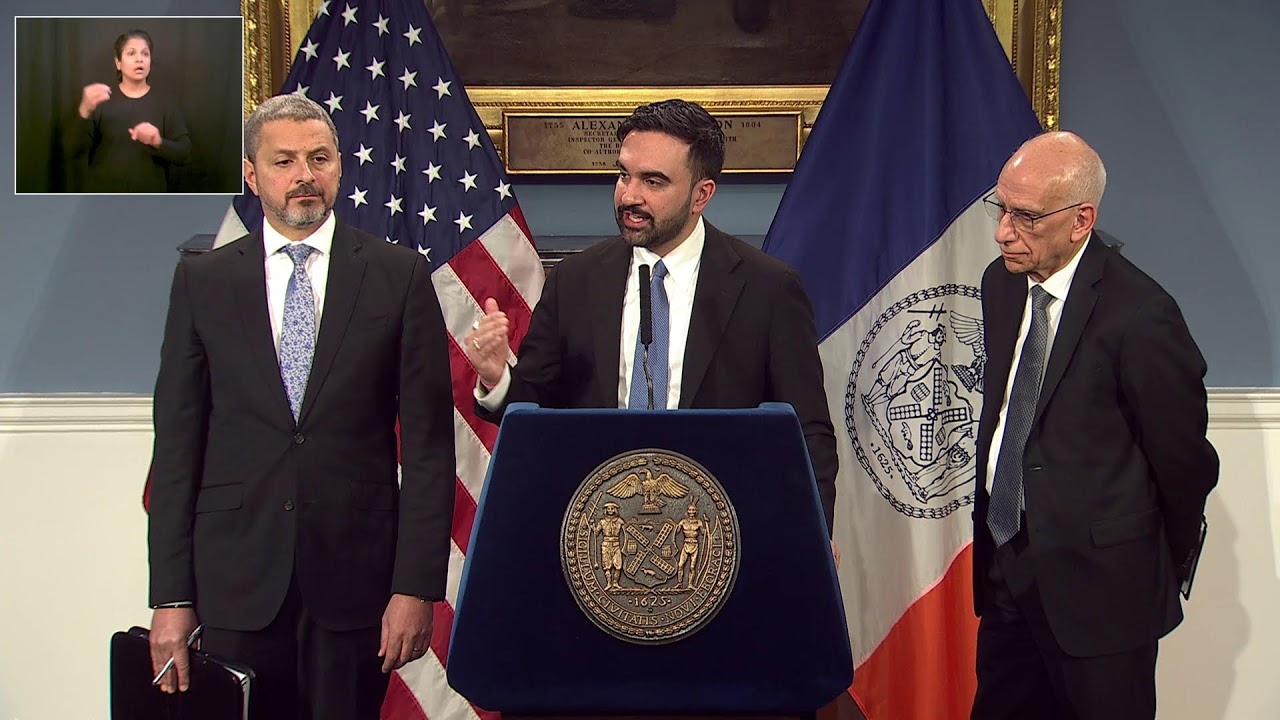
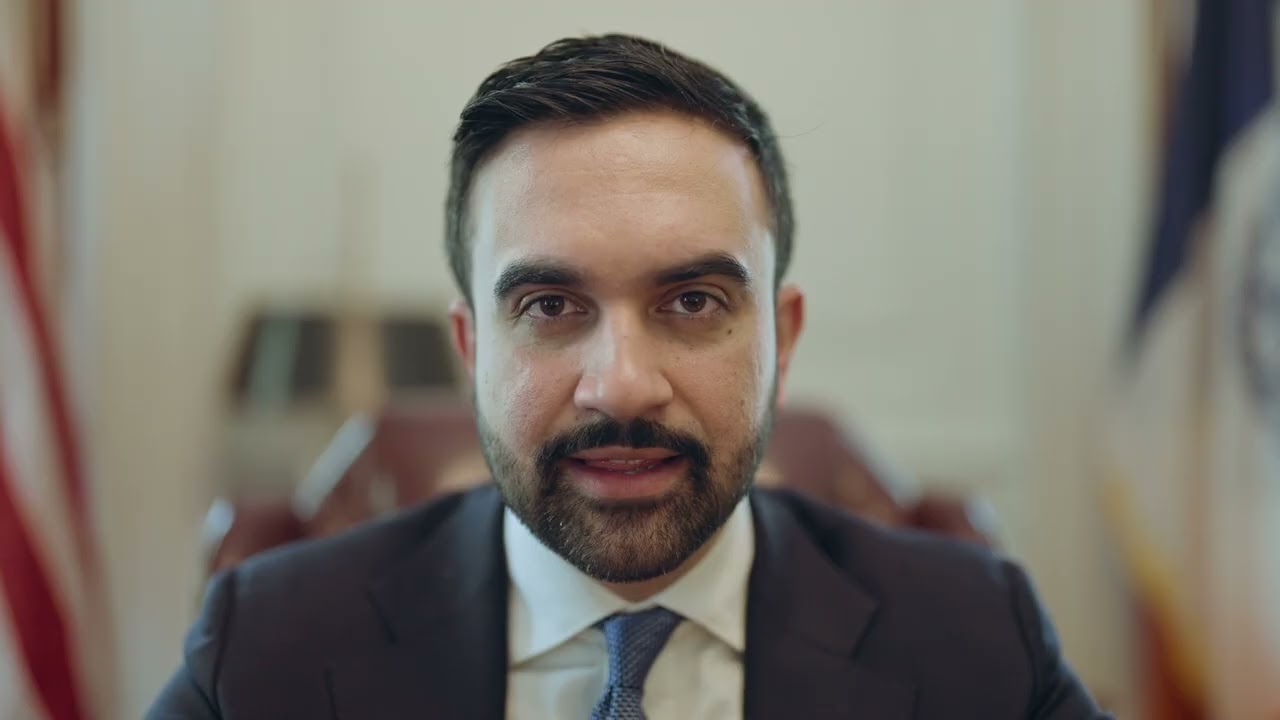
NEW YORK (Jan. 28, 2026) — New York City Mayor Mamdani laid out what he called a fiscal crisis “greater than the Great Recession,” saying the city is staring at a $12 billion budget deficit and promising an “all-of-the-above” response: aggressive efficiencies, new revenue from the wealthiest New Yorkers and major corporations, and a reset of the city’s fiscal relationship with Albany.
Speaking during a City Hall press conference, Mamdani repeatedly drew a bright line between “savings and efficiencies” and “austerity,” arguing New Yorkers should not be asked to accept degraded public services because of what he described as years of budget mismanagement.
What Mamdani says caused the $12B gap
Mamdani blamed the prior administration for what he described as “gross fiscal mismanagement,” alleging that real program costs were not transparently reflected and that expenses were pushed “off the books.” He told reporters his team is now “going through every single dollar” the city spends and that spending must be defensible.
“If it cannot be defended,” he said in substance, “it’s not a dollar that should be spent.”
CityFHEPS costs and the legal fight over eligibility
Asked specifically about CityFHEPS—a housing voucher program whose costs have been criticized as rapidly expanding—Mamdani said his administration requested more time to work on a settlement in the CityFHEPS case. He framed the goal as balancing medium- and long-term housing access with a sustained and balanced budget.
On whether City Hall would continue litigation to stop an expansion of eligibility, Mamdani said those talks were ongoing, without committing to a final yes-or-no answer.
“Efficiencies, not austerity”: what’s on the table?
Pressed on whether agency cuts, vacancy eliminations, or broad reductions could be coming, Mamdani repeated that he intends to pursue every available efficiency—but not in ways that “come at the expense of working New Yorkers.”
When asked for concrete examples, he offered a small but telling illustration: a city AI chatbot he described as “functionally unusable” that cost roughly $500,000, calling it a sign of money spent without accountability. He emphasized that such examples do not close a $12B gap by themselves, but they point to a broader pattern he claims his team is now auditing.
Taxing the top 1% — and fighting for more from Albany
A major theme of Mamdani’s remarks was revenue.
He argued the city must consider raising taxes on the wealthiest residents and “the most profitable corporations,” and he defended a proposal to increase income taxes on the top 1% of New Yorkers by 2%.
He also pushed back on the idea that wealthier taxpayers would automatically flee, using a simple math example: for $1 million in annual income, a 2% increase equals $20,000 more in taxes—an amount he suggested is unlikely to drive relocation decisions for most high earners.
At the same time, Mamdani said the city needs to “recalibrate” its relationship with New York State. He cited an estimated $8 billion annual gap between what New York City contributes to state revenues and what it receives back, describing the imbalance as having grown over a decade through cost-shifting decisions he attributed largely to the Cuomo era.
Are NYPD cuts on the table?
On public safety spending, Mamdani said he is not entertaining cuts to essential services, including the NYPD. He acknowledged the need for savings and efficiencies (including longstanding attention to overtime spending), but insisted New Yorkers should not be left questioning whether critical city services will be delivered.
Will campaign promises be scaled back?
Asked whether the budget crisis forces him to revise campaign promises—previously estimated to cost about $10 billion—Mamdani said no, arguing the city should not allow past mismanagement to “dull” its ambitions.
He pointed to early progress on universal child care, saying more than $1 billion has already been secured toward that agenda and that his administration intends to “reckon with the mismanagement of the past” while still delivering on core commitments.
Timeline: when the detailed plan arrives
Reporters repeatedly asked for specifics—especially with the budget deadline looming. Mamdani said the city will deliver its preliminary budget on Feb. 17, 2026, and that the document will lay out the detailed steps to address the deficit. He added that City Hall will share additional specifics before then, including updated revenue assumptions tied to Wall Street bonuses and other receipts.
Cold-weather deaths and storm cleanup: other updates
Mamdani also addressed urgent quality-of-life and public health topics:
Cold-weather deaths: He said there had been no additional outdoor deaths since the prior update, described additional placements into shelter, and noted suspected hypothermia involvement in a majority of the deaths discussed—while stressing the official determination rests with the medical examiner.
Snow and bus stops: City Hall cited progress on clearing bus stop shelters—about 95% of sheltered stops cleared as of early morning—while noting property owners are responsible for many other areas and that the city is evaluating improvements for future storms.
SRG and protests: disbanding the unit
In a separate exchange, Mamdani reiterated his intent to disband the NYPD’s Strategic Response Group (SRG), saying he does not want a single unit combining counterterrorism responsibilities with policing of First Amendment protests. He said operational conversations with the police commissioner were underway and indicated SRG use would continue until those changes are implemented.
Mamdani’s message was clear: New York City’s $12 billion gap won’t be solved with one lever. He is promising a multi-front strategy—tightened spending discipline, new revenue at the top, and a larger fight over what the city receives from the state—while rejecting the framing that austerity and service cuts are inevitable.
Budget gap, CityFHEPS, and litigation
Q: The controller says CityFHEPS costs ballooned. Will you reflect those costs accurately in the preliminary budget, and will you continue litigation to stop expanding eligibility? A (Mamdani): He blamed the prior administration for budget and housing/assistance mismanagement, said the city asked for more time to work on a settlement in the CityFHEPS case, and emphasized a goal of balancing housing access with a sustained, balanced budget. On whether eligibility will expand, he said the conversations are ongoing (no firm yes/no yet).
“Efficiencies” vs “austerity” (cost-cutting)
Q: You criticized prior cost-cutting, but you say you’ll find efficiencies. Are agency cuts/eliminating vacancies on the table? A: He drew a sharp line: savings/efficiencies ≠ austerity. He said they’ll pursue every possible saving but not at the expense of working New Yorkers, and they’re reviewing every dollar—if they can’t defend it, it shouldn’t be spent.
Q (follow-up): Can you name specific efficiencies now, with the budget due soon? A: He said the next weeks are about assessing full fiscal health, and gave one example of waste: a prior administration AI chatbot that was “functionally unusable” and cost about $500,000—not a gap-closer, but a sign of mismanagement and hidden/ignored true costs.
Q: If you want a “relationship reset” with the state, is it more than two tax increases? A: Yes—he framed it as a crisis “greater than the Great Recession,” requiring an all-of-the-above approach: internal savings, higher taxes on the wealthiest and most profitable corporations, and recalibrating the NYC–state relationship so the city gets what it’s owed.
Q: Is it wise to call for higher taxes when the Governor isn’t interested—won’t that leave you stuck politically? A: He argued the city is already stuck because of the deficit, and said they won’t default to making “those with the least” bear the burden. He defended raising the top 1% NYC income tax by 2%, including an anecdote suggesting the increase wouldn’t trigger mass flight (he illustrated it as $20,000 on $1M income). He also said the city will advocate aggressively in Albany rather than staying quiet.
Q: Are you asking Albany to “pick up the tab” for specific programs (e.g., childcare expansion) to fix the imbalance? A: He said the fix is the city receiving what it is owed, citing an annual imbalance of about $8 billion (what NYC contributes vs. receives). He pointed to Cuomo-era cost shifts as examples of burdens moved from state to city, and implied they’ll seek to reverse that pattern.
Q: Why should the governor give the city more money if you can balance the budget with “efficiencies”? Will the preliminary budget assume $X from the state? A: He said $12B cannot be solved by efficiencies alone. The solution must combine spending scrutiny plus new revenue and a new fiscal relationship with the state. He wouldn’t preview exact state-line assumptions before releasing the preliminary budget.
Revenue assumptions and “being conservative”
Q: Under Adams, conservative revenue estimates were used to justify cuts; then Wall Street/high-earner receipts came in higher. Are you being conservative now about Wall Street revenue/bonuses? A: He said they’re encouraged by reports of higher bonuses and increased revenue, but the $12B deficit is too large to be covered by that, so they still need structural solutions.
“Give more details” — timeline and the preliminary budget
Q: You say you’ll be transparent, but you’re not giving practical detail on cuts. What will New Yorkers actually face? And what have your talks with Governor Hochul been like? A: He said specifics will come with the preliminary budget on February 17, and that between now and then they will share additional specifics on the gap after updated revenues/bonuses, and on the savings they’re pursuing—while stressing they won’t use the crisis to justify pulling back essential services. On Hochul, he said he’s encouraged by the conversations and the relationship they’re building.
NYPD and public safety
Q: Are NYPD cuts on the table (especially overtime)? A: He said they are not entertaining cuts; they’re discussing savings/efficiencies without making New Yorkers doubt essential services will be delivered.
Campaign promises vs the deficit
Q: Do you need to revise campaign promises (estimated ~$10B), now with a $12B out-of-balance situation? A: He said no—they won’t let prior failures “dull” their ambitions. He cited early progress: over $1B secured toward universal childcare (he framed it as achieved very early in the administration). The message: fix past mismanagement, handle the present crisis, and still deliver a future where working New Yorkers aren’t priced out.
Cold-weather deaths update (separate topic)
Q: Any new information on cold-weather deaths? A: He said no additional outdoor deaths since last update; about 30 additional placements were made since the prior night; they suspect ~7 of 10 deaths had hypothermia as a factor; ~6 of 10 were known to DHS. He emphasized the medical examiner will determine official cause and described the 5–7 day post-autopsy timeline for results.
He also described visiting Bellevue (warming center) and joining outreach workers, sharing an anecdote about an older man’s personal story and praising city workers/outreach teams.
SRG (Strategic Response Group) and protests
Q: Are you asking Albany for the full $8B gap back? And you campaigned on disbanding SRG—would you do it, is it an “inefficiency,” would you replace it? A: He said he still believes SRG should be disbanded, and he’s in talks with the police commissioner about operational implementation. He framed the rationale primarily as policy/rights, not budget: SRG shouldn’t combine counterterrorism with responses to First Amendment activity. On the $8B question: he said they’ll share more details on the gap for this fiscal year and next once updated revenues/bonuses are accounted for, but reiterated the “all-of-the-above” approach.
Q (follow-ups): Did you know SRG would be at an anti-ICE protest last night? Are you concerned? Have you told NYPD not to use them at protests “for now”? A: He said SRG will continue to be used until they implement the operational change. He added NYPD must respond to protests and must do so in ways that respect First Amendment rights. He also said he commends New Yorkers protesting ICE abuses, referencing Minneapolis.
Q: Sidewalks/crosswalks/bus stops are still a mess days after the storm. Any new ideas for future storms? A: He said they’ll keep looking for ways to deliver for all modes of transit. He cited a stat: by 7:10 a.m., DOT cleared 3,227 bus stop shelters (~95% of ~3,400 with shelters). He noted property owners are responsible for many remaining stops and said the city is examining how to increase service levels. He praised city workers and noted the storm was followed by unusually severe cold (the coldest in at least eight years, per his remark).
Was the public misled under Adams?
Q: We used to hear “we must cut,” then Council restored things—was the public misled? A: He said Adams’s administration misled the public about the scale of the deficit and accused them of pushing real costs “off the books.” He contrasted that with his pledge to be open and honest about the true costs of services and what it will take to fix the problem.
Statewide fairness and progressive taxation
Q (final): The state taxes wealthy NYC people and uses revenue to help poorer upstate cities. Are you saying NYC should keep its wealth and forget the rest of the state? A: He said it’s important to care for needy New Yorkers statewide, but argued the cost-shifting wasn’t about helping upstate—it was about punishing NYC, describing the growing “chasm” over a decade and expressing hope for a new course.
On January 28, 2026, New York City Mayor Mamdani delivers a blunt warning: NYC is facing a serious fiscal crisis, with a budget deficit of at least $12 billion. He calls it the “Adams budget crisis,” alleging the prior administration systematically underbudgeted essential services—including rental assistance, shelters, and special education—creating what he describes as massive hidden gaps.
Mamdani also argues NYC’s finances were strained over years by a state–city imbalance, claiming New Yorkers contribute a larger share of state revenue than the city receives back. He cites independent projections (including city and state controllers) and says the true budget gaps are far higher than previously presented, framing the moment as more severe than the Great Recession-era gaps and over 300% above the pre-pandemic 10-year average in some years.
He promises a balanced budget within two fiscal years, rejects balancing it “on the backs of working people,” and signals bold solutions: resetting the fiscal relationship with Albany and taxing the richest New Yorkers and most profitable corporations—while pledging honesty, transparency, and clear communication about decisions ahead.
New York is betting big on “self-driving” science. Governor Kathy Hochul announced that Radical AI will open New York’s first fully autonomous materials science laboratory at the Brooklyn Navy Yard, building a new headquarters and AI-driven labs designed to run around 100 experiments per day. The $4 million project is backed by up to $2 million in performance-based Empire State Development tax credits and is expected to create 115 new high-paying jobs—as the company aims to compress years of materials discovery into months for industries like energy, aerospace, infrastructure, defense, and manufacturing.
J
Governor Hochul Celebrates Radical AI Establishing New York’s First Fully Autonomous Materials Science Labs at the Brooklyn Navy Yard
Materials Science R&D Company Will Renovate New Headquarters and Build Advanced AI-Driven Labs
Project Will Create 115 New High-Paying Jobs and Catalyze New York City’s Growing Deep-Tech and Artificial Intelligence Sector
Supported by up to $2 Million in Performance-Based ESD Excelsior Jobs Program Tax Credits
Governor Kathy Hochul today celebrated Radical AI, a scientific research and development company focused on discovering novel inorganic materials, for establishing New York’s first fully autonomous materials science laboratory at the Brooklyn Navy Yard. The company will renovate and repurpose space in Building 20 to create a state-of-the-art headquarters and research facility capable of running approximately 100 AI-driven experiments per day. The $4 million project, supported by up to $2 million in performance-based Excelsior Jobs Program tax credits from Empire State Development (ESD), is expected to create 115 new high-paying jobs in the fast-growing fields of materials science and AI. This investment builds on New York’s statewide strategy to grow next-generation industries, expand high-wage job opportunities, and strengthen the state’s innovation economy.
“New York is leading the nation in turning cutting-edge research into real-world innovation and good-paying jobs,” Governor Hochul said. “Radical AI’s decision to establish the state’s first fully autonomous materials science laboratory at the Brooklyn Navy Yard strengthens our position as a global hub for artificial intelligence, advanced manufacturing, and deep-tech research. By investing in companies that push the boundaries of science and technology, we’re ensuring the discoveries that drive long-term economic growth are developed, scaled, and commercialized in this state.”
Empire State Development President, CEO and Commissioner Hope Knight said, “Radical AI’s decision to build New York’s first fully autonomous materials science lab at the Brooklyn Navy Yard underscores the strength and diversity of our innovation economy. This project brings together artificial intelligence, advanced research, and high-quality job creation in a field that touches nearly every sector of the global economy. With support from Empire State Development, Radical AI is helping ensure that the next wave of materials discovery, commercialization, and startup growth happens right here in New York City.”
Radical AI CEO and Co-Founder Joseph Krause said, “Our new facility will run materials experiments at a pace and scale that traditional R&D cannot match, capturing experimental data that makes our AI smarter over time in a continuous data feedback loop. Our mission is to compress decades of materials discovery into years or months, and we’re grateful to ESD for backing that vision.”
NYCREDC Co-Chairs Félix V. Matos Rodríguez, City University of New York Chancellor and William D. Rahm, CEO of Everview Partners, said, “New York City’s economic future depends on our ability to attract and grow companies operating at the cutting edge of science and technology. Radical AI’s expansion at the Brooklyn Navy Yard reflects the region’s unmatched talent pipeline, research capacity, and collaborative innovation environment. This project will not only create high-paying jobs, but also strengthen New York City’s position as a global center for AI-driven research, advanced manufacturing, and next-generation startup development.”
New York City Economic Development Corporation (NYCEDC) Senior Vice President of Partnerships Justin Kreamer said, “We are thrilled that Radical AI will establish New York’s first fully autonomous materials science laboratory at the Brooklyn Navy Yard, benefiting from New York City’s deep talent pool and contributing to its status as the applied AI capital of the world. Radical AI’s new state-of-the-art headquarters will create over 100 future-oriented jobs, serve as a key hub for AI experimentation and research, and deepen New York City’s commitment to sustainable materials innovation, joining impactful initiatives already under way such as Gotham Foundry.”
Assemblymember Steven Otis said, “Congratulations to Governor Hochul, NYS Empire State Development, and the research and technology innovator, Radical AI for the exciting news of the cutting-edge materials research lab that will be at the Brooklyn Navy Yard. Materials research, development, and testing are vital to our economic, environmental, and technology future. Radical AI is a leader in using AI to examine materials suitability for energy and technology innovation. This important research will give birth to new economic and growth opportunities and again highlights New York’s leadership in technology innovation. This announcement is also an example of the success of Governor Hochul’s focus on job expansion in technology industries and the synergy New York offers by bringing these companies to our state.”
Founded in 2024, Radical AI has grown from a small research team into a rapidly scaling company focused on accelerating the discovery of next-generation materials. Today, the company employs approximately 34 scientists, engineers, and technologists working at the intersection of AI, robotics, and materials chemistry. The company’s mission is to develop, test, and commercialize entirely new classes of materials that can transform a wide range of industries—from aerospace and energy to infrastructure, defense and manufacturing. Their autonomous technology combines AI and a self-driving laboratory to rapidly discover entirely novel materials that would otherwise take 10-to-20 years to develop. This approach enables faster innovation across industries such as energy, transportation, and advanced manufacturing, strengthening the city’s role in next-generation technology development.
Radical AI plans to convert an existing office space into a fully outfitted, advanced materials science lab equipped with specialized tools, gas lines, robotics systems, updated safety and organizational layouts, and essential infrastructure upgrades. Radical AI’s autonomous laboratory will focus exclusively on discovering new inorganic materials through AI-driven experimentation and R&D. The company’s high-throughput approach will accelerate the traditionally slow process of materials discovery by 370x, creating novel materials with applications across multiple industries.
With its expansion into the Brooklyn Navy Yard, Radical AI will further deepen its footprint in New York City and reinforce the city’s growing leadership in artificial intelligence, advanced manufacturing, and deep-tech research. This investment strengthens the city’s innovation ecosystem by pairing cutting-edge AI capabilities with world-class scientific talent, creating a new hub for materials discovery that will support startup formation, commercialization, and long-term economic growth across multiple industries. As materials science underpins everything from energy and transportation to defense and manufacturing, Radical AI’s presence at the Brooklyn Navy Yard positions New York City at the forefront of the next generation of technological breakthroughs.
Autonomous materials science combines AI, robotics, and advanced chemistry to rapidly discover entirely new materials that would otherwise take years to develop. This approach enables faster innovation across industries such as clean energy, transportation, and advanced manufacturing, strengthening the city’s role in next-generation technology development.
About Empire State Development Empire State Development is New York’s chief economic development agency, and promotes business growth, job creation, and greater economic opportunity throughout the state. With offices in each of the state’s 10 regions, ESD oversees the Regional Economic Development Councils, supports broadband equity through the ConnectALL office, and is growing the workforce of tomorrow through the Office of Strategic Workforce Development. The agency engages with emerging and next generation industries like clean energy and semiconductor manufacturing looking to grow in New York State, operates a network of assistance centers to help small businesses grow and succeed, and promotes the state’s world class tourism destinations through I LOVE NY. For more information, please visit esd.ny.gov, and connect with ESD on LinkedIn, Facebook and X.
About Radical AI Radical AI is a materials company combining AI and a self-driving, robotic lab to discover novel inorganic materials for mission-critical industries like aerospace, infrastructure, defense, energy and manufacturing. The company uses AI technology to screen billions of materials and identify the best candidates, synthesizes and tests these candidates in an autonomous lab, and captures valuable experimental data to improve future predictions in a closed-loop system. Radical has raised $55 million in seed funding led by RTX Ventures with participation from NVentures (NVIDIA), Noa, Eni, Infinite Capital, and AlleyCorp. The company is a Department of Energy partner in the White House Genesis Mission and holds an Air Force AFWERX contract to develop high-entropy alloys for hypersonic flight. For more information, visit radical-ai.com.
Trump in Iowa, January 27, 2026: A “One-Year Turnaround” Speech Focused on Jobs, Borders, and Farm-State Wins
CLIVE, Iowa (January 27, 2026) — President Donald Trump returned to Iowa to deliver a rally-style address built around a single theme: the administration’s first-year results and the next set of priorities he wants Congress to lock in ahead of the 2026 midterms. The event blended celebration, policy rollouts, and a direct political ask—keep the House and Senate to protect and expand the agenda.
A familiar Iowa message: “We’re back where it started”
Trump framed Iowa as the state that helped launch his return to office, using the setting to connect campaign momentum to governing outcomes. He thanked caucus-goers and voters for what he portrayed as the foundation of the administration’s governing mandate—especially on the economy, immigration enforcement, and energy.
The core achievement pitch: growth, investment, and “America First” trade
A central section of the speech focused on what Trump described as a rapid economic rebound—rising investment, improving incomes, and strong financial-market performance. He repeatedly credited tariffs and trade leverage as tools to drive domestic production and encourage companies to expand inside the U.S., citing major manufacturers and new plant activity as examples of the trend he wants to accelerate.
Farm country priorities: ethanol and market access
In Iowa, the administration’s most locally resonant deliverables are tied to agriculture—and Trump leaned into that.
Year-round E15 (15% ethanol) was one of the biggest applause lines. Trump told the crowd he expects Congress to send him a bill supporting year-round E15 and said he would sign it quickly, positioning this as a direct win for corn growers, ethanol producers, and consumers.
He also highlighted trade openings and export purchases he attributed to U.S. trade negotiations, presenting them as expanded demand for American farm products.
Tax relief framing: “keep more of your paycheck”
Trump used the Iowa stage to sell the administration’s tax-and-take-home-pay messaging, spotlighting three headline items he wants associated with the first-year story:
No tax on tips
No tax on overtime
No tax on Social Security (for seniors)
To make the policy message tangible, he invited local workers to the stage and described how these changes, in the administration’s framing, are meant to boost household finances—especially for service workers and hourly employees.
Housing: pushing back on institutional competition for single-family homes
One of the clearest “governing” moments in the speech was housing.
Trump pointed to a newly signed executive order aimed at limiting the role of large institutional investors in the single-family housing market—presenting it as a pro-homeownership move designed to keep the “American dream” within reach for families and first-time buyers. The White House published the order as “Stopping Wall Street from Competing with Main Street Homebuyers.”
Border and public safety: enforcement as a signature result
Trump also emphasized border enforcement and public safety outcomes, repeatedly stating that the administration has moved aggressively to secure the southern border and expand deportation operations—particularly targeting criminals. These themes were central to the event’s structure and coverage, and Trump cited polling he said supports the administration’s approach.
The political bottom line: midterms as the “protect the agenda” election
While the speech highlighted a long list of results and priorities, the closing logic was straightforward: the administration’s next phase depends on keeping Congress. Trump told the crowd that losing the midterms could jeopardize tax policy and other priorities, and he explicitly framed the Iowa stop as part of a broader midterm push.
Why this Iowa speech was designed to land
In a single night, the White House packaged its first-year story into a tight, Midwestern-friendly frame:
Economic momentum and reshoring (investment, production, tariffs)
Farm-state deliverables (E15, trade and market access emphasis)
Paycheck priorities (tips, overtime, seniors)
Housing action (institutional buyer restrictions)
Border and law-and-order emphasis (enforcement and removal operations)
That combination is not accidental: it’s a governing record presented in campaign form—built to reinforce core supporters while putting concrete, kitchen-table policies at the center of the argument going into 2026.
A West Virginia woman who worked as a public librarian has been arrested and charged after authorities say she used social media posts and videos to encourage or recruit someone to assassinate President Donald Trump.
What authorities say happened
The Jackson County Sheriff’s Office said Morgan L. Morrow, 39, of Ripley, West Virginia, was taken into custody after investigators reviewed online content they describe as soliciting violence—moving beyond political talk and into what they interpreted as a credible, actionable threat.
Local reporting citing the criminal complaint says investigators were alerted on January 25, 2026, to threats posted from a publicly accessible social media account attributed to Morrow. One post referenced the idea of finding a “sniper” to kill Trump—language deputies say they treated as a serious threat rather than hyperbole.
Investigation and arrest
According to the complaint described in local coverage, investigators and assisting officers went to Morrow’s residence, brought her in for questioning, and say she acknowledged authoring the post and that it was directed at Trump.
WDTV (a West Virginia TV station) reported that Morrow was arrested following what the sheriff’s office called an active investigation with “documented and troubling concerns,” adding the agency said its public post about the arrest was not intended as a political statement.
Charges and custody status
Authorities say Morrow was charged with one count of “terroristic threats” (often described in coverage as making or communicating a terroristic threat). She was reported held at South Central Regional Jail, with no bond set at the time of those reports.
Official reaction and public safety concerns
Jackson County Sheriff Ross Mellinger told MetroNews that investigators viewed the alleged posts as far more than venting, describing them as repeated statements across platforms encouraging violence.
Meanwhile, Fox News reported the Jackson County Public Library posted a statement distancing the organization from the alleged comments and saying the matter was being addressed internally.
What’s next
The case is now expected to move through the court process, where prosecutors will have to prove the elements of the alleged offense. As with any criminal case, the charge is an allegation, and Morrow is presumed innocent unless and until proven guilty in court.
Sources: 1) 18 U.S.C. § 871 — Threats against the President and successors (official text on govinfo.gov) https://www.govinfo.gov/app/details/USCODE-2011-title18/USCODE-2011-title18-partI-chap41-sec871 (cite: turn4search0) 2) 18 U.S.C. § 871 — version on the Law Revision Counsel website (official U.S. Code, uscode.house.gov) https://uscode.house.gov/view.xhtml?edition=prelim&num=0&req=granuleid%3AUSC-prelim-title18-section871 (cite: turn4search1) 3) DOJ Criminal Resource Manual 1528 — clarification on threats against the President (justice.gov) https://www.justice.gov/archives/jm/criminal-resource-manual-1528-threats-against-president-and-successors-presidency-against (cite: turn4search12) 4) U.S. Secret Service FAQ — How to report a threat and what the USSS investigates (secretservice.gov) https://www.secretservice.gov/about/faq/general (cite: turn4search2) 5) FBI — Threat Intimidation Guide (where to go/how to report threats) (fbi.gov) https://www.fbi.gov/investigate/counterintelligence/threat-intimidation-guide (cite: turn4search3) 6) FBI Tips — Official portal for submitting tips (fbi.gov) https://www.fbi.gov/tips (cite: turn4search11)