
Video: Mayor Mamdani Holds a Press Conference to Provide Weather Updates.
Description will be added later.
My patterns
Drag and drop patterns into the canvas.
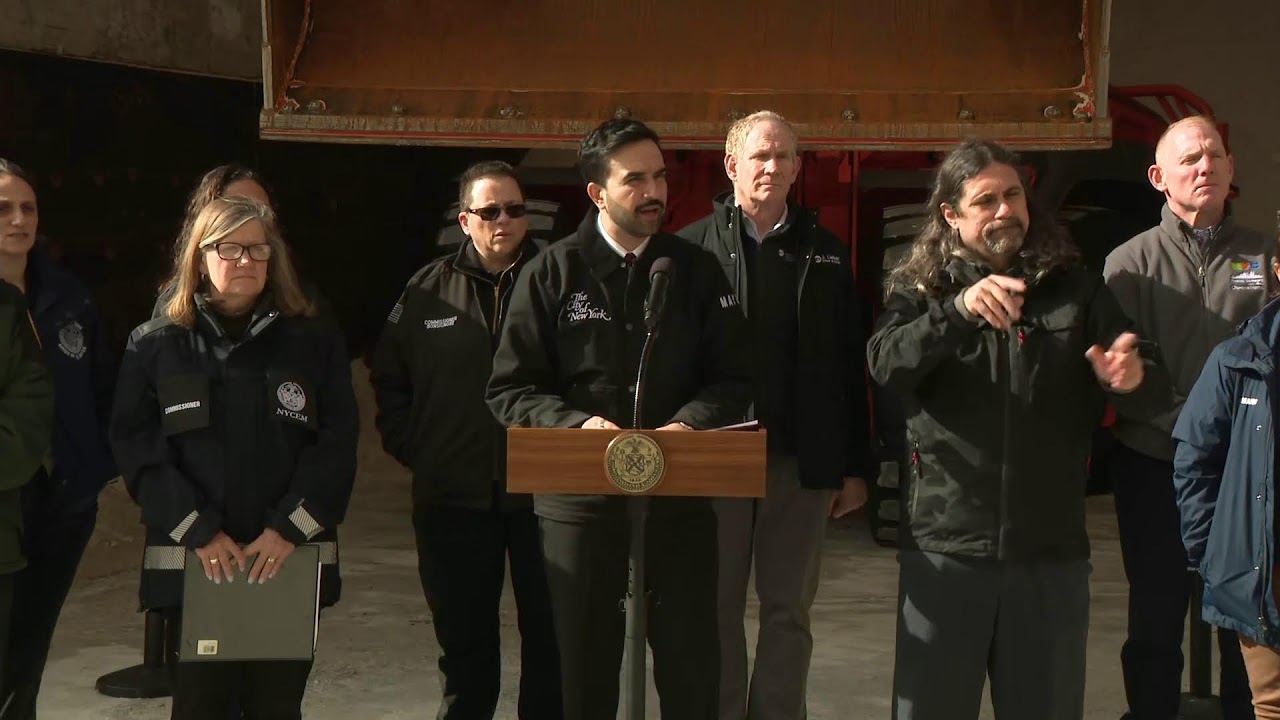
Video: Mayor Mamdani Holds a Press Conference to Provide Weather Updates.
Description will be added later.
Drag and drop patterns into the canvas.

Video: One week left to sign up for free Pre-k and 3-k!.
Description will be added later.
Drag and drop patterns into the canvas.

During the press conference, Mayor Mamdani addressed several key issues concerning NYC residents.
The following questions were asked to Mayor Mamdani, and he provided these answers:
Sources: NYC video
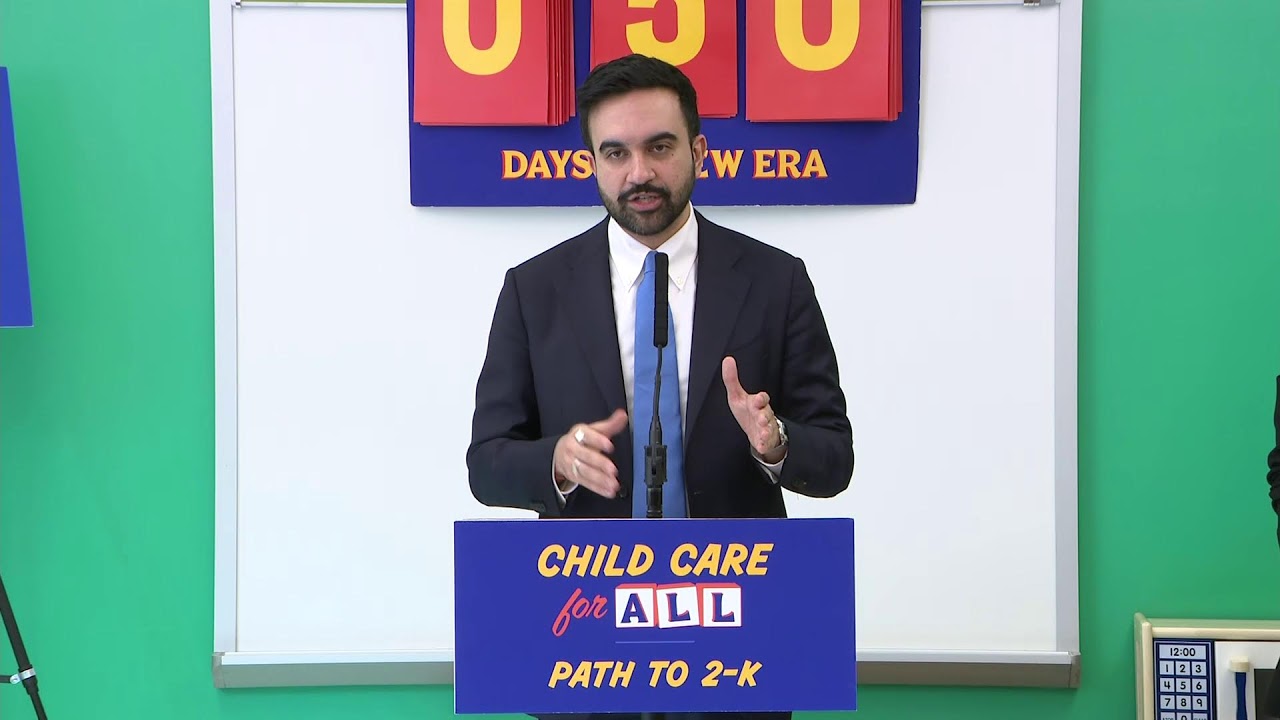
Video: Mayor Mamdani Holds Press Conference to Make a Child Care Announcement.
Description will be added later.
Drag and drop patterns into the canvas.

Video: This is how NYC is celebrating Lunar New Year.
Description will be added later.
Drag and drop patterns into the canvas.

The Community First Republican Club held its monthly meeting on Feb. 19 at 2101 East 16th St., welcoming a slate of candidates and issuing its first political endorsements of the election season. The event was led by the club’s president—also chief adviser to State Senator Steve Chan—and featured remarks from Ari Kagan, a former New York City Council member (2022–2023). Among the candidates in attendance was Karuna Beritaeva, running for the New York State Assembly in the 47th District, along with New York State Assemblyman Misha Novakhov. The program also included presentations by David Ben Hooren, publisher and founder of The Jewish Voice.
At a meeting of the Community First Republican Club, Ari Kagan took the floor to introduce Saritha Komatireddy, describing her as a candidate preparing to run for New York State Attorney General and, as he put it, to challenge Letitia James. Kagan said he was increasingly impressed as he learned more about her background and urged that her message reach broad audiences, including Russian-language media, Jewish media, and the general public.
Komatireddy opened by introducing herself and sharing biographical details. She said she was born in Brooklyn, and that her parents moved there in the 1980s and lived in Coney Island. She then outlined her professional résumé, stating that she served for more than a decade as a federal prosecutor in Brooklyn in the Eastern District of New York. She said she pursued that path after the September 11 attacks and described her work as focused on public safety, including cases she characterized as involving leaders of al-Qaeda and ISIS, as well as efforts targeting Mexican drug cartels. She also said she previously served as chief of staff at the Drug Enforcement Administration (DEA) and noted that President Donald Trump nominated her to be a federal judge.
The core of her remarks centered on law enforcement and public safety in New York. Komatireddy argued that “basic” enforcement is not being carried out at the state and local levels, saying repeat offenders are remaining on the streets and that officials are not enforcing the law or supporting law enforcement. She claimed that New Yorkers increasingly feel unsafe and asserted that crime has risen during Letitia James’s tenure, citing what she described as figures on the state’s own website. Komatireddy said her campaign’s focus would be prosecuting crime, addressing homelessness and mental health through care rather than leaving people on the streets, and pursuing corruption and fraud.
She closed by asking attendees to support her campaign financially, emphasizing that the number of donors matters for qualifying for state matching funds, and that even small contributions can help. After her remarks, the discussion in the room continued along similar lines, with participants criticizing current priorities and returning to the meeting’s central theme: that the attorney general’s office should focus on public safety and consistent enforcement of the law.
At the February gathering of the Community First Republican Club in Brooklyn, Ari Kagan introduced Ruslan Shamal, who announced he is running for the New York State Senate. Kagan told attendees that Shamal is challenging State Senator Jessica Scarcella-Spanton of Staten Island, whom he characterized as aligned with the Democratic Party’s agenda. Kagan described Shamal as a political newcomer who lives on Staten Island, noting that Shamal previously drew roughly 20% as an independent candidate and said he is now moving closer to support from the Republican and Conservative parties. Kagan added that he knows Shamal as a professional journalist with a strong sense of humor. Taking the microphone, Shamal introduced himself as a state senate candidate and shared personal background. He said he was born in Brooklyn and came to the United States decades ago, starting his life in Brooklyn before relocating to Staten Island after having children because he viewed it as a safer place to raise a family. He told the room he has two children, ages 11 and 7. Shamal emphasized that he is not a career politician and framed his candidacy as rooted in day-to-day experience. As an example, he said he recently purchased a business on Staten Island’s North Shore—a doggy daycare—but has been unable to open it for several months due to regulatory requirements and delayed paperwork, despite continuing to pay rent. He used the story to argue that running a small business in New York is difficult under Democratic governance. In the political portion of his remarks, Shamal said he does not believe in the concept of “good Democrats,” arguing that the party’s moderates ultimately vote with leadership to keep their seats. He urged supporters to compete aggressively across races, in the same way Democrats field candidates and organize for elections. During the discussion, Shamal was asked to describe the district. He said it spans a large area on both sides of the bridge, referencing Staten Island’s North Shore near the ferry and, on the Brooklyn side, neighborhoods including Sea Gate, Brighton Beach, and Manhattan Beach. He noted that covering such a geographically split district would require extensive travel between Staten Island and Brooklyn. He closed by asking for help from the audience, describing this as his first run with an organized volunteer effort and appealing for support to build out the campaign.
New York election 2026
Community First Republican Club Spotlights Judicial Race, Backs Etan Harris for Civil Court
At the February meeting of the Community First Republican Club in Brooklyn, Ari Kagan introduced Etan Harris, a candidate for Civil Court Judge in Southern Brooklyn. Kagan framed the race as unusually significant because, as he put it, many people assume judges in Brooklyn can only be elected as Democrats. Drawing on his own experience as a former Democratic district leader who helped elect civil court judges in the same area, Kagan argued that this particular district is “very Republican,” but that Republicans historically failed to field a candidate—leaving voters with only Democrats on the general-election ballot. He told the room that this year, for the first time, there is a real opportunity to elect a Republican/Conservative candidate for judge in the Second Municipal District, and urged attendees to remember the name “Harris.”
Harris thanked the club and noted that he is endorsed by the Republican Party and the Conservative Party, while emphasizing that judicial candidates are not supposed to act as political figures. He described his campaign as being about giving voters a real choice for Civil Court Judge in a district he said runs from Sea Gate through Coney Island and Brighton Beach to Manhattan Beach, Mill Basin, Midwood, Gravesend, and parts of Flatbush—an area where he said he grew up and still lives nearby.
In outlining his background, Harris said he grew up in Gravesend, lives in the Sheepshead Bay area, and attended Syracuse Law School. He described early legal experience clerking and gaining exposure to judicial decision-making, followed by work with legal aid assisting low-income clients. He then cited 16 years of litigation practice in New York City, including landlord–tenant matters, personal injury, and broader civil litigation and trial work. Harris said he is running because he values the law and conflict resolution, and he described the civil court system as a way for people—citizens and non-citizens—to resolve disputes through legal process rather than through confrontation or improper means.
A major theme of Harris’s remarks was court efficiency. He argued that delayed justice can create hardship for litigants and said he would work, within the limits of the role, to make proceedings and orders move more quickly. He repeatedly returned to the point that the election should offer a genuine choice for judge, contrasting it with past ballots where voters effectively selected from a pre-filled list.
The session then shifted into a Q&A with attendees. Harris fielded questions about whether he would be dealing with violence-related cases, explaining that he is running for civil court, focused on monetary matters, but that some incidents involving violence can become civil lawsuits if they are within the court’s jurisdiction (he referenced matters below a dollar threshold). He was pressed on public-safety concerns and issues like theft and bail reform; Harris responded that as a judicial candidate he cannot offer advisory opinions or political views, and that he would follow and apply the law based on the facts and evidence in each case. He also answered questions about the size of his caseload over 16 years, saying he has handled hundreds of cases, and clarified that judicial campaigns do not operate like typical political campaigns—stating he cannot solicit donations and does not have a matching-funds structure like other races.
Heshy Tischler Speaks at Community First Republican Club
At the February 19, 2026 meeting of the Community First Republican Club in Brooklyn, Ari Kagan introduced community activist Heshy Tischler, describing him as a relentless “fighter” who acts on conviction and keeps pushing for what he believes is right. Kagan told the room that, whatever people think of Tischler, they can agree on one point: he stands up for his community and doesn’t back down—qualities Kagan said are needed right now.
Tischler opened by identifying himself as “a Brooklyn boy” and launched into a personal story rooted in his family history. He spoke about his father, a Holocaust survivor who immigrated to the United States legally after the war, having lost most of his family. Tischler recounted a lesson his father shared with him as a teenager—an anecdote about betrayal and survival during the Holocaust, and a later moment in Brooklyn when a survivor encountered someone from the camps in a synagogue, leading to the revelation that a child had been saved. Tischler said his father framed the story as a moral charge: to do something in life so meaningful that “the angels will dance.”
From there, Tischler connected the story to his own identity and activism. He said he has spent decades helping people in the community and described himself as someone who steps in when others won’t. He cited his role during the COVID-era restrictions, claiming he helped reopen parks and defied lockdown measures that he believed were unjust, saying he faced repeated threats of arrest. He portrayed courage not as the absence of fear, but as standing up to what he called “tyrants,” and said he has consistently supported soldiers, police, and individuals in crisis—including people coming out of jail who have nowhere to go.
Tischler then pivoted to current local politics and quality-of-life issues. He criticized city policies affecting homeowners and landlords, argued that mismanagement by city government harms ordinary New Yorkers, and described himself as deeply familiar with housing conditions through years of hands-on work in apartments. He also said he was actively helping Etan Harris (the civil court judge candidate presented earlier) with petitioning, promising to deliver significant signature support to secure ballot access.
In a more explicitly political segment, Tischler addressed internal Republican dynamics, saying he had wanted to run for state senate and describing tensions around endorsements and competing candidacies within party structures. He argued that the district is winnable for Republicans and said he has learned how to run campaigns through experience. He presented himself as willing to do the hard, ground-level work—signatures, fundraising, and media—offering to bring candidates onto his platform and to mobilize whenever called upon.
He closed by stressing loyalty to the community and to his allies, saying he would support candidates who stand with him and that he remains ready to help with the practical mechanics of campaigning—petitions, fundraising, and turning out volunteers—so long as the party and candidates are prepared to fight for the district.

Yes — the city’s own press release confirms the $127 billion FY27 preliminary budget and the 9.5% property‑tax scenario, and it links that to Mamdani’s plan. The official budget announcement (NYC.gov, Feb 17 2026) states:
That same official document frames the choice as “raise revenue from the wealthiest… or balance the budget on the backs of working and middle class New Yorkers,” and it notes the administration is funding selected new investments while closing a $5.4 billion gap.
The official release doesn’t itemize every equity office, but media analysis of the released budget materials reports the specific allocations that support the claim:
So the official site proves the $127 B budget and the property‑tax hike mechanism; budget detail reporting based on the city’s materials provides the proof for the diversity‑office funding, six‑figure roles, and NYPD staffing change.
Sources: nyc.gov , Midtown Tribune News

During a Senate Homeland Security Committee hearing, Sen. Josh Hawley (R-MO) called on the Department of Justice to investigate and prosecute what he described as ‘dark money’ networks.
Hawley named billionaire-linked networks tied to George Soros and Neville Roy Singham, urging federal action to hold these organisations accountable.
Sen. Josh Hawley used a Senate homeland-security hearing this week to press a familiar Washington theme—follow the money—but in a setting that fused immigration unrest, nonprofit finance and allegations of foreign influence into a single prosecutorial pitch.
In the clip circulating online under the headline “‘Soros, Singham networks funding…’: Hawley ‘exposes’ dark money groups in Minnesota at fiery hearing,” Hawley (R., Mo.) argued that recent anti-ICE protests in Minnesota were less “spontaneous” than “highly organized,” and he urged the Justice Department to “untangle” what he called a “dark money” web and bring prosecutions where possible.
The exchange turns on testimony from Seamus Bruner of the Government Accountability Institute, whom Hawley cited as an investigator of nonprofit funding networks. Bruner told senators he had “tracked over $60 million” in payments—derived from IRS Form 990 disclosures—to “approximately 14 groups” that he said were active “on the ground” in Minnesota.
Hawley seized on the figure to argue that a large, multi-entity funding architecture sits behind street-level protest activity—an architecture he described as opaque by design because nonprofit pass-through structures can make it difficult to identify original sources of funds.
In the portion of the hearing highlighted in Hawley’s office release, Bruner listed a range of organizations and advocacy groups he said showed up in his Minnesota-focused mapping, including the ACLU (which he described as providing legal defense and training support) and other national and local groups. Among those he named were Democracy Forward, TakeAction Minnesota, Indivisible, the National Lawyers Guild, CTUL, CAIR-Minnesota, Minnesota 350, and Voices for Racial Justice.
Bruner characterized this as an “ecosystem” rather than a single organization directing events—mixing legal support, organizing capacity and communications infrastructure.
Pressed on where the money comes from, Bruner pointed to what he called major “networks,” including the Soros/Open Society sphere, the Arabella funding network and the Neville Roy Singham funding network, along with other large philanthropic channels. The alleged mechanism, he suggested, is straightforward: money moves through donor-advised funds and nonprofit intermediaries and arrives as large checks to local entities.
Hawley framed that pattern as a law-enforcement problem, not just a political-finance debate, arguing that if money is financing illegal conduct—assaults on officers, property damage or interference with law enforcement—then prosecutions should follow.
The hearing clip also elevates a second, more explosive claim: that some of the money behind U.S. protests may be foreign-linked. Bruner repeatedly invoked Singham—describing him as an American citizen living in China with pro-CCP sympathies—and also referenced Swiss billionaire Hansjörg Wyss in connection with Arabella-aligned vehicles, echoing prior media reporting he cited. Hawley used the allegations to argue that foreign influence should strip away any deference typically afforded to domestic political speech.
Hawley’s hearing moment is landing amid a larger national fight over the Trump administration’s immigration enforcement surge in Minnesota, which triggered mass demonstrations and intense scrutiny after the fatal shootings of two U.S. citizens during enforcement actions—events that have fueled political backlash and multiple congressional inquiries.
That context matters because it helps explain why Minnesota, rather than a border state, has become the stage for an argument about nonprofit money and protest logistics: the state has been treated by both parties as a test case for where immigration enforcement ends and civil unrest begins.
The testimony Hawley highlighted relies on two different kinds of claims that often get blurred in political media:
In other words, tracing grants to organizations is not the same as proving direction of illegal conduct—something Hawley effectively acknowledged by making DOJ action the endpoint of his argument: investigate first, prosecute where the facts allow.
Date: February 10, 2026
In a Homeland Security Subcommittee hearing chaired by Sen. Josh Hawley, the line of questioning pivots from broad program fraud to public disorder/anti-ICE unrest in Minnesota and the claim that it was not spontaneous, but organized and financially supported through “dark money” nonprofit networks.
Hawley’s objective in this segment is basically a chain:
(a) protests/riots in Minnesota show signs of coordination →
(b) coordination suggests infrastructure (training, legal support, comms, logistics) →
(c) infrastructure requires funding →
(d) funding allegedly traces back to large donor networks (some described as foreign-linked) →
(e) therefore DOJ should investigate and, where possible, prosecute.
That “DOJ investigation + prosecution” demand is Hawley’s closing theme in the press release and the hearing clip.
Minnesota State Sen. Mark Koran (as described in the press release) answers Hawley’s “spontaneous vs organized” question by saying the activity is “highly organized and coordinated,” with a mix of national and professional agitation groups plus local reporting that “30,000 observers” were trained to insert themselves into protests.
Koran describes (as allegations/observations) a package of tactics:
Koran also claims some elected officials in the Minneapolis area were “involved,” including participation in chats and at least one named state representative (as transcribed in your text). This is presented as assertion, not proven finding, in the clip.
Hawley then turns to Seamus Bruner (Government Accountability Institute), introduced as someone who tracks nonprofit funding networks, and asks the core question: “What organizations have been active on the ground in Minnesota?”
Bruner’s central funding claims are:
Important framing: in this hearing segment, these are testimony-level assertions about flows and purpose (protest/riot support), not adjudicated conclusions.
From your transcript (and consistent with Hawley’s office summary that Bruner listed Minnesota-active groups), the witness explicitly names the following as part of the Minnesota ecosystem he says received funding:
He presents this as a non-exhaustive list (“on and on”) within the broader “~14 groups” and “$60 million” claim.
In the clip, “dark money” is used in the colloquial political sense: money routed through nonprofit entities and pass-through structures that may not clearly identify original donors (especially depending on entity type and reporting). Bruner claims the structure makes it difficult to see “ultimate” donors and says this is intentionally opaque.
Then the exchange escalates into “foreign money” concerns. Bruner claims the most concerning aspect is foreign-linked funding, and the discussion focuses heavily on Neville Roy Singham and also mentions Swiss billionaire Hansjörg Wyss as a funder of Arabella-aligned vehicles (in the witness’s telling).
Sources: hawley.senate.gov/hawley-exposes-fraud-in-state-and-federal-programs-and-dark-money-funding-web/ , Senate Homeland Security Committee hearing, Sen. Josh Hawley video
Watch the full hearing here. Midtown Tribune News

Video: Ramadan Mubarak.
Description will be added later.
Drag and drop patterns into the canvas.

Video: Mayor Mamdani Holds Press Conference to Break Ground on Timbale Terrace.
Description will be added later.
Drag and drop patterns into the canvas.