
The socialists’ concern for the “ordinary worker” has not decreased. It has merely become more expensive.
There is a special kind of political poetry in New York City. It begins with speeches about working people, continues with slogans about affordability, and sometimes ends with a salary table for elected officials.
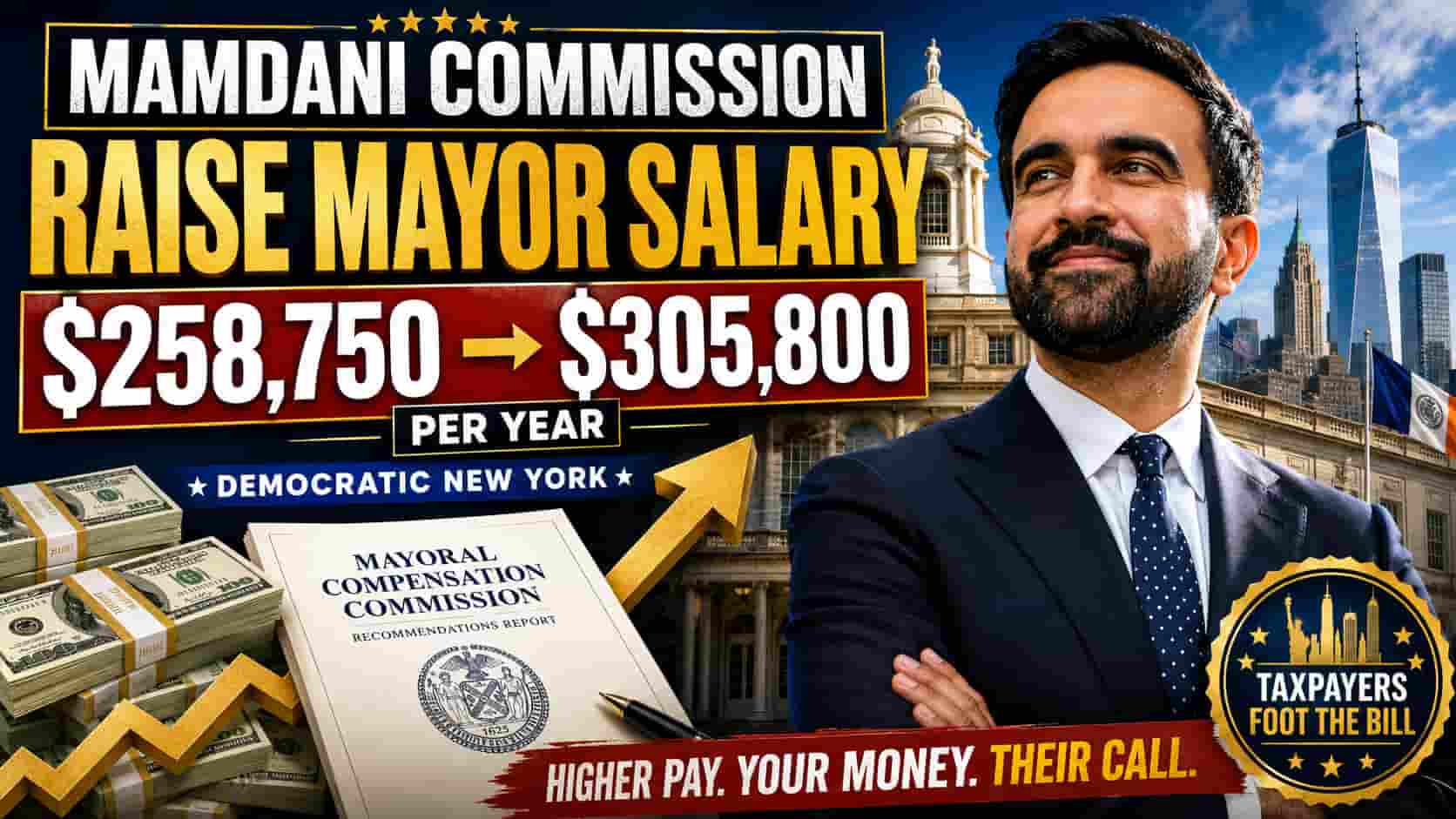
The 2026 NYC Quadrennial Advisory Commission, appointed by Mayor Zohran Mamdani, recommended raising the official salary of the mayor from $258,750 to $305,800 a year. The same report recommends an 18.2% increase for several categories of New York City elected officials, including the mayor, public advocate, comptroller, borough presidents, City Council members, City Council speaker, and district attorneys. The commission describes this as a cost-of-living adjustment, not as an ordinary raise. The taxpayer may call it whatever he wants, but the number still moves upward.
This is where the city’s moral theater becomes especially useful. When a minimum-wage worker asks whether $17 an hour is enough to live in New York, the answer usually comes with a lecture about economic complexity. When elected officials discuss their own compensation, complexity suddenly becomes compassion.
The official New York State minimum wage in New York City is $17 an hour as of January 1, 2026. For a full-time worker at 40 hours a week and 52 weeks a year, that equals $35,360 a year before taxes.
The recommended mayoral salary of $305,800 would be about $270,440 more than that annualized minimum wage.
That is not a gap. That is a subway line with express service.
But the more interesting comparison is not only with the minimum wage. It is also with the average worker. According to BLS data published through the Federal Reserve Bank of St. Louis, average hourly earnings for total private employment in New York City were $44.60 in May 2026. Annualized at 2,080 hours, that equals about $92,768 a year.
So, under the current mayoral salary of $258,750, the mayor earns roughly $165,982 more than the annualized average private-sector worker. Under the proposed salary of $305,800, the mayor would earn roughly $213,032 more than the annualized average worker.
And that worker, of course, is one of the people whose taxes help fund the political apparatus explaining why government must be made more “accessible.”
The Salary Gap Table
| Mayor / Period | Mayor’s salary | Minimum wage | Annualized minimum wage | Gap vs. minimum wage | Average wage / earnings | Gap vs. average |
|---|---|---|---|---|---|---|
| Rudy Giuliani, 2001 | $195,000 | $5.15/hour | $10,712 | +$184,288 | $61,046/year | +$133,954 |
| Michael Bloomberg, 2013 — official salary | $225,000 | $7.25/hour | $15,080 | +$209,920 | ~$66,643/year | +$158,357 |
| Michael Bloomberg, 2013 — actual $1 salary | $1 | $7.25/hour | $15,080 | –$15,079 | ~$66,643/year | –$66,642 |
| Zohran Mamdani, 2026 — current salary | $258,750 | $17.00/hour | $35,360 | +$223,390 | ~$92,768/year | +$165,982 |
| Zohran Mamdani — after recommended increase | $305,800 | $17.00/hour | $35,360 | +$270,440 | ~$92,768/year | +$213,032 |
In 2001, the New York City Campaign Finance Board listed the mayor’s annual salary at $195,000. The NYC Rent Guidelines Board reported that the average annual wage in 2001 was $61,046. New York State’s minimum wage history shows the minimum wage was $5.15 after March 31, 2000, and $7.25 after July 24, 2009. For Bloomberg, the official mayoral salary was $225,000, although he accepted only $1; this is documented in NYC’s archived Quadrennial Commission materials.
As the table shows, the gap between Republican Mayor Rudy Giuliani’s salary and the average annual wage in New York City was about $134,000 in nominal 2001 dollars. The current salary of “democratic socialist” Mayor Mamdani is already about $166,000 higher than the annualized average New York City private-sector worker. If the recommended increase is adopted, the mayoral salary would be about $213,000 higher than the annualized average worker — the same worker whose taxes help maintain the City Hall machine.
That is the great charm of modern progressive government. The ordinary worker is always honored, celebrated, invoked, photographed, quoted, organized, promised relief, and placed at the center of every campaign speech. But when the numbers arrive, the first table that receives professional attention is not the family budget. It is the official compensation schedule.
The commission’s argument is not irrational. It says public office should not be available only to the independently wealthy. That is a serious point. But it becomes politically amusing when the “ordinary worker” is asked to appreciate a system in which his own annual minimum wage is $35,360, while the mayoral salary may rise to $305,800.
In the old New York, politicians at least had the courtesy to call power by its proper name. In the new New York, everything comes wrapped in moral vocabulary. A salary increase becomes equity. A pay scale becomes democracy. A bigger paycheck becomes access to public service.
The taxpayer is asked to applaud.
And if he does not applaud, perhaps City Hall can appoint another commission to study why he lacks enthusiasm.
Sources and Official Data
- NYC Quadrennial Advisory Commission Final Report 2026 — official commission report recommending an 18.2% salary increase for New York City elected officials, including raising the mayoral salary from $258,750 to $305,800.
- NYC Quadrennial Advisory Commission — Plans and Process — official NYC page explaining how the commission submits salary recommendations and how the City Council may act on them.
- Mayor Mamdani Appoints Three Renowned Public Servants to Quadrennial Advisory Commission — official Mayor’s Office press release announcing Mayor Zohran Mamdani’s appointment of the commission.
- New York City Campaign Finance Board — 2001 Voter Guide — official NYC Campaign Finance Board voter guide listing the New York City mayor’s annual salary in 2001 as $195,000.
- New York State Department of Labor — History of the Minimum Wage — official New York State minimum wage history, including $5.15, $7.25, and the 2026 New York City minimum wage rate of $17.00 per hour.
- NYC Rent Guidelines Board — 2003 Income and Affordability Study — official NYC Rent Guidelines Board report showing the average annual wage in New York City in 2001.
- Federal Reserve Bank of St. Louis / BLS — Average Hourly Earnings in New York City — BLS average hourly earnings data for total private employment in New York City, published through FRED.
- FRED Annual Data — Average Hourly Earnings in New York City — annual average hourly earnings data used to calculate the 2013 annualized average wage.
- NYC Quadrennial Advisory Commission Archive — Select Reports — NYC archived material noting the official mayoral salary during the Bloomberg period and Bloomberg’s symbolic $1 salary.
Midtown Tribune Independent USA news from New York
Ask Midtown Tribune about this story
Answers are grounded first in this article. Search all Midtown Tribune reporting from the main AI Search page.
AI-generated summary. Verify important details in the linked original articles.