
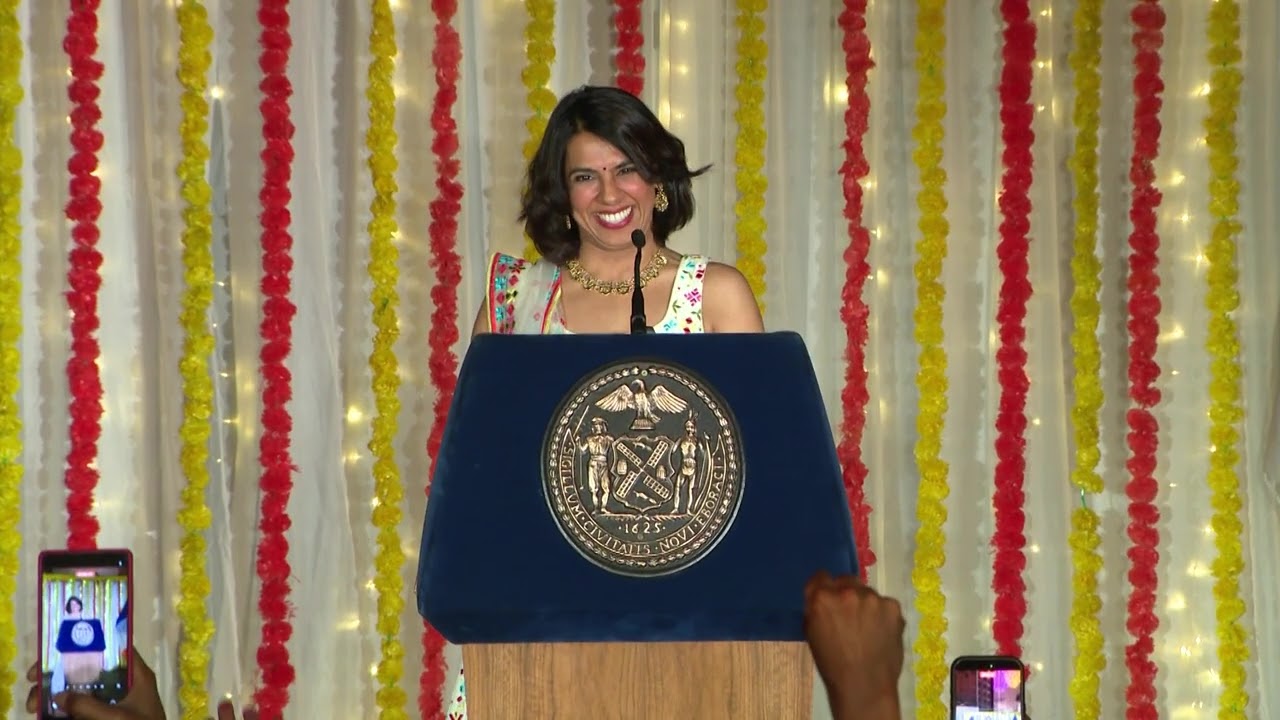
New York City’s official Diwali celebration on November 17 was more than a replay of the holiday itself. Diwali fell on November 8 this year, but the later gathering gave city leaders and performers a chance to reflect on the many communities that mark the season in different ways. A recording of the event was published by the NYC Mayor’s Office on November 19.
In his published remarks, Mayor Zohran Mamdani spoke about belonging in a city whose South Asian and Caribbean communities do not share a single language, religion, or holiday custom. He described the gathering as especially personal: he grew up celebrating Diwali with his family and is New York City’s first Indian American mayor.
A celebration spanning neighborhoods and traditions
The mayor’s speech moved across the boroughs rather than treating Diwali as one uniform experience. He pointed to Bengali families in Kensington, Indo-Caribbean communities in Ozone Park and Queens Village, Sikh observances in Richmond Hill, and Nepali families in Jackson Heights. These were examples from the mayor’s remarks, not a claim that every family in those neighborhoods celebrates in the same way.
The program also acknowledged performers and community organizers, including the Navatman Music Collective and South Asian Dance Company. That mix of music, dance, and neighborhood references made the event a civic celebration of New Yorkers themselves, not simply a ceremonial greeting from City Hall.
Why the date may look unusual
Readers looking at the video title or upload date could reasonably wonder whether Diwali was on November 17 or 19. It was not. An official Indian government holiday calendar lists Diwali on Sunday, November 8, 2026. The New York City celebration occurred November 17; the edited video was uploaded November 19. Those are three different dates for the holiday, the event, and the recording.
The mayor’s remarks centered on respect and inclusion. They did not announce a new Diwali benefit, school-calendar change, or city program. That distinction matters: the public value of this event was the visibility it gave to multiple traditions and the message that residents should feel at home in New York, not a policy rollout.
What to take from the event
For a city with communities spread across many neighborhoods, an official celebration can be most useful when it avoids implying that one version of a holiday speaks for everyone. Mamdani’s examples invited viewers to learn about neighbors whose observances may be unfamiliar, while the official event video lets readers hear the speakers and performers in their own words.
Was this a Diwali event or a new policy announcement?
It was a civic celebration. The Mayor’s Office transcript records remarks and acknowledgments, not a new law or program.
Did the event take place on Diwali itself?
No. The holiday was November 8; the city gathering took place November 17, and the edited recording appeared November 19.
Official sources
- NYC Mayor’s Office transcript of the November 17 celebration
- NYC Mayor’s Office video of the celebration
- Government of India 2026 holiday list identifying Diwali’s date
Reporting note: This original Midtown Tribune account is based on the official event recording, the city’s published remarks, and a government holiday calendar. It does not reproduce the speech transcript.
Reader discussion
Discuss the reporting. Links in comments are automatically removed.
Be the first to comment.
To comment, sign in with an enabled social account or sign in / register.
Ask Midtown Tribune about this story
Answers are grounded first in this article. Search all Midtown Tribune reporting from the main AI Search page.
AI-generated summary. Verify important details in the linked original articles.