Category: NEW YORK NEWS

  • Mayor Eric Adams Urges Americans to Stand Together Against Antisemitism at 2025 Mayors Summit

    Mayor Eric Adams Urges Americans to Stand Together Against Antisemitism at 2025 Mayors Summit

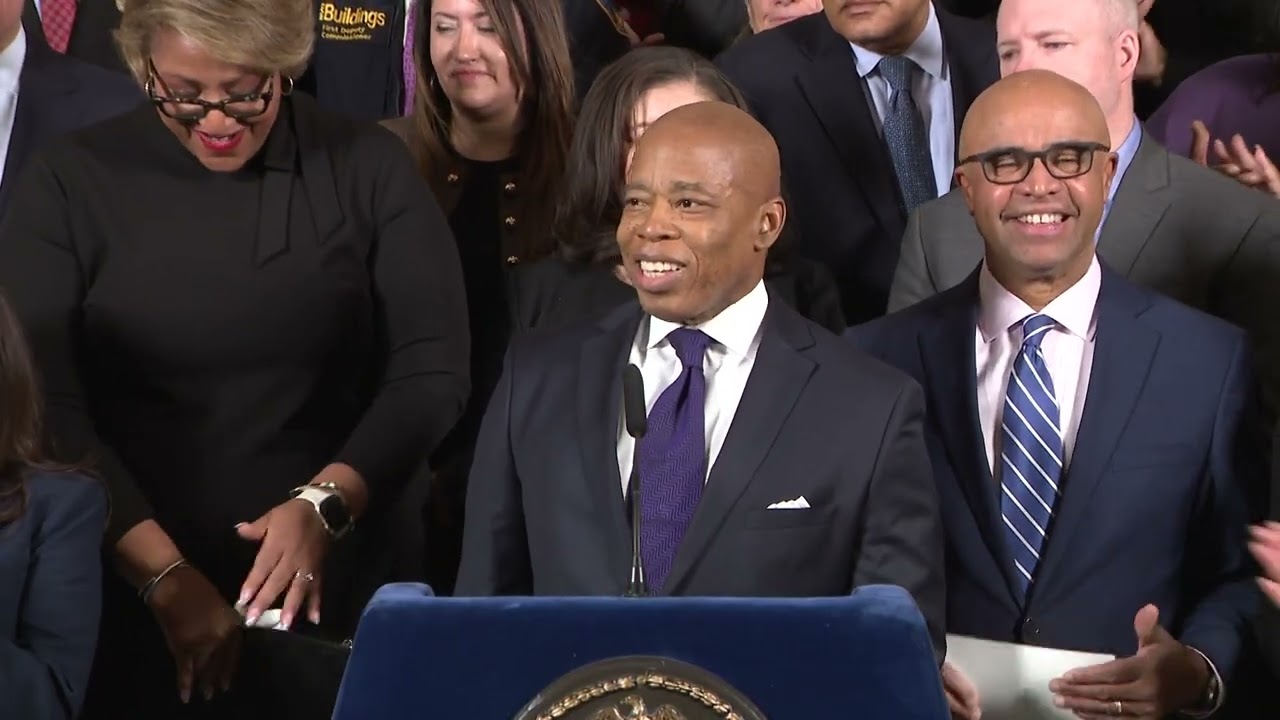
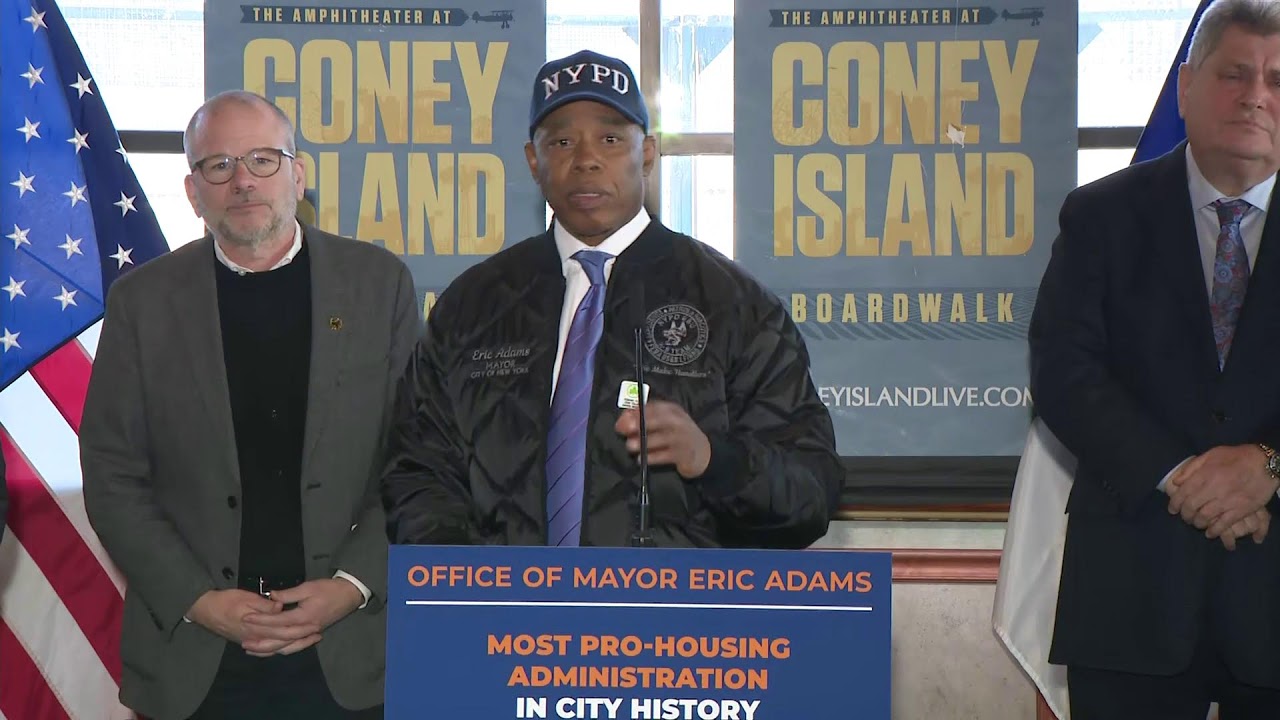
    At CAM’s 2025 North American Mayors Summit Against Antisemitism, Mayor Eric Adams gave a powerful speech asking people to stop “outrunning the lion” of hate and instead work together to remove it from our communities. He said that while many groups face hate and injustice, this moment is focused on fighting antisemitism, especially in New York City where Jews are a small part of the population but suffer more than half of all hate crimes. Adams urged everyone—teachers, faith leaders, and community organizations—to “play their position” by pushing back against antisemitism, misinformation, and the radicalization of young people. He announced an executive order against BDS and confirmed that New York City will keep investing pension funds in Israeli companies. Adams also reminded people of the long history of Jewish support for Black civil rights and called on Jewish communities to stand proudly and openly as Jews. He ended by saying he is willing to “leave everything on the ice” in the fight against hate and asked everyone to “lace up their skates” and join him.

    New York Adams forum against antisemitism 2025

    Transcript: Mayor Adams Delivers Remarks at CAM’s 2025 North American Mayors Summit Against Antisemitism Closing Gala Dinner

    Mayor Eric Adams: Thank you so much, mayor. Throughout this afternoon, you shared something that resonated with me, and I’m hoping people didn’t miss it. A good friend of mine, Rabbi Potasnik, told me a joke about two lions. Two hunters in a jungle, hunting for big game, they came up against a lion. One hunter looked at the other and said, “Let’s run, let’s get out of here.” The other hunter replied, “What’s wrong with you, we can’t outrun a lion.” The hunter replied, “I don’t have to outrun the lion, I have to outrun you.” 

    And when Rabbi Potasnik told me the story, I laughed, and he had this look on his face. He said, “That’s the problem. We’re trying to outrun each other.” Yes, the lion of foreclosure took your home, but I have my home, I outran that lion. The lion of crime may have taken your child, but I outran that lion. The lion of poverty, the lion of domestic violence, the lion of hatred. As long as I outrun that lion, I’m alright. 

    But what the hunter did not understand is, that if you don’t take the lion out of the jungle after he devours one hunter, he’s going to devour you. You were so right. The goal is not to outrun each other. The goal is to remove the lion of hatred from our community. That’s the goal. 

    If you go back to what Lyndon B. Johnson did in 1964 when he signed the Civil Rights Act, there were Jewish brothers and sisters that didn’t say, “Well, that had nothing to do with me.” When you look in 2013 and the Black Lives Matter movement took place after we saw the devastation, murder of a young man in Florida, and people used to say to Black folks who said Black lives matter, they said, well, all lives matter. Well, right now we’re not talking about all lives, we’re talking about Black lives. 

    And so, when we come to a conference and talk about combating antisemitism, don’t start telling me about other issues. Right now, we’re talking about antisemitism. And talking about a specific incident during a time does not dismiss the other incidents. Yes, we know we have other issues, but right now the focus is on antisemitism. That’s what it’s on. 

    And we can engage in other conversations. I’m going to continue to lift up my Asian brothers and sisters that are dealing with Asian violence. I’m going to continue to lift up the overproliferation of abuse in young African American males and the incarceration of them. I’m going to continue to lift up what’s happening with men and women of the LGBTQ+ community. We’re going to continue to do that. 

    But right now we’re in this stadium talking about antisemitism. And we need to be focused on what is happening, particularly in New York City, where you have a numerical minority of the community from the Jewish community and over 50 percent of the victims are Jewish people of hate crimes. That’s a real issue. And what we must focus on is to be laser focused on that. Because when we marry talking about this issue and bridging it with the other issues that we’re facing, we will raise the standard of who we are as human beings. 

    But how do we do it? That’s why I grabbed the football. This is a team sport, folks. If I’m the quarterback, you should not be the running back standing behind the center. Get your ass out of the way. Each player, play your position. We all got to play our positions. 

    If you are a teacher, you need to be in our public school system pushing back on the radicalization of our young people who not only hate Israel, they hate America because they were taught to hate America. That’s what we saw on the Columbia campus when the protests took place. We saw flyers that said hatred for Israel and hatred for America. Now, I don’t know who’s in this room, but I think you are Americans, right? 

    So, my educators must play their role. My faith-based leaders, play your position. You’re not the mayor. Be the rabbi, be the preacher, be the monk, be a Sikh leader. Play your position. And to my organizations, play your positions. Play your roles. And stand outside your comfort zones. Because if all we do all the time is speak to the same people, the choir heard the song, folks. It’s time to sing to those who are singing off-key so they can learn the lyrics and chorus of ending hate in our city and in our country. 

    And then let’s be honest with ourselves. Folks have been hating Jews for a long time. Our Jewish brothers and sisters have been fleeing and running from the days of Moses to when Columbus left Spain and Jews had to get out because of the edict, to being in Rome and watching the Jewish quarter. You can go over and over and over again to see how Jewish people have fled and ran from particular places. 

    And I’m saying to my Jewish brothers and sisters, your legacy in this generation is to say we run no more. We stand and fight. We don’t live in fear hoping that it goes away. We don’t allow certain groups to take to the streets and determine that you should be eradicated. And you’re sitting back contemplating what block you take off your yarmulke or what morning you remove your star of David. If you want to win this fight, then you need to stand up, stand firm, and say, “I am Jewish and there’s not a darn thing you can do about it.” 

    And you need to be strong in your faith and your belief. And people should see it in your presence and in your posture and in your stance. And that’s what we must do as a team. And then you need to lift up those who stand with you and let them know you support them. Because many of these mayors in this room will lose their races because they’re standing tall with you and not with the numerical loud minority that have hijacked the narrative. 

    They will be targeted, they will be focused, and they will go after them one at a time. That’s the hate that has swept our entire country and globe. You are being targeted. And we have to be as intelligent and as focused, as strategic as possible. That’s why we put the IHRA definition in place in New York City. 

    That’s why I am signing an executive order today to deal with BDS so we can stop the madness that we should not invest in Israel. That is why we’re going to sign an executive order stating that our pension funds will invest in Israeli companies because we’re getting a high return on our investment because they’re doing the right thing. 

    But Israel and Jews must tell their story. When I talk about ending antisemitism, you know what I talk about to that young African American man that’s in Brownsville? I tell him about the device that was discovered in Israel that helped his mother deal with a medical condition that she’s facing. 

    When I talk about ending hatred, you go look at who has the highest number of Nobel Peace Prize winners. Go look at the technology that’s coming out of Israel today because of the partnership that we have with New York City and Israel that is saving the lives of people from communities across the globe. 

    So, when you eradicate Israel and when you put them on an island and don’t allow their companies to go to trade shows and don’t allow their companies to participate in innovation, it is impacting us directly because it impacts us every day and the health and welfare of our communities. That’s what we have to do today. Don’t just talk about stopping antisemitism because it stops attacks on Jewish people. Stop antisemitism because we are all connected together and we’re all involved in this together. 

    I was sitting in a restaurant, as I conclude. It must have been October 10th. I’m sitting down at the table having a meal and a young African American woman walked in with a Howard University shirt on. She looked at me and said, “You’re one of those Zionist lovers. We know what you’re about. I just came from the march. We know what you are about.” 

    And while she’s saying that, I’m on my phone. I’m Googling Howard University. And I handed her my phone. And she looked at the founder of Howard University, Julius Rosenwald. And I told her, “Read on.” And she read on and she looked at the fact that almost 40 percent of the children in the Deep South were educated in schools that he opened, a Jewish philanthropist. 

    When segregation was the norm in the Deep South, he was opening schools so Black and Brown children could go to school and become teachers and educators to go into the Black and Brown communities and deal with segregation. And I said, “Read on.” And she saw how he was one of the original co-founders of the NAACP. 

    And I said, let’s go talk about the two Jewish young men who were down in Mississippi and lost their lives. But let’s not stop there. Let’s talk about when young white students went to the Deep South, 51 percent of them were Jewish, putting their lives on the line. And so yes, call me a Zionist. But what you can’t call me is mis-educated. And if you are going to denounce what gave birth to the college that you’re in right now, then they’re not educating you. 

    So, the next time you go in the street to celebrate October 7th, buy a plane ticket and go see what happened there. The next time you believe that you should eradicate from the river to the sea, first know where on the map you’re talking about. The next time you want to align yourself with groups who are proliferating hatred and talking about genocide, go look at what’s happening in Sudan and the thousands of lives that are being lost. 

    Lift up your educational understanding so you can properly fight a fight on the right side of the issue. That’s where we are missing this. They have indoctrinated and radicalized our children in the social media generation that is taking them down the road of devastation, of not knowing who their allies and brothers and sisters have historically been. 

    And you’re right, mayor. You are our cousins. You marched with us for Dr. King. You committed and volunteered your lives throughout the generations to stand side by side. But now your story can no longer be a tree that falls in a forest where no one hears a sound. It’s time for you to tell your story. Because if you don’t tell your story, people will distort your story. 

    So, I’m going to play my position. I may not be the best at it, but I’m going to do everything possible. We had a hockey player called Wayne Gretzky. They called him the ‘Great One.’ I loved his story. Wayne lost his first Stanley Cup. That’s a championship for hockey players. And he went into his locker room and all his teammates were pointing the finger at each other. “Who missed the puck? Who didn’t do their job?” 

    And then Wayne, being the gentleman that he is, walked down the hall to the opposing team’s locker room. It was quiet. He thought they went home. He peeked his head inside. They were laid out on the benches, bloody and bruised. They left everything they had on the ice. He knew then, that’s how you win. 

    And I don’t know what’s going to happen in the future. But I’m going to fight hate. And I’m going to be battered, I’m going to be bruised. I’m going to leave everything I have on the ice. And all I’m asking all of you, lace up your skates and get on this ice with me. And let’s win. 

    December 3, 2025 Manhattan, New York

    Sources: NYC.gov , Big New York news BigNY.com
    Midtown Tribune News

    Midtown Tribune Independent USA news from New York

  • White Home. Trump Ends Biden CAFE and EV Rules, Promises Cheaper Gas Cars and More U.S. Auto Jobs

    White Home. Trump Ends Biden CAFE and EV Rules, Promises Cheaper Gas Cars and More U.S. Auto Jobs

    President Trump, speaking at the White House on December 3, 2025, announced the termination of President Biden’s fuel economy (CAFE) standards and related electric vehicle mandates. He argued these rules were “burdensome” and “ridiculously expensive,” blaming them for driving up car prices by more than 25% and forcing automakers into costly technologies and carbon credit trading. Trump said his new rules will cancel EPA tailpipe emissions standards, revoke California’s stricter waiver, and restore automakers’ ability to build more gasoline-powered vehicles alongside hybrids and EVs, with the administration estimating at least $1,000 in savings per new vehicle for consumers.

    Transportation Secretary Shan Duffy and leaders from Ford, Stellantis, and General Motors backed the policy shift during the event, saying it aligns regulations with actual consumer demand and will support more investment and production in the U.S. They highlighted multibillion-dollar commitments to expand American plants, create thousands of jobs, and build a wider range of affordable vehicles, including very small, fuel-efficient cars that Trump said he has now authorized for U.S. production. Several lawmakers and auto dealers also praised the repeal, emphasizing consumer choice, lower prices, and the ability of small businesses to benefit from tax provisions such as full expensing and interest deductibility on vehicle loans.

    Beyond auto policy, Trump used the announcement to promote his broader economic agenda and address other issues raised by reporters. He credited tariffs with driving trillions of dollars in investment, claimed sharp increases in U.S. auto production, and said inflation and gasoline prices are now falling. In a wide-ranging Q&A, he commented on Ukraine peace efforts, drug interdiction at sea, Venezuela, investigations by Special Counsel Jack Smith, and immigration, including strongly critical remarks about Somali immigrants and Minnesota politics. He framed the rollback of CAFE and EV rules as part of a larger “affordability” and “jobs” push that he says distinguishes his administration from Biden’s policies.

    Sources : WH.gov , Midtiwn Tribune news

    Midtown Tribune Independent USA news from New York

  • Governor Hochul Launches Second $50 Million County Infrastructure Grant to Support Housing and Local Growth in New York

    Governor Hochul Launches Second $50 Million County Infrastructure Grant to Support Housing and Local Growth in New York

    Governor Kathy Hochul has opened a second round of the County Infrastructure Grant Program, adding another $50 million to help New York counties upgrade local infrastructure and support more housing, tourism, and community projects. Counties can apply now through April 1, 2026, with grants of up to $1 million for projects that create at least 10 new homes and up to $500,000 for smaller or non-housing projects. The program, run by Empire State Development, builds on a first round that funded 49 projects and more than 2,750 new homes, giving local governments the resources they need to fix aging systems, attract new residents and visitors, and create stronger, more vibrant neighborhoods across the state.

    Governor Hochul Announces Additional $50 Million for Second Round of County Infrastructure Grant Program

    Applications Now Open for County-Led Infrastructure Projects that Encourage Housing Growth, Placemaking and Tourism . Applications Due April 1, 2026

    Governor Kathy Hochul today announced a second round of the County Infrastructure Grant Program, which will provide an additional $50 million to support small- and medium-sized county-led infrastructure projects. Modern infrastructure is fundamental to New York State’s economic vitality. By supporting small- and medium-scale projects, the state can maintain its competitiveness, generate additional economic growth and continue to advance Governor Kathy Hochul’s bold housing agenda. Applications will be accepted now through April 1, 2026. Empire State Development (ESD) requires submitting a Letter of Intent (LOI) prior to filing a final application. Links to the LOI and application are available here.

    “Coming from local government, I know firsthand how funding for local infrastructure projects can change a community — uplifting residents and providing those communities with a sense of purpose,” Governor Hochul said. “When counties are offered assistance to build more infrastructure, it gives these communities the opportunity to attract more visitors and spur housing development for generations to come.”

    Empire State Development President, CEO & Commissioner Hope Knight said, “Growing the state’s housing stock is not just a priority; it is a structural pillar of Governor Hochul’s administration and the essential catalyst for robust, sustainable economic growth. With another round of the County Infrastructure Grant Program, we are making a targeted investment that will provide critical housing stability for New Yorkers. This simultaneous effort will enhance the sense of place and vitality across our communities, creating the groundwork necessary to cultivate new jobs, attract new residents, and welcome visitors.”

    New York State Housing and Community Renewal Commissioner RuthAnne Visnauskas said, “With this second round of funding, Governor Hochul is building on the millions already invested to strengthen local infrastructure and unlock more than 2,700 housing opportunities across New York. The additional $50 million will pave the way for more homes, ensuring that counties have the tools they need to grow sustainably. By investing in the foundations of our communities, we are not only expanding the supply of housing, but also fueling economic vitality, supporting tourism, and creating vibrant neighborhoods where families can thrive. We are proud to continue partnering with counties throughout New York to turn these investments into lasting results.”

    New York State Association of Counties President Phil Church said, “This innovative grant program provides vital resources that empower counties to strengthen local communities — addressing critical housing needs while upgrading aging water and wastewater systems. The New York State Association of Counties applauds Governor Kathy Hochul, the State Legislature, and Empire State Development President & CEO Hope Knight for their leadership and continued investment in county infrastructure. These partnerships between state and local governments are essential to building vibrant, resilient communities across every region of New York. With this second round of funding totaling $100 M, counties have new opportunities to deliver projects that improve quality of life and lay the foundation for sustainable growth statewide.”

    State Senator Sean M. Ryan said, “Strong communities are built on reliable, modern infrastructure, and counties across New York have no shortage of worthy projects that just need the resources to move forward. This program gives local governments the support they need to upgrade aging systems, attract new housing, and lay the groundwork for long-term economic growth. I’m grateful to Governor Hochul and Empire State Development for continuing to invest in the growth of our communities.”

    Assemblymember Al Stirpe said, “One of the biggest obstacles to economic development in New York State is housing — and a substantial amount of it for New Yorkers to live and work where they want to. The second round of the County Infrastructure Grant Program takes the housing crisis head-on, building on the success of its initial round to encourage additional housing, placemaking, and tourism in virtually every corner of the state. Small-scale infrastructure projects lacking the capital to get off the ground will get the chance to lift off and go from idea to implementation. This is an exciting opportunity to continue modernizing our neighborhoods and maintaining New York’s economic competitiveness, benefitting both residents and tourists alike.”

    An informational webinar will be held on Thursday, December 18 at 11:30 a.m. More information will be posted on the County Infrastructure Grant Program website.

    The County Infrastructure Grant Program was established to assist counties in developing infrastructure to better meet the needs of New Yorkers. The original $50 million program was included in the State’s FY 2025 Enacted Budget, with an additional $50 million included in the FY 2026 Enacted Budget. Grants of up to $1 million are awarded to priority projects that propose the creation of 10 or more housing units. Projects fewer than 10 housing units, or no housing creation, can receive up to $500,000. Projects are identified by the county and must support economic development, contribute to placemaking or encourage tourism. In July 2025, Governor Hochul announced that more than $37 million was awarded to 49 projects, supporting the construction of over 2,750 new homes, through the first round of the program.

    More information on the program, including how to apply, is on the Empire State Development website. Applications will be accepted on an ongoing basis through the Consolidated Funding Application portal.

    About Empire State Development

    December 2, 2025

    Albany, NY

    Sources: NY.gov , Big New York news BigNY.com
    Midtown Tribune news

    Midtown Tribune Independent USA news from New York

  • Mayor Adams, CC Sabathia Unveil $11 Million “Harlem Field of Dreams” Public-Private Investment at Charles Young Playground (Video)

    Mayor Adams, CC Sabathia Unveil $11 Million “Harlem Field of Dreams” Public-Private Investment at Charles Young Playground (Video)

    New York City Mayor Eric Adams and New York Yankees All-Star CC Sabathia have opened the $11 million “Harlem Field of Dreams,” a 150,000-square-foot multi-sport synthetic turf complex at Brigadier General Charles Young Playground in Harlem, representing a high-impact public-private investment in urban infrastructure and youth development. Funded through approximately $7.5 million in law enforcement asset forfeiture dollars, complemented by contributions from the PitCCh In Foundation, Major League Baseball and the MLBPA Youth Development Fund, the NFL Foundation Grassroots Program, the Cal Ripken Sr. Foundation, the Manhattan Borough President, and the New York City Council, the project advances the Adams administration’s strategic priorities around public safety, community engagement, and equitable access to quality recreational assets. The upgraded facility, coupled with free “Saturday Night Lights” youth programming, is designed to reduce crime risk factors, strengthen community–law enforcement relationships, and enhance long-term social and economic outcomes for Harlem residents, while honoring the legacy of Brigadier General Charles Young and the historic “Harlem Hellfighters” regiment.

    Mayor Adams, Yankees All-Star CC Sabathia Open $11 Million “Harlem Field of Dreams” Renovated Athletic Field at Historic Harlem Brigadier General Charles Young Playground

    https://youtube.com/watch?v=47GNAorHcSA%3Ffeature%3Doembed

    – New York City Mayor Eric Adams was today joined by New York City Department of Parks and Recreation (NYC Parks) Commissioner Iris Rodriguez-Rosa, New York Yankees All-Star CC Sabathia, and members of the Harlem community to celebrate the $9 million transformation of a dilapidated dirt field at Brigadier General Charles Young Playground in Harlem into a state-of-the-art 150,000 square foot multi-sport synthetic turf field, also known as the “Harlem Field of Dreams.” The plan for the now completed project was first announced in Mayor Adams’ 2025 State of the City address earlier this year.

    This revitalization project is a key component of a collaborative policing strategy led by the Adams administration, city agencies, and local community-based organizations aimed at transforming the relationship between communities and law enforcement. It builds on the administration’s upstream approach to public safety in New York City, which invests in free programming to keep young people safe and engaged when not in school. By focusing on youth development and violence prevention initiatives, the Adams administration continues to invest in a safer and more connected future for everyone — already contributing to a significant reduction in major crimes across the five boroughs, especially in shootings and homicides.

    “If you build it, they will come, and today, we are announcing the completion of the ‘Harlem Field of Dreams’ as we make children’s dreams come true,” said Mayor Adams. “This $11 million project not only fulfills another one of our State of the City commitments by transforming a once-dilapidated field into a vibrant and enriching space where more than 800 young people can play baseball, football, soccer, and lacrosse, but also upholds our promise to making the smart, upstream investments that prevent crime in the first place. Today, we are giving hundreds of families both a safe place to send their children and an outside space for them to grow in as we continue to make New York City the best place to raise a family.”

    “Today, we are proud to officially open the newly renovated athletic field at Brigadier General Charles Young Playground. The ‘Harlem Field of Dreams’ is now a reality — a space where Harlem’s young people and families can come together, play, and thrive,” said NYC Parks Commissioner Rodriguez-Rosa. “With a new synthetic turf field that supports multiple sports and expanded community programming, we are not only providing state-of-the-art facilities, but also creating lasting opportunities for health, connection, and growth. By honoring the legacy of Brigadier General Charles Young, this field will continue to inspire future generations for years to come.”

    “Giving back has always been at the heart of everything I do,” said CC Sabathia, founder, PitCCh In Foundation. Through the PitCCh In Foundation, we’re proud to support spaces that empower young people to dream, grow, and thrive. This field represents opportunity, resilience, and community—values that shaped me growing up and continue to inspire me today. New York has become my second home, and I’m honored to help build brighter futures right here.”   

    The newly renovated athletic field at Brigadier General Charles Young Playground now accommodates five sports — baseball, softball, soccer, football, and lacrosse. The upgrades to the park include improved drainage and water detention, a new synthetic turf surface, drinking fountains, fencing, backstops, benches, dugouts, and a sports mister.

    The $11 million project was funded through approximately $7.5 million in law enforcement asset forfeiture funds from the New York /New Jersey High Intensity Drug Trafficking Area program, in partnership with the New York City Police Department and the New York City Police Foundation, along with contributions from former New York Yankees pitcher CC Sabathia’s PitCCh In FoundationMajor League Baseball and the Major League Baseball Players’ Association Youth Development Fund, the NFL Foundation Grassroots Program , the Cal Ripken Sr. Foundation, the Manhattan Borough President’s Office, and the New York City Council.

    The renovation builds on earlier improvements made by the Adams administration in 2023, including new asphalt and fencing for the main basketball court, repairs and new coatings for three basketball courts, and the conversion of one court into a soccer pitch. The field house bathrooms are also set to be upgraded with $2.5 million in funding provided by the Mayor’s Office, the City Council, and the Manhattan Borough President’s Office.

    In addition to the capital improvements, free youth sports programming will be offered on the new field through the New York City Department of Youth and Community Development’s Saturday Night Lights program. This initiative gives young people safe spaces to play, while building trust between law enforcement and communities — helping youth develop skills and relationships that will support their future success.

    The project reflects the Adams administration’s holistic approach to public safety, which begins with investing in programs and opportunities that keep young people safe and engaged. Last year, Mayor Adams announced the city’s first indoor baseball center in Washington Heights to provide year-round training, launched a new Saturday Night Lights website to better connect families with free sports programming, and pledged $163 million over five years to expand some of the city’s most successful youth programs in his State of the City address earlier this year. Mayor Adams also committed to opening more schoolyards in underserved neighborhoods for after-school, weekend, and summer use — ensuring that thousands more New Yorkers are within a 10-minute walk of safe, supportive spaces to play.

    About Brigadier General Charles Young:

    General Charles Young was born into slavery on a Kentucky plantation in 1864. A year later, his family escaped and settled in the abolitionist town of Ripley, Ohio. Young went on to become the third Black graduate of the United States Military Academy at West Point and served over 30 years in the U.S. Army. His career included historic appointments as the first Black national park superintendent, the first Black military attaché, and the first African American to reach the rank of colonel, making him the highest-ranking Black officer in the Army until his death in 1922.

    In 1917, the U.S. Department of War forcibly “medically retired” Young, halting his promotion to general in response to resistance from white officers. To demonstrate his fitness for duty, the 53-year-old Young undertook a 497-mile horseback ride from his home in Ohio to Washington, D.C., though his appeal was unsuccessful. In 2022 — 100 years after his death — Charles Young was posthumously promoted to Brigadier General by the U.S. Department of Justice, recognizing his exemplary service and contributions to breaking racial barriers.

    The Brigadier General Charles Young Playground in Nort Central Harlem is located just north of the 369th Regiment Armory, home to the “Harlem Hellfighters,” an African American regiment that saw more combat than any other unit during World War I and was one of the most decorated in the Army. The playground and landmarked armory together celebrate African American military heritage.

    “Local Initiative Support Corporation’s partnership with the NFL Foundation and the New York Jets is devoted to increasing the quality, safety and accessibility of fields and play spaces. The Brigadier General Charles Young Park is essential to the health and sustainability of youth and families in the Harlem community,” said Beverly Smith, vice president, sports and youth development, Local Initiative Support Corporation. “For more than 25 years, our partnership with the NFL Foundation has resulted in over 450 new and improved recreation facilities across the country that are serving generations of neighborhood youth and communities.”

    “Brigadier General Charles Young Field holds extra significance as it is the 125th Youth Development Park opened by the Cal Ripken, Sr. Foundation across the country,” said Cal Ripken, Jr., vice chairman, Cal Ripken Sr. Foundation. “I cannot believe how much of an impact the foundation named for our father has made. This is only accomplished through relationships with other organizations that share a passion for helping kids. Thank you to the Manhattan District Attorney’s Office, the New York City Department of Parks and Recreation, and the Parks Capital team for making sure that this field was not only built but will continue to be a resource for New Yorkers in the years ahead.”

     “When we invest in our young people, we invest in a safer future for all New Yorkers,” said Manhattan District Attorney Alvin Bragg. “I am proud to celebrate the culmination of this years-long effort to make Brigadier General Charles Young Field a place where young New Yorkers can play sports, make friends, and be mentored by caring adults in a safe and beautiful space. My office was proud to contribute to this renovation and to work alongside the many public servants and Harlem leaders that made today a reality.” 

    December 2, 2025 Manhattan, New York

    Sources: NYC.gov , Big New York news BigNY.com
    Midtown Tribune news

    Midtown Tribune Independent USA news from New York

  • Reuters NEXT New York: Global Leaders Converge to Debate the World’s Most Urgent Questions

    Reuters NEXT New York: Global Leaders Converge to Debate the World’s Most Urgent Questions

    Reuters NEXT New York 2025

    New York, December 3–4, 2025 – As the world struggles to navigate geopolitical fracture, AI upheaval, and a fragile economy, Reuters NEXT returns to New York this week, assembling a heavyweight roster of policymakers, CEOs and creators to ask a simple but urgent question: what kind of future are we building?

    Over two days in the global financial hub, more than 700 leaders from business, government and civil society will take the stage across multiple tracks, tackling themes that range from war and peace to streaming wars, central bank policy to luxury retail.


    A summit of power brokers

    This year’s speaker lineup underlines the ambition of the summit. According to Reuters, confirmed speakers include:

    • António Guterres, Secretary-General of the United Nations
    • Christian Klein, CEO of SAP
    • Naomi Gleit, Head of Product, Meta
    • Jimmy Wales, Founder of Wikipedia
    • Sarah Jessica Parker, executive producer and entrepreneur
    • Shari Redstone, Chair of Sipur Studios
    • Aidan Gomez, Co-Founder & CEO of AI firm Cohere
    • Stéphane de La Faverie, President & CEO, The Estée Lauder Companies
    • Pearlena Igbokwe, Chairman, Television Studios & Peacock Scripted, NBCUniversal
    • Ilario Corna, CIO & CTO, International Olympic Committee
    • Joanne Crevoiserat, CEO of Tapestry
    • Rick Wurster, CEO of Charles Schwab
    • Senior leaders from Google, Cisco, Moderna and others

    They are joined by central bank governors, including representatives from Libya and Syria, underscoring how monetary policy and financial stability have become central to discussions about global risk and rebuilding trust in institutions. Reuters Agency

    Reuters Editor-in-Chief Alessandra Galloni will lead interviews and discussions, supported by a team of senior journalists, as they press speakers on the decisions they are making now—and the consequences those choices will have for 2026 and beyond.


    Six themes, one turbulent world

    The official agenda is built around six core themes that reflect the fault lines of 2025:

    1. Geopolitics – Panels will explore an era of “growing geopolitical fragmentation,” as alliances are tested by regional conflicts, resource competition and shifting power centers.
    2. Economy & Markets – With investors nervously eyeing the outlook for 2026, speakers from banks, asset managers and major corporates will debate interest-rate paths, capital flows and the resilience of the global financial system.
    3. Banking & Finance – From regulatory scrutiny to fintech disruption, executives will drill into how financial institutions can stay profitable while financing the energy transition and safeguarding against systemic shocks.
    4. AI & Technology – Having moved from “AI experimentation to accountability,” the program delves into governance, transparency and the real business impact of generative AI, with leaders from Cohere, Google, Cisco and others.
    5. Climate & Sustainability – With pressure mounting after a year of record temperatures, CEOs and policymakers will look at how to fund decarbonization, reform supply chains and meet mounting disclosure demands.
    6. Business Leadership – Sessions will focus on leadership in an “increasingly contested information ecosystem,” where trust, internal communications and public credibility can make or break an organization.

    Beyond the headlines: AI, energy and attention

    What sets Reuters NEXT apart from many other executive gatherings is its framing as a live journalism experience. Interviews are run with the same rigor as a newsroom grilling: short on platitudes, long on specifics.

    Some of the most closely watched conversations are expected to orbit three clusters of issues:

    • AI disruption and accountability
      • Tech leaders will be asked how they intend to govern powerful AI models, reduce bias, and protect jobs—while still chasing growth.
      • Policy-makers and regulators in attendance are expected to push for clearer guardrails and more transparency on training data, safety testing and risk management.
    • Financing the energy transition
      • With trillions of dollars in investment needed, financial institutions and corporates will debate which models actually work, from green bonds to blended finance.
      • Executives in energy, heavy industry and consumer goods will be pressed on supply-chain emissions, reporting standards and how they balance shareholder pressure with long-term climate commitments.
    • The battle for attention – from streaming to social
      • Media, entertainment and tech executives—including leaders from NBCUniversal, Meta and the IOC—will explore how audiences are fragmenting across platforms and what that means for business models built on advertising and subscriptions.

    Why New York, why now

    New York—still one of the world’s dominant hubs for finance, media and diplomacy—offers a symbolic backdrop. The city has been at the center of debates on inequality, climate resilience, and the future of work, making it a fitting stage for conversations about reshaping global systems.

    The 2025 edition arrives at a moment when:

    • Markets are trying to price in a new interest-rate regime and adjust to slower, more uneven growth.
    • Governments are wrestling with how to regulate fast-moving technologies without stifling innovation.
    • Public trust in institutions—from banks to newsrooms to international bodies—remains fragile.

    In a statement ahead of the summit, Galloni framed the objective as cutting through the noise: Reuters NEXT is meant to “go beyond the headlines” and give decision-makers the “clarity, connections and action plans” they need to navigate the next few years.


    What to watch for

    While the full speaker page is hosted on the Reuters Events site and may feature additional names and sessions that aren’t publicly detailed elsewhere, a few flashpoints are already emerging from the published lineup and themes:

    • How blunt will leaders be? Will CEOs and policymakers speak candidly about geopolitical risks, or stick to carefully scripted talking points?
    • Concrete AI commitments. Will any firms announce new principles, partnerships or oversight mechanisms for AI deployment?
    • Climate credibility. Expect close attention to what companies say about measurable progress toward net-zero goals rather than generic pledges.
    • Media and misinformation. With Wikipedia’s Jimmy Wales, major broadcasters and platform leaders in the mix, discussions on information integrity and audience trust could become some of the most lively sessions.

    A forum under pressure to deliver

    Expectations for high-level summits like Reuters NEXT are rising. Critics often accuse elite gatherings of generating lofty rhetoric but little follow-through. Organizers, for their part, are positioning the New York summit as a working forum—where deals are sketched out in side rooms, cross-sector coalitions emerge, and some of the world’s most powerful decision-makers are forced to defend their strategies in public.

    Whether the 2025 edition ultimately shapes policy, markets or boardroom agendas will only become clear in the months ahead. For now, the arrival of this year’s speakers in New York signals at least one thing: amid uncertainty and upheaval, the conversation about “what comes next” is very much underway.

    Sources: Midtown Tribune , Reuters Agency+1

    Midtown Tribune Independent USA news from New York

  • New York City Reaches $38.9 Million Fair Workweek Settlement With Starbucks

    New York City Reaches $38.9 Million Fair Workweek Settlement With Starbucks

    New York City Mayor Eric Adams and the Department of Consumer and Worker Protection (DCWP) announced a $38.9 million settlement with Starbucks resolving more than 500,000 alleged violations of the city’s Fair Workweek Law at over 300 locations between 2021 and 2024. Under the agreement, Starbucks will provide more than $35.5 million in restitution to over 15,000 current and former hourly employees in New York City—generally $50 for each week worked from July 4, 2021 through July 7, 2024—and pay $3.4 million in civil penalties and costs. DCWP’s investigation found that the company failed to provide consistent and predictable schedules, reduced hours by more than 15 percent in many cases, and did not adequately offer additional shifts to existing staff, resulting in involuntary part-time work. The settlement requires Starbucks to comply with Fair Workweek requirements going forward and allows workers who experienced violations after July 7, 2024, or who were affected by recent store closures, to seek additional relief through DCWP’s complaint process.

    Mayor Adams, DCWP Announce $38 Million Settlement With Starbucks in Largest Worker Protection Settlement in City History

    What you should know

    • Historic Settlement Follows Multi-Year Investigation by Adams Administration
    • All Hourly Starbucks Workers From July 2021 to July 2024 in New York City to Receive Restitution Payments, Agreement Expected to Benefit Over 15,000 Workers
    • Over 300 Starbucks Locations Across City Arbitrarily Cut Workers’ Hours, Involuntarily Kept Them in Part-Time Work, and Failed to Provide Predictable Schedules, Resulting in Over 500,00 Violations of the Fair Workweek Law

    – New York City Mayor Eric Adams and New York City Department of Consumer and Worker Protection (DCWP) Commissioner Vilda Vera Mayuga today announced a landmark $38.9 million settlement with Starbucks for widespread violation of the city’s Fair Workweek Law — the largest worker protection settlement in New York City history. A multi-year investigation by DCWP found that Starbucks committed more than half a million violations of the law since 2021, illegally denying thousands of workers across more than 300 locations the right to stable and predictable schedules, as well as the right to pick up additional hours and earn more; instead, Starbucks arbitrarily cut schedules and illegally prioritized their own profits over their workers’ rights.

    The settlement announced today requires Starbucks to pay more than $35.5 million in restitution to over 15,000 workers harmed by Starbucks’ unlawful practices, as well as any additional workers who come forward. The settlement also requires Starbucks to pay $3.4 million in civil penalties and costs and requires the company to comply with the law going forward. With today’s settlement, the Adams administration has now secured nearly $90 million in worker relief from different companies as it ensures New York workers get every dollar they have earned.

    “It does not matter how big your business is or how much money your company makes, if you violate our workers’ rights, you will pay the price,” said Mayor Adams. “With this landmark settlement, we’ll put tens of millions of dollars back into the pockets of hard-working New Yorkers and reinforce every New Yorker’s right to a reliable schedule, full hours, and basic dignity. We’ll make sure that New York City remains a place where employees are treated fairly and working-class people can still get ahead.”

    “The city’s Fair Workweek Law provides workers with vital protections, like the right to a predictable schedule so workers can plan their lives and earn stable incomes, but Starbucks chose to ignore these rights and prioritize their own bottom line,” said DCWP Commissioner Mayuga. “All workers deserve to be treated with dignity, and we are proud to stand up for our neighbors when a multibillion-dollar company like Starbucks chooses to systematically violate their employees’ rights.”

    DCWP launched an investigation into Starbucks in 2022 after receiving dozens of worker complaints about several Starbucks locations. Based on the evidence gathered — including reports from hundreds of employees and data from Starbucks — DCWP uncovered a pattern of systemic violations beyond the initial locations. DCWP then expanded the investigation to all Starbucks locations citywide.

    DCWP’s investigation found that most Starbucks employees in New York City never received regular schedules, making it difficult for workers to plan other commitments, such as child care, education, or second jobs. Starbucks also routinely and unlawfully reduced employees’ hours by more than 15 percent, making it difficult for employees to know how much money they would make week to week or whether they would earn enough to get by. Further, Starbucks denied workers the opportunity to pick up additional shifts, keeping them involuntarily in part-time work while continuing to hire new workers.

    Under today’s agreement, most employees who worked for Starbucks in an hourly position in New York City will receive $50 for each week worked from July 4, 2021 through July 7, 2024. For example, an employee who worked for Starbucks continuously for a year and a half (78 weeks) will receive $3,900. Employees will receive a check in the mail this winter. Any employee who experienced a violation after July 7, 2024 may be eligible for compensation under the settlement by filing a complaint with DCWP.

    The settlement also carves out claims related to layoffs following Starbucks’ recent closures of New York City stores. Under the law, laid-off employees have a right to reinstatement at other open locations. DCWP is monitoring Starbucks’ compliance with this obligation and assisting workers who want reinstatement. Workers who want to file a complaint to claim restitution or experience violations of their right to reinstatement should contact DCWP online or call 311.

    Under the Fair Workweek Law, fast food employers in New York City must give workers regular schedules, work schedules 14 days in advance that are consistent with the regular schedule, premium pay for schedule changes, the opportunity to decline to work additional time, and the opportunity to work newly available shifts before hiring new workers. Fast food employers also cannot schedule a “clopening” shift (a closing shift one night, followed by an opening shift the very next morning) unless the worker consents in writing and receives a $100 premium to work the shift. Additionally, these fast food employers cannot fire or reduce the hours of a worker by more than 15 percent without just cause and must reinstate laid-off workers at their other locations.

    The Workers’ Bill of Rights — a multilingual and comprehensive guide to rights in the workplace in New York City — summarizes the laws that protect workers, including employees, freelancers, workers classified as independent contractors, and job applicants in New York City, regardless of immigration status. The Workers’ Bill of Rights includes information on rights enforced by DCWP, like Paid Safe and Sick Leave, the Fair Workweek Law, the Temporary Schedule Change Law, and the city’s Delivery Worker Laws, as well as rights enforced by other state and federal agencies, like minimum wage and the right to organize. It also includes information about who to contact for more information or with questions, as well as how to file a complaint. Workers and employers can visit DCWP’s workers’ rights site or call 311 (212-NEW-YORK outside New York City) for more information about the laws that DCWP enforces or to file a complaint. Complaints can be filed anonymously. It is illegal to retaliate against workers for filing complaints. 

    “This historic settlement marks a major victory for thousands of Starbucks baristas across New York City. For too long, Starbucks has acted with impunity: manipulating schedules, disrespecting workers, and ignoring legal protections put into place by New Yorkers to protect working people from unfair business practices,” said Lynne Fox, international president, Workers United. “The settlement money awarded to Starbucks baristas will help them make ends meet this winter. Thousands of Starbucks baristas in New York City and across the country remain on an Unfair Labor Practices strike and are demanding a fair union contract that memorializes job protections, better staffing, and higher pay. We are grateful to DCWP for holding Starbucks accountable for the baristas who keep their stores running.”

    “Starbucks workers deserved predictable hours and a fair shot at full-time work, and this settlement delivers real accountability,” said Brendan Griffith, president, New York City Central Labor Council, AFL-CIO. “We applaud DCWP for enforcing the Fair Workweek Law and making sure thousands of working people get money they were denied. At a moment when Starbucks workers across the country, including here in New York City, are on a unfair labor practice strike for living wages, fair schedules, and respect on the job, this action sends a clear signal that workers’ rights matter and must be upheld.”

    “Far too often companies that abuse their workers, for reasons of pure corporate greed, do so without any repercussions,” said Theodore A. Moore, executive director, The Alliance for a Greater New York. “Thankfully, this is not one of those occasions. We applaud the work of Commissioner Mayuga and the amazing team at DCWP for their extraordinary enforcement of our city’s Fair Workweek Law. We hope this settlement will embolden workers to speak up and fight, while letting corporations know that their evil deeds will not go unpunished!”

    “Baristas are what keep Starbucks running. From Astoria to South Slope, we are the ones who create the warm, welcoming environment Starbucks advertises. When this company cuts our hours, understaffs our stores, and busts our union, it makes it harder for us to do our job and create that great experience for customers,” said Kai Fritz, barista, Starbucks. “This settlement is a step in the right direction. It shows the power baristas have when we stand together and demand change. We are continuing to fight back against Starbucks’ greed and will not stop until we have a fair contract that ensures the support and protections we need to thrive.”

    December 1, 2025 New York

    Sources: NYC.gov , Big New York news BigNY.com
    Midtown Tribune News

    Midtown Tribune Independent USA news from New York

  • NYC’s COPA Bill Explained: How a ‘First Right to Buy’ Could Reshape the Housing Market

    NYC’s COPA Bill Explained: How a ‘First Right to Buy’ Could Reshape the Housing Market

    New York City news City Council pushing NYC into ‘Communist dystopia’ with affordable-housing bill dictating property sales

    New York City is debating a housing bill that sounds technical but could seriously change how multifamily buildings are bought and sold.

    It’s called the Community Opportunity to Purchase Act, or COPA, and it’s City Council bill Intro 902. New York City Council+1

    Supporters say it’s a crucial tool to save affordable housing. Critics say it’s a slow-motion takeover of the housing market by City Hall and politically connected nonprofits. Let’s walk through what the bill actually does, how it would work in practice, and what we can realistically expect if it passes.


    1. What COPA Would Do in One Sentence

    COPA would give qualified nonprofits and community land trusts the first chance to buy most multifamily buildings (3+ units) when an owner decides to sell, plus extra time to match any private buyer’s offer — with fines up to $30,000 if owners don’t follow the rules. New York City Council+1

    That’s it in plain English. The entire fight is really about who gets first shot at buying a building, and how much red tape comes with that.


    2. How the COPA Process Would Work, Step by Step

    Here’s the basic workflow, based on the bill text on the Council’s Legistar site and summary pages. New York City Council+2Intro NYC+2

    1. Owner decides to sell a building with 3 or more apartments.
      This can be a small walk-up, a mid-size rental, or a larger property — as long as it has at least three residential units (with some technical exceptions).
    2. Mandatory notice to the city and nonprofits.
      Before accepting offers, the owner must send a “notice of sale” to:
      • the Department of Housing Preservation and Development (HPD), and
      • a city-maintained list of “qualified entities” (nonprofits, community land trusts, etc.).
    3. Nonprofits get the “first opportunity to purchase.”
      • They have 60 days to say they’re interested.
      • Then up to 120 days to submit an offer.
      • During this window, the owner is not allowed to accept other offers. New York City Council
    4. If a private buyer appears, nonprofits can still match.
      Suppose a private investor makes a “bona fide” offer later in the process. The owner has to notify HPD and the nonprofits again. Under COPA, the nonprofits get another window (up to 120 days) to come in and match the same price and terms. New York City Council+1
    5. Penalties for skipping the process.
      If an owner just tries to sell quietly and ignore COPA, the city can seek:
      • civil penalties up to $30,000, and
      • a court order to unwind or block the sale. New York Post+1

    So in practice, COPA doesn’t let nonprofits buy buildings at a discount — they still have to pay market prices — but it reorders the line so they get:

    • first look,
    • first offer,
    • and a last-minute right to match.

    3. Where the Idea Comes From: D.C. and San Francisco

    Supporters are very open about the fact COPA is modeled on similar laws elsewhere:

    • Washington, D.C. – TOPA (Tenant Opportunity to Purchase Act)
      TOPA gives tenants (or developers they partner with) the chance to buy their building or assign that right when the landlord sells. Studies funded by D.C. and advocacy groups estimate over 16,000 affordable units were preserved or created between 2006 and 2020 under TOPA. Housing Alliance of Pennsylvania+1
    • San Francisco – COPA
      Since 2019, San Francisco has given nonprofits a first right of offer and first refusal to buy most multifamily buildings (3+ units). The goal is to prevent displacement and keep buildings permanently affordable. City and County of San Francisco+2SFMOHCD+2

    New York’s bill is explicitly pitched as doing the same thing: letting mission-driven nonprofits buy at-risk buildings before “speculators swoop in.” City & State New York+1


    4. Who’s Pushing COPA, and What They Say It Will Do

    The main political sponsor is Council Member Sandy Nurse, who introduced Intro 902 in May 2024. New York City Council+1

    Key advocacy groups backing COPA include New Economy Project, the NYC Community Land Initiative, and a broader “Community Land Act” coalition:

    • They argue that as soon as buildings go on the market, private equity funds and large investors often outbid everyone else, then:
    • COPA, in their view, would:
      • “level the playing field” so nonprofits can compete for buildings;
      • help preserve existing affordable units rather than just building new ones;
      • create more tenant- and community-controlled housing via land trusts and co-ops. New Economy NYC+2New Economy NYC+2

    By November 2025, New Economy Project said COPA had reached supermajority support in the Council, enough to potentially override a mayoral veto if everyone stayed on board. New Economy NYC


    5. Why Critics Are Alarmed

    Opposition is coming from small landlord groups, real-estate trade associations, and several law firms that advise owners and lenders. Their concerns fall into a few buckets.

    a) Time and uncertainty

    Legal memos from firms like Belkin Burden Goldman and Holland & Knight highlight how COPA could stretch a normal sale into a 6–12-month saga of notices, waiting periods, and possible nonprofit match offers. Belkin · Burden · Goldman, LLP+1

    Their arguments:

    • Financing windows can close. Lenders don’t like deals that might sit for half a year without clarity.
    • 1031 exchanges become risky. Owners relying on time-sensitive tax-deferred exchanges may not be able to meet federal deadlines if they’re stuck waiting out COPA timelines. Holland & Knight
    • Buyers may just give up on NYC. If investors fear their offer will be used as free price discovery for nonprofits that can later match it, they may look to other markets.

    b) Impact on values and tax revenue

    Some analyses warn that if buildings are harder to sell, their market value will fall — not necessarily because nonprofits pay less, but because:

    Holland & Knight, for example, argues Intro 902 could “dramatically decrease sales of multifamily buildings” and reduce the billions NYC collects in property and mortgage recording taxes, with little evidence it will create new units. Holland & Knight

    c) Tilt toward politically connected nonprofits

    Critics also point out that COPA doesn’t give tenants themselves the first right — it gives it to “qualified entities” certified by the city, mostly nonprofits and land trusts. New York City Council+1

    That raises questions:

    • Who gets on the list and who doesn’t?
    • Will the organizations with better political connections see more deals?
    • Do these entities have the capacity and funding to close purchases at scale, or will many buildings just sit in limbo?

    The New York Post, in a highly charged editorial, goes much further — calling COPA a step toward “communist dystopia” and “Stalinesque” control over private sales. New York Post+1

    That’s clearly rhetorical overkill, but it reflects a real anxiety in parts of the landlord and business community: that City Hall is inserting itself directly into who gets to buy what, and when.


    6. What We Can Learn from D.C. and San Francisco

    The honest answer is that both sides can point to evidence.

    Evidence that these laws do preserve housing

    • In Washington, D.C., research funded by the city and summarized by PolicyLink and others estimates that 16,000+ affordable units were created or preserved through TOPA between 2006 and 2020, plus thousands more units where tenants used TOPA negotiations to secure repairs and affordability guarantees even if they didn’t buy. PolicyLink+2LISC+2
    • In San Francisco, COPA has helped nonprofits acquire and preserve hundreds of units since 2019, using a similar first-right-of-offer structure for 3+ unit buildings. Shelterforce+2Housing Alliance of Pennsylvania+2

    So, if your only question is “Can these laws preserve some buildings as permanently affordable?” the answer is yes — they can.

    Evidence that these laws create friction and backlash

    At the same time:

    • D.C. is now scaling back TOPA rights for small properties (2–4 units), after years of complaints from small landlords that the process was too complicated and open to abuse. The Washington Post+2The Washington Post+2
    • Legal and industry commentary in both cities is full of examples where deals fell apart, financing was delayed, or owners avoided selling because they didn’t want to navigate the process. K&L Gates+2Hanson Bridgett LLP+2

    So, the track record suggests something like this:

    These laws do help preserve some affordable housing stock —
    but they also slow and complicate transactions, and over time, politicians feel pressure to tweak or partially roll them back.

    NYC is essentially jumping into a policy experiment that has already shown both benefits and costs elsewhere.


    7. Likely Real-World Effects in New York

    Putting it all together, what’s most likely to happen if COPA passes in roughly its current form?

    1. More power for City Hall–approved nonprofits.
      They will get a pipeline of potential acquisitions, often with public subsidy behind them. That’s by design.
    2. Slower, more complex deals for multifamily buildings.
      Sellers and buyers will need lawyers who understand COPA, and timelines will stretch. Some deals that would have happened simply won’t.
    3. Upward pressure on prices for “clean” assets, and discounting on COPA-constrained assets.
      • Buildings not covered by COPA (or where obligations are waived) could become more attractive, bidding prices up.
      • Buildings squarely under COPA may trade at a discount to compensate for extra risk and time — or not trade at all.
    4. Uneven impact by size and sophistication of owner.
      • Large institutional players may treat COPA as just another compliance cost.
      • Small landlords and families who own one or two buildings are the most likely to feel overwhelmed or pushed out.
    5. Real, but limited, gains in nonprofit-owned affordable housing.
      If D.C. and San Francisco are any guide, COPA will help nonprofits save some buildings — but not remotely enough to “solve” the housing crisis on its own. Shelterforce+2PolicyLink+2

    8. The Bottom Line

    COPA is not literally a ban on private property, and it doesn’t let nonprofits seize buildings at cut-rate prices. It’s a procedural power shift:

    • away from fast, bilateral deals between owner and buyer,
    • toward a system where city-approved nonprofits get the first and last word on many sales.

    Whether you see that as necessary protection in an overheated market or a dangerous politicization of transactions depends on your starting values:

    • Do you think the housing crisis is mainly a failure of markets, or a failure of public policy and supply?
    • Do you trust nonprofits, backed by City Hall, to manage a growing chunk of the housing stock better than private owners?
    • And how much extra bureaucracy are you willing to tolerate in exchange for preserving some buildings as permanently affordable?

    What’s clear from the evidence is that COPA-type laws are not cost-free. They can preserve units and empower community buyers — but they also bring delay, compliance costs, and the risk that only those nonprofits and intermediaries with the best political connections will really benefit.

    New York City is now deciding if that trade-off is worth it.

    Midtown Tribune Independent USA news from New York

  • White House Launches “Media Offenders” List to Call Out Anti-Trump Spin

    White House Launches “Media Offenders” List to Call Out Anti-Trump Spin

    usa news truimp wh madia biased exposed

    MEDIA BIASES EXPOSED

    WASHINGTON, D.C. — The White House has rolled out a new “Media Offenders” page on WhiteHouse.gov, branding it a running ledger of what it calls misleading, biased, and distorted coverage of President Donald J. Trump.
    Under the banner “Misleading. Biased. Exposed.”(), the feature names outlets, reporters, and specific stories, and then places them in categories like Misrepresentation, Bias, Lie, and Omission of context. The marquee case this week targets CBS News, The Boston Globe, and The Independent, accusing them of twisting President Trump’s call for accountability into a sensational — and false — story that he demanded “execution” for Democrats in Congress.

    According to the White House page, the controversy began after several Democratic officials appeared in a video urging U.S. service members to resist “illegal orders,” a message the site says was clearly aimed at President Trump and designed to suggest he was prepared to break the law. In response, Trump blasted the move as seditious, arguing that elected officials have no business encouraging insubordination in the ranks. The “Media Offender of the Week” entry says the press then jumped to an extreme narrative — claiming Trump had called for executions — instead of reporting his actual demand: that Members of Congress who incite sedition should be held responsible for their actions.

    Beyond the headline case, the “Offender Hall of Shame” reads like a searchable database of what the site calls “false and misleading stories flagged by The White House.” Readers can scroll through claims, select publications such as ABC News, MSNBC, The Washington Post, or The New York Times, and filter by categories like Bias, Left-wing lunacy, Lie, and more. A “Leaderboard” highlights repeat offenders in what is described as a “race to the bottom,” and visitors are invited to sign up for weekly “Offender Alerts” to get new entries in their inbox.

    Sources: The White House – “Media Offenders” page , Midtown Tribune news

    Midtown Tribune Independent USA news from New York