
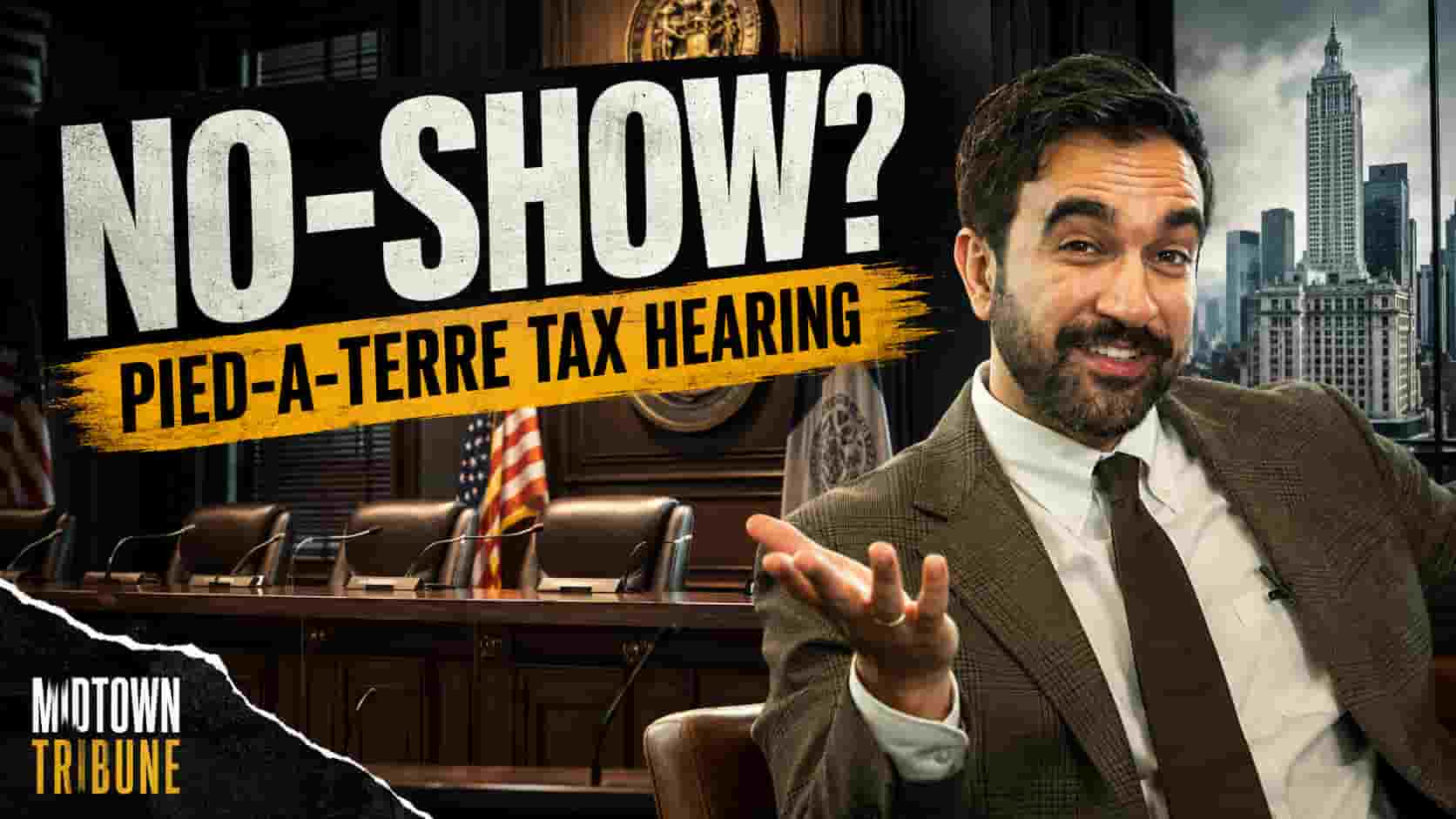
NEW YORK — Mayor Zohran Mamdani’s administration declined to appear before the New York City Council on Tuesday for an oversight hearing into the troubled rollout of the city’s new pied-à-terre tax — just five days after the mayor publicly said he was confident his officials could handle both the hearing and the ongoing lawsuit challenging the program.
The contradiction is difficult to miss.
On August 13, Mamdani was directly asked whether administration officials could testify before the Council while the city was simultaneously defending the tax rollout in court.
His answer was clear:
“I have confidence in our administration officials being able to navigate what are often concurrent obligations, both whether it be to a hearing or to an existing lawsuit.”
Official Mayor’s Office transcript — August 13, 2026
Five days later, those officials did not appear.
Council hearing went ahead — without City Hall at the table
The City Council’s official calendar confirms that the Committee on Finance and the Committee on Governmental Operations, State & Federal Legislation convened at City Hall at 1 p.m. on August 18 for:
“Oversight — Implementation of the Pied-à-Terre Tax.”
NYC Council — Official Hearing Record
Instead of appearing to answer Council members’ questions in person, the Department of Finance submitted written testimony.
That left lawmakers discussing one of the administration’s most controversial tax rollouts without the officials responsible for implementing it sitting before them.
Why does the administration say it stayed away?
The explanation is the pending litigation over the tax.
The rollout has already produced a lawsuit challenging how the Department of Finance identified potentially affected properties and notified homeowners.
But that explanation raises an obvious question because Mamdani himself had addressed precisely that issue only days earlier — and said he was confident officials could manage both obligations.
In other words:
August 13: The mayor says litigation should not prevent officials from navigating a Council hearing.
August 18: The administration cites the litigation and does not appear.
What is the pied-à-terre tax?
The new surcharge targets certain high-value New York City properties that are not an owner’s primary residence. Our guide to the proposed pied-à-terre tax list explains who could be affected and why some rented apartments may be exempt.
The Mamdani administration began implementing the measure in July, with the Department of Finance mailing notices to property owners who might be subject to the surcharge.
The administration says the tax is intended to raise substantial revenue from expensive secondary residences and use the proceeds to support city services.
In announcing the rollout, Mamdani said:
“On Tax Day earlier this year, I promised that we would tax the rich, and with our new pied-à-terre tax, that is exactly what we have done.”
NYC Mayor’s Office — Official Pied-à-Terre Tax Announcement
The administration says the tax could generate roughly $500 million for the city.
But the rollout quickly became controversial
The central controversy is not simply whether wealthy owners of second homes should pay more.
It is how the administration identified properties and how homeowners were told they might owe the tax.
Thousands of property owners received notices requiring them to determine whether they could be subject to the surcharge.
The rollout then became the subject of litigation, forcing the city to defend its implementation procedures in court while continuing to prepare for collection of the tax.
Mamdani has nevertheless repeatedly defended both the policy and the city’s authority to implement it.
On August 13, he said:
“I continue to believe in the importance of a surcharge on secondary homes worth more than $5 million as well as our ability to implement that surcharge.”
He argued that the revenue would make the city’s streets safer and schools stronger.
Oversight is different from agreeing with the tax
The larger issue emerging from Tuesday’s hearing is therefore not simply ideological.
Council members do not have to oppose the pied-à-terre tax to ask how it is being administered.
A legislative oversight hearing is specifically designed to allow elected lawmakers to question agency officials about implementation, procedures, mistakes and consequences.
Written testimony can explain the administration’s position.
It cannot answer a follow-up question.
That distinction matters particularly when residents are challenging an administration action in court and Council members are receiving questions from constituents about how the tax is being applied.
Five days, two very different messages
Mamdani’s August 13 answer now provides the clearest comparison.
Asked whether litigation would make Council testimony problematic, the mayor did not say his administration could not appear.
He said the opposite.
He expressed confidence that his officials could navigate both.
Five days later, City Hall chose another course.
The administration may have legal reasons for limiting what officials say publicly while litigation is pending.
But that does not erase the political question created by its own previous statement:
If the mayor believed his officials could handle both the lawsuit and the Council hearing five days ago, what changed?
For New Yorkers seeking answers about one of the administration’s signature new taxes, that may now be the most basic unanswered question of all.
Official Sources
NYC Council — August 18 Oversight Hearing: Implementation of the Pied-à-Terre Tax
Mayor’s Office — August 13 Transcript
Mayor’s Office — Pied-à-Terre Tax Rollout, July 23
Midtown Tribune | MidtownTribune.com
Ask Midtown Tribune about this story
Answers are grounded first in this article. Search all Midtown Tribune reporting from the main AI Search page.
AI-generated summary. Verify important details in the linked original articles.