
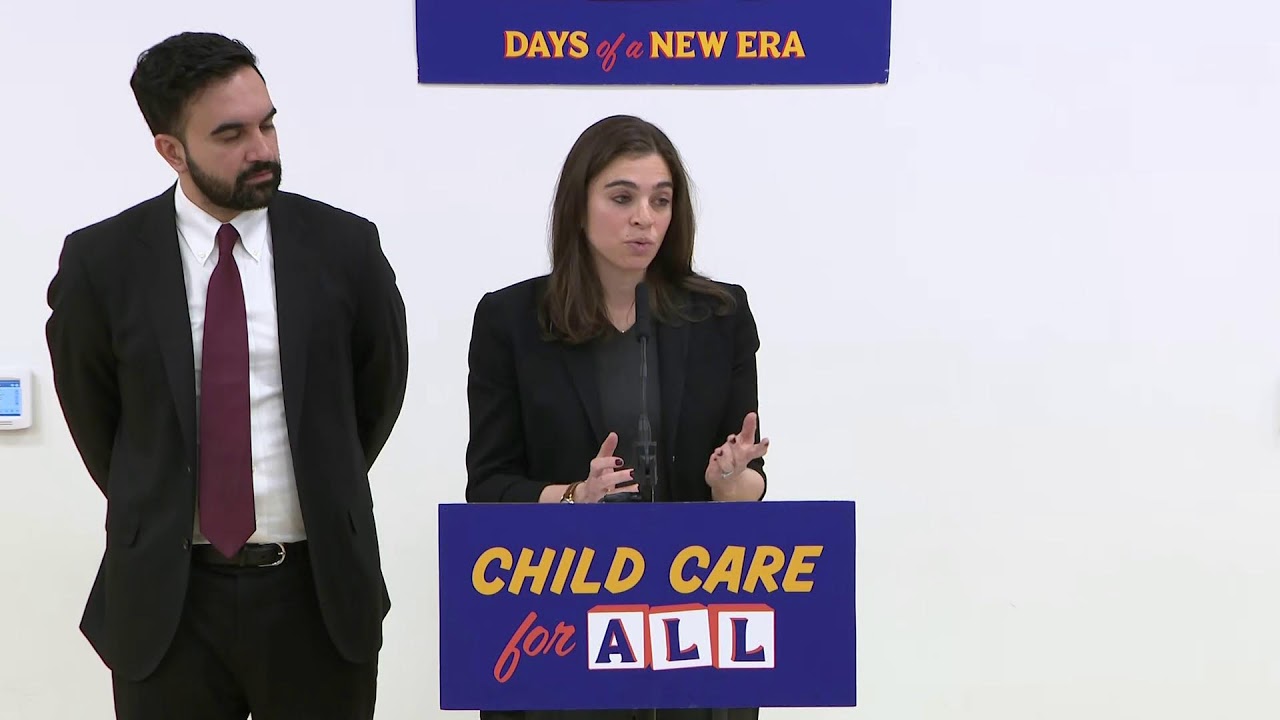
2,000 spots for 100,000 children / only 1 in 50 kids is likely to get a free childcare spot… what will the remaining 98,000 do?
What exactly did Mamdani say?
New York City officials are promoting a major expansion of free childcare for two-year-olds — but the numbers behind the program raise serious questions about its real impact.
Mayor Zohran Mamdani’s administration announced that 2,000 free childcare seats will be available this fall as part of the city’s new “2-K” initiative. The program is designed to support working families by offering full-day, year-round care — a model that could save parents up to $20,000 per child annually.
On paper, it sounds like a breakthrough.
In reality, it is only a small first step.
The Numbers Behind the Announcement
New York City has roughly 100,000 children in each age group. With just 2,000 seats available, that means:
- Only about 2% of eligible children will be served
- Roughly 1 in 50 children will get a spot
- Around 98,000 children will not
Even officials acknowledge this is just the beginning. The program is expected to expand significantly — with plans to reach 12,000 seats by 2027 as part of a broader statewide investment.
But for now, access remains extremely limited.
A Targeted Rollout — Not Universal
The first phase of the program will focus on select high-need communities in Brooklyn, Queens, the Bronx, and Manhattan.
This means that many families across the city — even those struggling with childcare costs — will not have access in the initial rollout.
Some areas are already raising concerns about being left out entirely in the first phase.
What Mamdani Is Promising
During his announcement, Mayor Mamdani framed the initiative as a major step toward universal childcare — a long-term goal supported by both the city and state.
The plan is backed by significant funding:
- $73 million for the first year
- A projected expansion to hundreds of millions annually as the program grows
The administration argues that investing in early childhood care will:
- help parents stay in the workforce,
- reduce financial pressure on families,
- and strengthen long-term economic outcomes.
The Gap Between Vision and Reality
Supporters say the program represents meaningful progress in addressing one of the city’s most expensive challenges: childcare costs, which can reach $20,000–$26,000 per year in New York.
Critics, however, point to the gap between messaging and scale.
While the policy is often described as a move toward “universal childcare,” the current rollout reaches only a fraction of eligible families — leaving the vast majority still dependent on private options or informal care.
For many parents, the situation remains unchanged.
What Happens Next?
City and state officials say the 2,000-seat rollout is only the first phase of a larger multi-year plan.
The key question now is whether expansion will happen fast enough — and at a scale large enough — to match the expectations set by the promise of universal access.
Until then, tens of thousands of families will continue to navigate childcare on their own.
Video:
NYC Mayor’s Office
Midtown Tribune Independent USA news from New York
Ask Midtown Tribune about this story
Answers are grounded first in this article. Search all Midtown Tribune reporting from the main AI Search page.
AI-generated summary. Verify important details in the linked original articles.