
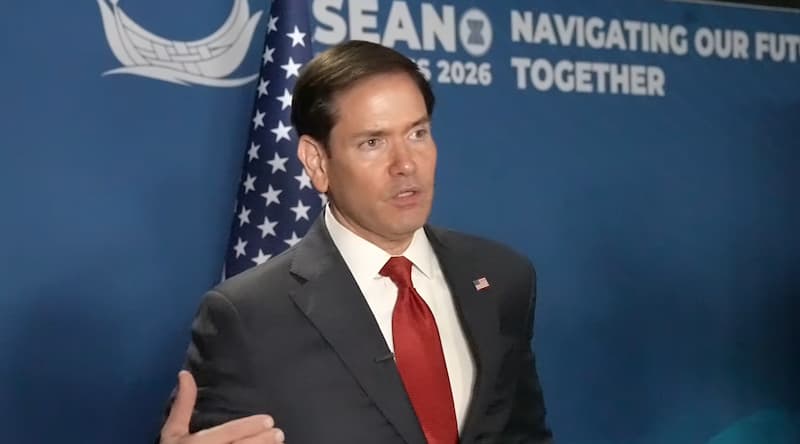
On July 23, 2026, Secretary of State Marco Rubio held a press conference in Manila, Philippines, addressing a wide range of international security and diplomatic issues. The following summary outlines the key topics discussed:
1. The War in Ukraine
- Status of Conflict: Rubio described the war as “very bloody,” noting staggering loss of life for Russian forces (thousands of soldiers per week) and ongoing suffering in Ukraine.
- Diplomatic Efforts: While acknowledging the difficulty of peace negotiations, he reiterated that the United States is prepared to play a constructive role in ending the war if the right conditions and mutual agreement from both sides are reached.
2. Regional Stability and China
- Indo-Pacific Tensions: Rubio addressed recent Chinese live-fire drills in the Taiwan Strait and the use of water cannons against Philippine vessels. He emphasized that these are “disturbing” and “destabilizing” events.
- Commitment to Allies: He stressed the U.S. commitment to treaty partners and freedom of navigation, confirming the U.S. will not abandon its allies in the region.
3. Iran and Middle East Security
- Negotiations and Sanctions: Rubio stated that Iran is currently not ready for a serious deal, claiming they repeatedly break or attempt to change agreements after they are made. He emphasized that until Iran “comes to its senses,” they will continue to face economic and military pressure.
- Nuclear Non-Proliferation: A central focus is ensuring Iran never possesses a nuclear weapon. Rubio maintained that the primary goal is denuclearization rather than regime change, though he criticized the current leadership as “evil lunatics.”
4. Saudi Arabia Nuclear Agreement
- The Secretary clarified that U.S. civil nuclear agreements with Saudi Arabia are designed to ensure peaceful use through rigorous safeguards. He emphasized that the U.S. prefers to provide this technology to maintain oversight, subject to Congressional review.
5. Venezuela
- Rubio discussed the upcoming transition of power in Venezuela between the interim authorities and the 2015 National Assembly, noting that the U.S. is there to support and facilitate the reconciliation process rather than dictate it.
Ask Midtown Tribune about this story
Answers are grounded first in this article. Search all Midtown Tribune reporting from the main AI Search page.
AI-generated summary. Verify important details in the linked original articles.