
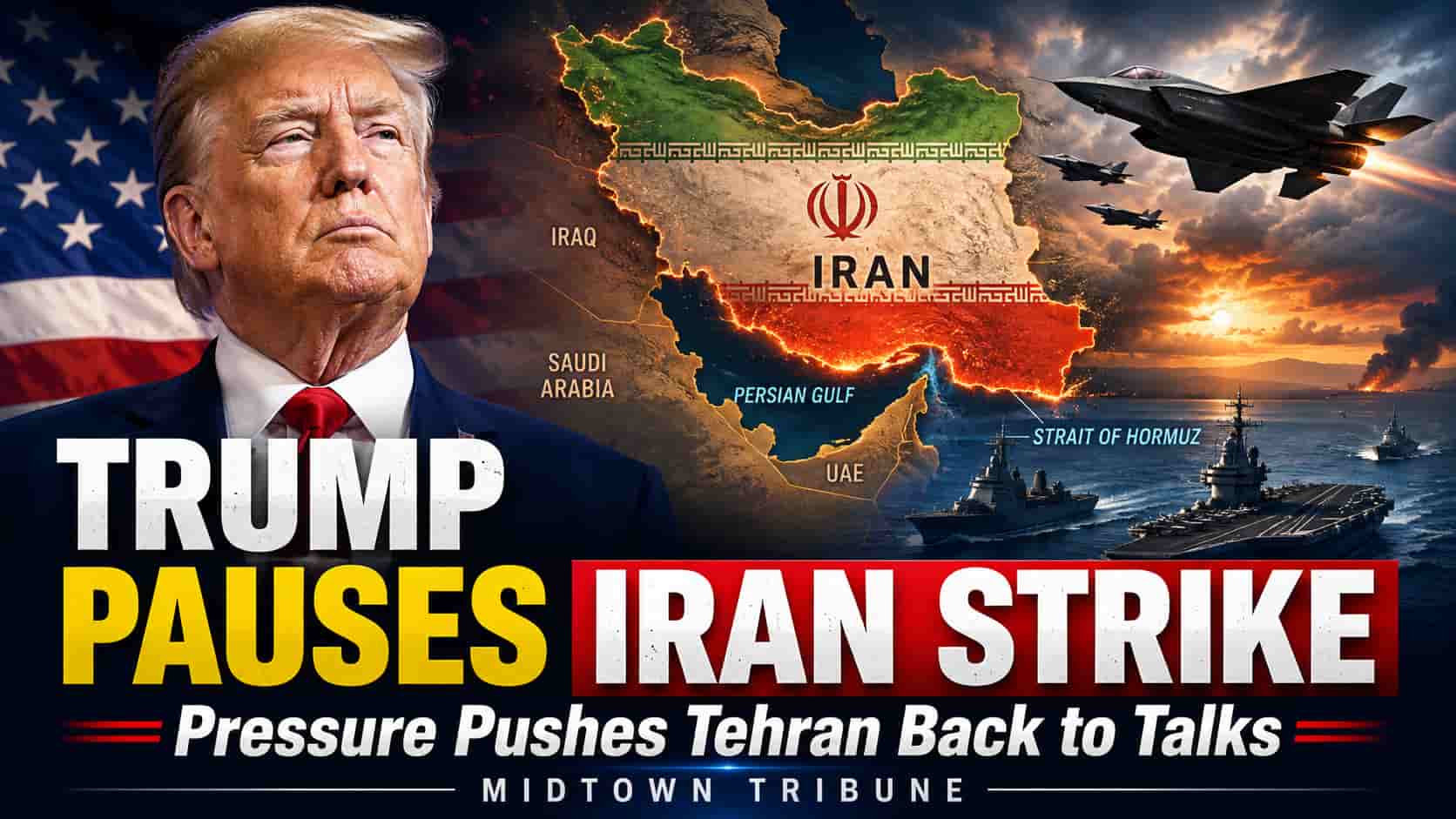
President Donald Trump’s latest approach toward Iran demonstrates a clear principle: negotiations become more serious when American military strength is credible.
In his August 2 video, commentator Benny Johnson argued that the threat of overwhelming U.S. action forced Tehran and regional governments to intensify diplomatic efforts. While some rapidly developing details remain subject to confirmation, the central argument is supported by the official record.
Trump Kept Maximum Pressure on Iran
The White House recently said President Trump had established strong American naval control around the Strait of Hormuz while maintaining intelligence, military and strike capabilities against the Iranian regime.
The administration described its policy as maximum pressure combined with an opportunity for Iran to accept an agreement serving American interests.
That combination matters. Diplomacy without leverage often produces delays, empty promises and repeated violations. Trump’s strategy placed negotiations against the unmistakable possibility of further military action.
Operation Epic Fury Established American Credibility
Operation Epic Fury was not merely a political threat.
U.S. Central Command confirms that the operation was launched at the president’s direction and that American forces have been striking targets connected to Iran’s security and military apparatus, prioritizing sites posing an imminent threat.
The White House said the operation was intended to eliminate Iran’s nuclear threat, degrade its ballistic-missile capabilities, weaken its terrorist networks and reduce its ability to threaten the United States and its allies.
This gave Trump’s warnings credibility. Iranian leaders were not negotiating with a president issuing symbolic statements. They were dealing with an administration that had already demonstrated its willingness and ability to act.
The Strait of Hormuz Remains a Central Demand
The Strait of Hormuz is one of the world’s most important maritime and energy routes. Any attempt by Iran to close it, restrict navigation or threaten commercial vessels affects oil markets, shipping costs and economic stability far beyond the Middle East.
The United States and Gulf Cooperation Council governments have officially called for the reopening of the strait and for free, unconditional and unrestricted navigation.
The State Department has also confirmed continuing diplomatic efforts to secure safe passage through the strait.
Trump’s position is straightforward: Iran cannot be permitted to use an international waterway as a weapon against the world economy.
Pressure Created an Opening for Diplomacy
Johnson’s main point is persuasive: Trump used military pressure not simply to expand the war, but to create conditions for a stronger agreement.
The White House has repeatedly described the administration’s Iran policy as “peace through strength.” The goal is not endless conflict. The goal is to make the cost of Iranian aggression higher than the cost of accepting enforceable terms.
The administration’s publicly stated objectives include preventing Iran from obtaining a nuclear weapon, protecting American personnel and allies, and maintaining free navigation through the Strait of Hormuz.
The White House also lists a U.S.–Iran memorandum of understanding, a ceasefire framework and the reopening of the Strait of Hormuz among the administration’s national-security achievements.
Strength Is Not the Opposite of Peace
Critics frequently present military strength and diplomacy as opposing choices. Trump’s approach treats them as connected.
Without credible consequences, negotiations can become an opportunity for hostile regimes to gain time. With credible consequences, negotiations can become a path away from escalation.
That is the larger significance of the events described by Benny Johnson. Iran and other regional governments did not intensify negotiations because Washington appeared uncertain. They acted because the United States demonstrated that it was prepared to defend its interests.
Conclusion
It is too early to declare every dispute with Iran permanently resolved. Any agreement must be verified, enforced and respected by Tehran’s political and military institutions.
But the broader result is already clear: President Trump combined military readiness with diplomatic flexibility.
He did not remove pressure before negotiations began. He applied pressure, established American credibility and then left the door open for an agreement.
That is the practical meaning of peace through strength.
Official U.S. Government Sources
-
“`
- White House: U.S.–Iran memorandum, ceasefire framework and reopening of the Strait of Hormuz
- White House: President Trump’s strategy to restore safe passage through the Strait of Hormuz
- U.S. Central Command: Official Operation Epic Fury page
- Department of Defense: Operation Epic Fury official fact sheet
- Department of Defense: Official objectives of Operation Epic Fury
- Department of Defense: Protecting commercial shipping through the Strait of Hormuz
- Department of Defense: Official briefing on protecting commercial shipping from Iranian aggression
- U.S. Department of State: Official Iran sanctions policy
- U.S. Department of State: Official Iran country page “`
All links lead exclusively to official White House, Department of Defense, Department of State and U.S. Central Command websites.
Ask Midtown Tribune about this story
Answers are grounded first in this article. Search all Midtown Tribune reporting from the main AI Search page.
AI-generated summary. Verify important details in the linked original articles.