Day: November 21, 2025

  • White House: ABC “News” Is Fake News

    White House: ABC “News” Is Fake News

    ABC “News” is not journalism — it’s a Democrat spin operation masquerading as a broadcast network. The network’s longstanding commitment to hoaxes, character assassinations, and outright fiction targeting only one side of the political aisle is a deliberate deception to wage war on President Trump and the millions of Americans who elected him to multiple terms.

    ABC “News” has a long, rich tradition of peddling lies, conspiracies, and outright opinion thinly veiled as fact:

    • In 2017, ABC suspended investigative reporter Brian Ross after he falsely reported that President Trump had directed Michael Flynn to contact Russian officials before the 2016 election.
    • In 2020, ABC suspended veteran correspondent David Wright after he was caught identifying himself as a “socialist” and admitting the network pushes an anti-Trump agenda and airs stories designed for profit, not news.
    • In 2020, George Stephanopoulos — longtime Democrat operative turned wannabe “journalist” — failed to ask Joe Biden about his son Hunter’s infamous laptop or the swirling allegations of impropriety.
    • In 2024, Stephanopoulos repeatedly lied about President Trump’s legal cases. After being sued for promoting these defamatory lies, the network agreed to settle for $16 million and issue a statement of regret.
    • In October 2024, the network erroneously “fact checked” President Trump at least five times during the presidential debate — but failed to call out his opponent a single time.
    • Following President Trump’s historic 2024 election victory, 90% of the network’s coverage of his cabinet nominees was negative.
    • In January, ABC News gave 27 times more coverage to President Trump’s pardons of January 6 defendants than of Biden’s last-minute pardons to his corrupt family members.
    • In January, ABC News editorialized in a partisan way that President Trump’s personnel directives were “retribution.”
    • In February, ABC News mischaracterized the Trump Administration’s effort to eliminate waste, fraud, and abuse in the bloated federal bureaucracy as an “attack on veterans.”
    • In April, ABC News peddled the debunked lie that the Trump Administration was unilaterally deporting U.S. citizen babies.
    • In June, ABC News’s senior national correspondent Terry Moran smeared White House Deputy Chief of Staff Stephen Miller as a “world-class hater” whose “hatreds are his spiritual nourishment” — just one entry in a long series of Moran’s obvious liberal bias during his tenure.
    • In June, ABC News aired what it called a “violent Border Patrol detention” — but failed to mention the detained illegal immigrant had been chasing federal agents with a weed whacker.
    • In June, ABC News praised violent Los Angeles rioters for “self-policing” — as local businesses and property were being harmed — during coverage critical of President Trump’s National Guard deployment.
    • In July, ABC News used its special coverage of the One Big Beautiful Bill signing ceremony to falsely claim the legislation would “mostly” benefit “the wealthiest Americans” and repeat the debunked talking point that millions of Americans would “lose their healthcare.”
    • In July, ABC News refused to cover the Office of National Intelligence’s announcement of a landmark investigation into Obama-era politicization and manufacturing of intelligence assessments.
    • In July, ABC News dismissed the vicious MS-13 gang — whose motto is literally “kill, rape, control” — as a “clique.”
    • In September, Stephanopoulos repeatedly — and falsely — insisted that people had somehow “died” because of the Trump Administration’s decision to shutter a bloated, wasteful bureaucratic agency.

    The White House

    November 19, 2025

    Sources: White House , Midtown Tribune

    Midtown Tribune Independent USA news from New York

  • RUBIO ORDERS RESTITUTION FOR HUNDREDS OF STAFFERS DENIED PROMOTIONS UNDER BIDEN DEI RULE – U.S. Department of State

    RUBIO ORDERS RESTITUTION FOR HUNDREDS OF STAFFERS DENIED PROMOTIONS UNDER BIDEN DEI RULE – U.S. Department of State

    The previous administration’s extreme DEI agenda imposed ideological litmus tests on government workers and robbed nearly 300 Foreign Service Officers of promotion opportunities.

    Now the State Department is rewarding merit and providing restitution to those unjustly impacted.

    An internal study conducted by the State Department revealed that 295 Foreign Service Officers were denied promotion opportunities in 2024 after the diversity, equity, and inclusion agenda was embedded into the promotion process.

    Officers were disadvantaged in promotion considerations if they didn’t fully embrace the discriminatory DEI agenda.

    The policy prioritized adherence to an extreme ideology over merit and competency.

    Now the State Department is rewarding excellence. Those harmed by these extreme DEI policies will be treated fairly based on past performance.

    Source: U.S. Department of State’s Post , Midtown Tribune news

    Midtown Tribune Independent USA news from New York

  • New York. Governor Hochul Announces MTA Opening First-of-its-kind Railcar Acceptance and Testing Facility

    New York. Governor Hochul Announces MTA Opening First-of-its-kind Railcar Acceptance and Testing Facility

    Yard Inspects All New Subway Cars Shipped Via Truck, Rail and Barge; Features Direct Link to New York City Transit Tracks, Allowing Modern Trains to Enter System Faster and More Efficiently

    Builds on MTA’s Plan To Add More than 1,500 Modern Subway Cars in 2025-29 Capital Plan; Details of the MTA Capital Plan Are Available Here

    Three-Year Project Completed on Time and $5.5 Million Under Budget

    Link to Photos of Railcar Acceptance and Testing Facility Is Available Here; B-Roll Is Available Here

    Governor Kathy Hochul and the Metropolitan Transportation Authority (MTA) today announced the opening of the first-of-its-kind Railcar Acceptance and Testing Facility. Delivered on time and under budget, this state-of-the-art complex serves as the first stop for all new subway cars before they are put into service. This facility will help the MTA process new subway cars, work locomotives and other rolling stock more efficiently, helping complete onsite testing so they can enter service more quickly. This comes as the MTA prepares to receive the biggest infusion of new rail cars since systematic capital planning was first introduced more than a generation ago.

    “Thanks to funding from congestion pricing and the MTA’s 2025-29 Capital Plan, we are making generational upgrades to our subway fleet,” Governor Hochul said. “Thousands of new, modern cars are set to improve the riding experience for millions of New Yorkers. By streamlining the process needed to get these new cars on the rails and into service, this new facility will ensure that riders feel the benefits of a new and improved subway fleet faster than ever.”

    Located near the South Brooklyn Marine Terminal in Sunset Park, the facility can accept rolling stock delivered by truck, rail, or boat. Once accepted, individual cars will be linked together for testing and commissioning on the facility’s in-house tracks. The newly created trains will then be sent via the facility’s direct connection to the subway network to complete further testing and will be entered into revenue service once they pass final inspection. This is the first brand-new, full-scale subway car facility located on a new property that the Authority has added since the Pitkin Yard opened in Brooklyn in 1948.

    MTA Chair and CEO Janno Lieber said, “Our historic $11 billion investment in rolling stock calls for a top-of-the-line new testing facility. Now we’re ready to start processing the 1,500+ rail cars included in the Capital Plan, no matter how they’re delivered — by land or by water.”

    MTA Construction and Development President Jamie Torres-Springer said, “This facility consolidates work that was once spread amongst different yards and unites it all under one roof. It’s another example of the MTA delivering a critical project on time and under budget to improve subway reliability for decades to come.”

    New York City Transit President Demetrius Crichlow said, “As we continue to upgrade our rolling stock with modern cars, the Railcar Acceptance and Testing Facility provides a state-of-the-art space for NYC Transit employees to ensure new cars are safe, reliable, and ready to enter service. With streamlined inspections and a direct connection to transit tracks, NYC Transit has never been more prepared to keep up with the historic 2025-29 Capital Plan and the unprecedented investment it provides in rolling stock.”

    The Railcar Acceptance and Testing Facility was completed within its three-year timeline and $5.5 million under budget by utilizing design-build delivery that streamlines project design and management. The MTA realized significant savings through the use of prefabricated building components and precast concrete for the track pit construction, speeding the project’s completion and minimizing cost.  

    The American Council of Engineering Companies of New York recently awarded the facility the silver medal in the Transportation category at the 2026 Engineering Excellence Awards Competition. This prestigious award recognized the yard’s state-of-the-art design, innovation, complexity and the benefits it will bring to the subway riding public and community as a whole.

    The opening of the facility comes as the MTA is actively buying hundreds of modern R211 and R268 subway cars that will eventually replace all R46 and R68 subway cars, which have been in service for decades. The historic $68 billion 2025-29 Capital Plan includes the purchase of 1,500 new subway cars – the largest new investment in rolling stock since the 1980s. New R211 cars are being delivered at a rapid pace, with 750 already delivered and another 860 still to arrive.  

    First placed into service in March 2023, the R211 features pre-installed security cameras in each car, as well as 58-inch-wide door openings that are eight inches wider than standard door openings on the existing car fleet. These are designed to speed up boarding and reduce the amount of time trains sit in stations. In addition to wider doors, these cars provide additional accessible seating, digital displays that will provide more detailed station-specific information, and brighter lighting and signage, among other features that improve the customer experience.

    The R211 is currently in service on the Staten Island Railway, as well as the A, B, C and G lines. There are plans to add the R211 on the D and the Rockaway Park S within the next two years. The R211 is just the start of the MTA’s investment in new subway cars. The MTA Board recently approved the purchase of 378 new R268 subway cars, which feature many of the same amenities as the R211. The R268s will service the MTA’s B division lines beginning in 2028. In addition, the 2025-29 Capital Plan will include the purchase of new cars for the A Division, replacing the existing R62 trains serving the 1, 3 and 6 trains.

    These modern cars also assist the MTA in its efforts to upgrade subway lines to Communications-based Train Control (CBTC), the international gold standard of signal systems. All R211s and R268s come equipped with technology that seamlessly integrates with CBTC signals, leading to a better overall commute for millions of daily riders — including more reliable service, fewer delays, more frequent trains and less waiting.

    Crews are actively working to complete CBTC upgrades on the A, C, E, F and G lines. Planned work on the Fulton St and Liberty Av Lines of the A and C trains in Brooklyn and Queens and the 6th Av Line of the B, D, F and M trains in Manhattan are being paid for by funds generated from congestion relief. Upcoming CBTC modernization efforts on the A, Rockaway Park S, J and Z trains from the Williamsburg Bridge to Broad St, as well as on the N, Q, R and W trains in Manhattan and Astoria will be financed through the 2025-29 Capital Plan.

    Representative Daniel Goldman said, “The new railcar acceptance facility in my district in Sunset Park is exactly the kind of smart transit investment that delivers real results for New Yorkers. By streamlining delivery and testing for new subway cars, this site will help modernize our fleet, improve reliability across the system, and get riders the safe and efficient service they deserve. I am grateful for the leadership and vision that made this possible, and I look forward to seeing the benefits for Brooklyn and our entire city.”

    State Senator Leroy Comrie said, “Investing in modern, reliable rail service is essential to keeping New York moving. This new testing facility will help the MTA bring upgraded subway cars online faster and more efficiently, improving safety, reliability and the rider experience system-wide. I commend Governor Hochul and the MTA for delivering this project on time and under budget and I look forward to continued progress that improves our ability to keep the system in a state of good repair, improving the ability of our transit network for all New Yorkers.”

    Assemblymember Marcela Mitaynes said, “Today’s opening builds on Sunset Park’s legacy of industrial innovation and maritime commerce. As we strive to uphold our commitment to improving public infrastructure and transportation, I am proud to welcome this first-of-its-kind facility to our community. Thank you to everyone involved in ensuring the project was delivered on time and under budget.”

    New York City Council Member Alexa Avilés said, “I am proud to welcome this new railcar acceptance facility into our district. Our public transportation system is the beating heart of our city. Investments that improve the efficiency of our trains will serve me and my neighbors, who rely on NYCT for their daily commutes across the city. I want to thank NYCT for the hard work they have put into opening this facility and look forward to supporting the dedicated NYCT workers who keep our city running.”

    November 21, 2025

    Albany, NY

    Sources: Governor.ny.gov , Big New York news BigNY.com ,
    Midtown Tribune news

    Midtown Tribune Independent USA news from New York

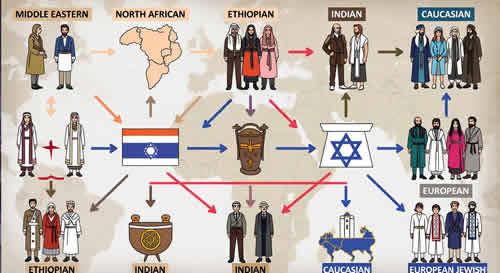
  • The Genetic Diversity of Jewish Ethnic Groups: What DNA Reveals About Jewish History Around the World

    The Genetic Diversity of Jewish Ethnic Groups: What DNA Reveals About Jewish History Around the World

    The Jewish people are often spoken of as a single group, but in reality, Jewish history is a tapestry of migrations, exiles, conversions, and centuries-long separations. These events produced a wide range of Jewish ethnocultural groups, each with its own customs, languages, and—importantly—genetic signatures.

    Jewish DNA Etnicity Groups

    Modern genetic research has shown that while many Jewish communities share ancient Middle Eastern ancestry, different Jewish ethnic groups exhibit clear DNA differences that reflect their unique journeys across time and geography. Below is a fascinating look at how genetics helps us understand the story of Jewish diversity.


    Shared Origins, Different Paths: Why Jewish DNA Is Not All the Same

    Most Jewish groups retain a significant component of Levantine ancestry, tracing back to ancient Israelites. Yet over thousands of years, Jews settled in Mesopotamia, Persia, North Africa, the Caucasus, Europe, India, and even Ethiopia and China. Each community experienced:

    • isolation
    • intermarriage with local populations
    • religious conversions
    • genetic bottlenecks
    • unique migrations

    These shaped distinct genetic profiles. As a result, there is no single “Jewish DNA,” but rather multiple genetic patterns within the global Jewish population.


    Genetic Differences Among Major Jewish Ethnic Groups

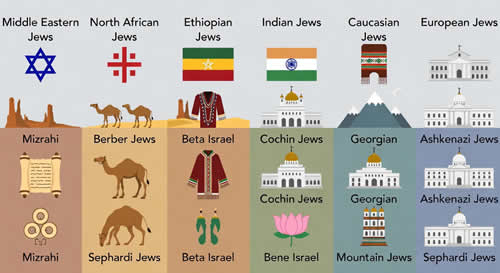
    1. Middle Eastern Jews (Mizrahi)

    Mizrahi communities—including Iranian, Iraqi, Syrian, Kurdish, Georgian, Yemeni, and Bukharan Jews—generally show strong Middle Eastern genetic continuity. Despite shared ancient ancestry, each subgroup has its own DNA profile formed through centuries of local history.

    For example:

    • Iranian and Iraqi Jews are genetically very close to each other but distinct from Yemenite or North African Jews.
    • Yemenite Jews show unique markers likely influenced by ancient South Arabian populations.
    • Bukharan Jews have Middle Eastern roots but also Central Asian admixture.

    These differences create identifiable genetic clusters within the broader Middle Eastern Jewish family.


    2. North African Jews

    Moroccan, Algerian, Tunisian, Libyan, and Egyptian Jews form their own genetic cluster, separate from both Middle Eastern Mizrahim and European Jews.

    • Moroccan Jews show mixtures of ancient Israelite, Berber, and Spanish/Portuguese Jewish ancestry.
    • Libyan Jews are genetically more isolated, with distinct patterns reflecting long periods of endogamy.

    North African Jewish DNA is internally diverse—but still distinct from neighboring non-Jewish populations.


    3. Ethiopian Jews (Beta Israel)

    Ethiopian Jews stand out genetically more than almost any other Jewish group.

    • Their DNA shows strong Ethiopian highland ancestry, especially in maternal lineages.
    • Yet there are hints of very ancient Near-Eastern admixture, possibly consistent with ancient Judaic influence.

    Their distinct DNA tells a story of a long-isolated community with deep regional roots.


    4. Indian Jews (Bene Israel, Cochin, and Baghdadi Jews)

    Indian Jewish communities are among the world’s most genetically fascinating.

    • Bene Israel

    Show a clear mix of Jewish Middle Eastern ancestry and local Indian ancestry, reflecting ancient admixture followed by 2,000 years of endogamy.

    • Cochin Jews

    Blend Jewish Middle Eastern ancestry with South Indian ancestry, forming a unique genetic identity in the Kerala region.

    • Baghdadi Jews

    Descend mostly from Iraqi and Syrian Jews who migrated to India much later (18–19th century), so genetically they resemble Middle Eastern Jews more than Indian Jews.


    5. Caucasus Jews (Mountain Jews, Georgian Jews, Krymchaks)

    Mountain Jews (Juhuro)

    Have a strong Middle Eastern core but also Caucasian admixture, producing one of the most distinctive Jewish genetic profiles.

    Georgian Jews

    Genetically closer to local Georgian populations, reflecting a 2,000-year presence in the region.

    Krymchaks

    Show a mixture of Middle Eastern Jewish ancestry and Crimean-Tatar influences.


    6. Romaniote and Italian Jews

    These ancient European Jewish communities are genetically distinct from both Ashkenazi and Sephardic Jews.

    • Romaniote Jews of Greece show long continuity in the Balkans, with moderate Levantine and Mediterranean admixture.
    • Italian Jews (Italkim) predate both Sephardim and Ashkenazim and form their own genetic category, combining ancient Jewish ancestry with Italian lineages.

    What These DNA Differences Mean

    1. Jewish identity has never been biologically uniform.

    Each Jewish community carries a blend of ancient Israelite ancestry and the genetic signature of the region where it lived.

    2. Many groups show strong Middle Eastern paternal ancestry, indicating continuity of male-line descent from ancient Hebrew populations.

    3. Maternal ancestry varies widely, reflecting local converts, intermarriage, and unique historical events (for example, Ethiopian Jews carry mostly African mtDNA; Ashkenazim have mainly European mtDNA).

    4. Jewish groups form identifiable genetic clusters, confirming that Ashkenazi, Sephardi, Mizrahi, Ethiopian, Indian, Caucasian, and North African Jews each have distinct genetic histories.


    Conclusion: Jewish DNA Is a Mosaic of Many Histories

    Genetic research beautifully illustrates what history already tells us: the Jewish people are not a single biological unit but a network of diverse communities, each shaped by its own migrations, neighbors, and centuries-long traditions.

    From the mountains of Dagestan to the deserts of Yemen, from the shores of Morocco to the villages of Ethiopia and the coast of India—Jewish DNA tells a global story. These differences do not divide the Jewish people; instead, they highlight the cultural and historical richness of a people whose identity survived and evolved across continents for thousands of years.

    Here’s a concise list of groups many people refer to:

    Middle Eastern / Mizrahi

    • Iranian (Persian)
    • Iraqi (Babylonian)
    • Syrian
    • Yemenite
    • Kurdish
    • Georgian
    • Bukharan
    • Egyptian
    • Libyan
    • Tunisian
    • Algerian
    • Moroccan

    Caucasus

    • Mountain Jews (Juhuro)
    • Krymchaks
    • Karaites (religious identity debated)

    African

    • Ethiopian Beta Israel
    • Falash Mura
    • Abayudaya (modern)

    South & East Asia

    • Cochin Jews
    • Bene Israel
    • Baghdadi Jews of India
    • Bnei Menashe
    • Kaifeng Jews

    Europe (non-Ashkenazi/Sephardi)

    • Italian Jews (Italkim)
    • Romaniote Jews

    Summary of Genetics & Linguistic Features of Major Jewish Ethnic Groups

    Below is a concise table-style narrative covering each major group.


    Middle Eastern / Mizrahi Jews

    1. Iranian (Persian) Jews

    Genetics:

    • Strong continuity with ancient Middle Eastern ancestry
    • Minor admixture with Persian populations
    • Distinct from both Ashkenazi and Iraqi Jews despite shared roots

    Language:

    • Historically Judeo-Persian (Persian with Hebrew elements)
    • Also Judeo-Tat in some subgroups

    2. Iraqi (Babylonian) Jews

    Genetics:

    • Strong Levantine/Mesopotamian ancestry
    • One of the closest groups to ancient Near Eastern genetic profiles

    Language:

    • Judeo-Arabic and Judeo-Aramaic
    • Aramaic dialects persisted until the 20th century

    3. Syrian Jews (Halabi & Shami)

    Genetics:

    • Middle Eastern core with moderate Levantine admixture
    • Distinct from both Ashkenazi and neighboring Arab populations

    Language:

    • Mostly Judeo-Arabic

    4. Yemeni (Teimani) Jews

    Genetics:

    • Unique cluster within Jewish genetics
    • Some influence from ancient South Arabian populations
    • Very high endogamy

    Language:

    • Judeo-Arabic
    • Distinct pronunciation of Hebrew

    5. Kurdish Jews

    Genetics:

    • Strong Middle Eastern ancestry with genetic continuity to ancient Israelites
    • Very low admixture

    Language:

    • Lishan Didan (Jewish Neo-Aramaic dialect)

    6. Georgian Jews

    Genetics:

    • Mixed Middle Eastern and Georgian ancestry
    • Very old, isolated community

    Language:

    • Judaeo-Georgian

    7. Bukharan Jews

    Genetics:

    • Middle Eastern Jewish core with Central Asian admixture
    • Unique genetic cluster

    Language:

    • Bukhori (Judeo-Tajik)

    North African Jews (Maghrebi)

    8. Moroccan Jews

    Genetics:

    • Mixed Levantine, Berber, and Iberian Jewish ancestry
    • Distinct from local non-Jewish Moroccans

    Language:

    • Judeo-Arabic
    • Haketía (a Judeo-Spanish dialect in northern Morocco)

    9. Algerian & Tunisian Jews

    Genetics:

    • Similar to Moroccan Jews but more North-African admixture
    • Still form a separate Jewish cluster

    Language:

    • Judeo-Arabic

    10. Libyan Jews

    Genetics:

    • Highly endogamous, forming a unique cluster
    • Some of the most genetically distinct North African Jews

    Language:

    • Judeo-Arabic

    Caucasus Jews

    11. Mountain Jews (Juhuro)

    Genetics:

    • Middle Eastern Jewish ancestry with Caucasus admixture
    • Highly endogamous

    Language:

    • Juhuri (Judeo-Tat), a Persian-based language

    12. Krymchaks

    Genetics:

    • Blend of Near Eastern Jewish and Crimean-Tatar ancestry

    Language:

    • Krymchak, related to Crimean Tatar with Hebrew elements

    13. Georgian Jews

    (Already listed under Mizrahi but also grouped here)


    African Jewish Groups

    14. Ethiopian Jews (Beta Israel)

    Genetics:

    • Primarily East African highland ancestry
    • Some signatures consistent with ancient Near-Eastern influence
    • Most genetically distinct Jewish group

    Language:

    • Ge’ez in liturgy
    • Amharic / Tigrinya historically

    15. Ethiopian Falash Mura

    Genetics:

    • Same as Beta Israel due to shared ancestry
    • Some later admixture with Christian Ethiopians

    Language:

    • Same as Beta Israel

    Indian Jewish Groups

    16. Bene Israel

    Genetics:

    • Roughly 50/50 Jewish Middle Eastern + Indian ancestry
    • Long-term endogamy after admixture

    Language:

    • Marathi (local language)
    • No distinctive Judeo-language

    17. Cochin Jews

    Genetics:

    • Mixture of Middle Eastern Jewish and South Indian ancestry
    • Distinct from Bene Israel

    Language:

    • Judeo-Malayalam

    18. Baghdadi Jews (India, Myanmar, Singapore)

    Genetics:

    • Middle Eastern ancestry similar to Iraqi Jews
    • Minimal local admixture

    Language:

    • Judeo-Arabic

    European (Non-Ashkenazi) Groups

    19. Romaniote Jews

    Genetics:

    • Mediterranean + Middle Eastern ancestry
    • Very old Jewish community predating Sephardim

    Language:

    • Judeo-Greek (Yevanic)

    20. Italian Jews (Italkim)

    Genetics:

    • One of the oldest European Jewish groups
    • Mix of ancient Jewish + Roman/Italian ancestry
    • Distinct from both Ashkenazi and Sephardi

    Language:

    • Judeo-Italian (Italkian)

    Asian Jewish Groups

    21. Kaifeng Jews (China)

    Genetics:

    • Originally Middle Eastern in medieval times
    • Heavy admixture with local Han Chinese populations

    Language:

    • Spoke Chinese
    • No unique Judeo-language preserved

    Ultra-Summary for Fast Use

    Genetic Patterns Across Groups

    • Middle Eastern core: Strong in Mizrahi, many North African, Caucasus, and Italian/Greek Jews
    • High admixture: Indian Jews, Ethiopian Jews, Kaifeng Jews
    • Highly isolated: Mountain Jews, Libyan Jews, Georgian Jews, Yemenite Jews
    • Most distinct genetically: Ethiopian Jews, Kaifeng Jews

    Linguistic Patterns Across Groups

    • Judeo-Arabic: Widespread across Middle East & North Africa
    • Judeo-Iranian / Judeo-Tat: Iran & Caucasus
    • Judeo-Aramaic: Iraq, Kurdistan
    • Judeo-Romance languages: Italy, Greece
    • Judeo-Indian languages: Malayalam (Cochin)
    • Local languages: Bene Israel (Marathi), Ethiopian Jews (Amharic/Tigrinya), Kaifeng Jews (Chinese)

    Midtown Tribune Independent USA news from New York