
Month: November 2025

  • New York. Governor Hochul Announces MTA Opening First-of-its-kind Railcar Acceptance and Testing Facility

    New York. Governor Hochul Announces MTA Opening First-of-its-kind Railcar Acceptance and Testing Facility

    Yard Inspects All New Subway Cars Shipped Via Truck, Rail and Barge; Features Direct Link to New York City Transit Tracks, Allowing Modern Trains to Enter System Faster and More Efficiently

    Builds on MTA’s Plan To Add More than 1,500 Modern Subway Cars in 2025-29 Capital Plan; Details of the MTA Capital Plan Are Available Here

    Three-Year Project Completed on Time and $5.5 Million Under Budget

    Link to Photos of Railcar Acceptance and Testing Facility Is Available Here; B-Roll Is Available Here

    Governor Kathy Hochul and the Metropolitan Transportation Authority (MTA) today announced the opening of the first-of-its-kind Railcar Acceptance and Testing Facility. Delivered on time and under budget, this state-of-the-art complex serves as the first stop for all new subway cars before they are put into service. This facility will help the MTA process new subway cars, work locomotives and other rolling stock more efficiently, helping complete onsite testing so they can enter service more quickly. This comes as the MTA prepares to receive the biggest infusion of new rail cars since systematic capital planning was first introduced more than a generation ago.

    “Thanks to funding from congestion pricing and the MTA’s 2025-29 Capital Plan, we are making generational upgrades to our subway fleet,” Governor Hochul said. “Thousands of new, modern cars are set to improve the riding experience for millions of New Yorkers. By streamlining the process needed to get these new cars on the rails and into service, this new facility will ensure that riders feel the benefits of a new and improved subway fleet faster than ever.”

    Located near the South Brooklyn Marine Terminal in Sunset Park, the facility can accept rolling stock delivered by truck, rail, or boat. Once accepted, individual cars will be linked together for testing and commissioning on the facility’s in-house tracks. The newly created trains will then be sent via the facility’s direct connection to the subway network to complete further testing and will be entered into revenue service once they pass final inspection. This is the first brand-new, full-scale subway car facility located on a new property that the Authority has added since the Pitkin Yard opened in Brooklyn in 1948.

    MTA Chair and CEO Janno Lieber said, “Our historic $11 billion investment in rolling stock calls for a top-of-the-line new testing facility. Now we’re ready to start processing the 1,500+ rail cars included in the Capital Plan, no matter how they’re delivered — by land or by water.”

    MTA Construction and Development President Jamie Torres-Springer said, “This facility consolidates work that was once spread amongst different yards and unites it all under one roof. It’s another example of the MTA delivering a critical project on time and under budget to improve subway reliability for decades to come.”

    New York City Transit President Demetrius Crichlow said, “As we continue to upgrade our rolling stock with modern cars, the Railcar Acceptance and Testing Facility provides a state-of-the-art space for NYC Transit employees to ensure new cars are safe, reliable, and ready to enter service. With streamlined inspections and a direct connection to transit tracks, NYC Transit has never been more prepared to keep up with the historic 2025-29 Capital Plan and the unprecedented investment it provides in rolling stock.”

    The Railcar Acceptance and Testing Facility was completed within its three-year timeline and $5.5 million under budget by utilizing design-build delivery that streamlines project design and management. The MTA realized significant savings through the use of prefabricated building components and precast concrete for the track pit construction, speeding the project’s completion and minimizing cost.  

    The American Council of Engineering Companies of New York recently awarded the facility the silver medal in the Transportation category at the 2026 Engineering Excellence Awards Competition. This prestigious award recognized the yard’s state-of-the-art design, innovation, complexity and the benefits it will bring to the subway riding public and community as a whole.

    The opening of the facility comes as the MTA is actively buying hundreds of modern R211 and R268 subway cars that will eventually replace all R46 and R68 subway cars, which have been in service for decades. The historic $68 billion 2025-29 Capital Plan includes the purchase of 1,500 new subway cars – the largest new investment in rolling stock since the 1980s. New R211 cars are being delivered at a rapid pace, with 750 already delivered and another 860 still to arrive.  

    First placed into service in March 2023, the R211 features pre-installed security cameras in each car, as well as 58-inch-wide door openings that are eight inches wider than standard door openings on the existing car fleet. These are designed to speed up boarding and reduce the amount of time trains sit in stations. In addition to wider doors, these cars provide additional accessible seating, digital displays that will provide more detailed station-specific information, and brighter lighting and signage, among other features that improve the customer experience.

    The R211 is currently in service on the Staten Island Railway, as well as the A, B, C and G lines. There are plans to add the R211 on the D and the Rockaway Park S within the next two years. The R211 is just the start of the MTA’s investment in new subway cars. The MTA Board recently approved the purchase of 378 new R268 subway cars, which feature many of the same amenities as the R211. The R268s will service the MTA’s B division lines beginning in 2028. In addition, the 2025-29 Capital Plan will include the purchase of new cars for the A Division, replacing the existing R62 trains serving the 1, 3 and 6 trains.

    These modern cars also assist the MTA in its efforts to upgrade subway lines to Communications-based Train Control (CBTC), the international gold standard of signal systems. All R211s and R268s come equipped with technology that seamlessly integrates with CBTC signals, leading to a better overall commute for millions of daily riders — including more reliable service, fewer delays, more frequent trains and less waiting.

    Crews are actively working to complete CBTC upgrades on the A, C, E, F and G lines. Planned work on the Fulton St and Liberty Av Lines of the A and C trains in Brooklyn and Queens and the 6th Av Line of the B, D, F and M trains in Manhattan are being paid for by funds generated from congestion relief. Upcoming CBTC modernization efforts on the A, Rockaway Park S, J and Z trains from the Williamsburg Bridge to Broad St, as well as on the N, Q, R and W trains in Manhattan and Astoria will be financed through the 2025-29 Capital Plan.

    Representative Daniel Goldman said, “The new railcar acceptance facility in my district in Sunset Park is exactly the kind of smart transit investment that delivers real results for New Yorkers. By streamlining delivery and testing for new subway cars, this site will help modernize our fleet, improve reliability across the system, and get riders the safe and efficient service they deserve. I am grateful for the leadership and vision that made this possible, and I look forward to seeing the benefits for Brooklyn and our entire city.”

    State Senator Leroy Comrie said, “Investing in modern, reliable rail service is essential to keeping New York moving. This new testing facility will help the MTA bring upgraded subway cars online faster and more efficiently, improving safety, reliability and the rider experience system-wide. I commend Governor Hochul and the MTA for delivering this project on time and under budget and I look forward to continued progress that improves our ability to keep the system in a state of good repair, improving the ability of our transit network for all New Yorkers.”

    Assemblymember Marcela Mitaynes said, “Today’s opening builds on Sunset Park’s legacy of industrial innovation and maritime commerce. As we strive to uphold our commitment to improving public infrastructure and transportation, I am proud to welcome this first-of-its-kind facility to our community. Thank you to everyone involved in ensuring the project was delivered on time and under budget.”

    New York City Council Member Alexa Avilés said, “I am proud to welcome this new railcar acceptance facility into our district. Our public transportation system is the beating heart of our city. Investments that improve the efficiency of our trains will serve me and my neighbors, who rely on NYCT for their daily commutes across the city. I want to thank NYCT for the hard work they have put into opening this facility and look forward to supporting the dedicated NYCT workers who keep our city running.”

    November 21, 2025

    Albany, NY

    Sources: Governor.ny.gov , Big New York news BigNY.com ,
    Midtown Tribune news

    Midtown Tribune Independent USA news from New York

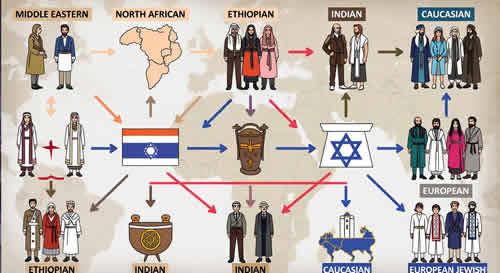
  • The Genetic Diversity of Jewish Ethnic Groups: What DNA Reveals About Jewish History Around the World

    The Genetic Diversity of Jewish Ethnic Groups: What DNA Reveals About Jewish History Around the World

    The Jewish people are often spoken of as a single group, but in reality, Jewish history is a tapestry of migrations, exiles, conversions, and centuries-long separations. These events produced a wide range of Jewish ethnocultural groups, each with its own customs, languages, and—importantly—genetic signatures.

    Jewish DNA Etnicity Groups

    Modern genetic research has shown that while many Jewish communities share ancient Middle Eastern ancestry, different Jewish ethnic groups exhibit clear DNA differences that reflect their unique journeys across time and geography. Below is a fascinating look at how genetics helps us understand the story of Jewish diversity.


    Shared Origins, Different Paths: Why Jewish DNA Is Not All the Same

    Most Jewish groups retain a significant component of Levantine ancestry, tracing back to ancient Israelites. Yet over thousands of years, Jews settled in Mesopotamia, Persia, North Africa, the Caucasus, Europe, India, and even Ethiopia and China. Each community experienced:

    • isolation
    • intermarriage with local populations
    • religious conversions
    • genetic bottlenecks
    • unique migrations

    These shaped distinct genetic profiles. As a result, there is no single “Jewish DNA,” but rather multiple genetic patterns within the global Jewish population.


    Genetic Differences Among Major Jewish Ethnic Groups

    1. Middle Eastern Jews (Mizrahi)

    Mizrahi communities—including Iranian, Iraqi, Syrian, Kurdish, Georgian, Yemeni, and Bukharan Jews—generally show strong Middle Eastern genetic continuity. Despite shared ancient ancestry, each subgroup has its own DNA profile formed through centuries of local history.

    For example:

    • Iranian and Iraqi Jews are genetically very close to each other but distinct from Yemenite or North African Jews.
    • Yemenite Jews show unique markers likely influenced by ancient South Arabian populations.
    • Bukharan Jews have Middle Eastern roots but also Central Asian admixture.

    These differences create identifiable genetic clusters within the broader Middle Eastern Jewish family.


    2. North African Jews

    Moroccan, Algerian, Tunisian, Libyan, and Egyptian Jews form their own genetic cluster, separate from both Middle Eastern Mizrahim and European Jews.

    • Moroccan Jews show mixtures of ancient Israelite, Berber, and Spanish/Portuguese Jewish ancestry.
    • Libyan Jews are genetically more isolated, with distinct patterns reflecting long periods of endogamy.

    North African Jewish DNA is internally diverse—but still distinct from neighboring non-Jewish populations.


    3. Ethiopian Jews (Beta Israel)

    Ethiopian Jews stand out genetically more than almost any other Jewish group.

    • Their DNA shows strong Ethiopian highland ancestry, especially in maternal lineages.
    • Yet there are hints of very ancient Near-Eastern admixture, possibly consistent with ancient Judaic influence.

    Their distinct DNA tells a story of a long-isolated community with deep regional roots.


    4. Indian Jews (Bene Israel, Cochin, and Baghdadi Jews)

    Indian Jewish communities are among the world’s most genetically fascinating.

    • Bene Israel

    Show a clear mix of Jewish Middle Eastern ancestry and local Indian ancestry, reflecting ancient admixture followed by 2,000 years of endogamy.

    • Cochin Jews

    Blend Jewish Middle Eastern ancestry with South Indian ancestry, forming a unique genetic identity in the Kerala region.

    • Baghdadi Jews

    Descend mostly from Iraqi and Syrian Jews who migrated to India much later (18–19th century), so genetically they resemble Middle Eastern Jews more than Indian Jews.


    5. Caucasus Jews (Mountain Jews, Georgian Jews, Krymchaks)

    Mountain Jews (Juhuro)

    Have a strong Middle Eastern core but also Caucasian admixture, producing one of the most distinctive Jewish genetic profiles.

    Georgian Jews

    Genetically closer to local Georgian populations, reflecting a 2,000-year presence in the region.

    Krymchaks

    Show a mixture of Middle Eastern Jewish ancestry and Crimean-Tatar influences.


    6. Romaniote and Italian Jews

    These ancient European Jewish communities are genetically distinct from both Ashkenazi and Sephardic Jews.

    • Romaniote Jews of Greece show long continuity in the Balkans, with moderate Levantine and Mediterranean admixture.
    • Italian Jews (Italkim) predate both Sephardim and Ashkenazim and form their own genetic category, combining ancient Jewish ancestry with Italian lineages.

    What These DNA Differences Mean

    1. Jewish identity has never been biologically uniform.

    Each Jewish community carries a blend of ancient Israelite ancestry and the genetic signature of the region where it lived.

    2. Many groups show strong Middle Eastern paternal ancestry, indicating continuity of male-line descent from ancient Hebrew populations.

    3. Maternal ancestry varies widely, reflecting local converts, intermarriage, and unique historical events (for example, Ethiopian Jews carry mostly African mtDNA; Ashkenazim have mainly European mtDNA).

    4. Jewish groups form identifiable genetic clusters, confirming that Ashkenazi, Sephardi, Mizrahi, Ethiopian, Indian, Caucasian, and North African Jews each have distinct genetic histories.


    Conclusion: Jewish DNA Is a Mosaic of Many Histories

    Genetic research beautifully illustrates what history already tells us: the Jewish people are not a single biological unit but a network of diverse communities, each shaped by its own migrations, neighbors, and centuries-long traditions.

    From the mountains of Dagestan to the deserts of Yemen, from the shores of Morocco to the villages of Ethiopia and the coast of India—Jewish DNA tells a global story. These differences do not divide the Jewish people; instead, they highlight the cultural and historical richness of a people whose identity survived and evolved across continents for thousands of years.

    Here’s a concise list of groups many people refer to:

    Middle Eastern / Mizrahi

    • Iranian (Persian)
    • Iraqi (Babylonian)
    • Syrian
    • Yemenite
    • Kurdish
    • Georgian
    • Bukharan
    • Egyptian
    • Libyan
    • Tunisian
    • Algerian
    • Moroccan

    Caucasus

    • Mountain Jews (Juhuro)
    • Krymchaks
    • Karaites (religious identity debated)

    African

    • Ethiopian Beta Israel
    • Falash Mura
    • Abayudaya (modern)

    South & East Asia

    • Cochin Jews
    • Bene Israel
    • Baghdadi Jews of India
    • Bnei Menashe
    • Kaifeng Jews

    Europe (non-Ashkenazi/Sephardi)

    • Italian Jews (Italkim)
    • Romaniote Jews

    Summary of Genetics & Linguistic Features of Major Jewish Ethnic Groups

    Below is a concise table-style narrative covering each major group.


    Middle Eastern / Mizrahi Jews

    1. Iranian (Persian) Jews

    Genetics:

    • Strong continuity with ancient Middle Eastern ancestry
    • Minor admixture with Persian populations
    • Distinct from both Ashkenazi and Iraqi Jews despite shared roots

    Language:

    • Historically Judeo-Persian (Persian with Hebrew elements)
    • Also Judeo-Tat in some subgroups

    2. Iraqi (Babylonian) Jews

    Genetics:

    • Strong Levantine/Mesopotamian ancestry
    • One of the closest groups to ancient Near Eastern genetic profiles

    Language:

    • Judeo-Arabic and Judeo-Aramaic
    • Aramaic dialects persisted until the 20th century

    3. Syrian Jews (Halabi & Shami)

    Genetics:

    • Middle Eastern core with moderate Levantine admixture
    • Distinct from both Ashkenazi and neighboring Arab populations

    Language:

    • Mostly Judeo-Arabic

    4. Yemeni (Teimani) Jews

    Genetics:

    • Unique cluster within Jewish genetics
    • Some influence from ancient South Arabian populations
    • Very high endogamy

    Language:

    • Judeo-Arabic
    • Distinct pronunciation of Hebrew

    5. Kurdish Jews

    Genetics:

    • Strong Middle Eastern ancestry with genetic continuity to ancient Israelites
    • Very low admixture

    Language:

    • Lishan Didan (Jewish Neo-Aramaic dialect)

    6. Georgian Jews

    Genetics:

    • Mixed Middle Eastern and Georgian ancestry
    • Very old, isolated community

    Language:

    • Judaeo-Georgian

    7. Bukharan Jews

    Genetics:

    • Middle Eastern Jewish core with Central Asian admixture
    • Unique genetic cluster

    Language:

    • Bukhori (Judeo-Tajik)

    North African Jews (Maghrebi)

    8. Moroccan Jews

    Genetics:

    • Mixed Levantine, Berber, and Iberian Jewish ancestry
    • Distinct from local non-Jewish Moroccans

    Language:

    • Judeo-Arabic
    • Haketía (a Judeo-Spanish dialect in northern Morocco)

    9. Algerian & Tunisian Jews

    Genetics:

    • Similar to Moroccan Jews but more North-African admixture
    • Still form a separate Jewish cluster

    Language:

    • Judeo-Arabic

    10. Libyan Jews

    Genetics:

    • Highly endogamous, forming a unique cluster
    • Some of the most genetically distinct North African Jews

    Language:

    • Judeo-Arabic

    Caucasus Jews

    11. Mountain Jews (Juhuro)

    Genetics:

    • Middle Eastern Jewish ancestry with Caucasus admixture
    • Highly endogamous

    Language:

    • Juhuri (Judeo-Tat), a Persian-based language

    12. Krymchaks

    Genetics:

    • Blend of Near Eastern Jewish and Crimean-Tatar ancestry

    Language:

    • Krymchak, related to Crimean Tatar with Hebrew elements

    13. Georgian Jews

    (Already listed under Mizrahi but also grouped here)


    African Jewish Groups

    14. Ethiopian Jews (Beta Israel)

    Genetics:

    • Primarily East African highland ancestry
    • Some signatures consistent with ancient Near-Eastern influence
    • Most genetically distinct Jewish group

    Language:

    • Ge’ez in liturgy
    • Amharic / Tigrinya historically

    15. Ethiopian Falash Mura

    Genetics:

    • Same as Beta Israel due to shared ancestry
    • Some later admixture with Christian Ethiopians

    Language:

    • Same as Beta Israel

    Indian Jewish Groups

    16. Bene Israel

    Genetics:

    • Roughly 50/50 Jewish Middle Eastern + Indian ancestry
    • Long-term endogamy after admixture

    Language:

    • Marathi (local language)
    • No distinctive Judeo-language

    17. Cochin Jews

    Genetics:

    • Mixture of Middle Eastern Jewish and South Indian ancestry
    • Distinct from Bene Israel

    Language:

    • Judeo-Malayalam

    18. Baghdadi Jews (India, Myanmar, Singapore)

    Genetics:

    • Middle Eastern ancestry similar to Iraqi Jews
    • Minimal local admixture

    Language:

    • Judeo-Arabic

    European (Non-Ashkenazi) Groups

    19. Romaniote Jews

    Genetics:

    • Mediterranean + Middle Eastern ancestry
    • Very old Jewish community predating Sephardim

    Language:

    • Judeo-Greek (Yevanic)

    20. Italian Jews (Italkim)

    Genetics:

    • One of the oldest European Jewish groups
    • Mix of ancient Jewish + Roman/Italian ancestry
    • Distinct from both Ashkenazi and Sephardi

    Language:

    • Judeo-Italian (Italkian)

    Asian Jewish Groups

    21. Kaifeng Jews (China)

    Genetics:

    • Originally Middle Eastern in medieval times
    • Heavy admixture with local Han Chinese populations

    Language:

    • Spoke Chinese
    • No unique Judeo-language preserved

    Ultra-Summary for Fast Use

    Genetic Patterns Across Groups

    • Middle Eastern core: Strong in Mizrahi, many North African, Caucasus, and Italian/Greek Jews
    • High admixture: Indian Jews, Ethiopian Jews, Kaifeng Jews
    • Highly isolated: Mountain Jews, Libyan Jews, Georgian Jews, Yemenite Jews
    • Most distinct genetically: Ethiopian Jews, Kaifeng Jews

    Linguistic Patterns Across Groups

    • Judeo-Arabic: Widespread across Middle East & North Africa
    • Judeo-Iranian / Judeo-Tat: Iran & Caucasus
    • Judeo-Aramaic: Iraq, Kurdistan
    • Judeo-Romance languages: Italy, Greece
    • Judeo-Indian languages: Malayalam (Cochin)
    • Local languages: Bene Israel (Marathi), Ethiopian Jews (Amharic/Tigrinya), Kaifeng Jews (Chinese)

    Midtown Tribune Independent USA news from New York

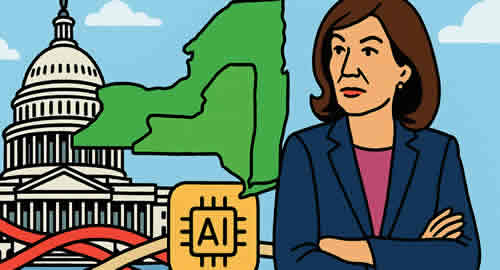
  • Hochul Vows New York Will Lead on ‘Responsible AI’ Despite Broadband Funding Clash

    Hochul Vows New York Will Lead on ‘Responsible AI’ Despite Broadband Funding Clash

    New York Gov. Kathy Hochul is blasting the Trump administration, saying the White House is threatening to pull hundreds of millions of dollars in rural broadband funding from upstate communities because the state passed tough new rules on artificial intelligence.
    Hochul says the AI safeguards are designed to protect kids, workers and consumers, and accuses Washington of siding with big corporations that don’t want to take basic steps to prevent AI-related harm. Calling the move “unacceptable,” she vows to keep fighting for working families and to keep New York at the forefront of “responsible AI” policy.

    nov 20 2025 Hochul New York

    Statement from Governor Kathy Hochul

    “We passed some of the nation’s strongest AI safeguards to protect kids, workers and consumers. Now, the White House is threatening to withhold hundreds of millions of dollars in broadband funding meant for rural upstate communities, all to shield big corporations from taking basic steps to prevent potential harm from AI.

    “This is unacceptable. In New York, we protect working families and set the standard for the nation. I will continue to fight to ensure our state remains a global leader in responsible AI.”

    Sources: Governor.ny.gov , Big New York news BigNY.com

    Midtown Tribune Independent USA news from New York

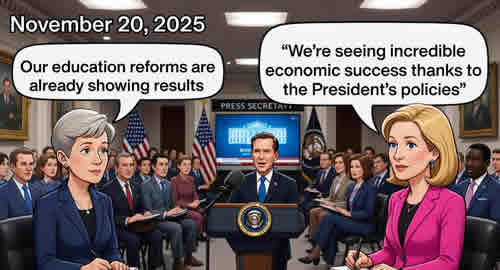
  • White House. Press Secretary Karoline Leavitt Briefs Members of the Media, Nov. 20, 2025 (Video)

    White House. Press Secretary Karoline Leavitt Briefs Members of the Media, Nov. 20, 2025 (Video)

    Full Detailed English Summary of the White House Press Briefing

    November 20, 2025 Based on the official subtitles from the White House video (C-SPAN / White House YouTube)

    Press Secretary: Karoline Leavitt Special Guest: Secretary of Education Linda McMahon Location: James S. Brady Press Briefing Room Time: 1:00 PM EST – approx. 47 minutes long

    Opening Remarks – Karoline Leavitt (0:00 – 6:30)

    • Welcomes everyone and introduces “a very special guest today, Secretary McMahon.”
    • Yesterday: First Lady Melania Trump and Second Lady Usha Vance visited Marine Corps Air Station New River and Camp Lejeune, NC – met students, educators, military families, and Marines. “May God bless all of them.”
    • September jobs report: +119,000 jobs added (more than double expectations), construction +19,000 (biggest monthly gain in a year). Almost all private-sector and went to American-born workers – “the opposite of the previous administration.”
    • Inflation under control, wages up 3.8 % year-over-year. Real wages on track for ~$1,200 gain for the average worker in 2025 vs. ~$3,000 loss under Biden due to 9 % inflation.
    • Thanksgiving affordability:
      • Gas prices projected to be the lowest since 2021 (thanks to “drill, baby, drill”).
      • American Farm Bureau: full Thanksgiving dinner down ~5 %, 16-lb turkey down >16 %.
    • Tax policy: no tax on tips, overtime, Social Security; Piper Sandler study says average tax refund next year up ~$1,000 – “could be a record-breaking tax refund season.”
    • Major announcement: Trump took “a significant step” toward closing the Department of Education. New inter-agency agreements with Labor, Interior, HHS, and State to transfer legally required programs. Goal: return education to states and localities.
    • 43-day Democratic government shutdown (longest in history) proved the point: 90 % of Dept of Ed furloughed, schools stayed open, teachers paid, zero impact → “America does not need a federal Department of Education.”
    • Since 1979: >$3 trillion spent, per-pupil spending up 245 %, yet math/reading scores down. 2024 NAEP: 13-year-olds at decades-low in math, lowest reading scores ever recorded.
    • Introduces Linda McMahon as the “amazing leader” executing the president’s vision.

    Secretary of Education Linda McMahon Speech (6:30 – 16:30)

    • Speaking directly to American families about the “hard reset” of education – Trump’s top campaign promise.
    • This week: six groundbreaking inter-agency agreements to delegate redundant programs → cuts bureaucratic bloat, shifts authority to states, local superintendents, school boards, and parents.
    • Critics claim “defunding education” or “no plan” – “could not be further from the truth.”
    • Americans gave Trump the popular vote because they see the broken top-down system:
      • Only 3 in 10 students read proficiently.
      • $1.7 trillion in student debt, <50 % of graduates work in their field.
      • Teachers leaving due to burnout and over-regulation.
    • Polling: when told only “shutting down Dept of Ed” → 51 % oppose; when told funding preserved and programs moved → 56 % support.
    • Dept of Ed is a “pass-through entity” – doesn’t teach a single child. Shutdown proved money can flow directly to states.
    • Her 50-state tour (14 states so far): states are already innovating – science of reading (Mississippi Miracle, Louisiana, Florida, Iowa, Tennessee), school choice, etc.
    • Final mission: fully empower states for an “educational renaissance.” “We are not ending federal support for education – we are ending federal micromanagement.”

    Q&A Session (16:30 – end)

    1. Elizabeth (Politico) – Will Congress codify the transfers? McMahon: Already briefed dozens of members; once transfers proven successful, will ask Congress to make permanent.
    2. Brian – Update on Harvard negotiations? McMahon: Ongoing, “very comfortable” – close to finalizing.
    3. Diana – Federal AI standard for schools? Does Trump personally use AI? McMahon: Saw amazing AI tutoring at Alpha School in Austin (2 hrs/day individualized, then life-skills). Needs guardrails but very promising. Leavitt: Never seen Trump use AI.
    4. Michael – Charter-school grants / special-needs funding during transition? McMahon: Zero interruption – legally obligated. First transfers (WIOA/Perkins) already to Labor; their grant system far superior (“ours is held together with bubble gum”).
    5. Carrie/Rick – Half of medical schools reportedly defying new DEI rules – consequences? McMahon: President has been clear – DEI offices closed, rules stripped. Measures will continue.
    6. Rick – Only 3/10 students literate – will states fix it? McMahon: States already leading – science of reading success stories. Federal government only 8–10 % of education budget; too much spent on compliance. Will publish “best-practices toolkit” from 50-state tour.

    (Leavitt takes over)

    1. Javier (Spanish media) – Why legacy media silent on murdered journalists in Mexico? Trump plan for cartels? Leavitt: Condemns murders. Mexico (President Sheinbaum) has been “incredibly cooperative.” Trump keeping all options on the table against cartels.
    2. Question on NYC mayor-elect Zohran Mamdani meeting tomorrow Leavitt: “It speaks volumes that a communist is coming to the White House” because that’s who NY Democrats elected. Trump willing to work with anyone for Americans.
    3. Nancy (CNN) – Trump said 6 Dem lawmakers committed “sedition punishable by death” – does he want them executed? Leavitt (strong pushback): They made a video urging active-duty troops to defy lawful orders – extremely dangerous, breaks chain of command. Former CIA/Navy officers knew exactly what they were doing. “If Republicans did this, this room would explode.”

    10–15. Ukraine peace plan updates Leavitt: Trump frustrated with both sides. Rubio & special envoy Whitkopf have worked quietly for a month, engaging Russia and Ukraine equally. Plan exists, both sides briefed, talks ongoing. “We believe it should be acceptable to both.”

    Remaining rapid-fire: G20 (US not participating in talks, only handover), “Piggy” nickname for reporter (“Trump is frank”), Coast Guard, France relations, Qatar mediation rumors (declined details), etc.

    Briefing ends abruptly because President Trump is about to meet freed Israeli hostages upstairs.

    Midtown Tribune Independent USA news from New York

  • New York City Comptroller Brad Lander is choosing to go to trial on a federal misdemeanor instead of taking a deal that would have quietly ended his case.

    New York City Comptroller Brad Lander is choosing to go to trial on a federal misdemeanor instead of taking a deal that would have quietly ended his case.

    What is he charged with?

    • Lander is facing a federal misdemeanor obstruction charge.
    • The charge comes from a Sept. 18 sit-in/protest on the 10th floor of 26 Federal Plaza in Manhattan, where ICE uses holding rooms for immigrants.
    • Prosecutors say he was blocking entrances/foyers/corridors while he and other elected officials tried to inspect the detention area to see if ICE was complying with a judge’s order on overcrowding and conditions. AP News

    What deal did he refuse?

    • Federal prosecutors offered an “adjournment in contemplation of dismissal” (ACD) style deal:
      • No guilty plea.
      • Case would be dropped in about six months if he stayed out of trouble on federal property.
    • All or most of the other 10 elected officials arrested with him accepted that offer.
    • Lander was the lone holdout and told reporters, “I want a trial.” ABC7 New York+1

    Why does he say he wants a trial?

    According to his public statement and reporting:

    • He argues the “real crime” happened inside the detention area, not in the hallway where he was arrested.
    • He says a trial will “bring to light” how ICE is treating people in those holding rooms and whether they’re complying with court-ordered limits on crowding, cleanliness, sleeping mats, etc. AP News+1
    • It also fits his long pattern of civil-disobedience-style protests around immigration enforcement. The Forward+1

    What’s the potential penalty?

    • The charge carries a maximum of 30 days in federal jail if he’s convicted. AP News
    • Realistically, for a first-time nonviolent misdemeanor of this type, outcomes often range from a fine or conditional discharge up to short jail, but that’s ultimately up to the judge if he’s found guilty.

    How does this tie to his earlier ICE arrest?

    • Back in June 2025, Lander was arrested by masked ICE agents at the same federal complex while linking arms with an immigrant who was being taken into custody; those earlier charges were dropped after big political backlash. The Guardian+2AP News+2
    • The current case is separate: it’s about the September sit-in on the 10th floor detention area, not the June hallway arrest.

    Midtown Tribune Independent USA news from New York

  • Upper Darby Man Sentenced to One Year in Prison for Defrauding a Religious Organization and a Political Organization

    Upper Darby Man Sentenced to One Year in Prison for Defrauding a Religious Organization and a Political Organization

     United States Attorney David Metcalf announced that Willie Jordan, 68, of Upper Darby, Pennsylvania, was sentenced today to one year in prison, one year of supervised release, $142,991 in restitution, and forfeiture of $142,991 by United States District Judge Harvey Bartle III for two separate fraud schemes Jordan conducted.

    The defendant was charged by information with two counts of wire fraud and pleaded guilty in July of this year.

    As detailed in court filings and statements made in court, Jordan was a deacon and trustee for Religious Organization #1, located in Philadelphia, Pa. Jordan was responsible for managing and overseeing various financial matters involving Religious Organization #1, including collecting funds for the organization, depositing those funds in the organization’s bank accounts, and paying the organization’s expenses.

    Religious Organization #1 placed Jordan in a position of trust and allowed him to exercise almost total control over its funds. The defendant did not receive a salary from Religious Organization #1. Rather, he received his salary from the Commonwealth of Pennsylvania, where he was a Director of Operations for a state senator.

    From at least in or about January 2020 through at least in or about January 2024, Jordan exploited Religious Organization #1 for his personal financial benefit. On a regular basis, the defendant improperly issued checks to himself from Religious Organization #1’s business checking account, and made it appear that such checks were to reimburse him for expenses that he incurred on behalf of Religious Organization #1. In fact, Jordan did not incur those expenses and simply issued those checks for his personal benefit. The defendant engaged in this activity fraudulently and without the knowledge or permission of Religious Organization #1, its trustees, or members.

    As part of this scheme, Jordan issued approximately 82 fraudulent checks to himself totaling approximately $57,384, resulting in significant losses to Religious Organization #1.

    As presented in court filings and statements, Political Organization #1 was one of 66 wards in Philadelphia and a subdivision of Political Organization #2, which represented the interests of a political party in the City of Philadelphia.

    From in or about 1996 through in or about April 2025, the defendant was the elected leader of Political Organization #1 and controlled and managed the organization’s finances. Jordan did not receive a salary from Political Organization #1.

    From at least in or about January 2020, through at least in or about January 2024, Jordan exploited Political Organization #1 for his personal financial benefit. He opened two bank accounts in name of Political Organization #1, made himself the sole signatory on the accounts in the name of Political Organization #1, and obtained, for both accounts, debit cards that he controlled.

    On a regular basis, the defendant improperly conducted financial transactions, through debit card charges, checks, and ATM cash withdrawals, using Political Organization #1’s bank accounts to transfer the funds of Political Organization #1 to himself or others, for his personal benefit.

    Jordan used Political Organization #1’s funds for personal purchases at airlines, car dealerships, furniture stores, grocery stores, and other retail establishments. He also used those funds to pay his personal credit card bills, utility bills, and cellular telephone bills. In or about the summer of 2023, Jordan used the funds of Political Organization #1 to pay more than $12,500 in expenses for a family member’s funeral. The defendant engaged in these personal financial transactions without any benefit flowing to Political Organization #1 and without the knowledge or permission of any of its members.

    As part of this scheme, Jordan defrauded Political Organization #1 and its members of at least $85,607.

    This case was investigated by the FBI and the Pennsylvania Office of Attorney General and is being prosecuted by Assistant United States Attorney Louis D. Lappen and Special Assistant United States Attorney James E. Price.

    Sources: Justice.gov , Midtown Tribune

    Midtown Tribune Independent USA news from New York

  • N.Y. governor, education chief blast Trump plan to kill Education Department: ‘Won’t go down without a fight’

    N.Y. governor, education chief blast Trump plan to kill Education Department: ‘Won’t go down without a fight’

    ALBANY, N.Y. — New York Gov. Kathy Hochul and state Education Commissioner Betty Rosa fired back Wednesday at President-elect Donald Trump’s push to eliminate the U.S. Department of Education, calling the move “catastrophic” and a “direct attack” on the state’s schools. In a sharply worded joint statement, the Democratic leaders warned that breaking up the federal agency and shifting its duties elsewhere would put millions of New York students at risk and disrupt everything from special education services to civil rights enforcement in classrooms. “We won’t go down without a fight – not when our kids are on the line,” they declared, vowing to defend public education against what they described as an attempt to dismantle the nation’s school system.

    Joint Statement from Governor Kathy Hochul and State Education Commissioner Betty Rosa

    “The Trump administration’s decision to tear apart the Department of Education carries catastrophic consequences for education nationwide. By outsourcing the Department’s responsibilities to other federal agencies, the administration is moving closer to its misguided goal of dismantling our education system, and in doing so, threatens to upend New York’s school system, putting millions of students’ educations at risk. Make no mistake, this maneuver is a direct attack on New York teachers, students, and families and its effects will be felt in schools statewide.

    “New York is committed to standing up for our students and ensuring their futures remain front and center. We won’t go down without a fight – not when our kids are on the line.”

    November 18, 2025

    Albany, NY

    Sources: Governor.ny.gov/ , Big New York News BigNY.com

  • Trump Refuses to Hand Out $400 Million in Free Heating Cash – Hochul & Tonko Throw Tantrum as 1.5 Million New Yorkers Expected to Pay Their Own Bills

    Trump Refuses to Hand Out $400 Million in Free Heating Cash – Hochul & Tonko Throw Tantrum as 1.5 Million New Yorkers Expected to Pay Their Own Bills

    In a shocking turn of events that absolutely nobody on planet Earth could’ve predicted, Governor Kathy Hochul and Congressman Paul Tonko are dramatically clutching their pearls because the big bad Trump administration hasn’t yet wired $400 million of other people’s money so that 1.5 million New Yorkers can keep their thermostats cranked to “tropical paradise” without, you know, actually paying the bill themselves like the rest of the functioning adult world does every winter.
    While normal humans simply budget for heat, turn the dial down two degrees, or (gasp) put on a sweater, New York’s political class is treating basic seasonal utility bills as if they’re some exotic human-rights crisis that only endless federal handouts can solve — because apparently the primary job of government isn’t roads, cops, or courts anymore, it’s playing Santa Claus with heating subsidies while simultaneously lecturing everyone about personal responsibility and climate change. Shocking, truly shocking, that in the year 2025 some Americans still expect to pay for the energy they consume instead of outsourcing their thermostat to Washington.

    Governor Hochul and Representative Tonko Call on Trump Administration to Release Federal Heating Assistance for 1.5 Million New Yorkers

    New York State Office of Temporary and Disability Assistance Commissioner Barbara C. Guinn said, “Households that rely on HEAP, most of whom include someone who is an older adult, young child or an individual with a disability, have already had to wait too long for this vital assistance as colder days and nights become more common. The delay by the federal government in releasing federal funding for HEAP has created an unacceptable amount of uncertainty for these households who must wait for financial assistance to help heat their homes during a time of rising energy prices. We thank Governor Hochul for her efforts to secure HEAP funding and help households reduce their energy costs.”

    Demanding Release of Federal HEAP Funds

    Due to the federal government shutdown, which has now ended after a record 43 days, New York’s ability to open its federally-funded HEAP program has been delayed by weeks. This federally funded program cannot begin receiving and processing applications or making payments until the federal government provides New York with the necessary funding. At Governor Hochul’s direction, the New York State Office of Temporary and Disability Assistance (OTDA) is taking all steps needed to prepare for the opening of the HEAP program for applications on November 24, pending receipt of federal funds, including programming HEAP payments.

    If the Trump Administration does not release Federal grant funds for HEAP by November 24, the program opening will continue to be delayed. Governor Hochul’s actions ensure OTDA will be ready to open the program for applications within 48 hours of receiving the grant funds, so that New Yorkers can access their heating benefits as soon as possible.

    “It’s shameful that the Trump Administration is threatening to make New Yorkers pay more for their heating bills this winter — and I’m demanding the immediate release of federal funds to help 1.5 million New Yorkers heat their homes.”

    Governor Kathy Hochul

    Urging More New Yorkers To Enroll in State’s EAP

    The State’s EAP is separate from federal HEAP. The State’s EAP provides monthly discounts on energy bills throughout the year to households across New York. This program provides up to $500 in annual savings per household.

    Eligibility for EAP is based on household income. For example, a family of four is eligible to enroll in EAP if they make up to $80,160 per year in household income. A family of five is eligible if they make up to $92,988 per year in household income.

    The State’s EAP already serves approximately one million households statewide, but state officials estimate that approximately 1.5 million more households are eligible to enroll and receive discounts. New Yorkers can enroll in EAP directly through their local energy provider.

    New Yorkers can visit ny.gov/EAP to learn more about eligibility and steps on how to enroll in the program.

    Additionally, Governor Hochul is expanding income eligibility for the State’s EAP in 2026 to ensure that more households across New York can start receiving energy discounts in the coming year. The Governor will continue to update New Yorkers on this in the coming weeks.

    Protecting EAP Discounts for New Yorkers

    The delay in federal HEAP funds also threatened to disenroll many New Yorkers from their State EAP benefits. The Department of Public Service estimated this cruel action would lead to tens of thousands of customers being automatically disenrolled from receiving EAP benefits every month without State action. This is because most residential customers in EAPs are automatically enrolled in the program after their heating utility receives a HEAP grant on the customer’s behalf, which the utility credits to those customers’ utility bills. Generally, most utilities provide that those customers will remain enrolled in the utilities’ EAPs as long as they received a HEAP grant within the preceding 12 months.

    The delay in federal funds for HEAP and concurrent loss of EAP bill discounts would make utility services far more expensive for those customers during the coming winter heating season. Temperatures across the state continue to grow colder, some days hitting levels below freezing, increasing the need for heating assistance to protect the health and safety of families and households statewide.

    That’s why Governor Hochul took action earlier this month to ensure that New Yorkers struggling to pay their bills this winter will continue receiving EAP discounts regardless of Washington Republicans’ cruelty. Without the Governor’s action, thousands of those households would have automatically lost their November EAP discount, since enrollment in EAP is tied to enrollment in HEAP for many households across the state.

    Representative Paul Tonko said, “HEAP provides a vital lifeline for countless families here in New York and across the nation who are still struggling to deal with rising costs for home heating and other basic necessities. The Trump administration’s failure to release funding for HEAP is yet another example of how Republicans have weaponized their government shutdown to hurt the working Americans suffering most from the affordability crisis Republicans created. While New York State is doing everything in its power to mitigate the damage from the GOP’s neglect, federal action remains essential to support families here in our Capital Region and beyond. Today, I’m proud to join Governor Hochul in demanding the Trump administration release these desperately needed funds immediately so New Yorkers can heat their homes this winter.”

    State Senator Patricia Fahy said, “First we saw the federal government weaponize hunger, and now we’re seeing them weaponize the cold against working people and their families. New Yorkers that rely on HEAP will feel the effects of this just like those who rely on SNAP, and the federal government has a firm responsibility to release the funds needed for energy assistance. Temperatures continue to plummet, and New Yorkers are anxious. Thank you to Governor Hochul for addressing this problem with urgency and calling on the federal government to release federal heating assistance that New Yorkers desperately need.”

    Assemblymember John T. McDonald III, RPh said, “HEAP is a critical program that helps families afford their energy bills. Unfortunately, this assistance is needed now more than ever as utility costs continue to rise for a variety of reasons. Now is not the time to delay support, it’s the time to expedite it. I fully support Governor Hochul’s call to accelerate this aid, especially as we’ve already experienced many cold nights, with temperatures only getting colder.”

    Assemblymember Didi Barrett said, “HEAP helps more than 1.5 million New Yorkers keep their heat and lights on during the winter months. Due to the federal government shutdown, New York State is still waiting for the critical federal funding needed to begin processing HEAP applications. I stand with Governor Hochul in urging the Trump administration to immediately release our $400 million in HEAP funding to ensure heating fuel is delivered, avoid utility shut-offs, and protect the health and safety of our neighbors and families.”

    Assemblymember Gabriella A. Romero said, “As temperatures drop, New Yorkers should not be left in the cold because the federal government refuses to release urgently needed heating assistance. The Trump Administration’s delay jeopardizes the safety of families across our state, especially low-income households and seniors who rely on HEAP to stay warm. I stand with Governor Hochul in demanding the immediate release of these federal dollars and in expanding access to state programs that help working families afford their energy bills.”

    November 17, 2025

    Albany, NY

    Sources: Governor.ny.gov , Midtown Tribune news

  • NYPD Officer-Involved Shooting in Manhattan Prompts State Investigation

    NYPD Officer-Involved Shooting in Manhattan Prompts State Investigation

    MANHATTAN — New York Attorney General Letitia James’ Office of Special Investigation opened a probe Friday into the fatal police shooting of an armed man during a confrontation on Madison Avenue, authorities said. The incident unfolded around 7:20 p.m. Thursday after multiple 911 callers reported a man brandishing a gun; NYPD officers located a suspect matching the description holding a firearm, and when he opened fire, police returned shots, striking him. He was rushed to a nearby hospital but pronounced dead on arrival, with officers recovering a gun from the scene. Under state law, the OSI must review any death potentially caused by on- or off-duty officers, armed or not, and these early details remain preliminary as the full investigation proceeds.

    Attorney General James’ Office of Special Investigation Opens Investigation into Civilian Death in Manhattan

    – The New York Attorney General’s Office of Special Investigation (OSI) has opened an investigation into the death of a civilian who died on November 13, 2025 following an encounter with members of the New York City Police Department (NYPD) in Manhattan.

    At approximately 7:20 p.m. on November 13, NYPD officers were canvassing an area after receiving multiple 911 calls reporting a man with a gun. Officers encountered a man matching the description with a gun in his hand at an address on Madison Avenue in Manhattan. The man fired the gun, and officers discharged their service weapons in response, striking the man. He was taken to a local hospital, where he was pronounced dead. Officers recovered a gun at the scene.

    Pursuant to New York State Executive Law Section 70-b, OSI assesses every incident reported to it where a police officer or a peace officer, including a corrections officer, may have caused the death of a person by an act or omission. Under the law, the officer may be on-duty or off-duty, and the decedent may be armed or unarmed. Also, the decedent may or may not be in custody or incarcerated. If OSI’s assessment indicates an officer may have caused the death, OSI proceeds to conduct a full investigation of the incident.

    These are preliminary facts and subject to change.   

    Letitia James

    New York State Attorney General

    November 14, 2025

    NEW YORK

    Sources: AG.ny.gov/ Big New York news BigNY.com
    Midtown Tribune news

    Midtown Tribune Independent USA news from New York

  • Harlem’s Iconic Studio Museum Reopens in $160M Masterpiece: Gov. Hochul Unveils Stunning New Home with $11M State Boost

    Harlem’s Iconic Studio Museum Reopens in $160M Masterpiece: Gov. Hochul Unveils Stunning New Home with $11M State Boost

    New York — Gov. Kathy Hochul joined Harlem leaders to cut the ribbon on the Studio Museum in Harlem’s long-awaited $160 million new home, a seven-story landmark that replaces a temporary space the institution occupied since construction began in 2018. Backed by nearly $11 million in state funding—including $7 million from the New York State Council on the Arts and $3.5 million from Empire State Development—the 82,000-square-foot building designed by Adjaye Associates features galleries inspired by neighborhood brownstones, a top-lit interior echoing local churches, artist studios, education spaces and a roof terrace with sweeping city views. “This is a lasting community cornerstone that will champion artists of African descent for generations,” Hochul said, as officials hailed the museum’s role in boosting tourism, creating jobs and marking the 100th anniversary of the Harlem Renaissance.

    Governor Hochul Celebrates the Opening
    of the Studio Museum in Harlem’s New Home]

    Governor Kathy Hochul … celebrated the grand opening of Studio Museum in Harlem’s new home. Created expressly for the needs of the museum and its communities, the $160 million, seven-floor, 82,000 square-foot building takes its inspiration from the brownstone, churches and bustling sidewalks of Harlem. The project is supported by a combined $10.9 million state investment, including over $7 million from the New York State Council on the Arts and $3.5 million from Empire State Development, recommended by the New York City Regional Economic Development Council.

    “The Studio Museum has been one of the centerpieces of Harlem arts and culture since 1968,” Governor Hochul said. “New York’s support of this incredible achievement has helped create a lasting and living community cornerstone that will continue to celebrate and champion artists of African descent for generations to come.”

    Closed for construction since 2018, the new Studio Museum building, designed by Adjaye Associates with Cooper Robertson serving as executive architect, expresses the Museum’s core values of openness and engagement, while also providing exceptional new spaces to elevate the Museum’s service to artists, audiences, the uniquely vibrant Harlem community, and the world of art. The design includes a facade with windows of varying sizes and proportions, echoing the windows of Harlem apartment buildings.

    The neighborhood’s churches find a counterpart in a top-lit interior gallery while an interior “stoop” can be used as benches for watching lectures, performances, and films presented on the building’s lower level. Galleries are configured in assorted proportions to accommodate the wide variety of works in the permanent collection and temporary exhibitions. Studios for the artists in residence and education spaces will be located adjacent to exhibition galleries to facilitate exchanges with the community. Finally, a roof terrace will offer striking views of Harlem and the rest of the city.

    Founded in 1968 by a diverse group of artists, community activists, and philanthropists, the Studio Museum in Harlem is internationally known for its catalytic role in promoting the work of artists of African descent.

    New York State Council on the Arts Executive Director Erika Mallin said, “For over 50 years, NYSCA has proudly supported the Studio Museum in Harlem, a beacon for emerging artists and a premier global museum. We are proud to have provided over $7 million for their new home, empowering the Studio Museum to continue their distinguished legacy to serve and inspire the next generation of artists, engaging residents and visitors alike.”

    Empire State Development President, CEO and Commissioner Hope Knight said, “The Studio Museum’s new home is a testament to Harlem’s cultural strength and to New York State’s commitment to investing in places where creativity and community meet. The Studio Museum’s new facility will generate millions in economic activity, create jobs across multiple sectors, and reinforce our state’s tourism economy. By supporting world-class cultural institutions like this, we’re supporting economic growth that benefits all New Yorkers while showcasing the creativity that makes our state a magnet for talent and investment worldwide.”

    NYCREDC Co-Chairs Félix V. Matos Rodríguez, City University of New York Chancellor and William D. Rahm, CEO of Everview Partners, said, “For over five decades, the Studio Museum has been a classroom, a launching pad, and a gathering place for Harlem. This new building expands those possibilities exponentially—providing students with cutting-edge educational technology, offering emerging artists professional development opportunities, and creating free public spaces where communities can connect with transformative art that reflects their experiences and aspirations. This project embodies the kind of inclusive growth and community-centered development the Regional Economic Development Council is proud to support.”

    The Studio Museum in Harlem Ford Foundation Director and Chief Curator Thelma Golden said, “The Studio Museum in Harlem is deeply grateful for the vital leadership of Governor Kathy Hochul, the support of the Office of the Governor and the New York State Legislature. I also want to extend our profound appreciation to the Executive Director of The New York State Council on the Arts Erika Mallin; and the Commissioner and CEO of Empire State Development Hope Knight for all that they have made possible through their commitment to this institution over the years. Thanks to each of these organizations and all those within them, the Studio Museum now inhabits an incredible new building which makes it all the more possible for us to continue the work our founders set out to do in 1968 while ensuring we remain an essential gathering space for everyone in our Harlem community and beyond.”

    State Senator Cordell Cleare said, “As we embrace the 100th Anniversary of the Harlem Renaissance, there is no better way to celebrate than with the opening of the new home of the Studio Museum In Harlem. The Studio Museum is an iconic institution representing over 200 years of Black History, Creativity and Lived Experience. Thank you to the project partners who made this day possible and to the Harlem Community who deserves this project and investment.”

    Assemblymember Jordan J. G. Wright said, “Today we join to celebrate a truly momentous occasion- the grand reopening of one of Harlem’s most beloved and iconic institutions: the Studio Museum. With a global reputation for excellence, the Studio Museum has elevated Black art and artists since opening its doors in 1968. Today, we usher in a new era of excellence where that commitment will continue in a space that matches its unparalleled exhibits and programming. In so many ways, I was raised by the Studio Museum, as my mother was employed there while I was growing up. I am beyond lucky to have grown up surrounded by not just the incredible works showcased by the museum over the years, but by all of the creative, dynamic, passionate people who make it happen as well as the vibrant Village of Harlem that allows it to thrive. Thank you to Thelma Golden for being a driving force behind the museum’s success and an absolute pillar in the Harlem community. I am proud to be a part of this historic reopening and look forward to seeing the dream achieved by the Studio Museum continue, in its new home, long into the future!”

    Retired Deputy Majority Whip of the New York State Assembly, Honorable Inez E. Dickens said, “I am deeply grateful to Governor Kathy Hochul for this historic $10 million investment to complete the new home of the Studio Museum in Harlem, Our global nexus for artists of African descent and for work shaped and inspired by Black culture. During my tenure in the New York State Assembly, I was proud to secure nearly $1 million dollars for this institution, but without Governor Hochul’s leadership and commitment, that investment could not have reached its fullest impact. Long before my service in Albany, as Majority Whip of the New York City Council, I funded the initial steps to launch this renovation and helped negotiate the unification of the one City lot and one State lot that the Studio Museum now calls home. To stand here today and witness Harlem on the cusp of a fully realized, newly renovated Studio Museum is a profound honor, and I am immensely proud of what this partnership between State, City, and community will mean for generations of artists, families, and visitors from around the world. Thank you, Governor Kathy Hochul.”

    New York City Councilmember Yuseef Salaam said, “Today, we celebrate the historic reopening of the Studio Museum in Harlem, a cultural cornerstone that has shaped the global understanding of Black creativity, history, and identity. For generations, the works of visionary artists have told the powerful, complex, and beautiful stories of the Black diaspora. Their voices, expressed through paint, sculpture, photography, and countless other forms, have helped us see ourselves with greater clarity.”

    This September, Governor Kathy Hochul announced that more than $80 million in NYSCA funding is now available competitively to support capital projects for non-profit arts and cultural organizations. NYSCA’s Capital Projects Fund supports arts and cultural nonprofits seeking State funding for investments in capital improvements that allow organizations to sustain and expand cultural programming for diverse audiences, promote accessibility and environmental sustainability, preserve and create jobs, and ultimately contribute to the growth of New York’s dynamic arts and tourism sectors.

    About the New York State Council on the Arts
    The mission of the New York State Council on the Arts is to foster and advance the full breadth of New York State’s arts, culture, and creativity for all. To support the ongoing recovery of the arts across New York State, the Council on the Arts will award over $161 million in FY 2026, serving organizations and artists across all 10 state regions. The Council on the Arts further advances New York’s creative culture by convening leaders in the field and providing organizational and professional development opportunities and informational resources. Created by Governor Nelson Rockefeller in 1960 and continued with the support of Governor Kathy Hochul and the New York State Legislature, the Council is an agency that is part of the Executive Branch. For more information on NYSCA, please visit arts.ny.gov, and follow NYSCA’s Facebook page, on X @NYSCArts and Instagram @NYSCouncilontheArts.

    About Empire State Development
    Empire State Development is New York’s chief economic development agency, and promotes business growth, job creation, and greater economic opportunity throughout the state. With offices in each of the state’s 10 regions, ESD oversees the Regional Economic Development Councils, supports broadband equity through the ConnectALL office, and is growing the workforce of tomorrow through the Office of Strategic Workforce Development. The agency engages with emerging and next generation industries like clean energy and semiconductor manufacturing looking to grow in New York State, operates a network of assistance centers to help small businesses grow and succeed, and promotes the state’s world class tourism destinations through I LOVE NY. For more information, please visit esd.ny.gov, and connect with ESD on LinkedInFacebook and X.

    November 14, 2025

    Albany, NY

    Sources: Governor.ny.gov , Big New York news BigNY.com
    Midtown Tribune News

    Midtown Tribune Independent USA news from New York