
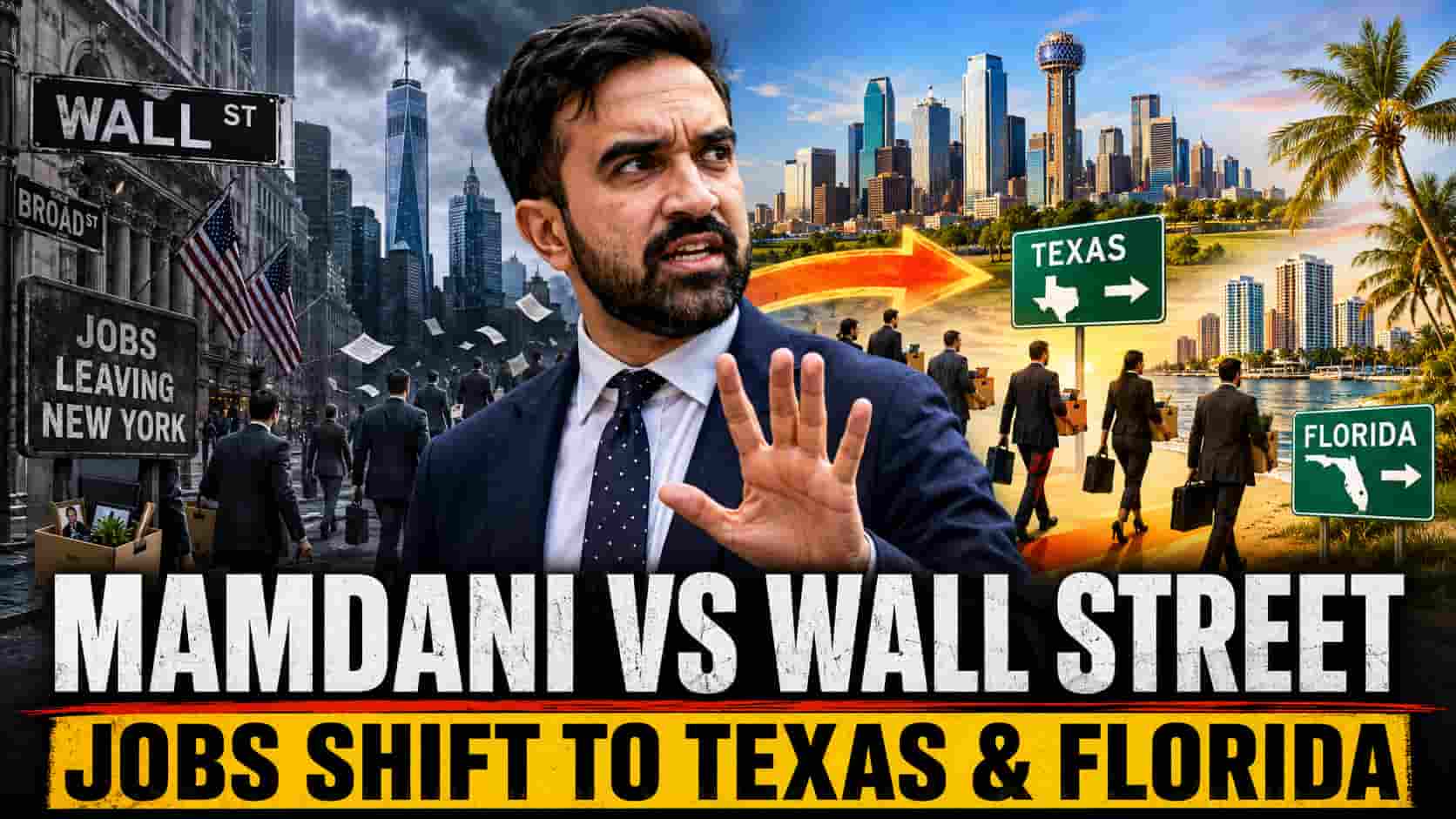
Goldman Sachs’ growing Dallas campus and reported pressure on some senior employees to relocate have turned a corporate staffing decision into a major warning sign for New York City’s economy. For Mayor Zohran Mamdani, the issue is bigger than Goldman. It is about whether New York can keep the Wall Street tax base that helps fund the city.
For 157 years, Goldman Sachs has been closely tied to New York City. The firm traces its roots to 1869, when Marcus Goldman, a German immigrant, began trading commercial paper in Lower Manhattan. From that beginning, Goldman Sachs became one of the defining institutions of Wall Street and one of the symbols of New York’s financial power.
But the old assumption that major Wall Street firms must keep their most important growth in Manhattan is now under pressure. Goldman Sachs is expanding in Dallas, Texas, where the firm is building a major new campus expected to become one of its largest U.S. facilities. At the same time, reports have described an internal relocation effort — reportedly known inside the company as “Project Voyage” — under which some employees have been pushed to move from high-cost financial centers to lower-cost hubs such as Dallas and Salt Lake City.
That shift has political consequences in New York. Mayor Zohran Mamdani has built his economic message around higher taxes on corporations and wealthy residents. But major financial firms are increasingly showing that they have options. They can keep a New York headquarters while moving future jobs, departments, managers, and investment to states with lower taxes and lower operating costs.
Goldman Sachs’ Dallas Expansion Is Not Just a Real Estate Story
Goldman’s Dallas project is not a small regional office. The company has described its new North Texas campus as an 800,000-square-foot workplace designed to house more than 5,000 employees. The size and design of the project suggest a long-term strategy: Dallas is being built as a major center of power inside the firm.
That matters because the employees being discussed are not only clerks or support staff. Reports about Goldman’s relocation push have referenced managers, vice presidents, managing directors, and other senior personnel. These are the kinds of employees whose compensation, income taxes, spending, and business networks help support New York’s broader economy.
If future Goldman growth happens in Dallas instead of Manhattan, New York does not necessarily lose the company overnight. But it may lose something more gradual and more dangerous: the next generation of high-paying finance jobs.
Mamdani’s Political Problem: Taxing a Mobile Industry
Mayor Mamdani’s agenda depends heavily on the idea that New York can raise more money from corporations and wealthy residents without pushing them away. That is the central political gamble.
The financial industry is highly important to New York’s tax base. Wall Street compensation generates billions of dollars in state and city tax revenue. High-earning financial workers also support real estate, restaurants, law firms, accountants, cultural institutions, charities, private schools, transportation, and many other parts of the local economy.
This is why the Goldman story is not simply about one bank. It is about the fiscal structure of New York City.
When politicians propose higher taxes on the very people and companies that fund a large share of public services, they must answer a practical question: what happens if those taxpayers begin choosing Dallas, Miami, West Palm Beach, Nashville, Charlotte, Salt Lake City, or Austin instead?
JPMorgan, Florida and the Wider Wall Street Migration
Goldman Sachs is not the only major financial company expanding outside New York. JPMorgan Chase, while still deeply tied to New York, has also grown substantially in Texas over the past decade. Other financial firms have expanded in Florida, where executives and high-income workers are attracted by lower taxes and a friendlier business climate.
This does not mean Wall Street is dead. New York remains the most important financial center in the United States and one of the most powerful financial cities in the world. But the new reality is that New York is no longer the only place where major financial companies can build serious operations.
Technology, remote work, hybrid offices, lower-cost states, and aggressive economic development policies have changed the map. A firm can still keep its prestige address in Manhattan while building its future workforce elsewhere.
That is the real danger for New York. The city may keep the brand while losing the growth.
The Fiscal Math Behind Mamdani’s Wall Street Meetings
Mamdani’s public message often criticizes billionaires, corporations, and Wall Street power. But his private meetings with major financial executives show that he understands the city cannot ignore them.
The reason is simple: New York’s budget depends on high-income taxpayers and profitable companies. If the financial sector slows down, relocates growth, or moves top earners elsewhere, the city’s revenue projections become weaker. That means less money for transit, schools, policing, housing programs, sanitation, parks, migrant services, and social spending.
This is not a moral argument. It is budget math.
A mayor can attack Wall Street politically, but City Hall still needs Wall Street economically. That tension now sits at the center of Mamdani’s economic agenda.
Why Texas and Florida Are Winning New Financial Jobs
Texas and Florida offer a very different pitch from New York. They advertise lower taxes, lower costs, more space, less regulatory friction, and a political culture that actively courts business expansion.
Dallas has become especially important for financial firms because it offers a large labor market, strong airport connections, lower office costs, and no state income tax. Florida has attracted executives and wealth-management operations for similar reasons.
New York still has enormous advantages: talent, capital, media, law, culture, universities, global connections, and the prestige of Wall Street. But those advantages now have to compete against the hard numbers of cost and tax policy.
For many companies, the choice is no longer New York or nothing. It is New York plus Texas. New York plus Florida. New York headquarters, but future growth somewhere else.
The Core Question for New York City
The Goldman Sachs story raises one central question: can New York continue raising taxes on its most mobile taxpayers while assuming they will stay?
For decades, New York benefited from concentration. Wall Street needed Manhattan. Talent needed proximity. Deals required physical presence. That world has changed. Financial firms can now spread operations across multiple states without losing their identity.
If New York wants to remain the undisputed capital of American finance, it must compete for jobs, not just tax them. That means taking business costs seriously, improving public safety, reducing bureaucratic friction, protecting quality of life, and recognizing that high earners and major employers are not guaranteed to remain forever.
Goldman Sachs may not be leaving New York. But Goldman’s Dallas expansion shows that the future of Wall Street is no longer automatically tied to Manhattan.
For Mayor Mamdani, that is the warning. New York can still lead. But it cannot lead by pretending that companies and taxpayers have nowhere else to go.
Conclusion: Wall Street Is Still in New York — But Future Growth Is Up for Grabs
Goldman Sachs was born in New York. JPMorgan Chase is building a major new Manhattan headquarters. Wall Street is not disappearing. But the geography of finance is changing.
The issue is not whether New York loses every bank. The issue is whether the next wave of high-paying financial jobs, senior managers, and corporate investment will be created in New York — or in Texas and Florida.
That is why Mamdani’s tax agenda now faces its hardest test. If the city depends on Wall Street revenue, it must keep Wall Street growth. Otherwise, higher taxes may not produce a stronger city. They may accelerate the search for new addresses.
Official Sources and Corporate References
The following official government, comptroller, budget, and corporate resources provide background for the discussion of Goldman Sachs, Wall Street employment, New York City fiscal risk, and the growing competition from Texas and Florida for financial-sector jobs.
Government and Public Fiscal Sources
- New York State Comptroller — Wall Street Bonuses and Securities Industry Data
- New York State Comptroller — Wall Street Profits and Fiscal Impact on New York
- New York City Comptroller — Comments on NYC Preliminary Budget for FY 2027 and Financial Plan FY 2026–2030
- New York City Comptroller — Projected NYC Budget Shortfalls
- New York City Mayor’s Office of Management and Budget
- NYC Office of Management and Budget — Overview of the City Budget
Corporate Sources
- Goldman Sachs — Official Corporate Website
- Goldman Sachs — Leadership, including CEO David Solomon
- Goldman Sachs Careers — Current Global Job Listings
- Goldman Sachs Private Wealth Management — Dallas Location
- JPMorganChase — Official Corporate Website
- JPMorganChase — Jamie Dimon’s 2025 Annual Letter to Shareholders
- JPMorganChase — Fourth-Quarter and Full-Year 2025 Financial Results
Context for Business Climate and Tax Competition
- Tax Foundation — New York State Tax Competitiveness Profile
- Tax Foundation — State Tax Competitiveness Index
- City of Dallas — Official Government Website
- Office of the Texas Governor — Business and Economic Development
Editor’s note: These links are provided as official background sources. Claims about internal corporate relocation programs should be attributed to the original reporting source unless confirmed directly by the company.
Midtown Tribune Independent USA news from New York
Ask Midtown Tribune about this story
Answers are grounded first in this article. Search all Midtown Tribune reporting from the main AI Search page.
AI-generated summary. Verify important details in the linked original articles.