
By Midtown Tribune Newsroom
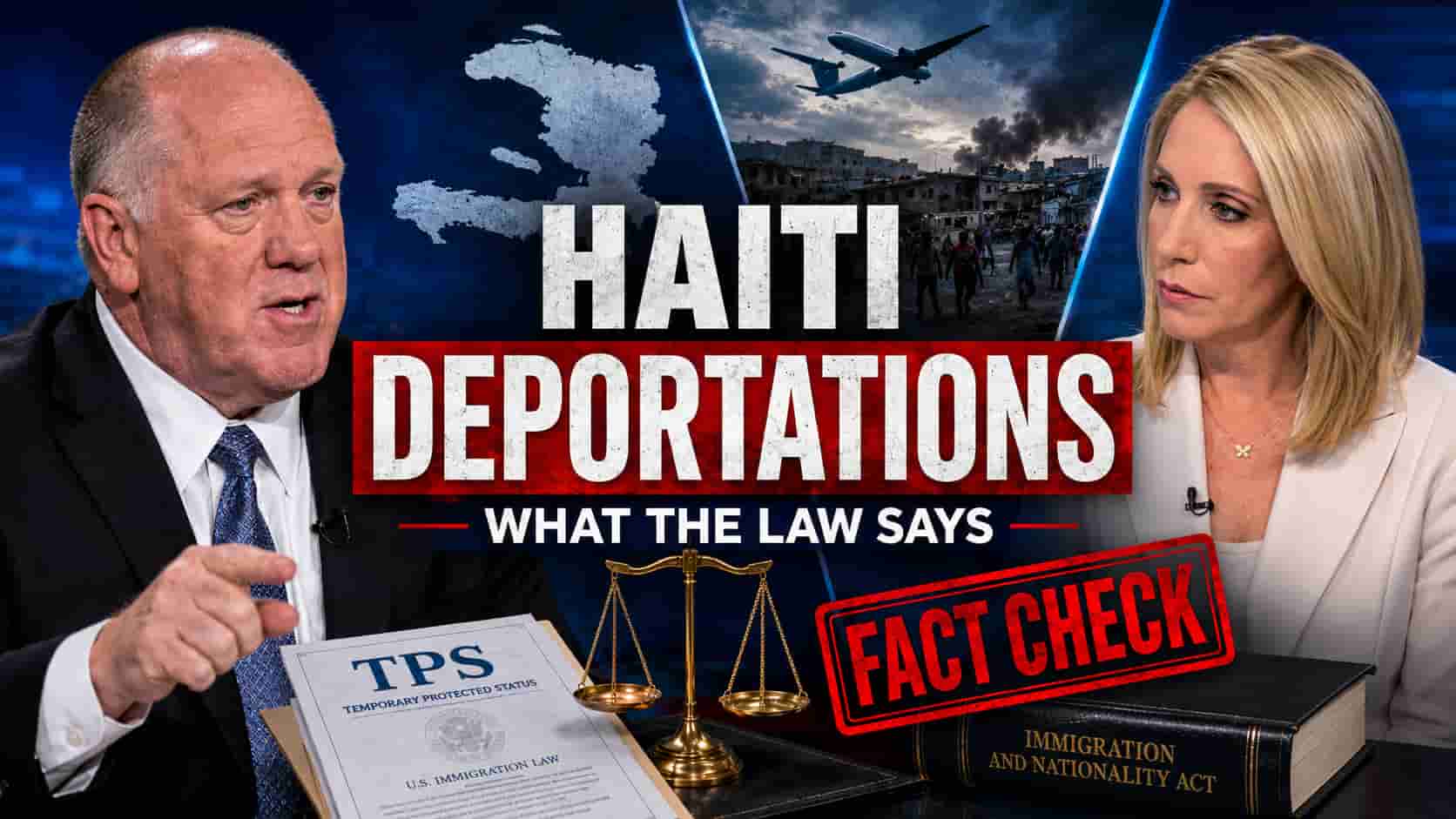
A tense exchange between White House border czar Tom Homan and CNN host Dana Bash is circulating online under headlines suggesting that Homan delivered a “blunt reality check” over deportations to dangerous countries.
The underlying CNN interview is real. But some viral descriptions of it blur an important legal distinction: losing Temporary Protected Status, or TPS, is not automatically the same thing as having a final order of removal.
That distinction is supported by official federal sources, including the U.S. Department of Homeland Security, USCIS, ICE, the State Department and the U.S. Supreme Court.
Key Facts
- Tom Homan appeared on CNN’s State of the Union with Dana Bash on August 30, 2026.
- Bash questioned Homan about deportations to Haiti and the dangerous conditions there.
- Homan repeatedly said that people who have been ordered removed cannot remain in the United States.
- Haiti’s TPS designation was terminated effective February 3, 2026, according to the official Federal Register notice.
- On June 25, 2026, the U.S. Supreme Court decided Mullin v. Doe, a case involving TPS termination litigation. The official Supreme Court docket is available here.
- The U.S. State Department currently lists Haiti at Level 4: Do Not Travel because of crime, kidnapping, terrorism, unrest and limited health care. See the official Haiti Travel Advisory.
- ICE itself states that deportation does not automatically follow merely from an encounter with immigration authorities and that removals occur under lawful orders, including final orders of removal. See the official ICE Immigration Detainers FAQ.
What Dana Bash Asked
Bash questioned why the Trump administration was sending Haitian nationals back to a country that the federal government itself describes as extraordinarily dangerous.
That factual premise is supported by the U.S. government.
The State Department’s official Haiti Travel Advisory currently places Haiti at:
Level 4 — Do Not Travel.
The department cites:
- crime,
- kidnapping or hostage taking,
- terrorism,
- civil unrest,
- and limited health care.
The State Department also says the U.S. government has an extremely limited ability to provide emergency services to American citizens in Haiti because of the security situation.
So Bash’s underlying safety question was legitimate: how can the federal government describe Haiti as too dangerous for Americans to visit while simultaneously returning Haitian nationals there?
But that question is different from whether the deportations themselves are lawful.
What Homan Actually Said
Homan’s central answer was that when a person has already been legally ordered removed from the United States, ICE is supposed to execute that order.
Homan told Bash:
“When people are ordered deported, they can’t stay here.”
He later said:
“They were ordered removed, and ICE is removing them.”
And:
“They have got to go home. They have no status here anymore. They can’t stay here.”
Those remarks also appear in the transcript of the viral video.
This distinction is important because the federal government itself recognizes a difference between someone merely being subject to immigration enforcement and someone already having a lawful final order of removal.
According to the official ICE Immigration Detainers FAQ:
“Everyone ICE encounters is entitled to due process under the law.”
ICE further states that officers remove noncitizens only under lawful orders, including cases in which an immigration judge has issued a final order of removal.
That official ICE language supports the central legal distinction missing from many viral descriptions of the Homan interview.
Ending TPS Is Not Automatically the Same as a Deportation Order
Temporary Protected Status is authorized by Section 244 of the Immigration and Nationality Act, 8 U.S.C. § 1254a.
According to an official USCIS report on Temporary Protected Status, the Secretary of Homeland Security can designate a country for TPS when qualifying conditions exist, including:
- ongoing armed conflict,
- environmental disaster,
- or extraordinary and temporary conditions.
TPS can temporarily protect eligible nationals of that country from removal.
But TPS is not permanent residency.
When TPS ends, the individual loses that particular form of temporary protection unless another legal basis for remaining in the United States exists.
That still does not mean that every former TPS beneficiary automatically boards a deportation flight the next day.
The person may have:
- another lawful immigration status,
- an asylum application,
- withholding-of-removal protection,
- another pending immigration proceeding,
- or other relief available under federal immigration law.
USCIS expressly recognizes that people in immigration court proceedings may seek different forms of relief or protection from removal. See the official USCIS page: Immigration Benefits in EOIR Proceedings.
That page identifies potential forms of relief including adjustment of status, cancellation of removal, asylum and withholding of removal.
Therefore:
TPS termination and a final removal order are not legally identical events.
What Happened to Haiti TPS?
The Department of Homeland Security formally terminated Haiti’s TPS designation.
According to the official Federal Register notice:
“The designation of Haiti for Temporary Protected Status is terminated, effective at 11:59 p.m., local time, on February 3, 2026.”
The notice explains that TPS authority comes from the Immigration and Nationality Act and that DHS is required to periodically review conditions in designated countries.
The official notice also explains that if the Secretary determines that the statutory conditions supporting a TPS designation no longer exist, the designation may be terminated.
This is therefore not merely a political announcement. It was a formal administrative action published through the federal government’s official regulatory process.
What the Supreme Court Actually Decided
The legal battle eventually reached the U.S. Supreme Court.
On June 25, 2026, the Court issued its decision in Mullin v. Doe, No. 25-1083.
According to the official Supreme Court docket, the Court:
reversed the lower court judgment and remanded the case.
The official case materials are also listed on the Supreme Court’s Opinions of the Court page under the June 25, 2026 decisions.
But it is important not to exaggerate what the Supreme Court ruled.
The Court did not declare that:
every Haitian who previously held TPS must now be deported.
Instead, the case concerned the federal government’s ability to terminate TPS and the scope of judicial intervention blocking that action.
Individual immigration cases remain separate.
A former TPS beneficiary could still have another legal claim, status or form of relief depending on his or her circumstances.
Haiti Is Officially Considered Extremely Dangerous
There is no serious factual dispute that current conditions in Haiti are dangerous.
The official U.S. State Department Haiti Travel Advisory, dated July 10, 2026, states:
“Do not travel to Haiti for any reason.”
The State Department cites the risk of:
- crime,
- kidnapping,
- terrorism,
- unrest,
- and limited health care.
It also states that Haiti has remained under a national state of emergency since March 2024.
The warning is therefore considerably stronger than ordinary advice to exercise caution.
Does a State Department Travel Warning Prevent Deportation?
Not automatically.
This is where much of the public debate becomes confused.
A State Department travel advisory is primarily guidance for American travelers.
Immigration removal proceedings operate under federal immigration law.
Therefore, the fact that the State Department advises American citizens not to travel to Haiti does not by itself create a legal right for every Haitian national to remain permanently in the United States.
However, dangerous country conditions can matter in individual immigration proceedings.
For example, USCIS confirms that some people in removal proceedings may seek protections including asylum or withholding of removal. See the official USCIS immigration-court guidance.
So the correct legal answer is more nuanced than either political side’s slogan.
Where the Viral Video Goes Beyond Homan
A large portion of the YouTube video circulating online consists of political commentary by the creator, not statements made by Tom Homan.
For example, remarks about migrants consuming welfare resources, criminals harming Americans, or migrants simply needing to “make their country great” are part of the commentator’s argument surrounding the interview.
They should not automatically be attributed to Homan.
The distinction is visible in the transcript.
Likewise, describing Dana Bash as “crying” is an editorial characterization.
The actual exchange shows Bash repeatedly pressing Homan about whether the United States should return people to a country the administration acknowledges is dangerous.
The Strongest Part of Homan’s Position
Homan’s strongest point is supported by ICE’s own description of the removal process.
If a person:
- no longer has lawful protection preventing removal,
- has exhausted or lost relevant legal claims,
- and is subject to an enforceable final removal order,
ICE generally has authority to execute that order.
The official ICE Immigration Detainers FAQ states that removals occur under lawful orders and specifically references final orders issued by immigration judges.
In that limited sense, Homan’s statement that people already ordered removed “can’t stay here” reflects the basic structure of federal immigration enforcement.
The Strongest Part of CNN’s Question
CNN’s strongest factual point is that Haiti remains extraordinarily dangerous.
That conclusion does not come from CNN.
It comes directly from the U.S. Department of State.
The government’s own Level 4 Haiti advisory confirms the severity of the conditions.
So it is legitimate for journalists to ask how the government reconciles those conditions with deportation policy.
The answer, legally, is that:
danger alone does not automatically create a permanent right to remain in the United States.
At the same time:
the end of TPS alone does not automatically resolve every individual deportation case.
What Is Confirmed
Confirmed: Haiti TPS was formally terminated effective February 3, 2026.
Official source: Federal Register — Haiti TPS Termination
Confirmed: The Supreme Court issued its Mullin v. Doe decision on June 25, 2026.
Official source: U.S. Supreme Court — Docket No. 25-1083
Confirmed: Haiti remains under a Level 4 “Do Not Travel” advisory.
Official source: U.S. Department of State — Haiti Travel Advisory
Confirmed: ICE states that removals occur under lawful orders and specifically recognizes final removal orders.
Official source: ICE — Immigration Detainers FAQ
Confirmed: People in removal proceedings may sometimes pursue other forms of immigration relief or protection.
Official source: USCIS — Immigration Benefits in EOIR Proceedings
What Is Misleading
It is misleading to describe every Haitian affected by TPS termination simply as an “illegal immigrant.”
TPS itself is a lawful form of temporary humanitarian protection created under federal immigration law.
It is also misleading to suggest that TPS termination itself automatically constitutes a final deportation order.
And describing Dana Bash as “crying” is political commentary rather than a factual description of the interview.
Bottom Line
Tom Homan’s central argument has a legitimate legal foundation:
if an individual has an enforceable final order of removal and no remaining legal protection allowing that person to stay, ICE can carry out the removal.
That principle is consistent with ICE’s own official description of federal removal enforcement.
But the viral shorthand — “illegal immigrants sent back to war zones” — leaves out critical legal distinctions.
Haiti TPS was legally terminated.
The Supreme Court issued a major ruling allowing that termination process to proceed.
Haiti is also unquestionably dangerous according to the U.S. government’s own State Department.
All three things can be true at the same time.
The central legal distinction is this:
Dangerous conditions in a foreign country do not automatically provide a permanent right to live in the United States. But losing TPS does not automatically erase every other immigration right, claim or procedural protection that an individual may possess.
Official Government Sources
U.S. Department of Homeland Security / Federal Register
Haiti Temporary Protected Status termination — effective February 3, 2026:
https://public-inspection.federalregister.gov/2025-21379.pdf
U.S. Supreme Court
Mullin v. Doe, No. 25-1083 — official docket:
https://www.supremecourt.gov/docket/docketfiles/html/public/25-1083.html
U.S. Supreme Court
Opinions of the Court — October Term 2025:
https://www.supremecourt.gov/opinions/slipopinion
U.S. Department of State
Haiti — Level 4: Do Not Travel:
https://travel.state.gov/en/international-travel/travel-advisories/haiti.html?os=os
U.S. Immigration and Customs Enforcement — ICE
Immigration Detainers and Final Orders of Removal:
https://www.ice.gov/immigration-detainers
U.S. Citizenship and Immigration Services — USCIS
Immigration Benefits in EOIR Removal Proceedings:
https://www.uscis.gov/laws-and-policy/other-resources/immigration-benefits-in-eoir-removal-proceedings
U.S. Citizenship and Immigration Services — USCIS
Temporary Protected Status Congressional Report:
https://www.uscis.gov/sites/default/files/document/reports/TPS_CY23_Congressional_Report.pdf
Midtown Tribune Independent USA news from New York
Ask Midtown Tribune about this story
Answers are grounded first in this article. Search all Midtown Tribune reporting from the main AI Search page.
AI-generated summary. Verify important details in the linked original articles.