
MIDTOWN TRIBUNE | CONSUMER PROTECTION INVESTIGATION
NEW YORK — October 12, 2026
Signing up for a subscription can take seconds. Cancelling it may involve hidden menus, repeated phone calls, unwanted retention offers, or another charge before a company finally processes the request. Since October 1, New York City has had a new local enforcement mechanism designed to address these practices — with penalties starting at $525 per violation.
But the story is more complicated than a new City Hall announcement. Federal and New York State laws already prohibited several deceptive subscription practices before the city adopted its rule.
Midtown Tribune examined the newly effective New York City regulation, the Federal Trade Commission’s legal authority, the federal court decision overturning the national Click-to-Cancel rule, and recent government enforcement cases.
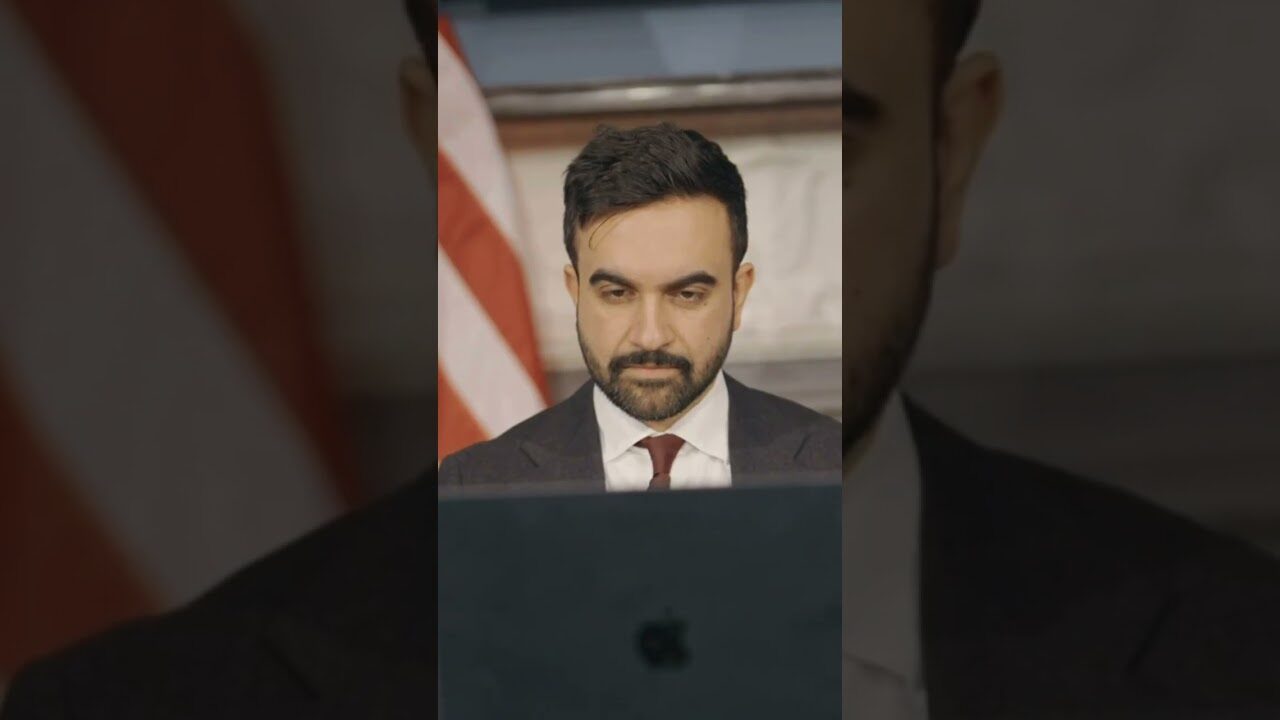
Watch: Cancelling a Subscription Shouldn’t Be This Hard
Related video: Cancelling a Subscription Shouldn’t Be This Hard — YouTube.
Key Facts: What Changed on October 1?
- October 1, 2026: New York City’s Click-to-Cancel regulation took effect.
- Enforcement: The NYC Department of Consumer and Worker Protection (DCWP) can investigate covered subscription-cancellation violations.
- Penalties: Civil penalties start at $525 per violation, and restitution may also be available.
- Cancellation: Covered businesses must provide a straightforward process through the same method customers used to enroll.
- Complaints: New Yorkers can now submit subscription complaints through the city’s official online system.
The official adopted rule is available through NYC Rules — Cancellation of Subscriptions.
Why Are Subscription Cancellations So Difficult?
Many online businesses rely on recurring billing, sometimes described in consumer protection law as a negative option.
Under this arrangement, consumers continue paying until they take action to cancel.
Automatic renewals are not inherently unlawful. They can be convenient when customers understand the terms and want uninterrupted service.
Problems arise when a business makes enrollment simple but intentionally complicates cancellation or fails to disclose important payment terms.
The Federal Trade Commission identifies several recurring risks:
- Free trials that convert into paid subscriptions without clear disclosure.
- Automatic renewals consumers did not knowingly authorize.
- Cancellation options hidden deep inside websites or applications.
- Repeated retention steps that delay termination.
- Charges continuing after a consumer requests cancellation.
Federal source: FTC — Getting In and Out of Free Trials, Auto-Renewals, and Negative Option Subscriptions.
New York City’s Rule: What Businesses Must Do
New York City’s Department of Consumer and Worker Protection says the rule requires covered companies to clearly explain subscription terms and consumers’ cancellation rights.
Businesses must provide a straightforward way to cancel using the same method through which the consumer signed up.
For example, a business that permits enrollment online cannot ordinarily make a telephone conversation or an in-person visit the only available way to cancel.
The city also prohibits certain practices involving unsolicited products and demands that consumers pay to return goods they received for free.
The adopted rule became effective on October 1, 2026.
Consumers can now report violations to DCWP, which may investigate complaints, pursue restitution, and assess applicable civil penalties.
Official sources:
- NYC — Click-to-Cancel: Consumer Rights and Complaint Portal
- NYC DCWP — October 1, 2026 Enforcement Announcement
Was This Consumer Protection Already Required by New York State Law?
Yes. New York State regulated automatic renewals and continuous service agreements before the city introduced its new municipal rule.
New York General Business Law Section 527-a requires covered sellers to disclose important renewal terms, obtain appropriate affirmative consent, and provide an easy-to-use cancellation mechanism.
The state law also addresses renewal notices and other disclosures under specified circumstances.
That means New York City did not create the basic consumer right to cancel a subscription from nothing.
What the city added is a more detailed local regulatory framework and direct municipal enforcement.
Instead of relying exclusively on state or federal enforcement, New Yorkers can bring covered complaints to their own municipal consumer protection agency.
State-law documentation: New York Attorney General — Equinox Settlement, Including General Business Law §527-a.
What Happened to the Federal Click-to-Cancel Rule?
This distinction is particularly important.
In October 2024, the Federal Trade Commission announced a nationwide Click-to-Cancel rule intended to make ending recurring subscriptions as simple as enrolling.
However, in July 2025, the United States Court of Appeals for the Eighth Circuit vacated that amended rule because the FTC had not complied with required rulemaking procedures.
As a result, the 2024 federal Click-to-Cancel amendments did not take effect as originally planned.
But the court decision did not eliminate existing federal consumer protection laws.
The FTC continues to use the FTC Act and the Restore Online Shoppers’ Confidence Act (ROSCA) against allegedly deceptive recurring-payment practices.
In March 2026, the FTC also requested public input on whether and how to pursue additional negative-option rulemaking.
Official documents:
- U.S. Court of Appeals, Eighth Circuit — Decision Vacating the 2024 FTC Rule
- FTC — March 2026 Negative Option Rulemaking Announcement
Federal Enforcement: Shutterstock’s $35 Million Settlement
The FTC continued pursuing subscription cases during 2026.
In May, the agency announced that Shutterstock Inc. would pay $35 million to settle allegations involving deceptive subscription and cancellation practices.
The FTC accused the digital media company of practices including charging consumers without properly informed consent and making certain subscriptions difficult to cancel.
The settlement demonstrates that federal enforcement can continue under existing laws even after the separate 2024 Click-to-Cancel rule was vacated.
As with other settlements, the allegations and the terms of the resolution should be distinguished from a judicial finding after a contested trial.
Official FTC announcement: FTC — Shutterstock to Pay $35 Million, May 2026.
New York Case: $400,000 Settlement With Thirty Madison
On August 24, 2026, New York Attorney General Letitia James announced a $400,000 settlement with Thirty Madison, an online medication provider associated with brands including Keeps, Nurx, and Cove.
According to the Attorney General’s Office, the investigation found that the company failed to clearly disclose important subscription conditions, including recurring charges and nonrefundable fees.
Investigators also found problems with cancellation procedures, including repeated steps, delayed processing, and additional charges.
The settlement requires changes to the company’s subscription practices and restitution for certain eligible consumers.
Official state source: New York Attorney General — Thirty Madison Settlement, August 24, 2026.
Another New York Case: 1-800-Flowers and Automatic Renewals
On July 22, 2026, the New York Attorney General announced a $375,000 settlement with 1-800-Flowers concerning automatically renewing subscription services.
State investigators found that important terms for the company’s paid Celebrations Passport program had not been adequately disclosed to customers.
The investigation also identified problems involving subscription acknowledgments and renewal notices.
Under the settlement, the company agreed to change subscription practices and provide restitution to eligible subscribers.
This case illustrates that state consumer protection authorities were already enforcing automatic-renewal requirements before New York City’s October regulation became effective.
Official source: New York Attorney General — 1-800-Flowers Settlement, July 22, 2026.
FTC v. Uber: What the Federal Government Alleged
The FTC’s case involving Uber provides another example of how federal law applies to recurring subscriptions.
The agency alleged that certain Uber One customers were enrolled or charged without adequate consent and that the company failed to provide a sufficiently simple way to stop recurring charges.
The FTC brought claims under Section 5 of the FTC Act and ROSCA.
The allegations remain subject to the applicable judicial process and should not be presented as established findings of liability unless a court so determines.
Official FTC case: Federal Trade Commission v. Uber Technologies, Inc..
What Can New Yorkers Do If a Company Refuses to Cancel?
The FTC and New York City recommend that consumers document cancellation problems and pursue available remedies.
- Submit the cancellation request. Use the company’s published cancellation process and save confirmation screens, emails, or reference numbers.
- Keep records. Preserve subscription terms, payment confirmations, dates, and any correspondence with customer service.
- Check bank and credit card statements. Look for charges after your cancellation request.
- Dispute unauthorized charges. Contact your card issuer promptly and follow its billing-dispute procedure. Applicable deadlines may matter.
- File a city complaint. New Yorkers can use the NYC Click-to-Cancel portal or contact 311.
- Report additional violations. Complaints may also be submitted to the New York Attorney General or FTC.
Official consumer complaint resources:
- NYC — Click-to-Cancel Complaint Portal
- NYC311 — Click-to-Cancel Complaint
- New York Attorney General — Consumer Complaint
- Federal Trade Commission — ReportFraud.ftc.gov
What Happens After a Complaint?
According to NYC’s official consumer guidance, DCWP reviews submitted complaints and supporting documentation.
A complaint may be assigned to a mediator, who can contact the business and attempt to resolve the dispute.
Enforcement action may be considered where the agency finds violations within its jurisdiction.
Consumers should not assume that filing a complaint automatically cancels a subscription or guarantees an immediate refund.
Keeping payment records and pursuing timely billing disputes therefore remains important.
What Is New — and What Already Existed?
| Protection | Legal framework |
|---|---|
| Disclosure of recurring charges and material subscription conditions | Existing federal and New York State requirements |
| Informed consent for covered online recurring subscriptions | Federal ROSCA and applicable state law |
| Accessible cancellation mechanisms | Existing federal and state protections; additional NYC standards |
| Municipal Click-to-Cancel enforcement | New York City rule effective October 1, 2026 |
| City civil penalties starting at $525 | New NYC enforcement framework |
| 2024 nationwide FTC Click-to-Cancel amendments | Vacated by federal appeals court in July 2025 |
Midtown Tribune Analysis: The Real Test Is Enforcement
The basic principle behind Click-to-Cancel is straightforward: a consumer should not face unnecessary barriers to leaving a service.
But the existence of a regulation does not, by itself, guarantee that companies will comply.
The effectiveness of New York City’s new policy will depend on how efficiently complaints are processed, how consistently businesses are investigated, how much restitution reaches affected customers, and whether companies actually simplify their cancellation procedures.
There is also a broader regulatory lesson.
New York’s new rule did not emerge in a legal vacuum. Federal and state governments already possessed enforcement tools against deceptive automatic renewals.
The city’s principal change is to add direct municipal oversight and detailed local cancellation requirements.
That creates a measurable policy question: will New York City resolve consumer problems more quickly and effectively than the existing systems?
Future DCWP enforcement reports, complaint statistics, and restitution totals should help answer that question.
Conclusion
As of October 1, 2026, New Yorkers have a new local avenue for challenging subscription traps.
Businesses covered by the city rule must provide clear subscription information and straightforward cancellation procedures, while DCWP can investigate violations and pursue appropriate remedies.
At the same time, federal and New York State laws continue to protect consumers from deceptive recurring-payment practices.
The FTC’s $35 million Shutterstock settlement and New York’s recent enforcement actions against Thirty Madison and 1-800-Flowers demonstrate that subscription-related enforcement is not theoretical.
Consumers should be able to make their own decisions about which services to keep — without continuing to pay simply because cancellation has been made unnecessarily difficult.
Official Sources and Further Reading
- NYC Rules — Adopted Cancellation of Subscriptions Rule
- NYC DCWP — October 1, 2026 Enforcement Announcement
- NYC Click-to-Cancel — Consumer Information and Complaints
- FTC — Subscription Cancellation Consumer Guidance
- U.S. Court of Appeals — Decision Vacating the FTC’s 2024 Rule
- FTC — Shutterstock $35 Million Settlement, 2026
- NY Attorney General — Thirty Madison $400,000 Settlement
- NY Attorney General — 1-800-Flowers $375,000 Settlement
- FTC — Uber Subscription Litigation
- NYC DCWP — File a Consumer Complaint
Related Midtown Tribune coverage: Did Mayor Mamdani Present Existing Consumer Protections as Something New?
Editorial Note: This report distinguishes the October 2026 NYC rule from existing state and federal consumer protections. Financial amounts in government enforcement announcements describe settlements or allegations as specified by the issuing agency. Updated October 12, 2026.
Ask Midtown Tribune about this story
Answers are grounded first in this article. Search all Midtown Tribune reporting from the main AI Search page.
AI-generated summary. Verify important details in the linked original articles.