
For years, diplomatic optimists insisted Iran could be persuaded to abandon its nuclear ambitions with enough money, sanctions relief and politely worded meetings.
It was a beautiful theory. Tehran apparently forgot to read it.
The United States has completed its eleventh consecutive night of strikes against Iran. CENTCOM says American forces targeted military command centers, maritime capabilities, aircraft hangars, drone storage facilities and military logistics infrastructure. Washington says the purpose is to weaken Iran’s ability to attack commercial shipping in the Strait of Hormuz. CENTCOM’s official statement
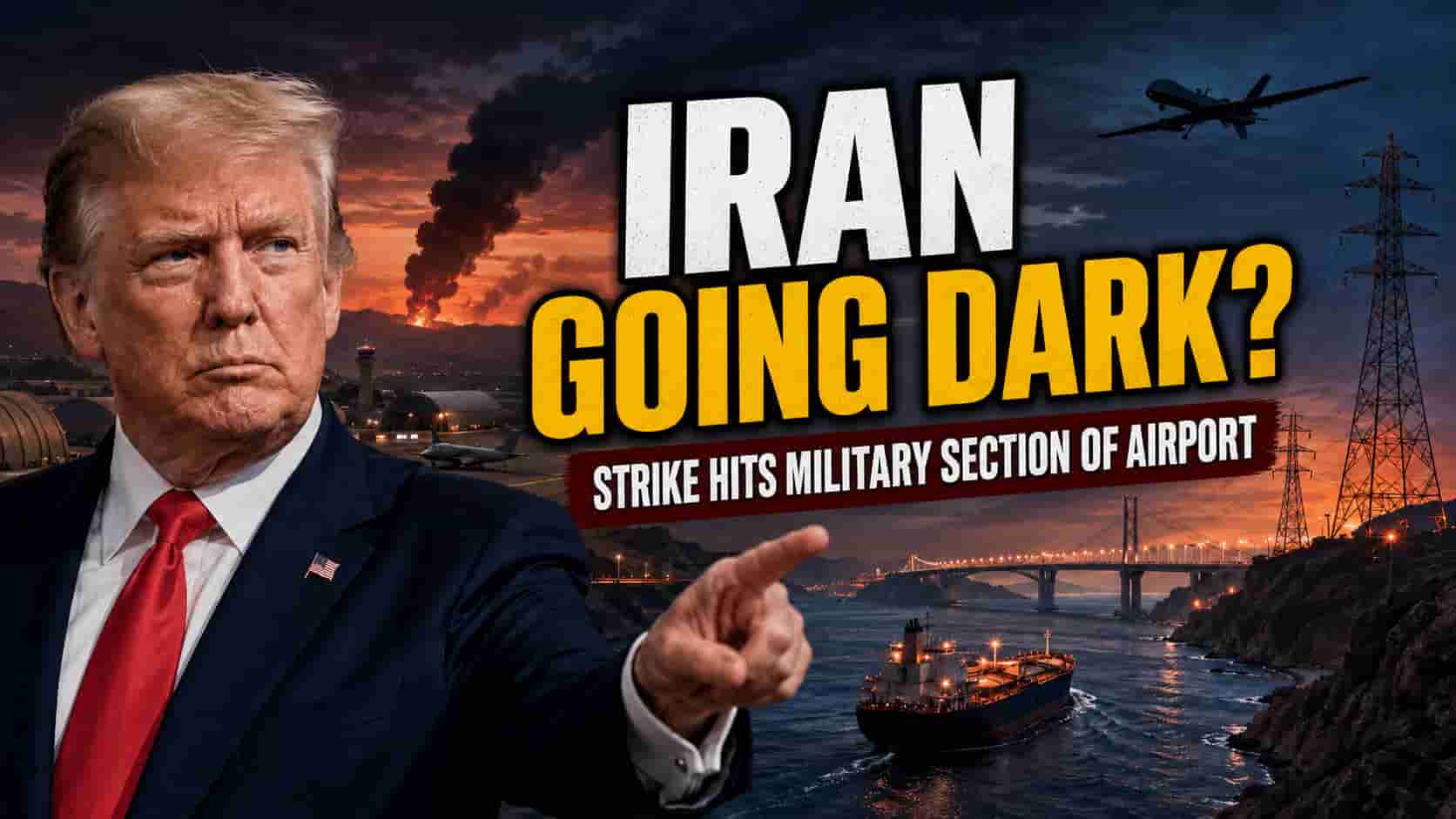
Iranian and regional media also reported a strike on the military section of Bushehr Airport. CENTCOM has not separately confirmed that location, so reports that the entire civilian airport was destroyed would be premature. What appears to have been targeted was the airport’s military sector.
Trump Introduces a New Rewards Program
President Donald Trump announced a simple new policy: every additional Iranian attack on a ship in the Strait of Hormuz could cost Tehran one bridge or one power plant—including infrastructure near or inside the capital.
In other words, the old arrangement was: Iran fires drones, Western diplomats schedule another meeting.
The new arrangement is: Iran fires a drone, Iran starts checking which bridge is missing.
Trump’s warning was confirmed by Reuters, CBS News and the Associated Press.
The president has also threatened a major strike against Pickaxe Mountain, the deeply buried complex near Natanz associated with Iran’s nuclear program. Whether the facility currently contains enriched uranium or operational centrifuges has not been publicly proven, but Washington clearly regards it as a serious potential target.
For years, the fashionable theory was that Iran’s rulers would become more responsible if the world kept feeding the regime money, trade and diplomatic attention. Unfortunately, uranium centrifuges do not run on goodwill—but they apparently work quite well after sanctions relief.
That means a single new Iranian drone over the Strait of Hormuz could result in the destruction of another strategic target. For Tehran, this is no longer merely the risk of further escalation—it is the prospect of the regime’s military machine being gradually dismantled. And if sustained pressure forces Iran’s leadership to stop its attacks and abandon nuclear blackmail, the current operation may bring not a wider war, but peace—secured not by another round of empty promises, but by strength.
Sources and Official Resources
- U.S. Central Command: 11th consecutive night of strikes against Iran
- U.S. Central Command: Operation Epic Fury
- U.S. Maritime Administration: Iranian attacks on commercial vessels
- Reuters: Trump threatens strikes on Iranian bridges and power plants
- CBS News: Iran war and Strait of Hormuz updates
- Associated Press: Trump’s warning to Iran
- U.S. State Department: Iran travel advisory
Information may change as military operations and diplomatic developments continue.
Ask Midtown Tribune about this story
Answers are grounded first in this article. Search all Midtown Tribune reporting from the main AI Search page.
AI-generated summary. Verify important details in the linked original articles.