
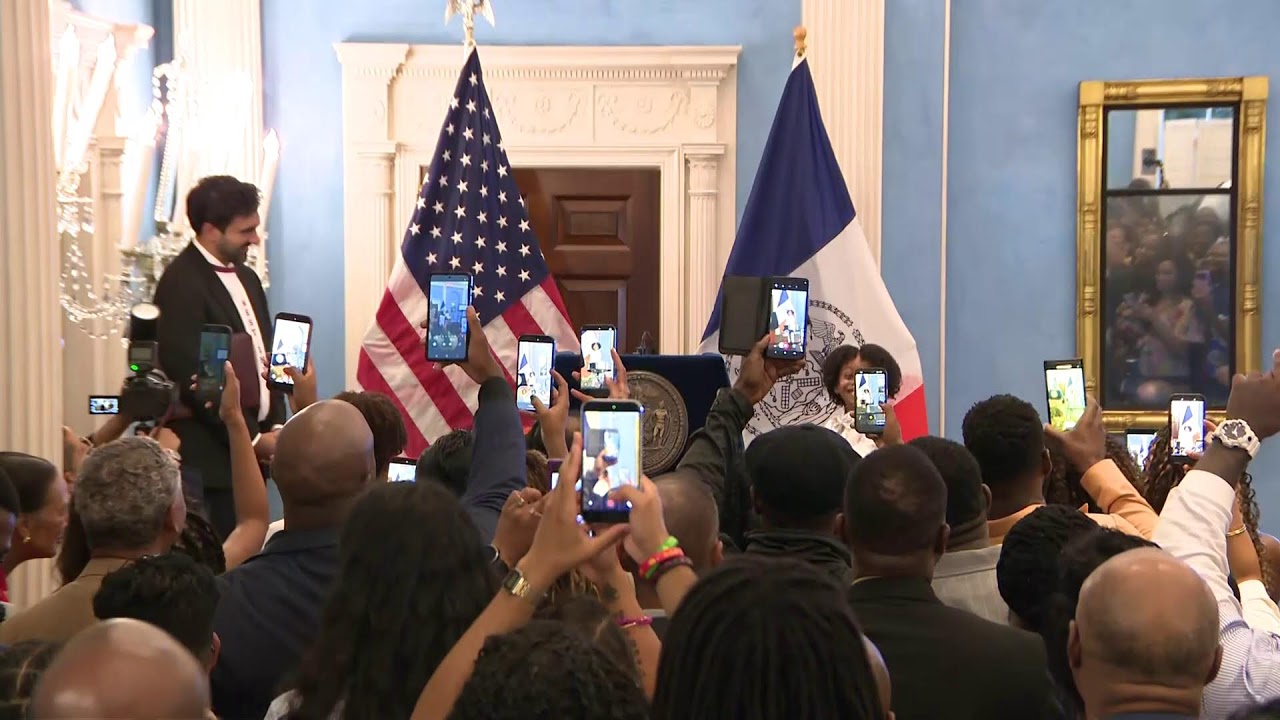
Mayor Mamdani Hosts Caribbean Heritage Reception at Gracie Mansion, Highlights Haitian TPS, Immigration and West Indian Day Parade
New York City Mayor Zohran Mamdani hosted a Caribbean Heritage Reception at Gracie Mansion on August 27, 2026, celebrating Caribbean New Yorkers while also addressing Haitian Temporary Protected Status, immigration policy, sanctuary-city protections and the upcoming West Indian American Day Parade.
NEW YORK — Mayor Zohran Mamdani welcomed members of New York City’s Caribbean community to Gracie Mansion on August 27 for a Caribbean Heritage Reception that mixed cultural celebration with discussion of immigration, public service and the city’s relationship with its Caribbean diaspora.
The event featured city officials, community leaders and advocates representing Caribbean New Yorkers across the five boroughs.
Mamdani’s central message was that Caribbean culture is deeply embedded in New York City — from Flatbush and Crown Heights to Richmond Hill, Wakefield, Canarsie and Rosedale — and that City Hall intends to support the community as it faces new immigration-related uncertainty.
The mayor also confirmed that his administration plans to participate in the West Indian American Day celebrations on Eastern Parkway over Labor Day weekend.
Official NYC Mayor’s Office transcript — August 27, 2026
What Was the Caribbean Heritage Reception About?
The approximately 33-minute event at Gracie Mansion was more than a ceremonial cultural reception.
Speakers discussed several themes affecting Caribbean communities in New York City:
- Caribbean immigration and identity;
- Haitian Temporary Protected Status;
- New York City’s sanctuary-city policies;
- immigrant legal and language assistance;
- representation of Caribbean New Yorkers in city government;
- LGBTQ and immigrant advocacy;
- public schools and Caribbean educators;
- the West Indian American Day Parade;
- and the economic and cultural contribution of Caribbean neighborhoods.
The reception began with remarks emphasizing greater community participation in city government. An Office of Mass Engagement representative described the administration’s goal as creating a government in which residents are more directly involved in decisions affecting their communities.
Mamdani Celebrates Caribbean New Yorkers at Gracie Mansion
Mayor Mamdani began his remarks by welcoming attendees to what he described as a celebration of New York City’s Caribbean community.
He recognized members of his administration and other elected officials, including Schools Chancellor Kamar Samuels, New York City Sheriff Edwin Raymond, Public Advocate Jumaane Williams and State Senator Jabari Brisport.
Mamdani then focused heavily on Caribbean cricket and its role in shaping his own understanding of Caribbean identity and solidarity.
Wearing a West Indies 2007 Cricket World Cup jersey, he recalled growing up hearing about legendary West Indian players including Clive Lloyd, Viv Richards, Curtly Ambrose, Michael Holding and Malcolm Marshall.
He also described attending the 2007 Cricket World Cup in the Caribbean with his family and later helping to establish his school’s first cricket team in New York.
For Mamdani, the history of the West Indies cricket team served as a broader metaphor: individual Caribbean nations became more powerful when they competed together.
He connected that idea directly to Caribbean New Yorkers.
“Caribbean Greatness” Across New York City
Mamdani said the influence of the Caribbean diaspora can be seen throughout all five boroughs.
He referenced neighborhoods with significant Caribbean populations including Flatbush, Wakefield, Canarsie, Rosedale, Richmond Hill and Crown Heights.
The mayor described Caribbean New Yorkers as contributing to the character and vitality of New York City through food, culture, neighborhoods, public service and community institutions.
Schools Chancellor Kamar Samuels made a similar point earlier in the reception.
Samuels, who spoke about coming to New York from Kingston as a teenager, recalled eventually finding the Caribbean community he missed from Jamaica within New York City.
He highlighted Caribbean New Yorkers working as nurses, home health aides, transit workers, teachers, school employees and principals.
Samuels told the audience that Caribbean people are found throughout New York City and described them as a central part of the city’s workforce and communities.
Haitian Temporary Protected Status Became a Major Political Theme
The reception shifted from cultural celebration to federal immigration policy when speakers discussed Haitian immigrants and Temporary Protected Status, or TPS.
Mamdani criticized the federal government’s revocation of TPS protections affecting Haitians, saying the policy had created fear and uncertainty among Caribbean New Yorkers.
He praised community groups and volunteers who are helping Haitian residents through:
- Know Your Rights sessions in Haitian Creole;
- assistance with immigration paperwork;
- translation services;
- and community support networks.
The mayor said Caribbean communities have historically relied on mutual-aid organizations and benevolent associations when formal institutions could not meet their needs.
The issue was also raised earlier by Tiffany Jade Monroe of the Caribbean Equality Project, who called for continued protections for Haitian migrants and argued that TPS recipients should have work authorization, protection from detention and deportation, and a pathway toward permanent legal status.
Mamdani Defends New York City Sanctuary Policies
One of the most politically significant parts of Mamdani’s speech concerned the role of City Hall in immigration matters.
The mayor said the administration wants to support Caribbean immigrant communities through several existing mechanisms, specifically mentioning:
New York City sanctuary-city policies, the Mayor’s Office of Immigrant Affairs, hotlines, clinics and other assistance programs.
That makes the reception relevant beyond Caribbean cultural affairs.
It provides another public statement of Mamdani’s broader position on the continuing dispute between New York City and the federal government over immigration enforcement.
Mamdani framed those policies as part of City Hall’s effort to support immigrants facing legal uncertainty.
Caribbean Equality Project Raises LGBTQ and Immigration Issues
The event also featured Tiffany Jade Monroe, trans justice manager at the Caribbean Equality Project.
Monroe described the organization as a Caribbean LGBTQ immigrant-rights group and spoke about being an undocumented asylum seeker from Guyana.
Her remarks addressed immigration enforcement, housing, food access, health care, legal resources and protections for transgender and LGBTQ immigrants.
She also announced that the organization is raising money toward what it describes as New York City’s first Caribbean LGBTQ community center.
Her speech was among the most overtly political portions of what was otherwise presented as a Caribbean heritage celebration.
Jumaane Williams Criticizes Divisions Over Immigration
New York City Public Advocate Jumaane Williams also spoke during the reception.
Williams criticized what he characterized as attempts to divide immigrants into “good” and “bad” categories and urged Caribbean New Yorkers to remember their own communities’ immigration histories.
He argued that Caribbean communities should remain united as immigration enforcement becomes a larger political issue.
Williams also turned toward the upcoming Labor Day festivities, encouraging a safe celebration on Eastern Parkway and emphasizing the shared identity of Caribbean New Yorkers.
Mamdani Administration Prepares for West Indian Day Parade
Mamdani said City Hall will participate in the annual celebration on Eastern Parkway during Labor Day.
The mayor said the administration wants the West Indian Day celebration to be both “joyful” and “safe.”
The West Indian American Day Carnival and Parade is one of New York City’s largest annual Caribbean cultural events and traditionally draws large crowds to Brooklyn during Labor Day weekend.
At Gracie Mansion, Mamdani connected the upcoming parade with the same theme he used throughout his speech: Caribbean communities are strongest when they act collectively.
He said the unity historically represented by West Indies cricket is also visible among Caribbean New Yorkers today.
Caribbean Representation Inside Mamdani’s City Government
The mayor also highlighted Caribbean representation within his administration.
He pointed specifically to Schools Chancellor Kamar Samuels, who immigrated from Kingston and later became an educator in New York City.
Mamdani also recognized Sheriff Edwin Raymond, describing him as the first Haitian New Yorker to lead a major law-enforcement office in New York City history.
The comments reinforced a recurring theme of the reception: Caribbean New Yorkers are not simply a cultural constituency but are represented throughout government, education, law enforcement, health care and other parts of the city.
Why This Event Matters
The Gracie Mansion reception was officially a celebration of Caribbean heritage, but much of the discussion concerned current public policy.
Three subjects stood out.
Immigration: Haitian TPS and federal immigration enforcement were repeatedly discussed.
City policy: Mamdani publicly reiterated support for sanctuary-city protections and immigrant assistance through City Hall.
Political representation: The administration emphasized Caribbean representation among senior city officials and community organizations.
The event therefore offered a useful snapshot of how the Mamdani administration is approaching one of New York City’s largest immigrant communities: combining cultural recognition with immigration policy, municipal services and political engagement.
Video: Mayor Mamdani Hosts Caribbean Heritage Reception
The full video includes remarks from Caribbean community representatives, Schools Chancellor Kamar Samuels, Caribbean Equality Project Trans Justice Manager Tiffany Jade Monroe, Public Advocate Jumaane Williams and Mayor Zohran Mamdani.
Mamdani begins his principal remarks at approximately the 21-minute mark.
His speech covers Caribbean cricket and culture before moving into Haitian TPS, sanctuary-city policy, immigrant assistance and the West Indian Day Parade.
Key Facts
Event: Caribbean Heritage Reception
Host: New York City Mayor Zohran Mamdani
Location: Gracie Mansion, New York City
Date: August 27, 2026
Major topics: Caribbean heritage, Haitian TPS, immigration, sanctuary-city policies, Caribbean representation in city government and the West Indian American Day Parade
Speakers included: Mayor Zohran Mamdani, Schools Chancellor Kamar Samuels, Public Advocate Jumaane Williams and Caribbean community advocates
Frequently Asked Questions
When did Mayor Mamdani host the Caribbean Heritage Reception?
The event took place at Gracie Mansion on August 27, 2026, according to the New York City Mayor’s Office.
What did Mamdani say about Haitian TPS?
Mamdani criticized the federal government’s revocation of Temporary Protected Status affecting Haitian immigrants and discussed community efforts to provide legal information, translation and other assistance.
What did Mamdani say about sanctuary-city policies?
He specifically cited New York City’s sanctuary-city policies and the Mayor’s Office of Immigrant Affairs as mechanisms City Hall is using to support immigrant New Yorkers.
Did Mamdani discuss the West Indian Day Parade?
Yes. He said City Hall plans to participate in the Labor Day celebration on Eastern Parkway and stressed the importance of making the event both joyful and safe.
Where was the Caribbean Heritage Reception held?
The reception was held at Gracie Mansion, the official residence of the mayor of New York City.
Sources
New York City Mayor’s Office — August 27, 2026
“Transcript: Mayor Mamdani Hosts Caribbean Heritage Reception.”
Read the official NYC transcript
Midtown Tribune
Original video page: “Mayor Mamdani Hosts Caribbean Heritage Reception.”
View the Midtown Tribune page
Ask Midtown Tribune about this story
Answers are grounded first in this article. Search all Midtown Tribune reporting from the main AI Search page.
AI-generated summary. Verify important details in the linked original articles.