
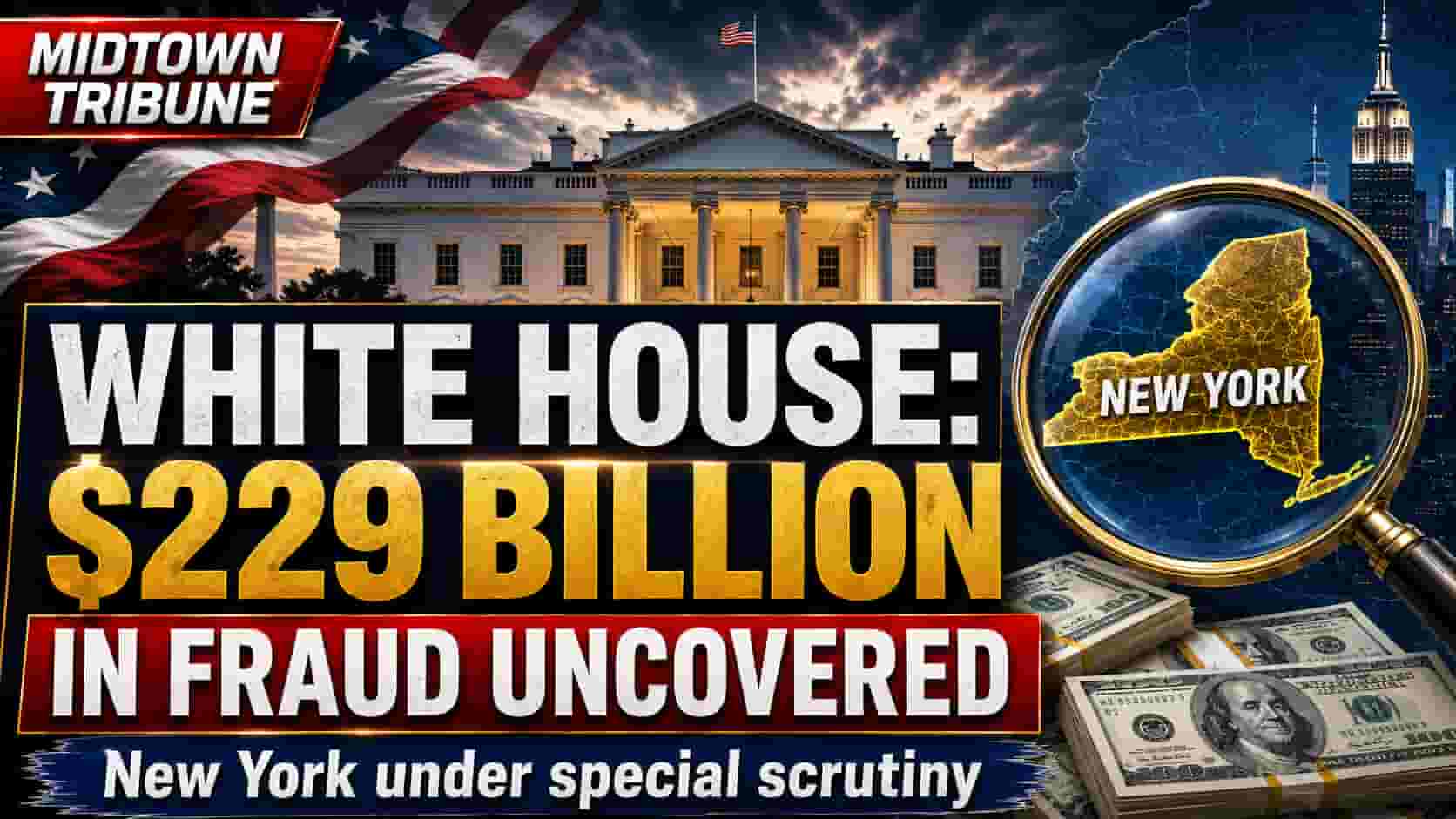
WASHINGTON — The White House has launched a new public initiative highlighting what the Trump administration says is an unprecedented federal crackdown on fraud, waste and abuse, reporting that more than $229 billion in fraud has been uncovered across government programs.
The new “Fraud Ledger” tracks actions taken by the White House Task Force to Eliminate Fraud, which President Donald Trump established earlier this year and placed under the leadership of Vice President JD Vance.
The administration says the effort has also stopped roughly $56 billion in fraudulent or improper payments, while federal agencies continue investigations, enforcement actions and recovery efforts.
But there is an important distinction: the $229 billion figure should not be interpreted as $229 billion already recovered and returned to the U.S. Treasury. It represents the administration’s aggregate estimate of fraud and questionable spending identified through investigations, audits, data analysis and enforcement activity.
Trump Created a Government-Wide Anti-Fraud Task Force
President Trump formally established the Task Force to Eliminate Fraud on March 16, 2026, through Executive Order 14395.
Vice President JD Vance serves as chairman.
The task force brings together representatives from the Department of Justice, Treasury Department, Department of Labor, Department of Health and Human Services, Department of Agriculture, Department of Housing and Urban Development, Department of Education, Department of Veterans Affairs, Department of Homeland Security, Small Business Administration and other federal agencies.
Its mission includes stronger identity and eligibility verification, pre-payment controls, data sharing among agencies, detection of high-risk fraud patterns and coordinated civil and criminal enforcement.
The White House says federal benefit programs involving housing, food assistance, health care and cash assistance are among the areas being reviewed.
Billions Identified Across Federal Programs
The administration’s anti-fraud effort covers a broad range of programs, including pandemic-era business loans, Medicare and Medicaid, unemployment insurance and other federally funded benefits.
In May, the White House reported a series of enforcement actions, including the referral of hundreds of thousands of allegedly fraudulent or delinquent pandemic-era loans for collection, suspensions of high-risk health-care providers and federal investigations involving billions of dollars in suspected fraudulent contracts.
The White House also said the Department of Justice was handling thousands of active fraud cases nationwide.
The administration has increasingly relied on cross-agency data analysis to identify duplicate identities, questionable providers, potentially ineligible recipients and suspicious payment patterns.
A March 2025 executive action directed agencies to expand data sharing specifically to combat waste, fraud and abuse, including access to unemployment-payment information.
New York Is Now a Major Focus
For New Yorkers, one of the most significant developments involves the unemployment insurance system.
The U.S. Department of Labor Office of Inspector General announced in July that a joint federal Strike Team was being deployed to New York to investigate unemployment-insurance fraud and improper payments.
According to the federal watchdog, New York recorded more than $750 million in improper unemployment insurance payments during calendar year 2025.
Of that amount, approximately $507 million was classified as fraudulent payments.
The Inspector General said New York was losing nearly $2 million per day to fraud and improper unemployment payments.
Federal investigators are now working with Department of Labor personnel to identify suspicious claims, recover improperly paid money, conduct data analysis and pursue potential civil and criminal cases.
What Does “Improper Payment” Mean?
An improper payment is not automatically the same thing as criminal fraud.
Government agencies may classify a payment as improper because the recipient was ineligible, documentation was missing, the amount was calculated incorrectly or required verification procedures were not followed.
Fraud is a narrower category and generally involves intentional deception.
That distinction is important when interpreting the large dollar amounts being released by the administration.
The ultimate measure of the initiative will therefore be how much money federal agencies actually recover, how much future spending they successfully prevent and how many suspected schemes result in proven civil or criminal violations.
Why the Administration Says the Crackdown Is Necessary
The White House argues that weak eligibility controls, fragmented databases and insufficient information sharing allowed fraud schemes to expand across multiple government programs.
Executive Order 14395 directs the new task force to create a coordinated national strategy for detecting suspicious activity before payments are made rather than attempting to recover taxpayer money afterward.
The administration also wants federal agencies to establish minimum anti-fraud standards covering identity verification, documentation, risk controls, audits and corrective action.
Jim Jordan Highlights the $229 Billion Figure
House Judiciary Committee Chairman Jim Jordan promoted the announcement on social media, writing:
“The White House Task Force to Eliminate Fraud announced more than $229 BILLION in fraud has been uncovered.”
Jordan followed the statement with a partisan criticism of Democrats.
The $229 billion number itself comes from the administration’s anti-fraud initiative, while Jordan’s broader political characterization represents his own commentary.
That distinction matters because combating fraud in federal programs is separate from the political debate over how the administration conducts investigations, shares state data or changes eligibility requirements.
The Bigger Question: How Much Will Taxpayers Actually Recover?
The new Fraud Ledger gives the public a way to follow the administration’s anti-fraud campaign as investigations expand across federal agencies.
But the headline figure alone does not answer the most important financial question.
How much of the alleged $229 billion will ultimately be recovered, permanently prevented from being paid, or proven to be fraud through enforcement proceedings?
For New York, that question is already becoming particularly relevant.
With federal investigators citing more than $750 million in improper unemployment payments in a single year — including $507 million classified as fraudulent — New York is now one of the states receiving intensified federal scrutiny.
The investigations are likely to determine whether the administration’s massive nationwide fraud estimates translate into actual recoveries, prosecutions and long-term savings for American taxpayers.
Official U.S. Government Sources
The information in this article is based on official White House and U.S. Department of Labor documents and releases.
-
The White House — Fraud Ledger
Official White House tracker covering the Trump administration’s federal anti-fraud initiative.
WhiteHouse.gov — The Fraud Ledger -
The White House — Task Force to Eliminate Fraud
Fact Sheet on President Donald J. Trump’s establishment of the government-wide Task Force to Eliminate Fraud.
WhiteHouse.gov — Official Fact Sheet -
The White House — Executive Order 14395
“Establishing the Task Force to Eliminate Fraud,” signed March 16, 2026.
WhiteHouse.gov — Executive Order -
The White House — Full-Scale War on Fraud
Administration summary of federal enforcement actions, investigations and anti-fraud measures across government programs.
WhiteHouse.gov — Official Release -
The White House — Federal Data Sharing to Combat Fraud
Official fact sheet on expanding government data access and eliminating information silos to detect waste, fraud and abuse.
WhiteHouse.gov — Official Fact Sheet -
U.S. Department of Labor — Office of Inspector General
Federal Strike Team deployed to New York. The DOL-OIG reported more than $750 million in improper unemployment insurance payments in New York during calendar year 2025, including approximately $507 million classified as fraudulent payments.
DOL-OIG.gov — Official Release, July 13, 2026
Source note: All links above lead to official U.S. government websites. Dollar figures cited by the White House may include estimated fraud identified, prevented payments, enforcement actions, settlements and other categories; they should not automatically be interpreted as money already recovered by the U.S. Treasury.
Ask Midtown Tribune about this story
Answers are grounded first in this article. Search all Midtown Tribune reporting from the main AI Search page.
AI-generated summary. Verify important details in the linked original articles.