
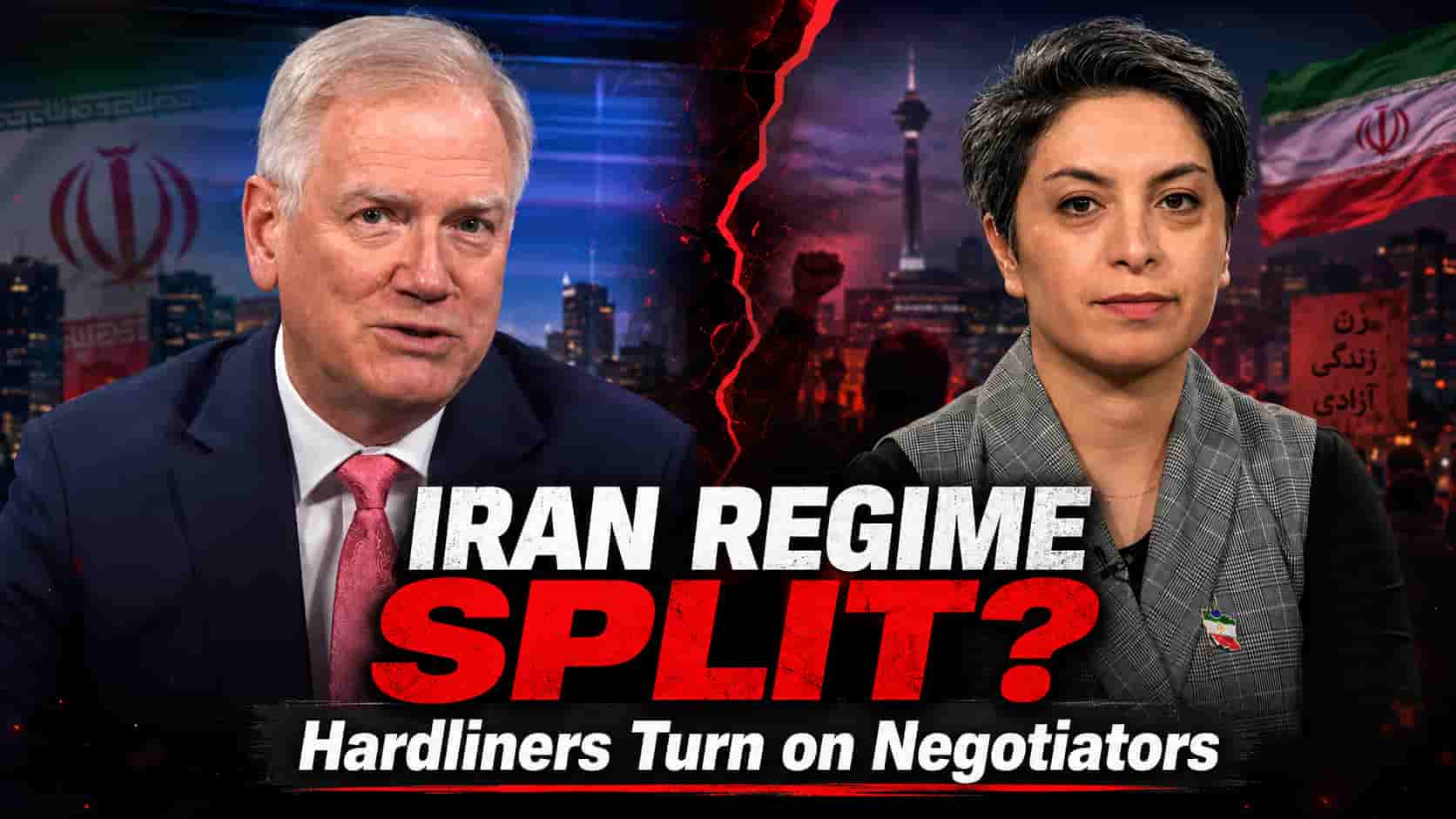
Iranian Hardliners Chant Against Ghalibaf and Araghchi Over U.S.-Iran Deal
A Sky News Australia interview with sociologist Dr. Somayeh Khani highlights a dramatic split inside Iran’s regime support base, as hardliners accuse negotiators Mohammad Bagher Ghalibaf and Abbas Araghchi of betraying the revolutionary cause.
A new Sky News Australia segment is drawing attention to a dangerous political fracture inside Iran: regime supporters and hardline loyalists are now turning their anger not only toward foreign enemies, but toward senior Iranian officials involved in negotiations with the United States.
In the video, titled “‘Betraying their leaders’: Iranian negotiators face death chants from regime supporters,” sociologist Dr. Somayeh Khani tells Sky News host Andrew Bolt that the backlash against Iran’s emerging peace framework with Washington has reached the streets.
According to Khani, some hardline supporters believe that officials involved in the talks have “sold out” the very ideology the Islamic Republic has promoted for decades. The target of that anger includes Mohammad Bagher Ghalibaf, Iran’s parliament speaker and a senior political figure in the talks, and Abbas Araghchi, Iran’s foreign minister.
The most important point in the video is not simply that Iran is negotiating with the United States. The deeper story is that parts of the regime’s own ideological base appear unable to accept the political logic of compromise after nearly half a century of anti-American slogans.
For 47 years, the Islamic Republic built much of its domestic legitimacy around confrontation: “Death to America,” “Death to Israel,” resistance, martyrdom, sacrifice, and permanent struggle against the West. Now, if senior officials sign or support a deal with Washington, hardliners can present that diplomacy as a betrayal of the blood and ideology on which the regime has relied.
That is why the slogans against Ghalibaf and Araghchi matter. They show that the Iranian leadership is facing pressure not only from ordinary Iranians tired of war and economic collapse, but also from its own revolutionary right wing, which sees compromise as humiliation.
The controversy comes as the United States and Iran move toward a framework agreement intended to halt hostilities and reopen the Strait of Hormuz. The deal has reportedly reduced immediate fears in global energy markets, but it leaves major issues unresolved, including Iran’s nuclear program, sanctions relief, Lebanon, Hezbollah, and the long-term rules for navigation through Hormuz.
Inside Iran, the proposed agreement has created two competing narratives.
One side argues that the deal is a strategic necessity: it can stop the war, relieve economic pressure, and preserve enough leverage for future negotiations. This camp frames diplomacy as survival.
The hardline camp argues the opposite: if Iran fought the United States, Israel, and their allies, then reopening Hormuz or negotiating with Washington without total victory looks like surrender. For them, the issue is not only policy. It is identity.
This is where Dr. Khani’s analysis is especially important. Her argument is that the regime’s own propaganda has created a trap. When a state spends decades teaching supporters that compromise with the enemy is treason, those supporters may eventually apply the same accusation to their own leaders.
The chants against Ghalibaf and Araghchi therefore reveal a political contradiction inside the Islamic Republic. The regime needs diplomacy to survive a military and economic crisis, but its ideological base has been trained to treat diplomacy with America as betrayal.
For Western audiences, the video offers a useful reminder: Iran is not a single political voice. There are ordinary Iranians who want freedom and normal life; there are regime officials trying to preserve power; and there are hardliners who may prefer confrontation over compromise because confrontation is the foundation of their political identity.
The emerging U.S.-Iran agreement may reduce immediate regional tension, but it also opens a new internal battle in Tehran. If the deal moves forward, Ghalibaf and Araghchi may not only face diplomatic pressure from Washington or criticism from Israel. They may face escalating attacks from the very revolutionary forces the Islamic Republic spent decades empowering.
In that sense, the Sky News segment is not just about one protest or one set of slogans. It is about the political price of building a state around permanent enemies — and then trying to negotiate with them when reality changes.
Key Takeaways
- Iranian hardliners are protesting against senior officials involved in the U.S.-Iran talks.
- Mohammad Bagher Ghalibaf and Abbas Araghchi have become targets of anger from regime loyalists.
- The backlash reflects a deeper contradiction inside the Islamic Republic: decades of anti-American ideology now collide with the need for diplomacy.
- The U.S.-Iran framework deal may reduce immediate military pressure, but it has intensified political conflict inside Iran.
- The video highlights a growing split between regime survival strategy and revolutionary hardline ideology.
Editorial Note
The central claim of the video — that Iranian hardliners have chanted against Ghalibaf and Araghchi over the U.S.-Iran deal — is supported by multiple reports. However, the exact wording of every street chant should be treated cautiously unless verified from original Persian-language footage. The broader political point is clear: Iran’s negotiators are facing pressure from hardliners who view compromise with the United States as ideological betrayal.
Official Sources and Primary Documents
The links below provide official background on U.S.–Iran policy, sanctions, negotiations, Iran’s foreign ministry, and the Iranian officials mentioned in the article.
-
U.S. Department of State — Iran Sanctions
Official State Department page tracking U.S. sanctions policy toward Iran, including recent actions and public statements.
https://www.state.gov/iran-sanctions -
U.S. Department of State — United States Sanctions Iranian Financial and Shipping Networks
Official May 19, 2026 State Department release on sanctions targeting Iranian regime-linked financial and shipping networks.
https://www.state.gov/releases/office-of-the-spokesperson/2026/05/united-states-sanctions-iranian-financial-and-shipping-networks -
U.S. Department of the Treasury / OFAC — Iran Sanctions Program
Official OFAC page for Iran sanctions, compliance guidance, advisories, and sanctions program information.
https://ofac.treasury.gov/sanctions-programs-and-country-information/iran-sanctions -
OFAC — Sanctions Programs and Country Information
Official Treasury list of active sanctions programs, including Iran-related sanctions updates.
https://ofac.treasury.gov/sanctions-programs-and-country-information -
The White House — Addressing Threats to the United States by the Government of Iran
Official White House presidential action page on U.S. policy toward threats from the Iranian government.
https://www.whitehouse.gov/presidential-actions/2026/02/addressing-threats-to-the-united-states-by-the-government-of-iran/ -
The White House — Fact Sheet on Iran Policy
Official White House fact sheet describing the administration’s position on Iran, negotiations, and national security concerns.
https://www.whitehouse.gov/fact-sheets/2026/02/fact-sheet-president-donald-j-trump-addresses-threats-to-the-united-states-by-the-government-of-iran/ -
The White House — Operation Epic Fury / Iran Ceasefire Statement
Official White House release discussing Iran, the ceasefire, the Strait of Hormuz, and broader negotiations.
https://www.whitehouse.gov/releases/2026/04/peace-through-strength-operation-epic-fury-crushes-iranian-threat-as-ceasefire-takes-hold/ -
Ministry of Foreign Affairs of the Islamic Republic of Iran
Official English-language website of Iran’s Foreign Ministry, including statements by Foreign Minister Seyed Abbas Araghchi.
https://en.mfa.ir/ -
Iranian Foreign Ministry — Abbas Araghchi Profile
Official profile page for Abbas Araghchi, Iran’s foreign minister and former nuclear negotiator.
https://en.mfa.ir/portal/organizationpersoninfo/13756 -
Iranian Foreign Ministry — Foreign Minister Phone Talks with Regional Counterparts
Official Iranian Foreign Ministry release mentioning Seyed Abbas Araghchi’s regional diplomatic contacts.
https://en.mfa.ir/portal/newsview/787177/Iran%E2%80%99s-Foreign-Minister-holds-phone-talks-with-regional-counterparts
Note: Reports about street chants and internal hardliner backlash should be checked against original video footage and Persian-language sources. The official links above provide primary-source context on the U.S.–Iran diplomatic and sanctions background.
Ask Midtown Tribune about this story
Answers are grounded first in this article. Search all Midtown Tribune reporting from the main AI Search page.
AI-generated summary. Verify important details in the linked original articles.