
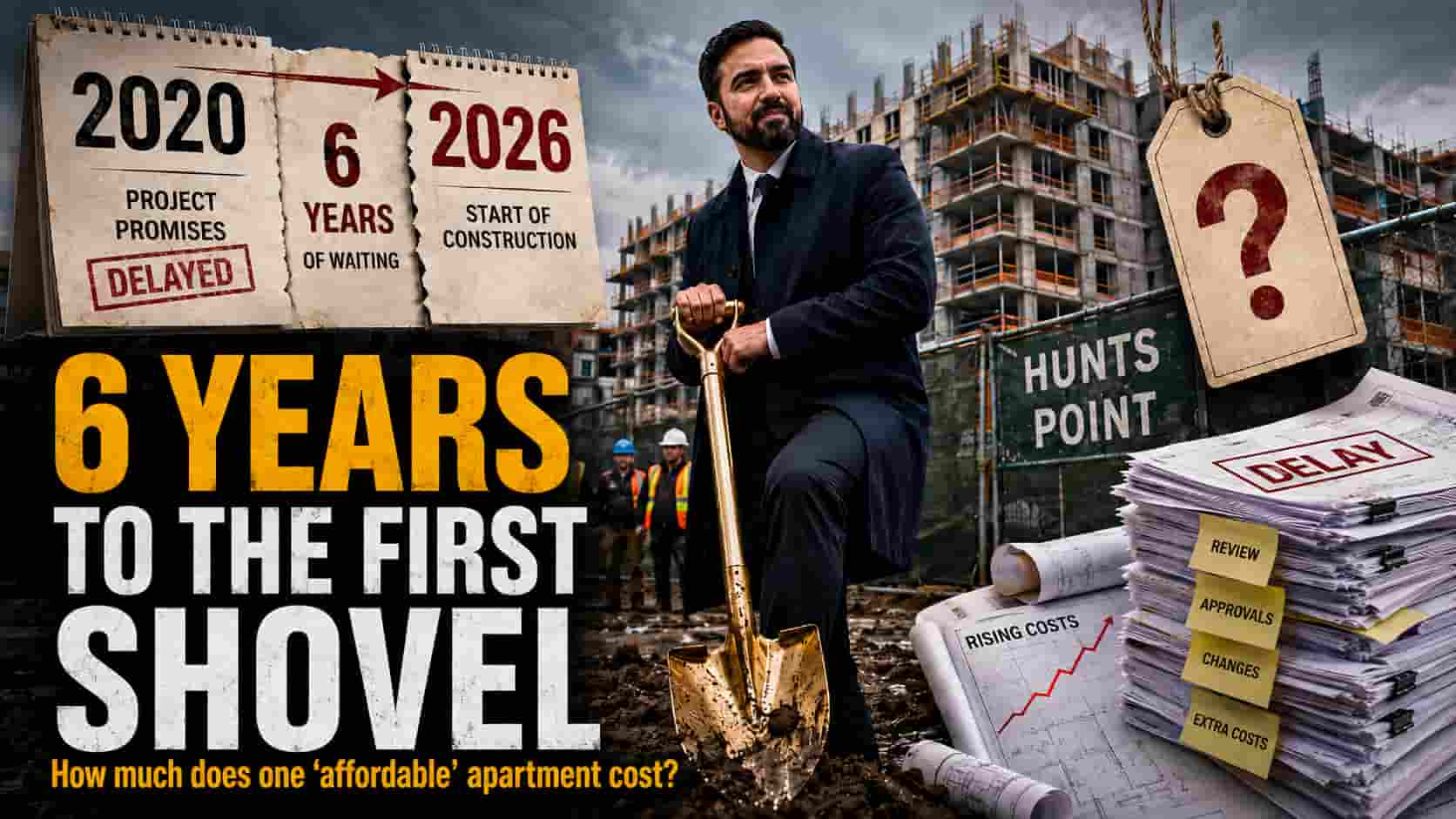
The Casanova Residence will bring 96 affordable and supportive apartments to the Bronx. The groundbreaking, however, also illustrates how many years it can take New York City housing projects to move from acquisition to construction.
By Midtown Tribune Editorial Staff | August 4, 2026
NEW YORK — Mayor Zohran Mamdani joined The Doe Fund and Bronx officials on August 3 to break ground on the Casanova Residence, a planned 96-unit affordable and supportive housing development in Hunts Point.
The six-story, approximately 63,000-square-foot building will contain 58 supportive housing apartments and 38 additional affordable apartments, according to The Doe Fund.
The supportive units are intended for formerly homeless New Yorkers, including people living with mental illness, substance-use disorders or disabling medical conditions. The remaining affordable apartments are expected to be offered to lower-income and working-class New Yorkers through the city’s housing lottery.
Residents are also expected to receive free broadband internet and access to on-site laundry, a fitness center, landscaped outdoor space, community rooms and social-service facilities.
The Doe Fund will provide case management, employment assistance, education, financial-literacy programs, job training and referrals to other services.
“This groundbreaking is another step toward a more affordable city,” Mamdani said, presenting the project as part of his administration’s broader housing strategy.
A New Groundbreaking for a Project That Is Not New
The ceremony marked an important construction milestone, but Casanova Residence did not originate under the Mamdani administration.
During the event, John McDonald, executive vice president of real estate at The Doe Fund, said the organization purchased the property in February 2020. The COVID-19 shutdown began the following month, and the project later struggled to secure equity and debt financing even after receiving city tax credits.
McDonald credited Raymond James and Webster Bank with eventually helping the development move forward.
That timeline makes Casanova a revealing example of the difference between announcing affordable housing and actually building it. The site was acquired more than six years before the August 2026 groundbreaking.
Mayor Mamdani can reasonably claim responsibility for helping move the project into construction under his administration. But the development itself represents years of work by The Doe Fund, city housing officials, financial institutions, architects, contractors and community organizations across multiple mayoral administrations.
What the Public Still Does Not Know
Neither the Mayor’s Office announcement nor the speakers at the event provided several details future tenants will need before judging how affordable the project will actually be.
City Hall did not publish:
- The total development cost
- The expected construction-completion date
- The income limits for the lottery apartments
- The projected monthly rents
- The number of apartments of each size
- The public subsidy per apartment
The event remarks indicated that one of the 38 rent-stabilized apartments will be designated for a live-in superintendent. The city’s written release broadly described the remaining apartments as available through the housing lottery without publishing a detailed unit breakdown.
Those numbers will matter. In New York City, the word “affordable” does not necessarily mean that an apartment is affordable to every resident of the surrounding neighborhood. Eligibility and rent are normally calculated using household income, apartment size and a percentage of the regional Area Median Income.
Supportive Housing, Not Just Apartments
Most of the Casanova Residence will be supportive housing rather than conventional affordable apartments.
That distinction is significant. Supportive housing combines a permanent apartment with services intended to help residents remain housed and manage medical, employment or behavioral-health challenges.
The Doe Fund says it currently operates affordable and supportive housing serving more than 1,300 residents. Casanova will become its 13th permanent residence, according to remarks delivered at the groundbreaking.
Supportive housing can also reduce pressure on shelters, hospitals and emergency services when properly funded and managed. But its long-term success depends not only on constructing the building, but also on maintaining sufficient staffing, case management and operating funds after residents move in.
Mamdani Connects Housing to a Larger Hunts Point Plan
The mayor linked Casanova Residence to the redevelopment of the former Spofford Juvenile Detention Center across the street.
That site is being transformed into the Peninsula, a mixed-use campus expected to contain approximately 740 affordable apartments, commercial space and public outdoor areas.
Mamdani also said the Peninsula will house the first store in his planned network of five municipally backed grocery stores. The administration says the Hunts Point location is expected to open by the end of 2027 and offer selected groceries at prices approximately 30 percent below typical retail prices.
The Casanova groundbreaking therefore served two purposes: celebrating a specific 96-unit building and promoting the administration’s broader vision for housing and city-supported retail development in the South Bronx.
The Real Test Comes After the Shovels
Casanova Residence appears designed to meet a genuine need. It will replace a vacant property with permanent apartments, and most of its residents will receive services intended to help them move out of homelessness and remain stably housed.
But ceremonial shovels do not house anyone.
The project should ultimately be evaluated by measurable results: whether it is finished on schedule, whether costs remain under control, whether the promised services are adequately funded and whether the published rents are genuinely affordable to Bronx residents.
After a development process that began in 2020, Hunts Point residents should not have to wait another six years to see the doors open.
Official Sources and Public Records
-
NYC Mayor’s Office — Casanova Residence Groundbreaking
Official August 3, 2026 announcement confirming that the Hunts Point development will contain 96 affordable and supportive homes: 58 supportive apartments and 38 additional affordable apartments. It also describes the on-site services, free broadband, fitness center, outdoor space and housing-lottery units. -
NYC Mayor’s Office — Full Groundbreaking Transcript
Official transcript of the mayor’s event. The Doe Fund’s John McDonald states that the organization purchased the site in February 2020 and explains that the project was delayed by the COVID-19 disruption and difficulties obtaining financing. -
The Doe Fund — Affordable and Supportive Housing Portfolio
The developer’s official housing page lists Casanova Residence as a six-story, approximately 63,000-square-foot Bronx development with 96 units: 38 affordable and 58 supportive apartments. -
NYC Housing Connect — Official Affordable Housing Lottery Information
Official New York City information explaining how affordable-housing lotteries operate, how income and household-size requirements are determined and how New Yorkers can apply for available apartments. -
NYC Mayor’s Office — The Peninsula Redevelopment in Hunts Point
Official announcement confirming that the former Spofford Juvenile Detention Facility is being redeveloped as The Peninsula, a mixed-use campus containing 740 units of 100% affordable housing, public open space, community facilities and a planned municipal grocery store. -
NYC Mayor’s Office — Municipal Grocery Store Pricing Plan
Official city announcement describing the planned 30% discount on a defined basket of produce, meat, seafood and selected grocery staples. It also states that the Hunts Point store is expected to open by the end of 2027. -
NYC Mayor’s Office — “Block by Block” Housing Plan
Official overview of the administration’s broader housing program, including affordable-housing construction, supportive-housing investment, preservation programs and proposed development reforms.
Source note: Project details and statements attributed to city officials are based on publications from the NYC Mayor’s Office, NYC housing agencies and The Doe Fund, the nonprofit organization developing and operating Casanova Residence.
Ask Midtown Tribune about this story
Answers are grounded first in this article. Search all Midtown Tribune reporting from the main AI Search page.
AI-generated summary. Verify important details in the linked original articles.