
By Midtown Tribune
One of the most closely watched legal battles over election security in America took another dramatic turn this week.
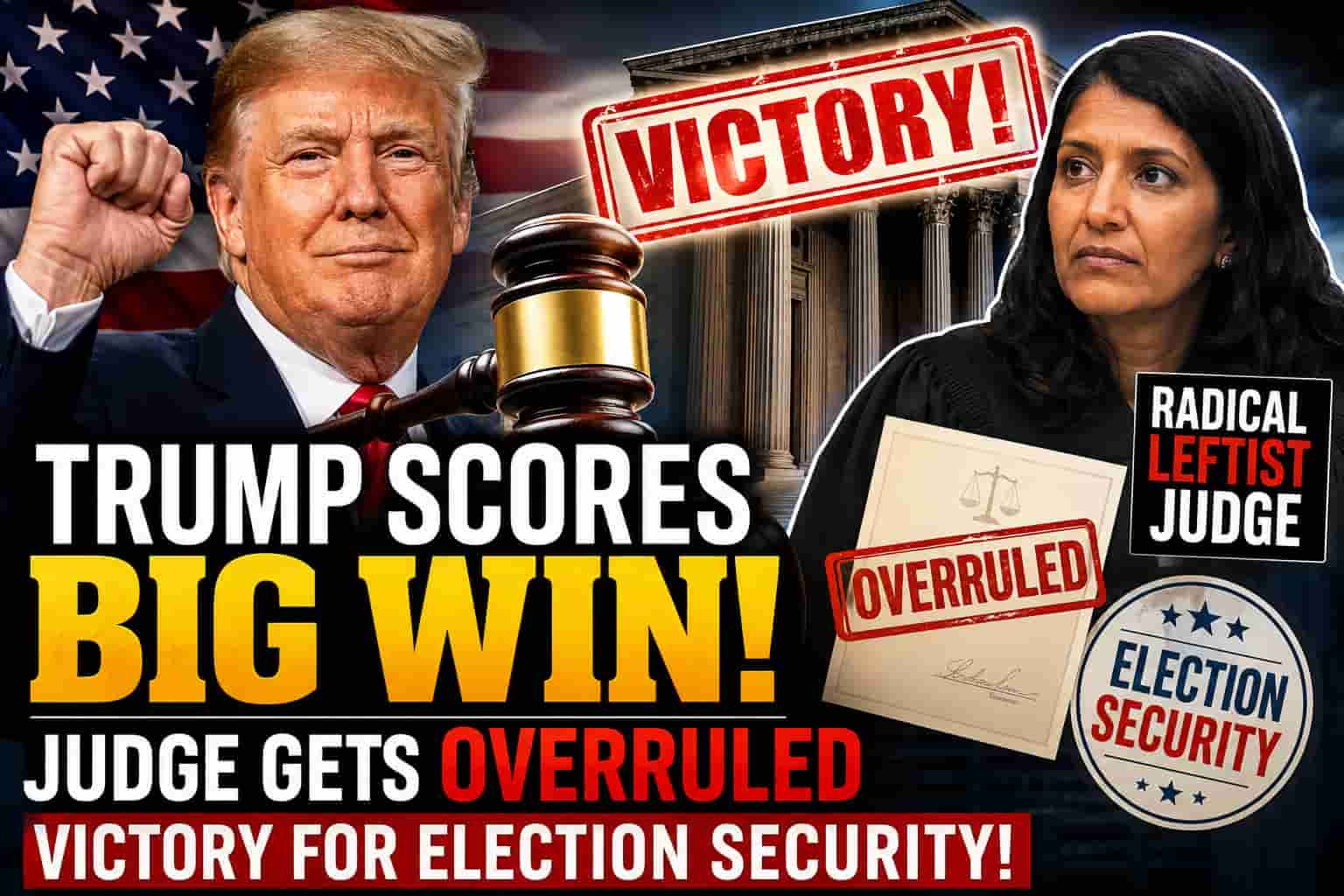
A federal judge in Florida handed the Trump administration an important courtroom victory by ordering the Department of Homeland Security to restore four states’ access to the federal SAVE (Systematic Alien Verification for Entitlements) system—despite an earlier nationwide ruling that had blocked the program.
The decision marks another chapter in the growing legal fight over how states verify voter eligibility and the federal government’s role in protecting election integrity.
What Is the SAVE System?
Contrary to some political claims, the SAVE system is not a new Trump creation.
It was established by Congress in 1986 and is operated by U.S. Citizenship and Immigration Services (USCIS). For decades, government agencies have used it to verify immigration status when administering public benefits, issuing driver’s licenses, and determining eligibility for various government services.
The Trump administration expanded the system’s election-related capabilities under its Executive Order on Election Integrity, allowing participating states to compare voter registration records with federal citizenship data more efficiently.
Supporters argue that the system helps identify individuals who are not U.S. citizens but may appear on voter registration rolls.
Why Was It Blocked?
Last month, U.S. District Judge Sparkle L. Sooknanan in Washington, D.C., temporarily halted the expanded use of SAVE.
The court concluded that the administration had likely violated federal privacy and administrative law requirements when implementing the new data-sharing procedures. The ruling also expressed concern that inaccurate federal records could potentially affect eligible naturalized citizens.
Civil rights organizations praised the decision, arguing that voter roll maintenance must not come at the expense of privacy protections or lawful voters’ rights.
Florida Judge Reaches a Different Conclusion
This week, however, U.S. District Judge T. Kent Wetherell II ruled that four Republican-led states—Florida, Ohio, Iowa, and Indiana—must regain access to the SAVE database.
Rather than overturning the Washington decision nationwide, Judge Wetherell concluded that these states were entitled to access the system under a separate settlement agreement previously reached with the federal government.
The conflicting rulings have created an unusual legal situation in which two federal courts have reached different conclusions about the same election security program.
Legal experts expect the dispute to continue in the federal appellate courts and potentially reach the U.S. Supreme Court.
Why This Matters
At the heart of the dispute is a simple but highly consequential question:
How should states verify that only U.S. citizens are registered to vote in federal elections?
Supporters of the Trump administration argue that modern technology allows election officials to compare federal citizenship records with voter rolls more accurately than ever before, helping strengthen public confidence in elections.
Opponents counter that election administration has traditionally been managed by the states, and expanding federal access to personal data raises legitimate concerns about privacy, due process, and the possibility of mistakenly flagging eligible voters.
A Debate Far From Over
Regardless of political affiliation, the case has become one of the most significant election law battles ahead of the next federal election cycle.
The courts are now being asked to balance two competing priorities:
- protecting election integrity by ensuring that only eligible citizens vote; and
- protecting the rights and privacy of lawful voters while respecting constitutional limits on federal authority.
The legal fight over the SAVE system is far from over, but this week’s ruling represents an important victory for the Trump administration’s election security agenda and ensures that the debate will continue in courts across the country.
What Is the SAVE System, and Why Has It Become So Controversial?
The SAVE system — Systematic Alien Verification for Entitlements — did not originate under Donald Trump. Congress created it in 1986, and it is administered by the Department of Homeland Security through U.S. Citizenship and Immigration Services.
Its original purpose was relatively limited: to help government agencies verify a person’s immigration status when determining eligibility for public benefits, licenses, driver’s licenses, and other government services.
How Does SAVE Work?
Put simply, SAVE is not a single independent database. It is a verification system that sends queries to federal immigration records.
When a government agency wants to verify an individual’s status, it submits a request through SAVE. The system checks information held in several DHS databases and reports whether the person’s immigration or citizenship status can be confirmed.
SAVE itself does not decide whether someone qualifies for a benefit, license, or the right to vote. It only provides verification information. The final decision remains with the government agency using the system.
What Did the Trump Administration Change?
In the spring of 2026, the Trump administration significantly expanded the election-related use of SAVE as part of its broader effort to strengthen election integrity.
States were given greater ability to use the system to determine whether individuals appearing on voter registration rolls were U.S. citizens.
The White House’s stated goal was straightforward:
- compare voter registration records with federal immigration and citizenship data;
- identify more quickly cases in which noncitizens may appear on voter rolls;
- help states enforce the federal prohibition on noncitizen voting in federal elections.
Why Do Trump Supporters Back the Use of SAVE?
Supporters of the administration argue that the policy is a matter of basic common sense.
Their position is that:
- only U.S. citizens may legally vote in federal elections;
- the federal government already possesses much of the relevant citizenship and immigration data;
- automated record comparisons can identify possible errors or violations more quickly;
- more accurate voter rolls can increase public confidence in election results.
From this perspective, using SAVE is not an attempt to restrict lawful voting. It is an effort to make sure that election officials can verify eligibility using information the federal government already maintains.
Why Are Opponents Challenging It?
Civil-rights organizations and several government officials argue that the central problem is not citizenship verification itself, but the way SAVE was expanded and applied.
Their main concerns include:
- SAVE was originally designed to verify immigration status for government benefits and services, not to manage voter rolls;
- some federal records may be incomplete, outdated, or inaccurate;
- lawful U.S. citizens, particularly naturalized citizens, could be mistakenly identified as noncitizens;
- combining large amounts of personal information raises privacy and data-security concerns.
These arguments formed part of the basis for a federal court order temporarily restricting the expanded use of SAVE in June 2026.
Why Has the Case Become So Important?
The dispute is about much more than one government verification system.
It raises a broader constitutional and administrative question:
Who should control the verification of voter citizenship — the federal government or the individual states?
The Trump administration argues that federal databases give states a stronger tool to protect election integrity and prevent unlawful voting by noncitizens.
Opponents respond that elections are primarily administered by the states under the Constitution and that excessive federal involvement could produce errors, privacy violations, and wrongful challenges to eligible voters.
That is why the legal battle over SAVE has become one of the most significant election-law disputes ahead of the next federal election cycle. The outcome could shape how states maintain voter rolls, how federal agencies share citizenship data, and how courts balance election security against privacy and due-process protections.
Should a Citizen of Another Country Hold Lifetime Judicial Power in the United States?
The controversy surrounding Judge Sparkle Sooknanan raises a question that reaches far beyond one ruling involving the SAVE system.
The issue is not simply whether the judge interpreted a particular federal statute correctly. The broader question is more fundamental:
Should people who were born outside the United States and continue to hold citizenship in another country receive lifetime appointments as federal judges—with the power to block actions taken by an elected president and by American states seeking to protect their elections?
Sparkle Sooknanan was born in Trinidad and Tobago, came to the United States as a teenager, and became a U.S. citizen in 2009. President Joe Biden nominated her to the federal bench. The Senate confirmed her in December 2024, and she assumed office in January 2025.
According to her written responses to the Senate Judiciary Committee, she still held citizenship in Trinidad and Tobago when her nomination was being considered. She stated that she was prepared to take the necessary steps to renounce that citizenship if required by law or by the performance of her federal duties.
However, the publicly available official record reviewed for this article does not confirm that a formal renunciation was subsequently completed.
That fact drew particular attention after Sooknanan issued a ruling restricting the expanded use of the federal SAVE system for checking the citizenship status of people appearing on voter registration rolls.
The result is a politically explosive picture: a person who maintains a formal legal bond with another country holds a lifetime federal position and uses judicial authority to limit a program intended to verify that only U.S. citizens participate in American elections.
Legal Permission Is Not the Same as Sound Policy
Being born outside the United States does not legally disqualify someone from serving as a federal judge.
Article III of the Constitution does not require federal judges to be natural-born citizens. In fact, it does not establish a minimum period of U.S. citizenship or expressly prohibit dual citizenship.
But the absence of a prohibition does not automatically mean that the current system is wise.
Federal judges are not elected by the public. Once confirmed, they generally serve for life during “good Behaviour.” They can block actions by the executive branch, limit state policies, invalidate laws, and issue decisions affecting the nation’s election system.
Americans are therefore entitled to ask whether candidates for such powerful lifetime offices should be required to demonstrate a single, unambiguous national allegiance.
A Question of Allegiance, Not Birthplace
The most serious issue is not that a judge was born abroad.
Naturalized citizens are Americans, and many have demonstrated extraordinary loyalty and service to the United States. Place of birth alone says nothing reliable about a person’s integrity, patriotism, or professional ability.
The sharper question concerns active citizenship in another sovereign country.
Citizenship is not merely cultural heritage. It is a formal legal relationship between an individual and a state. Depending on the country, it may involve rights, protections, duties, passport privileges, property interests, and continuing legal obligations.
When a person receives lifetime authority to act in the name of the United States, should that person simultaneously remain a citizen of another country?
Under current American law, the answer can effectively be yes.
But that does not end the public-policy debate.
What Stricter Rules Could Look Like
A reasonable reform would not have to exclude naturalized Americans from the judiciary. Instead, it could establish clear rules for anyone seeking a lifetime federal judicial appointment.
Such requirements could include:
- a minimum period of U.S. citizenship before nomination;
- full disclosure of all foreign citizenships, passports, financial interests, property, and significant legal ties;
- formal renunciation of all foreign citizenships before taking office;
- written confirmation that the nominee owes no legal obligation to another government;
- mandatory recusal from cases directly involving the country of former citizenship;
- penalties for concealing or misrepresenting foreign legal ties during confirmation.
These safeguards would not declare naturalized citizens to be less American.
They would recognize that a person exercising lifetime judicial power on behalf of the United States should have only one formal national allegiance: the United States.
The Argument for the Current System
Defenders of the existing system would argue that U.S. citizenship and the judicial oath are sufficient.
They would also point out that American judges are required to uphold the Constitution, not the political agenda of the president who appointed them. A judge’s birthplace, former nationality, ethnicity, or family background does not determine whether a ruling is legally correct.
That principle matters. Courts should not be reduced to a test of ancestry or political identity.
Yet critics are asking a different question.
If the Constitution imposes special citizenship requirements on the president because of the office’s power and the danger of foreign influence, why are there almost no comparable citizenship requirements for federal judges who receive lifetime appointments and can exercise enormous authority over the government?
A Debate Larger Than One Judge
The controversy surrounding Sooknanan is therefore not only about one individual.
It exposes a broader gap in the federal judicial appointment system.
Should the United States entrust lifetime judicial power to someone who simultaneously remains a citizen of another sovereign country?
Current law largely permits it.
The more difficult question is whether Americans should continue accepting that arrangement without clearer safeguards, fuller disclosure, and a requirement of exclusive legal allegiance for the nation’s most powerful lifetime offices.
Official Documents and Government Sources
-
White House — Preserving and Protecting the Integrity of American Elections
President Donald Trump’s March 25, 2025 executive order addressing citizenship verification, federal election standards, voter-registration records, and information sharing with state election officials.
Read the executive order -
White House — Ensuring Citizenship Verification and Integrity in Federal Elections
The March 31, 2026 executive order directing additional federal measures related to citizenship verification and voter eligibility in federal elections.
Read the 2026 executive order -
White House Fact Sheet — Citizenship Verification and Voter Eligibility
The administration’s official summary explaining the purpose and principal provisions of the 2026 election-integrity order.
Read the White House fact sheet -
U.S. Citizenship and Immigration Services — SAVE
The official USCIS page for the Systematic Alien Verification for Entitlements program, which government agencies use to verify immigration status and U.S. citizenship.
Visit the official SAVE website -
USCIS — About SAVE
Official information explaining what SAVE does, which agencies may use it, and the nature of the information supplied through the service.
Learn how SAVE works -
U.S. Code — 18 U.S.C. § 611: Voting by Aliens
The official text of the federal law generally prohibiting noncitizens from voting in elections for federal office, subject to limited statutory exceptions.
Read the federal statute -
U.S. District Court for the District of Columbia — Judge Sparkle L. Sooknanan
The judge’s official federal court webpage, including access to court information, orders, opinions, and docket resources when publicly available.
Visit the official court page
Editorial note: SAVE, the SAVE Act, and the president’s election-related executive orders are separate legal instruments. SAVE is a USCIS verification service; the SAVE Act is proposed federal legislation; and the executive orders direct actions by the executive branch.
Ask Midtown Tribune about this story
Answers are grounded first in this article. Search all Midtown Tribune reporting from the main AI Search page.
AI-generated summary. Verify important details in the linked original articles.