
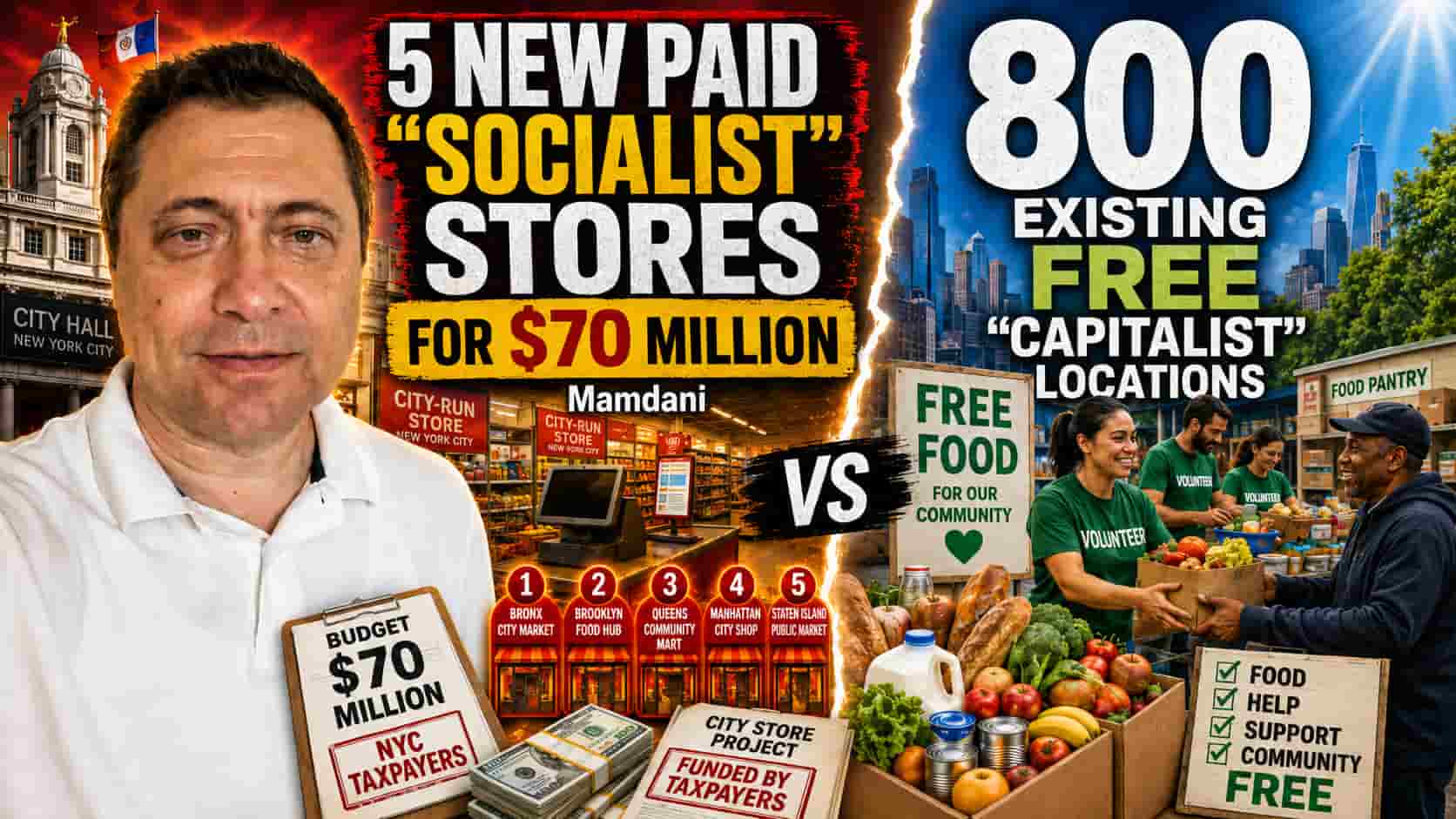
Former New York City Council Member Ari Kagan criticized Mayor Zohran Mamdani’s plan to spend $70 million on five city-backed grocery stores that are expected to sell selected products at prices up to 30% below regular retail levels.
Kagan warned that the project could burden taxpayers, hurt nearby privately owned grocery stores, create shortages, and add another layer of city bureaucracy. Drawing on his experience growing up in the Soviet Union, he compared Mamdani’s proposal with government-controlled retail systems.
New York Already Has a Large Free-Food Network
This is not one single chain of “free stores.” It is an overlapping citywide network of nonprofit organizations, community groups, religious institutions, mobile distribution programs, food pantries, and publicly funded community kitchens.
Food Bank For New York City says its network includes nearly 800 food pantries, soup kitchens, and mobile pantries across the five boroughs. Its partner sites also include shelters, senior centers, hospitals, and clinics. They provide free groceries, hot meals, fresh produce, SNAP assistance, and other forms of food support.
The city’s Human Resources Administration, through the Community Food Connection, funds more than 700 community kitchens and food pantries citywide. Food pantries provide groceries that people can take home and prepare, while community kitchens provide hot meals.
City Harvest makes daily deliveries to more than 400 food pantries, soup kitchens, Mobile Markets, Community Partner Distributions, and other community food programs throughout the five boroughs. City Harvest says the rescued food is delivered free of charge.
These figures must not be added together because many food pantries, kitchens, and community organizations participate in more than one network.
Midtown Tribune Editorial Comment
These free-food systems existed in supposedly “terrible capitalist New York” long before Mamdani proposed spending $70 million on five government-backed stores that will still charge customers for food.
A 30% discount cannot compete with a price of zero.
The contrast is striking: New York already has hundreds of locations where people in need can receive groceries or prepared meals without paying at the register. Mamdani’s new stores would sell food, depend on public financing and government-selected operators, and provide the greatest practical benefit mainly to people who live or work near the five selected locations.
There is currently no evidence that Mamdani intends to close food pantries, soup kitchens, or nonprofit food programs. But Midtown Tribune believes New Yorkers should watch carefully to ensure that the new government retail project does not divert money, property, or political support away from the free community networks that already work.
Socialists often speak about workers, mandatory union standards, and government-directed economic organization. Their model risks treating people not as free citizens, but as a labor force tied to a state-directed, union-controlled, totalitarian economic system.
American citizens do not live under Karl Marx’s Das Kapital. Their rights come from the Constitution of the United States, including protections for individual liberty and against involuntary servitude. The Constitution does not promise everyone a comfortable life without work, but neither does it authorize the government to organize ordinary citizens as compulsory labor for an ideological economic system.
The Constitution is available online. Mamdani and every member of his socialist team should read it regularly—not merely to repeat its words, but to remember that individual liberty stands above communist, religious, or secular totalitarian theories.
Official and Primary Sources: Free Food Assistance in New York City
- Food Bank For New York City — Nearly 800 Free-Food Locations
The organization’s official food locator reports nearly 800 food pantries, soup kitchens, and mobile pantries across New York City. These locations provide free groceries, hot meals, and assistance with SNAP enrollment. - Food Bank For New York City — Official Website
The organization describes a network of nearly 800 partner locations serving residents across all five boroughs. - NYC Human Resources Administration — Community Food Connection
The official New York City government website states that the Community Food Connection program provides funding to more than 700 community kitchens and food pantries citywide. - Food Help NYC — Official City Map of Free-Food Locations
This official New York City search tool helps residents locate food pantries, soup kitchens, mobile programs, and other locations offering free food across the five boroughs. - NYC 311 — Food Pantries and Soup Kitchens
The official NYC 311 page explains that food pantries provide free groceries for people to take home, while soup kitchens and mobile kitchens provide prepared meals. - City Harvest — More Than 400 Partner Food Programs
City Harvest reports that its trucks make daily deliveries to more than 400 soup kitchens, food pantries, and other community food programs throughout New York City’s five boroughs.
Editorial note: These figures should not be added together. Many food pantries, soup kitchens, and community organizations participate in more than one partner network. The description “nearly 800 locations” is based primarily on figures published by Food Bank For New York City.
Ask Midtown Tribune about this story
Answers are grounded first in this article. Search all Midtown Tribune reporting from the main AI Search page.
AI-generated summary. Verify important details in the linked original articles.