
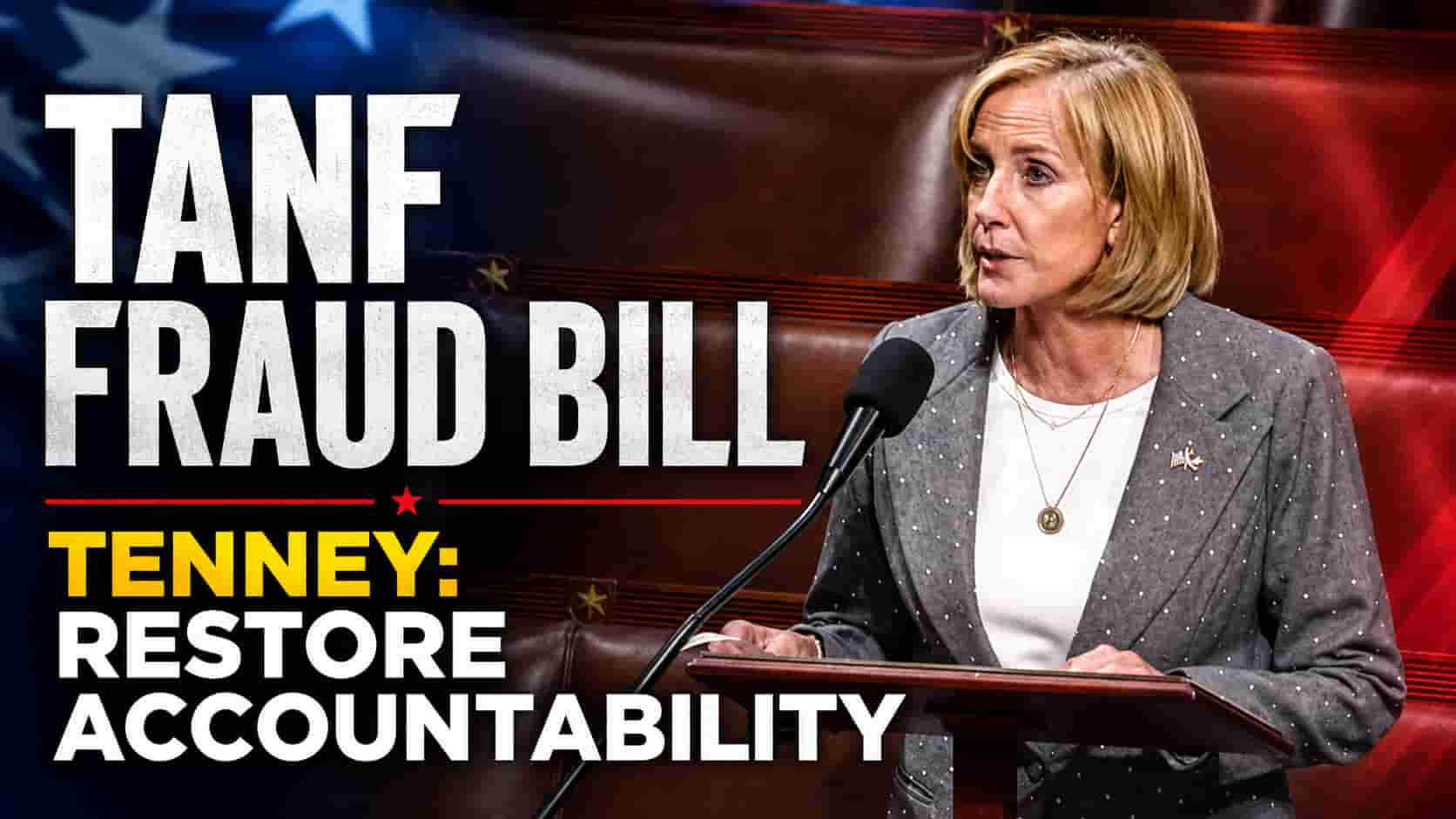
Rep. Claudia Tenney Backs TANF Fraud Bill, Calling It a Step Toward Accountability for Taxpayers and Needy Families
By Midtown Tribune Staff
Washington, D.C. — June 2026
Rep. Claudia Tenney (R-NY) took to the House floor this week to urge passage of H.R. 8872, the Preventing Waste, Fraud, and Abuse in TANF Act, arguing that federal welfare dollars should be protected for the families they were created to serve — not diverted into unrelated state spending priorities.
Speaking during House debate, Tenney said the Temporary Assistance for Needy Families program, known as TANF, was designed to help families in poverty meet urgent needs while encouraging work and long-term self-sufficiency. But she warned that weak guardrails have allowed some states to treat federal TANF funds as flexible budget money rather than targeted assistance for struggling families.
“Federal TANF funds can only be used to support families in poverty and cannot be used to fill state budget gaps,” Tenney said, describing the legislation as “an important step toward restoring accountability.”
Tenney: Welfare Dollars Should Not Become State Slush Funds
Tenney criticized what she called the misuse of TANF money for unrelated projects, echoing concerns raised by Rep. Aaron Bean (R-FL), who has argued that some states have stretched TANF spending far beyond its original anti-poverty purpose.
“Federal dollars provided for needy families should remain focused on needy families,” Tenney said. “Struggling families should be able to trust that TANF resources are being preserved for them.”
The New York Republican emphasized that the bill does not eliminate state flexibility. Instead, she argued, it restores basic responsibility to a federal block grant program that has long given states broad discretion over welfare spending.
“Flexibility requires responsibility,” Tenney said.
What H.R. 8872 Would Do
H.R. 8872 would make a series of program-integrity changes to TANF. According to congressional materials and the Congressional Budget Office, the bill would require states to identify and reduce improper payments, apply payment-integrity standards to TANF, restrict certain uses of federal TANF grants, and limit the use of federal funds to replace state spending on low-income programs.
The bill would also require the Department of Health and Human Services to submit a plan to Congress to reduce improper payments made by states over a 10-year period.
Supporters say the legislation is necessary because TANF is one of the few major federal programs not subject to the same improper-payment reporting requirements applied elsewhere in the federal government. They argue that the absence of stronger oversight makes the program vulnerable to waste, abuse, and political spending decisions that do not directly help low-income families.
A Republican Push for Anti-Fraud Oversight
Tenney thanked House Ways and Means Chairman Jason Smith, Subcommittee Chairman Darin LaHood, Rep. Aaron Bean, Speaker Mike Johnson, Majority Leader Steve Scalise, and Whip Tom Emmer for advancing the legislation to the House floor.
The bill is part of a broader House Republican push to tighten oversight of federal benefit programs and ensure taxpayer dollars are used for their intended purpose. For Republicans, TANF reform is both a fiscal issue and a moral issue: money appropriated for poor families should reach poor families.
“Taxpayers have the right to ensure that their money isn’t being diverted through unfair state budget maneuvers,” Tenney said.
Critics Warn of Added Burdens
Some Democratic and anti-poverty organizations have opposed the bill, arguing that tighter restrictions could lead to more administrative burdens for states and potentially reduce support for low-income families. Supporters respond that accountability requirements are not cuts, and that stronger oversight protects both taxpayers and the families who rely on the program.
The debate highlights a larger national divide over welfare policy: whether broad state flexibility has become too loose, and whether federal anti-poverty dollars should be more tightly restricted to direct assistance and proven work-support programs.
Bottom Line
Rep. Tenney framed H.R. 8872 as a common-sense reform: keep TANF focused on families in need, stop state budget gimmicks, and restore public confidence in a major federal welfare program.
“I urge my colleagues to support this bill to help us end waste, fraud and abuse and to provide accountability to our taxpayers,” Tenney said before yielding back.
For House Republicans, the message is clear: welfare programs must serve the vulnerable — not state political wish lists.
Official Sources
- GovInfo: H.R. 8872 — Preventing Waste, Fraud, and Abuse in TANF Act, Introduced in House
- GovInfo: H.R. 8872 — Reported in House Version
- House Ways and Means Committee: H.R. 8872 Bill Text PDF
- House Ways and Means Committee: Markup of H.R. 8872
- House Ways and Means Committee: Chairman Smith Floor Remarks on H.R. 8872
- Congressional Budget Office: H.R. 8872 Cost Estimate
- Congressional Budget Office: H.R. 8872 Cost Estimate PDF
Midtown Tribune Independent USA news from New York
Ask Midtown Tribune about this story
Answers are grounded first in this article. Search all Midtown Tribune reporting from the main AI Search page.
AI-generated summary. Verify important details in the linked original articles.